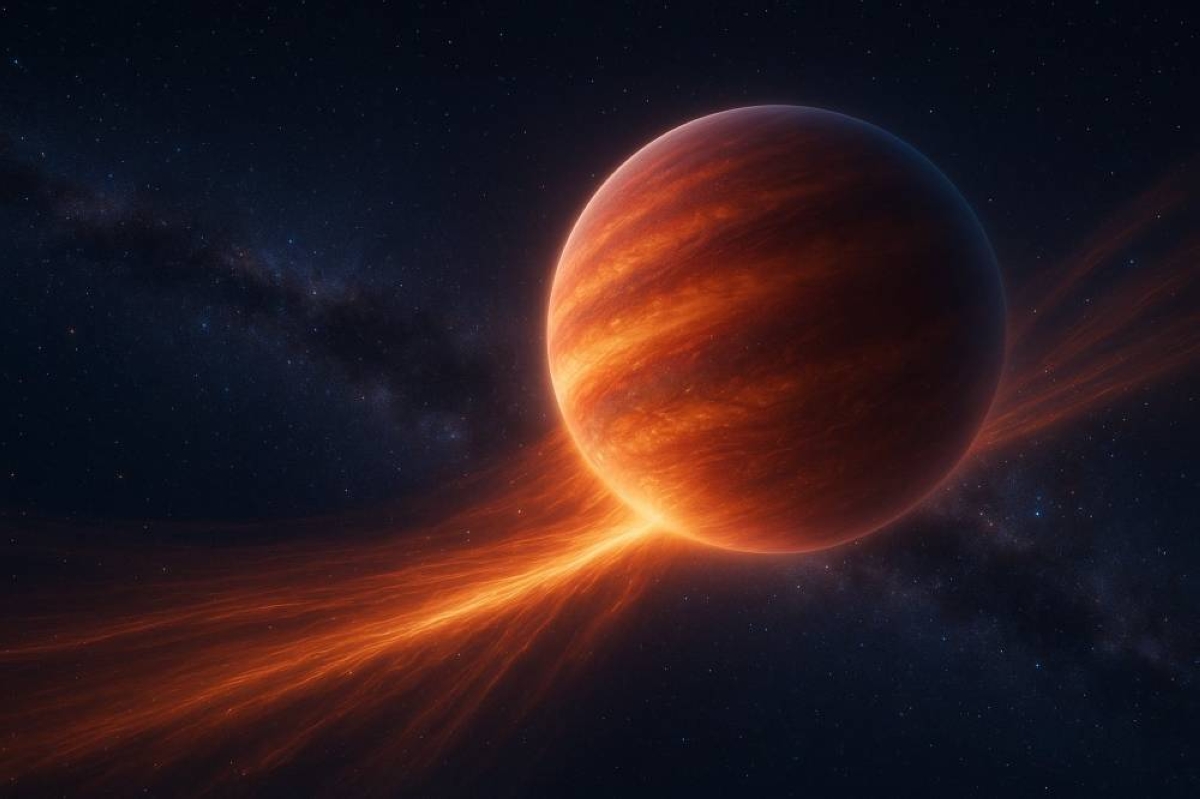
في اكتشاف مذهل يعيد تشكيل فهمنا لتكوُّن الكواكب، أعلن علماء الفلك عن رصد كوكب تائه يدعى Cha 1107-7626، يبتلع كميات هائلة من الغاز والغبار بمعدل يصل إلى ستة مليارات طن في الثانية، وهو أعلى معدل نمو مسجل على الإطلاق لأي جسم كواكبي.
التكوُّن لدى النجوم الشابة
ووفقاً لدراسة نشرت في The Astrophysical Journal Letters يعتبر هذا السلوك، الذي يشبه عملية التكوُّن لدى النجوم الشابة، الأقوى في تاريخ الملاحظات لكائنات بحجم كواكب، حيث يُرصد لأول مرة في كوكب تائه يتغذى من قرص غازي محيط به دون وجود نجم قريب.
وكشفت الملاحظات، التي أجراها مرصد عملاق في تشيلي بالتعاون مع تلسكوب جيمس ويب الفضائي، عن «اندفاع نمو» حدث في أبريل-مايو ويونيو-أغسطس، إذ زاد معدل الامتصاص 6-8 مرات عن الطبيعي، مع تغيرات كيميائية في القرص تشمل ظهور بخار الماء.
الكواكب المتجوّلة
ويقع الكوكب التائه Cha 1107-7626 على بعد حوالى 620 سنة ضوئية في كوكبة الشمايلون، وهو كوكب تائه بحجم 5-10 أضعاف كتلة المشتري، يبلغ عمره 1-2 مليون سنة فقط، ما يجعله في طور التكوُّن المبكر.
وعلى عكس الكواكب التقليدية التي تدور حول نجوم، هذه الكواكب المتجولة إما تُطرد من أنظمة نجمية أو تتكون بشكل مستقل، وغالباً ما تُعتبر باردة وصامتة، لكن هذا الكوكب يُغذى من قرص غازي وغباري محيط، في عملية تُدعى الالتصاق، مدفوعة بحقول مغناطيسية قوية تشبه تلك في النجوم الشابة.
وأكد باحثون مثل فيكتور ألميندروس أباد وبيليندا داميان أن هذا «يُذيب الخط الفاصل بين النجوم والكواكب»، إذ يُرصد اندفاع (مثل ذلك الذي في النجوم) لأول مرة في جسم كواكبي، وقد حدث سابقاً في 2016، ما يشير إلى تكرار محتمل.
ويقدم هذا الاكتشاف نظرة نادرة إلى مراحل التكوُّن الأولى للكواكب المتجولة، التي قد تكون أكثر شيوعاً مما نعتقد، ويُشير إلى أن بعضها يتكون كالنجوم الأضعف كتلة.
ويُعد هذا الاكتشاف خطوة كبيرة في علم الكواكب خارج النظام الشمسي، إذ يُظهر أن الكواكب المتجولة يمكن أن تنمو بسرعة نجمية، ما يُثري فهمنا لأصولها ويُشير إلى إمكانية وجود آلاف مثلها في مجرتنا.
In a stunning discovery that reshapes our understanding of planet formation, astronomers have announced the observation of a rogue planet named Cha 1107-7626, which is consuming massive amounts of gas and dust at a rate of up to six billion tons per second, the highest growth rate ever recorded for any planetary body.
Formation in Young Stars
According to a study published in The Astrophysical Journal Letters, this behavior, which resembles the formation process in young stars, is the strongest observed in the history of observations of objects the size of planets, as it is observed for the first time in a rogue planet feeding from a surrounding gas disk without a nearby star.
The observations, conducted by a giant observatory in Chile in collaboration with the James Webb Space Telescope, revealed a "growth surge" that occurred in April-May and June-August, where the absorption rate increased 6-8 times above normal, with chemical changes in the disk including the appearance of water vapor.
Rogue Planets
The rogue planet Cha 1107-7626 is located about 620 light-years away in the constellation Chamaeleon, and it is a rogue planet with a mass 5-10 times that of Jupiter, only 1-2 million years old, placing it in the early stages of formation.
Unlike traditional planets that orbit stars, these rogue planets are either ejected from stellar systems or form independently, and they are often considered cold and silent. However, this planet is being fed from a surrounding gas and dust disk in a process called accretion, driven by strong magnetic fields similar to those in young stars.
Researchers like Victor Almenndros Abad and Belinda Damian have confirmed that this "melts the boundary between stars and planets," as a surge (similar to that in stars) is observed for the first time in a planetary body, having previously occurred in 2016, indicating a potential recurrence.
This discovery offers a rare glimpse into the early formation stages of rogue planets, which may be more common than we think, and suggests that some form like lower-mass stars.
This discovery is a significant step in exoplanet science, showing that rogue planets can grow at stellar rates, enriching our understanding of their origins and indicating the possibility of thousands like them in our galaxy.