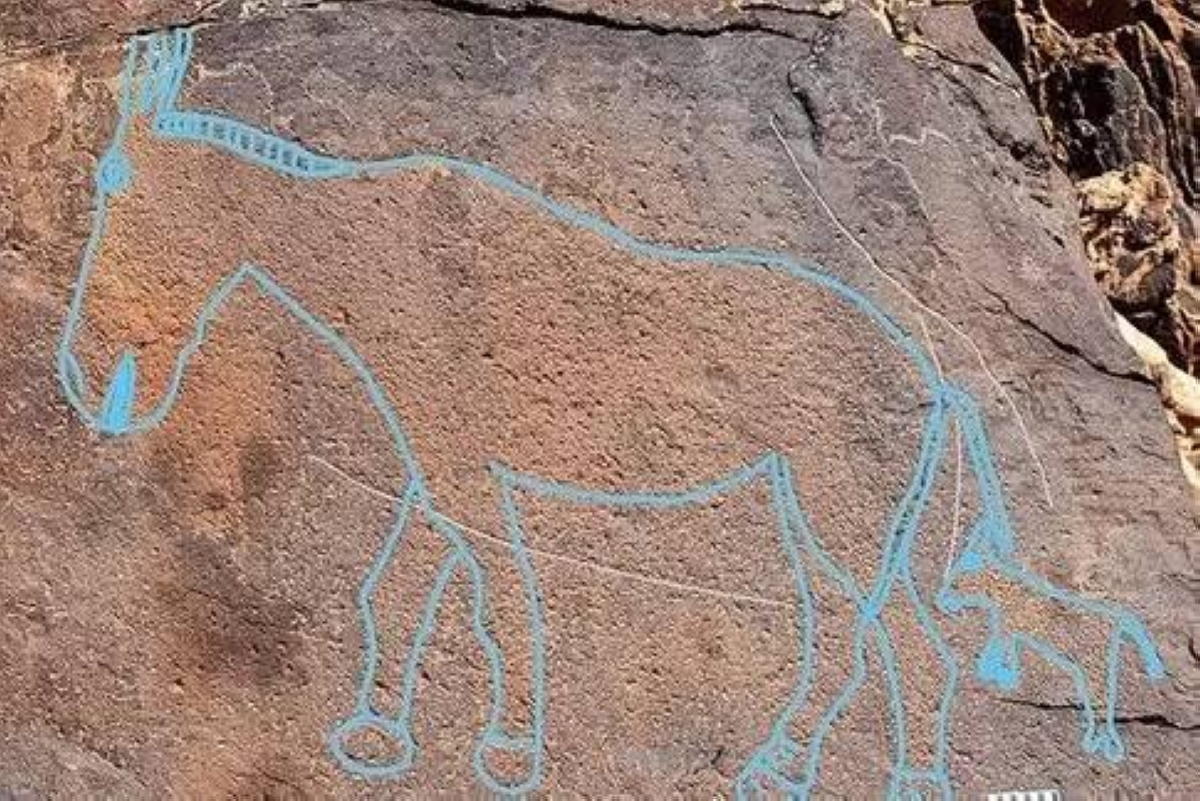
احتفت مجلة «نيتشر» الأمريكية، باكتشاف رسومات بالحجم الطبيعي على صخور الحجر الرملي في صحراء النفود السعودية، يعود عمرها إلى نحو 12 ألف سنة.
ويمثل الاكتشاف تحدياً للمعتقدات السابقة بشأن موعد أول استيطان بشري لتلك المنطقة الواقعة شمال المملكة العربية السعودية.
مجتمعات من الصيادين
ويعتقد أن تلك الرسومات قامت بها مجتمعات من الصيادين خلال الفترة الواقعة بين 11,400 و12,800 سنة، في مسعى يهدف الى وضع علامات على مواقع ورود المياه. وتم العثور على نحو 60 رسماً على الصخور، تحمل رسوماً لنحو 130 حيواناً، تشمل الجمال، والحمير، والغزلان، إلى الجنوب من صحراء النفود، في مواقع مختلفة في دائرة قطرها 32 كيلومتراً. ويبلغ طول الرسوم الخاصة بالجِمال نحو 7 أقدام.
وهي مرسومة على صخور ترتفع 128 قدماً من الأرض.
ونقلت مجلة «نيتشر» عن عالمة الآثار الإيطالية ماريا غونين، المتخصصة في أبحاث الرسوم الصخرية، قولها: إن إنجاز هذه الأعمال الفنية كان مشوباً بالخطر الشديد بسبب شدة انحدار الصخور.
The American magazine "Nature" celebrated the discovery of life-sized drawings on sandstone rocks in the Nafud Desert of Saudi Arabia, dating back approximately 12,000 years.
This discovery challenges previous beliefs about when the first human settlement occurred in that area located north of the Kingdom of Saudi Arabia.
Communities of Hunters
It is believed that these drawings were created by communities of hunters during the period between 11,400 and 12,800 years ago, in an effort to mark the locations of water sources. About 60 drawings were found on the rocks, depicting around 130 animals, including camels, donkeys, and deer, to the south of the Nafud Desert, in various locations within a 32-kilometer radius. The drawings of the camels are approximately 7 feet long.
They are drawn on rocks that rise 128 feet from the ground.
Nature magazine quoted Italian archaeologist Maria Gonnella, an expert in rock art research, saying that the achievement of these artworks was fraught with great danger due to the steepness of the rocks.