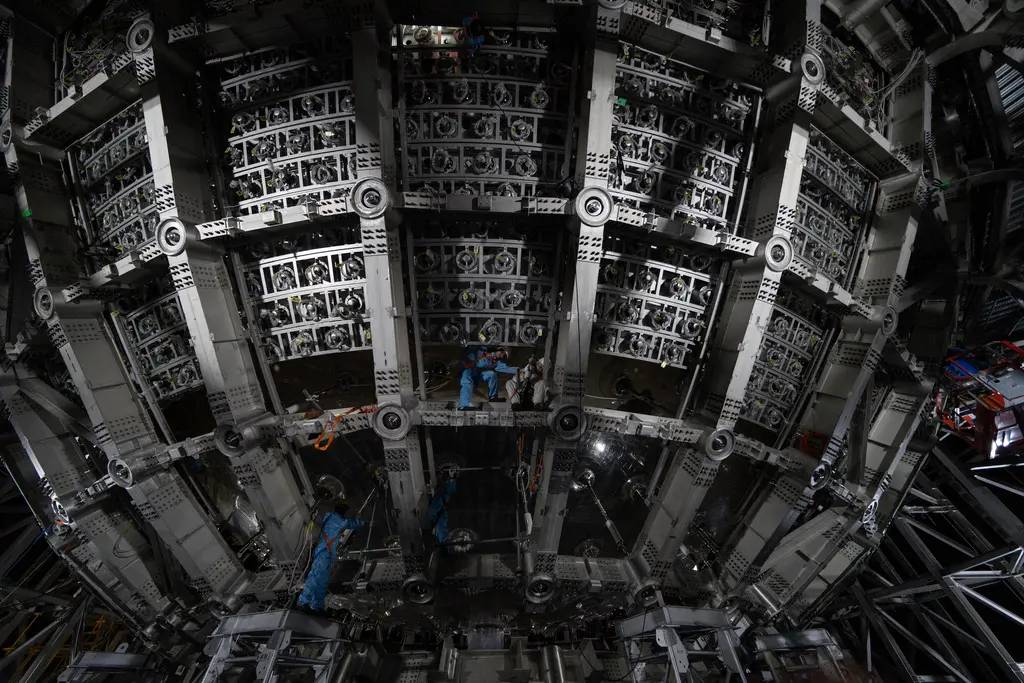
في قلب الجبال جنوب الصين، وعلى عمق أكثر من 700 متر، يعمل مرصد جيانغمن للنيوترينوات في تجربة علمية فريدة تهدف إلى كشف أسرار المادة المظلمة وفهم أصل الكون، بتكلفة تجاوزت 300 مليون دولار.
صيد الجسيمات المراوغة
النيوترينوات أو «الجسيمات الشبحية»، جسيمات دقيقة للغاية شبه عديمة الكتلة، تتدفق من النجوم والانفجارات النووية باستمرار عبر كل ما حولنا، بما في ذلك أجسادنا. ويصعب رصدها مباشرة، لذا يعتمد العلماء على تسجيل تأثيرها عند اصطدامها بمادة أخرى، مما يُطلق ومضات ضوئية تكشف وجودها.
تصميم مبتكر تحت الأرض
يقع المرصد على عمق 700 متر ليحمي التجارب من الإشعاعات الكونية. والقلب العلمي للمشروع هو كرة ضخمة مليئة بسائل خاص يضيء عند مرور النيوترينوات، موضوعة داخل أسطوانة تحتوي على 45 ألف طن من المياه النقية. وتنتج كل اصطدامات النيوترينوات بمعدل 50 ومضة ضوئية يوميا، ما يتطلب أجهزة حساسة جدا لتسجيلها.
تحديات القياس
وللوصول إلى نتائج دقيقة، يحتاج العلماء إلى تجميع 100 ألف ومضة خلال نحو ست سنوات. وتُبنى مشاريع مماثلة في اليابان والولايات المتحدة، وستسمح بمقارنة البيانات وتأكيد النتائج باستخدام طرق وتقنيات مختلفة بدءا من عام 2027.
مفتاح لفهم الكون
النيوترينوات موجودة منذ الانفجار العظيم، وفهم سلوكها قد يفسر كيفية تشكل الكون وتوسع المادة قبل مليارات السنين. ويرى العلماء أن هذه التجربة قد تكون خطوة تاريخية لكشف أسرار المادة المظلمة والعمليات الكونية الأولى.
In the heart of the mountains in southern China, at a depth of over 700 meters, the Jiangmen Neutrino Observatory is conducting a unique scientific experiment aimed at uncovering the secrets of dark matter and understanding the origin of the universe, with costs exceeding 300 million dollars.
Hunting the Elusive Particles
Neutrinos, or "ghostly particles," are extremely tiny particles that are almost massless, constantly flowing from stars and nuclear explosions through everything around us, including our bodies. They are difficult to detect directly, so scientists rely on recording their effects when they collide with other matter, which produces flashes of light that reveal their presence.
Innovative Underground Design
The observatory is located 700 meters deep to protect the experiments from cosmic radiation. The scientific heart of the project is a massive sphere filled with a special liquid that lights up when neutrinos pass through it, placed inside a cylinder containing 45,000 tons of pure water. Each neutrino collision produces about 50 flashes of light daily, requiring very sensitive equipment to record them.
Measurement Challenges
To achieve accurate results, scientists need to collect 100,000 flashes over approximately six years. Similar projects are being built in Japan and the United States, which will allow for data comparison and confirmation of results using different methods and techniques starting in 2027.
A Key to Understanding the Universe
Neutrinos have existed since the Big Bang, and understanding their behavior may explain how the universe formed and how matter expanded billions of years ago. Scientists believe that this experiment could be a historic step in uncovering the secrets of dark matter and the early cosmic processes.