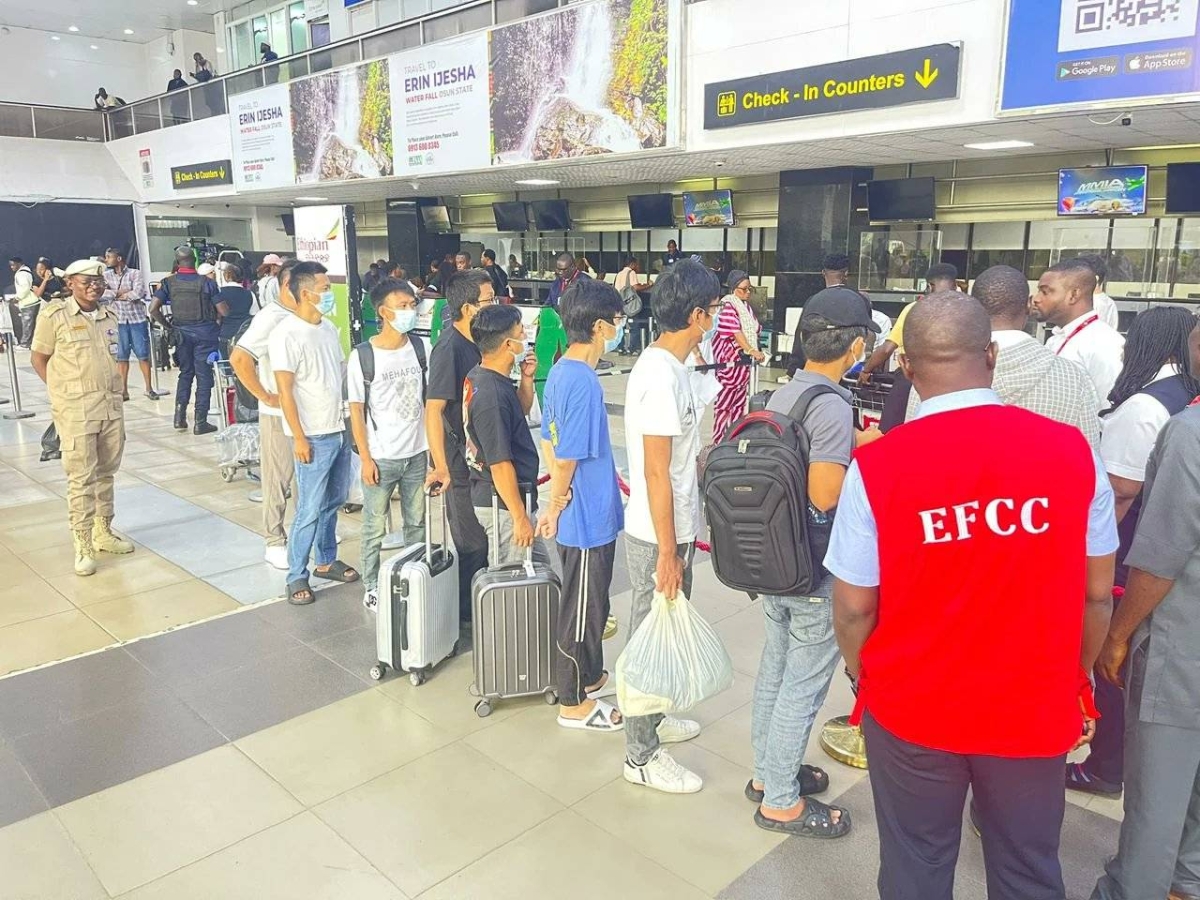
أعلنت السلطات النيجيرية، بالتعاون بين لجنة الجرائم الاقتصادية والمالية وجهاز الهجرة النيجيري، عن ترحيل 51 أجنبيا، بينهم 50 صينيا وتونسي واحد، بعد إدانتهم بجرائم الإرهاب الإلكتروني والاحتيال عبر الإنترنت.
وأوضحت لجنة الجرائم الاقتصادية والمالية في بيان رسمي أن الـ51 فردا الذين تم ترحيلهم يوم الأربعاء، هم جزء من 192 أجنبيا، معظمهم من الصين والفلبين، أُلقي القبض عليهم في 10 ديسمبر 2024 خلال مداهمة استهدفت مقرا لشبكة إجرامية في شارع أوين جولايمي بمنطقة فيكتوريا آيلاند في لاغوس.
وكشفت التحقيقات أن هذه الشبكة، التي وُصفت بأنها واحدة من أكبر الشبكات الأجنبية التي تديرها عصابات إلكترونية في نيجيريا، كانت تنفذ عمليات احتيال واسعة النطاق تشمل خدع الرومانسية، ومخططات العملات المشفرة المزيفة، والاحتيال عبر منصات التواصل الاجتماعي.
وأفادت اللجنة أن المتهمين استخدموا أدوات قرصنة متقدمة واتصالات مشفرة وقنوات لغسل الأموال، مستهدفين مؤسسات نيجيرية وضحايا دوليين، وبعد محاكمات سريعة أمام المحكمة الفيدرالية العليا في لاغوس، أُدين المتهمون بتهم تشمل سرقة الهوية عبر الإنترنت، والاحتيال المسبق، وانتهاكات قانون مكافحة الاحتيال عبر الإنترنت لعام 2006.
وبموجب اتفاقيات الإقرار بالذنب، أمرت المحكمة بترحيلهم بعد قضاء فترات سجنهم. وأشار رئيس اللجنة، أولا أولوكوييدي، إلى أن هذه العملية تمثل «إنجازا بارزا في مكافحة الجريمة الإلكترونية، وتؤكد التزام نيجيريا بحماية الفضاء الرقمي واستعادة ثقة العالم في اقتصادها».
وأثارت عملية الترحيل نقاشا واسعا في نيجيريا، إذ أشادت منظمات المجتمع المدني بالجهود الأمنية، لكنها طالبت بتعزيز القوانين الإلكترونية لردع الجرائم المستقبلية، وطالب متابعون أمنيون بضرورة التركيز على الشبكات المحلية التي تتعاون مع هذه العصابات.
وتُعد نيجيريا واحدة من أكثر الدول الأفريقية استهدافا للجرائم الإلكترونية، واكتسبت سمعة عالمية بسبب ما يُعرف بـ«خدع ياهو ياهو»، وهي عمليات احتيال إلكتروني ينفذها أفراد وشبكات منظمة تستهدف ضحايا محليين ودوليين، وفي السنوات الأخيرة كشفت تحقيقات لجنة الجرائم الاقتصادية والمالية عن تورط شبكات أجنبية، خصوصا من آسيا، في تنظيم عمليات احتيال معقدة داخل البلاد، مستغلة ضعف الرقابة على التأشيرات والهجرة.
وفي ديسمبر 2024 نفذت اللجنة مداهمة غير مسبوقة أسفرت عن اعتقال 759 شخصا، بينهم 192 أجنبيا، في عملية وصفتها بأنها «ضربة قاضية» لإحدى أكبر الشبكات الإلكترونية الأجنبية، وأدت التحقيقات إلى مصادرة أكثر من 220 ألف دولار من الأصول الرقمية المرتبطة بالشبكة، إضافة إلى أدوات قرصنة متطورة. ومنذ 15 أغسطس، رحّلت السلطات النيجيرية 102 مدان أجنبي، مع خطط لترحيل المزيد في الأيام القادمة.
Nigerian authorities, in collaboration with the Economic and Financial Crimes Commission and the Nigerian Immigration Service, announced the deportation of 51 foreigners, including 50 Chinese and one Tunisian, after they were convicted of cyber terrorism and online fraud.
The Economic and Financial Crimes Commission clarified in an official statement that the 51 individuals who were deported on Wednesday are part of 192 foreigners, most of whom are from China and the Philippines, who were arrested on December 10, 2024, during a raid targeting a headquarters of a criminal network on Owen Golaimi Street in the Victoria Island area of Lagos.
Investigations revealed that this network, described as one of the largest foreign networks run by cyber gangs in Nigeria, was executing large-scale fraud operations that included romance scams, fake cryptocurrency schemes, and fraud via social media platforms.
The commission reported that the defendants used advanced hacking tools, encrypted communications, and money laundering channels, targeting Nigerian institutions and international victims. After swift trials before the Federal High Court in Lagos, the defendants were convicted on charges including online identity theft, advance fee fraud, and violations of the 2006 Cyber Fraud Prevention Act.
Under plea agreements, the court ordered their deportation after serving their prison terms. The head of the commission, Ola Olukoyede, noted that this operation represents a "significant achievement in combating cybercrime and reaffirms Nigeria's commitment to protecting the digital space and restoring global confidence in its economy."
The deportation process sparked widespread debate in Nigeria, as civil society organizations praised the security efforts but called for strengthening electronic laws to deter future crimes. Security observers demanded a focus on local networks that collaborate with these gangs.
Nigeria is considered one of the most targeted African countries for cybercrime and has gained a global reputation due to what is known as "Yahoo Yahoo" scams, which are cyber fraud operations carried out by individuals and organized networks targeting local and international victims. In recent years, investigations by the Economic and Financial Crimes Commission have uncovered the involvement of foreign networks, particularly from Asia, in orchestrating complex fraud operations within the country, exploiting weak visa and immigration controls.
In December 2024, the commission conducted an unprecedented raid that resulted in the arrest of 759 individuals, including 192 foreigners, in an operation it described as a "knockout blow" to one of the largest foreign electronic networks. Investigations led to the seizure of over $220,000 in digital assets linked to the network, in addition to advanced hacking tools. Since August 15, Nigerian authorities have deported 102 convicted foreigners, with plans to deport more in the coming days.