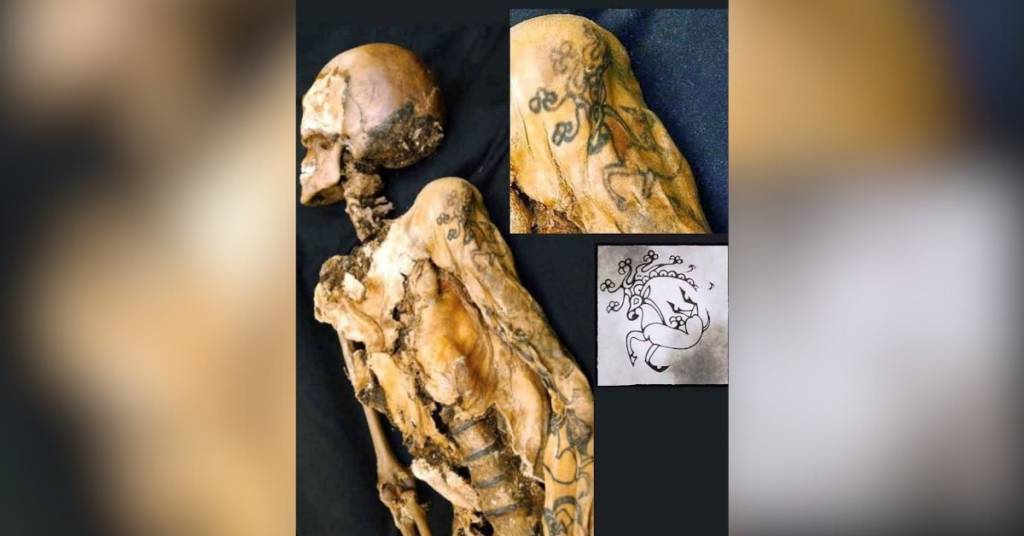
عُثر على وشوم مفصلة ومحفوظة بدقة على مومياء لامرأة من حضارة بازيريك البدوية، دُفنت في جليد سيبيريا منذ نحو 2500 عام، وتحديدًا في عام 300 قبل الميلاد. وكشفت دراسة حديثة نُشرت في مجلة Antiquity أن هذه الوشوم تم تنفيذها بدقة فائقة باستخدام أدوات متعددة وتقنيات متقدمة، ما يجعلها من أكثر أشكال الحبر القديم تطورًا التي تم توثيقها حتى الآن.
واستخدم الباحثون التصوير الرقمي بالأشعة تحت الحمراء القريبة لكشف تفاصيل كانت تبدو باهتة لعقود، وتبيّن أن الوشوم تتضمن مشاهد قتال وحيوانات أسطورية، مرسومة بخطوط متجانسة ودقيقة. وتشير الأدلة إلى أن العملية تمت على مراحل، ربما على يد رسام واحد في جلسات متعددة أو بمشاركة أكثر من شخص.
ورغم عدم العثور على الأدوات المستخدمة، يُعتقد أنها كانت مصنوعة من مواد قابلة للتحلل مثل الأشواك النباتية، فبعض الخطوط رُسمت بنقطة واحدة، وأخرى باستخدام حزم من الأشواك المرتبطة بخيوط.
وأثارت أماكن الوشوم وكون بعضها مقطوعًا أثناء التحنيط تساؤلات حول الدور الذي تمثله في تلك الثقافات المنقرضة. وقال المؤرخ مات لودر إن هذه الوشوم تمثل أكثر من مجرد رموز فنية، بل تعكس قرارات وطقوسًا شخصية لأناس عاشوا قبل أكثر من ألفي عام. ورغم مرور الزمن، ما زالت هذه العلامات تحكي قصصهم بوضوح.
Detailed and well-preserved tattoos were found on the mummy of a woman from the Pazyryk nomadic culture, buried in the Siberian ice about 2,500 years ago, specifically in 300 BC. A recent study published in the journal Antiquity revealed that these tattoos were executed with exceptional precision using multiple tools and advanced techniques, making them one of the most sophisticated forms of ancient ink documented to date.
The researchers used near-infrared digital imaging to reveal details that had appeared faded for decades, showing that the tattoos include scenes of combat and mythical animals, drawn with uniform and precise lines. Evidence suggests that the process was carried out in stages, possibly by a single artist over multiple sessions or with the involvement of more than one person.
Although the tools used were not found, it is believed they were made from biodegradable materials such as plant thorns, as some lines were drawn with a single point, while others were created using bundles of thorns tied to threads.
The locations of the tattoos and the fact that some were cut during embalming raised questions about the role they played in those extinct cultures. Historian Matt Loader stated that these tattoos represent more than just artistic symbols; they reflect personal decisions and rituals of people who lived over two thousand years ago. Despite the passage of time, these marks still tell their stories clearly.