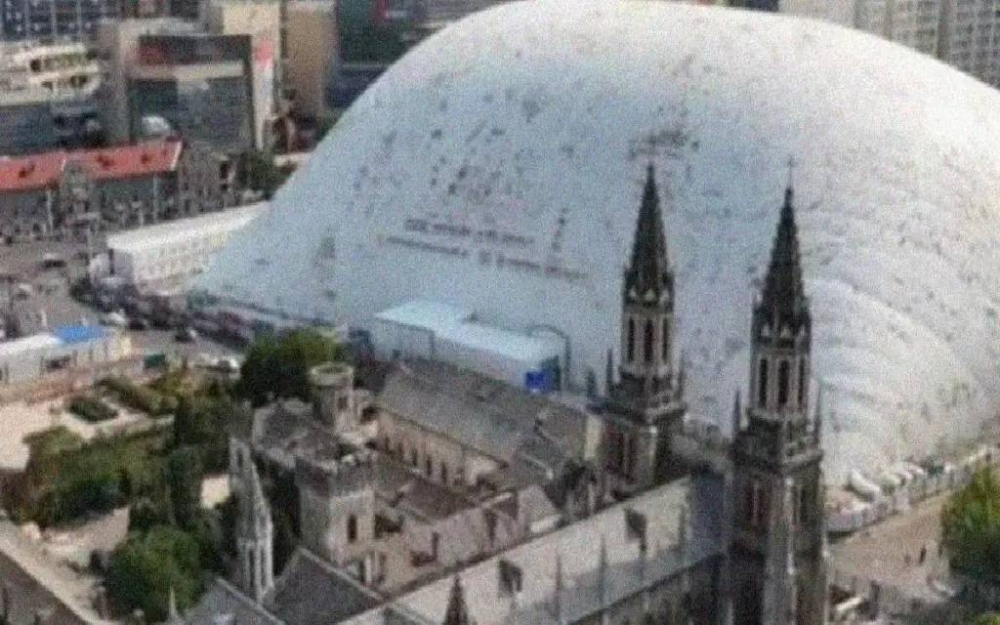
البناء في المدن يعني مزيجًا معتادًا من الغبار وأبخرة الديزل، وصوت حفارات الحفر في السادسة صباحًا. لكن في مدينة جينان الصينية اختار المسؤولون شيئًا مختلفًا، حيث وضعوا الموقع بأكمله داخل ما قد يكون أكبر قبة قابلة للنفخ في العالم.
يبلغ ارتفاع القبة 50 مترًا وتمتد على مساحة 20 ألف متر مربع، ما يجعلها أكبر من ثلاثة ملاعب كرة قدم وأطول من مبنى مكون من 15 طابقًا. ووفقًا للسلطات الصينية، فإن الهدف هو حجز الغبار واحتواء الصوت والحد من التداعيات البيئية، التي عادةً ما تمتد إلى ما وراء سياج البناء.
انتشر على نطاق واسع مقطع فيديو يُظهر قبةً تنتفخ فوق موقع البناء، مما أثار تعليقاتٍ من المعجبين والمتحيرين. سأل أحد المستخدمين: «كيف يُمكن صنع لوح بهذا الحجم؟». الإجابة تتضمن مراوح صناعية، وترشيحًا عالي الجودة، وضغطًا سلبيًا هائلًا - جميعها مصممة للحفاظ على الغبار في الداخل وتدوير الهواء النقي.
كُشف عن القبة في منشور على فيسبوك للمتحدث باسم وزارة الخارجية الصينية ماو نينغ، وهي الأولى من نوعها في الصين. صُنعت من بوليستر شفاف مطلي بمادة PVDF، وهو متين بما يكفي للحفاظ على شكله، ولكنه شفاف بما يكفي للسماح بدخول ضوء الشمس الطبيعي. هذا يعني أن الموقع يبقى مضاءً طوال النهار دون الاعتماد على الكهرباء. لا عوارض، ولا سقالات. فقط أربع مراوح كبيرة، وضغط هواء ثابت، وثقة هندسية عالية.
قال أحد المعلقين: «إنها طريقة ذكية للغاية لحماية البيئة والأشخاص الذين يعيشون بالقرب منها»، في إشارة إلى ما كان المسؤولون الصينيون يهدفون إليه منذ البداية: البناء المستدام في بلد عانى منذ فترة طويلة من التلوث المحيط بالمشاريع واسعة النطاق.
يذكر أن التصميم معياري وقابل للحركة. وبمجرد اكتمال البناء، يُمكن تفريغ القبة وتعبئتها وشحنها إلى الموقع التالي. ويقول مسؤولون محليون إنه في حال نجاح تجربة جينان، يُمكن نشر قباب مماثلة في جميع أنحاء الصين. ولم يُنشر على نطاق واسع بعدُ ما يعنيه العمل داخل بالون بلاستيكي ضخم. ولكن إذا نجح هذا المخطط العمراني الضخم كما هو مُتوقع، فقد يكون مستقبل البناء: مُغلقًا، مُضغوطًا، وأنيقًا بشكلٍ مُدهش.
Construction in cities typically means a familiar mix of dust, diesel fumes, and the sound of excavators at six in the morning. But in the Chinese city of Jinan, officials chose something different, placing the entire site inside what may be the largest inflatable dome in the world.
The dome stands 50 meters tall and covers an area of 20,000 square meters, making it larger than three football fields and taller than a 15-story building. According to Chinese authorities, the goal is to contain dust, manage noise, and reduce environmental impacts, which often extend beyond the construction fence.
A widely circulated video shows the dome inflating over the construction site, sparking comments from both fans and the puzzled. One user asked, “How can a panel of this size be made?” The answer involves industrial fans, high-quality filtration, and massive negative pressure—all designed to keep the dust inside and circulate fresh air.
The dome was revealed in a Facebook post by Chinese Foreign Ministry spokesperson Mao Ning, marking the first of its kind in China. It is made from transparent polyester coated with PVDF, which is durable enough to maintain its shape but transparent enough to allow natural sunlight to enter. This means the site remains illuminated throughout the day without relying on electricity. No beams, no scaffolding. Just four large fans, constant air pressure, and high engineering confidence.
One commenter noted, “It’s a very smart way to protect the environment and the people living nearby,” referring to what Chinese officials have aimed for from the beginning: sustainable construction in a country that has long struggled with pollution surrounding large-scale projects.
It is worth mentioning that the design is modular and portable. Once construction is complete, the dome can be deflated, packed, and shipped to the next site. Local officials say that if the Jinan experiment is successful, similar domes could be deployed across China. What working inside a massive plastic balloon means has not yet been widely published. But if this ambitious urban scheme succeeds as expected, it could represent the future of construction: enclosed, compressed, and surprisingly sleek.