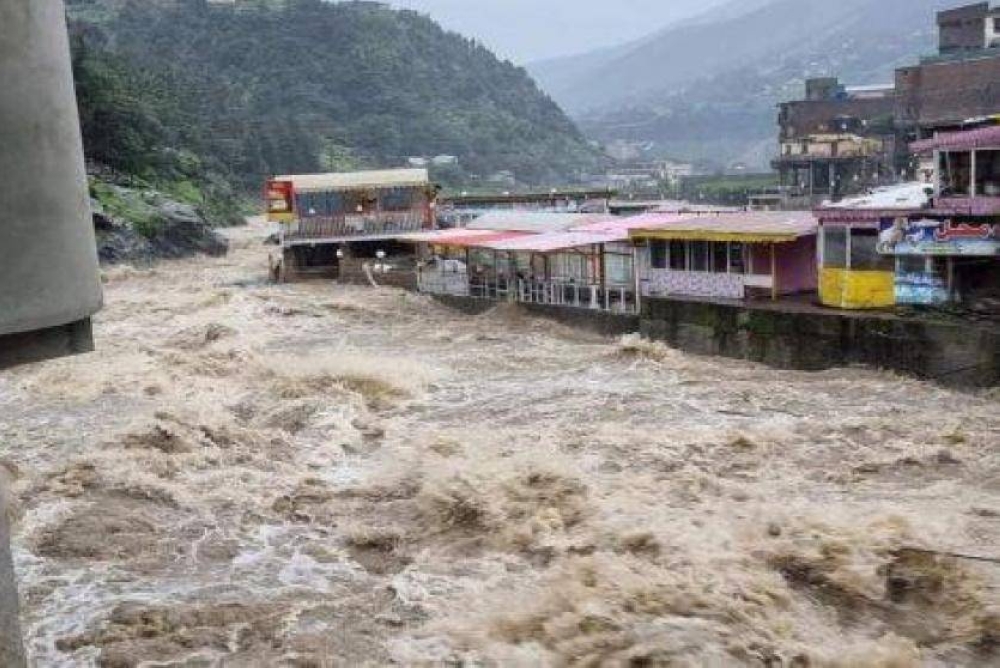
أعلنت السلطات الباكستانية اليوم (السبت) مصرع 32 شخصا، من بينهم 15 طفلا، جراء فيضانات مفاجئة اجتاحت إقليم خيبر بختونخوا في شمال غرب باكستان، بسبب أمطار غزيرة بدأت الأربعاء الماضي، وتسببت في انهيار أبنية وسيول جارفة، ما أدى إلى تدمير منازل وإغلاق طرق رئيسية، وتعطيل الحياة اليومية في المنطقة.
وأفادت هيئة إدارة الكوارث في خيبر بختونخوا بأن 9 أفراد من عائلة واحدة لقوا مصرعهم الجمعة عندما جرفت مياه نهر سوات مجموعة من السياح كانوا يتنزهون على ضفافه، بينما لا يزال 4 أفراد في عداد المفقودين.
وأوضح مدير الهيئة المحلية شهزاد مهبوب أن الأطفال كانوا يلعبون بالقرب من النهر عندما فاجأتهم السيول، وحاول أقاربهم إنقاذهم لكنهم جرفوا مع التيار، وقد تمكنت فرق الإنقاذ، التي تضم نحو 100 فرد، من إنقاذ 58 شخصا حتى الآن، وفقاً للمتحدث باسم الخدمة الطارئة شاه فهد.
وأعرب رئيس الوزراء الباكستاني شهباز شريف عن «حزنه العميق» للخسائر البشرية، ووجه السلطات بتكثيف إجراءات السلامة بالقرب من الأنهار والجداول، محذراً من استمرار الأمطار خلال الأسبوع.
وأشارت توقعات الأرصاد الجوية إلى استمرار هطول الأمطار مع اقتراب موسم الرياح الموسمية السنوية، التي تمتد عادة من يوليو إلى سبتمبر، لكنها قد تكون أقل شدة مقارنة بفيضانات 2022 التي أودت بحياة 1739 شخصا.
وتعد الفيضانات من الكوارث الطبيعية المتكررة في باكستان، خصوصاً في المناطق الجبلية الشمالية الغربية مثل خيبر بختونخوا، بسبب تضاريسها الوعرة وذوبان الأنهار الجليدية، التي تفاقمت بفعل تغير المناخ. ووفقاً لتقرير صادر عن منظمة «سيف ذا تشيلدرن» في سبتمبر 2024 لقي أكثر من 150 طفلاً حتفهم جراء الفيضانات في باكستان منذ يوليو 2024، ما يمثل أكثر من نصف الوفيات الكلية.
وشهدت باكستان فيضانات كارثية في 2022، وصفت بأنها الأسوأ في تاريخ البلاد، حيث تسببت الأمطار الموسمية الغزيرة وذوبان الأنهار الجليدية بعد موجة حر شديدة في مقتل 1739 شخصا، بينهم 647 طفلا، وإصابة 12,867 آخرين، مع تدمير 426,897 منزلا وإتلاف 1230 كيلومترا مربعا من المحاصيل، وأدت هذه الفيضانات إلى نزوح أكثر من 2.1 مليون شخص وتدمير نصف مليون رأس من الماشية، ما تسبب في أضرار اقتصادية تقدر بنحو 40 مليار دولار.
وتشير التقارير إلى أن تغير المناخ يفاقم شدة هذه الفيضانات، حيث أدى ارتفاع درجات حرارة المحيط الهندي بمقدار درجة مئوية إلى زيادة هطول الأمطار الموسمية، كما ساهمت موجات الحر في مايو ويونيو 2022 في ذوبان الأنهار الجليدية في إقليم جيلجيت-بلتستان، ما زاد من حدة السيول. ويُصنف البنك الدولي باكستان كواحدة من أكثر الدول عرضة لتغير المناخ، رغم مساهمتها بأقل من 1% من انبعاثات الغازات الدفيئة العالمية.
وأعلنت هيئة إدارة الكوارث الوطنية (NDMA) أن الفيضانات الأخيرة ألحقت أضراراً بـ1370 منزلا في خيبر بختونخوا، مع توقعات بمزيد من الأمطار في الأيام المقبلة، وتستمر جهود الإنقاذ بمشاركة الجيش الباكستاني ومنظمات دولية مثل «سيف ذا تشيلدرن»، التي قدمت المساعدة لأكثر من 1.1 مليون شخص، بينهم 568 ألف طفل، منذ فيضانات 2022.
Pakistani authorities announced today (Saturday) the death of 32 people, including 15 children, due to sudden floods that swept through the Khyber Pakhtunkhwa province in northwest Pakistan, caused by heavy rains that began last Wednesday, resulting in building collapses and flash floods, which led to the destruction of homes, the closure of main roads, and the disruption of daily life in the area.
The Khyber Pakhtunkhwa Disaster Management Authority reported that 9 members of one family died on Friday when the waters of the Swat River swept away a group of tourists who were picnicking on its banks, while 4 individuals are still missing.
Local authority director Shehzad Mehboob explained that the children were playing near the river when they were caught off guard by the floods, and their relatives tried to save them but were swept away by the current. Rescue teams, consisting of about 100 individuals, have managed to save 58 people so far, according to emergency service spokesperson Shah Fahd.
Pakistani Prime Minister Shehbaz Sharif expressed his "deep sorrow" over the loss of life and directed authorities to intensify safety measures near rivers and streams, warning of continued rain throughout the week.
Weather forecasts indicated that rainfall would continue as the annual monsoon season approaches, which typically runs from July to September, but it may be less severe compared to the 2022 floods that claimed the lives of 1,739 people.
Floods are a recurring natural disaster in Pakistan, particularly in the northwestern mountainous regions like Khyber Pakhtunkhwa, due to its rugged terrain and glacial melt, exacerbated by climate change. According to a report by Save the Children in September 2024, more than 150 children have died due to floods in Pakistan since July 2024, accounting for more than half of the total fatalities.
Pakistan experienced catastrophic floods in 2022, described as the worst in the country's history, where heavy monsoon rains and glacial melt after a severe heatwave resulted in the deaths of 1,739 people, including 647 children, and injured 12,867 others, with 426,897 homes destroyed and 1,230 square kilometers of crops damaged. These floods displaced more than 2.1 million people and destroyed half a million livestock, causing economic damages estimated at around $40 billion.
Reports indicate that climate change is exacerbating the severity of these floods, as a one-degree Celsius rise in Indian Ocean temperatures has increased monsoon rainfall, and heatwaves in May and June 2022 contributed to glacial melt in the Gilgit-Baltistan region, intensifying the floods. The World Bank classifies Pakistan as one of the most vulnerable countries to climate change, despite contributing less than 1% of global greenhouse gas emissions.
The National Disaster Management Authority (NDMA) announced that the recent floods have damaged 1,370 homes in Khyber Pakhtunkhwa, with forecasts of more rain in the coming days, and rescue efforts continue with the participation of the Pakistani army and international organizations like Save the Children, which has provided assistance to more than 1.1 million people, including 568,000 children, since the 2022 floods.