أثار الاتحاد الدولي لكرة القدم (فيفا) والمجلس الدولي لكرة القدم (IFAB) جدلًا واسعًا عقب انتهاء كأس العالم 2026، بعد اختلاف وجهتي النظر بشأن إحدى الحالات التحكيمية التي شهدتها البطولة، والمتعلقة بتطبيق بروتوكول حكم الفيديو المساعد (VAR) في حالات (الهوية الخاطئة).
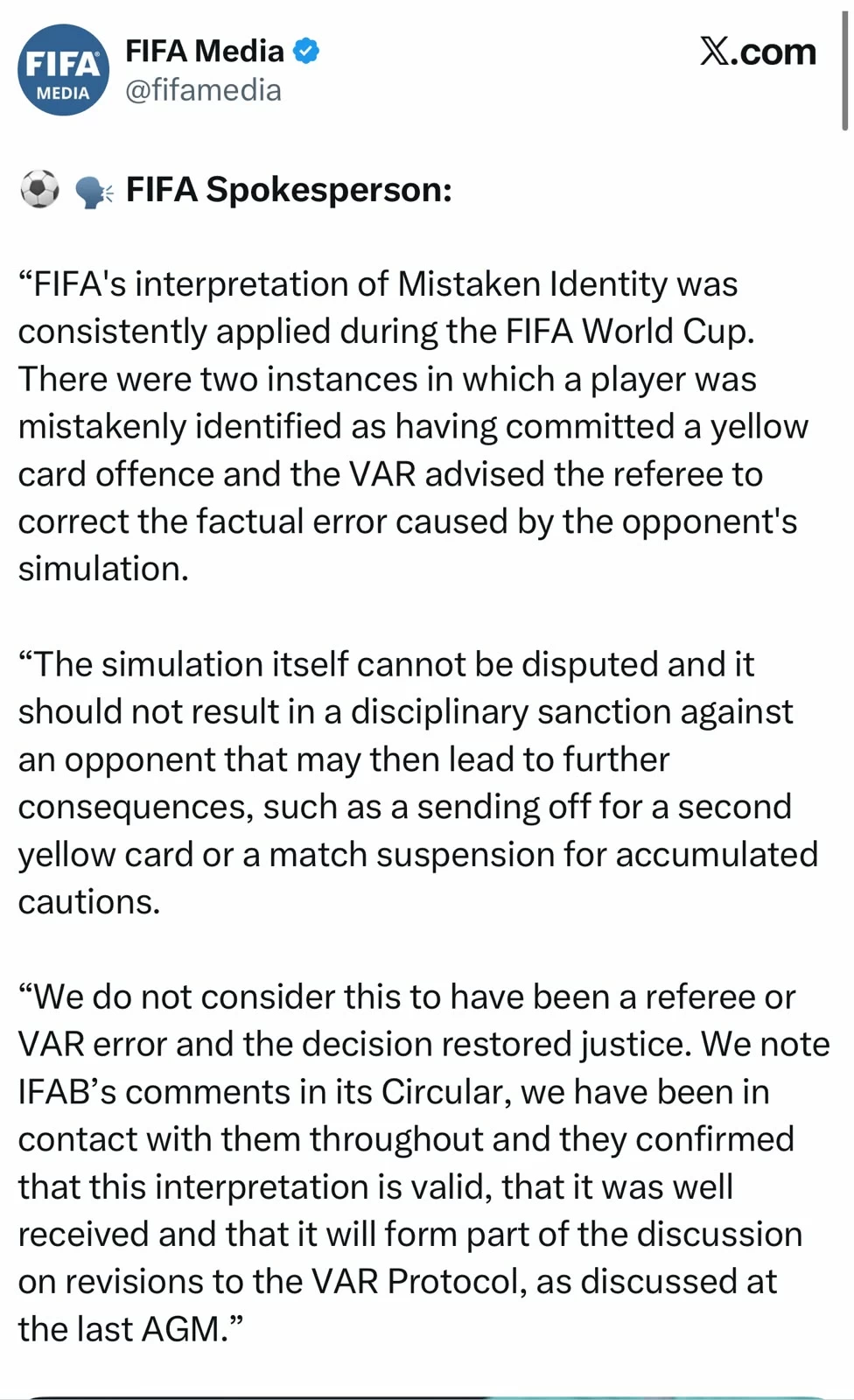
وأكد فيفا، في بيان رسمي، أن تفسيره للحالة طُبق بشكل متسق طوال البطولة، مشيرًا إلى وقوع حالتين تم خلالهما توجيه بطاقة صفراء إلى لاعب بالخطأ، قبل أن يتدخل حكم الفيديو المساعد لإبلاغ حكم الساحة بوجود خطأ في تحديد هوية اللاعب، بعدما تبين أن الواقعة نتجت عن تمثيل من لاعب الفريق المنافس. واعتبر الفيفا أن هذا الإجراء أعاد العدالة إلى المباراة، مؤكدًا أنه لا يرى في ذلك أي خطأ تحكيمي أو تقني من الحكم أو من حكم الفيديو.
وأضاف الفيفا أنه كان على تواصل مع IFAB طوال فترة البطولة، وأن الأخير أبدى ترحيبه بهذا التفسير، كما أكد أن المسألة ستكون ضمن النقاشات الخاصة بمراجعة بروتوكول الفار مستقبلًا.
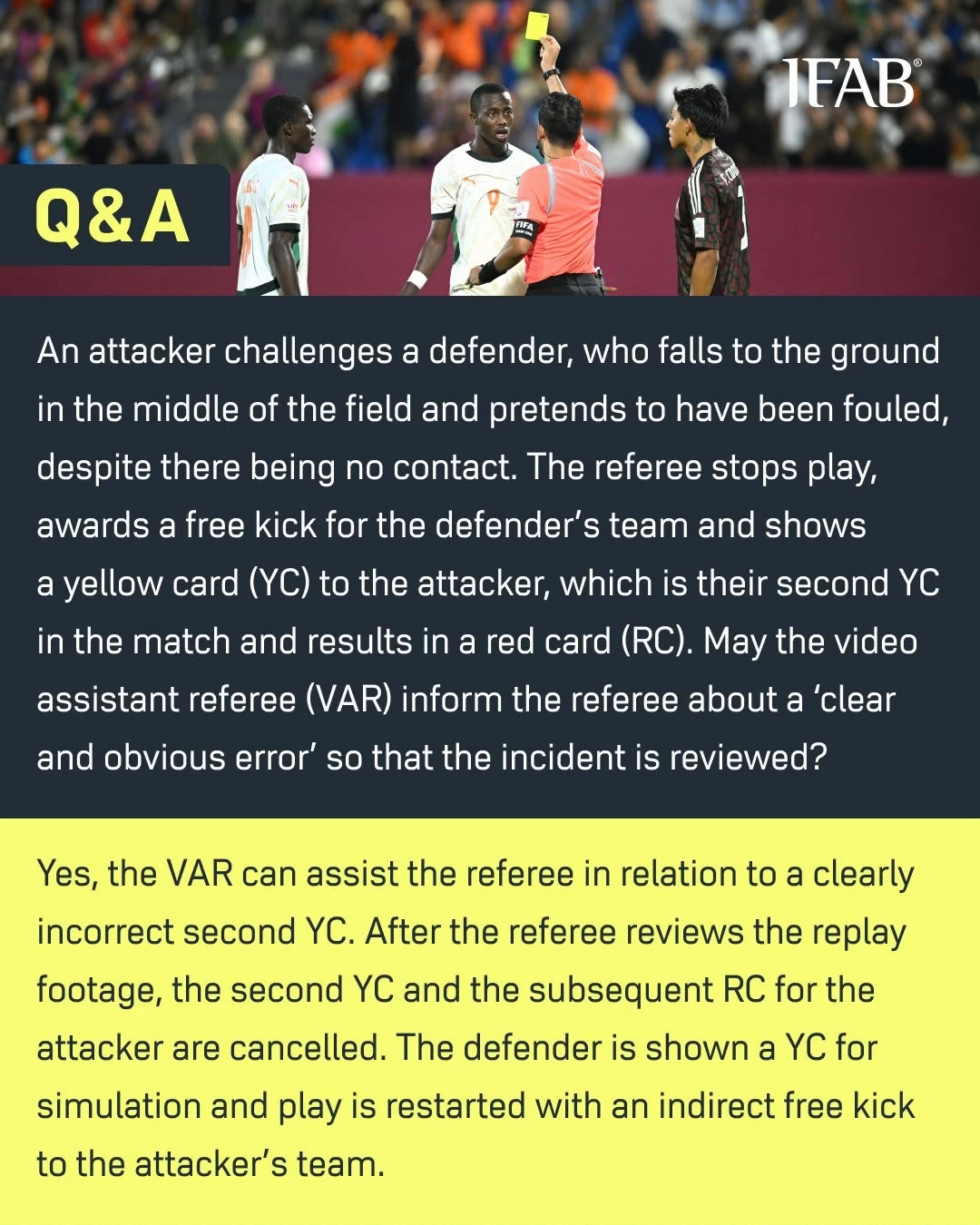
في المقابل، أصدر «IFAB» تعميمًا أوضح فيه أن بروتوكول حكم الفيديو المساعد بصيغته الحالية لا يسمح بمراجعة نوع المخالفة نفسها، وإنما يقتصر فقط على تصحيح هوية اللاعب المعاقب إذا ثبت أن البطاقة أُشهرت للاعب غير مرتكب المخالفة. وبذلك، فإن تغيير قرار يتعلق بطبيعة الواقعة – مثل تحويل مخالفة تستوجب بطاقة إلى حالة تمثيل – لا يندرج ضمن الصلاحيات الحالية للبروتوكول.
ورغم هذا الاختلاف، لم يغلق المجلس الدولي الباب أمام تطوير القانون، إذ أشار إلى أن تفسير الفيفا سيُناقش ضمن المراجعة القادمة لبروتوكول الفار، تمهيدًا لدراسة إمكانية إدراجه رسميًا في المستقبل.
ويفتح هذا التباين الباب أمام نقاش أوسع حول حدود تدخل تقنية الفيديو، بين الالتزام الحرفي ببروتوكولها الحالي، وبين السعي إلى تحقيق العدالة حتى وإن استلزم ذلك توسيع صلاحياتها في النسخ القادمة من قوانين اللعبة.
The International Football Federation (FIFA) and the International Football Association Board (IFAB) sparked widespread controversy following the conclusion of the 2026 World Cup, after differing viewpoints emerged regarding one of the refereeing incidents witnessed during the tournament, related to the application of the Video Assistant Referee (VAR) protocol in cases of (wrong identity).
FIFA confirmed in an official statement that its interpretation of the incident was applied consistently throughout the tournament, noting that there were two instances in which a yellow card was mistakenly issued to a player, before the Video Assistant Referee intervened to inform the on-field referee of an error in identifying the player, after it became clear that the incident resulted from simulation by a player of the opposing team. FIFA considered this action to have restored fairness to the match, asserting that it sees no refereeing or technical error on the part of the referee or the Video Assistant Referee.
FIFA added that it was in communication with IFAB throughout the tournament, and that the latter welcomed this interpretation, also confirming that the matter would be part of discussions regarding the future review of the VAR protocol.
In contrast, IFAB issued a circular clarifying that the current form of the Video Assistant Referee protocol does not allow for a review of the type of foul itself, but is limited to correcting the identity of the penalized player if it is proven that the card was shown to a player who did not commit the foul. Thus, changing a decision related to the nature of the incident – such as converting a foul that warrants a card into a simulation case – does not fall within the current powers of the protocol.
Despite this disagreement, the International Board did not close the door on the development of the law, as it indicated that FIFA's interpretation would be discussed in the upcoming review of the VAR protocol, in preparation for studying the possibility of officially incorporating it in the future.
This discrepancy opens the door to a broader discussion about the limits of video technology intervention, between strict adherence to its current protocol and the pursuit of achieving justice, even if that requires expanding its powers in future versions of the game’s laws.