


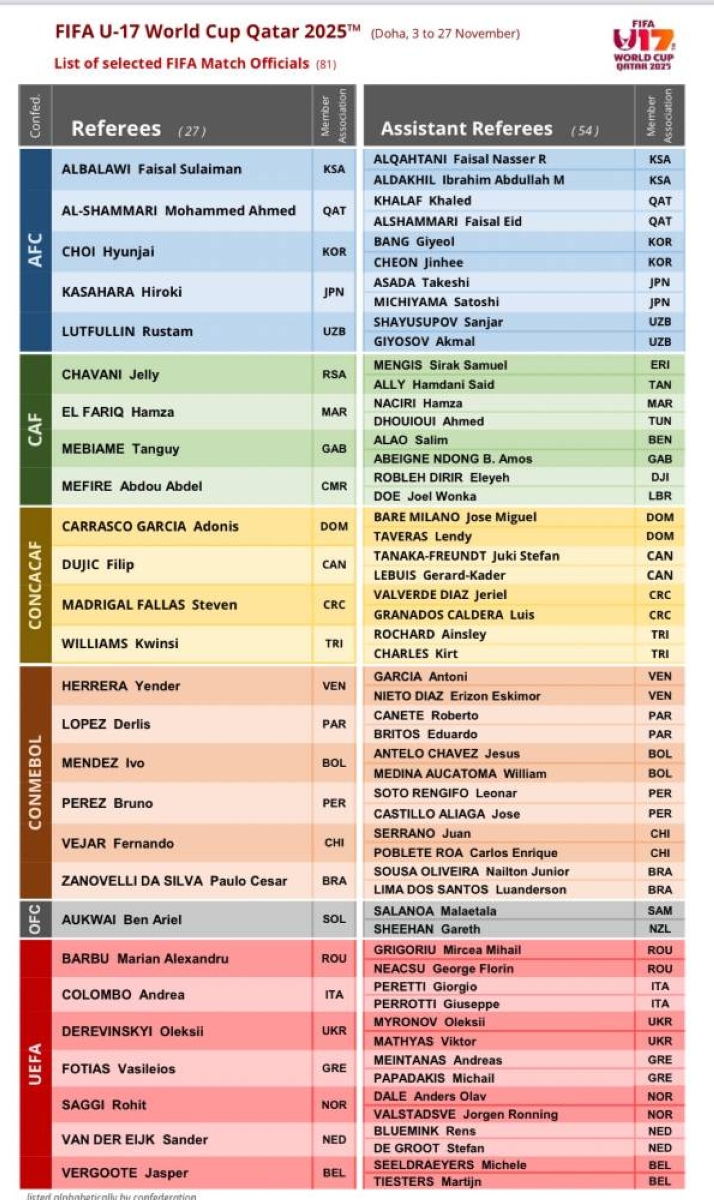
أعلنت لجنة التحكيم لدى الاتحاد الدولي لكرة القدم (فيفا) قائمة الحكام الذين سيُديرون مباريات بطولة كأس العالم تحت 17 سنة التي ستقام في قطر بين 3 و27 نوفمبر، وتعد هذه البطولة هي النسخة الموسعة الأولى التي تشمل مشاركة 48 منتخباً.
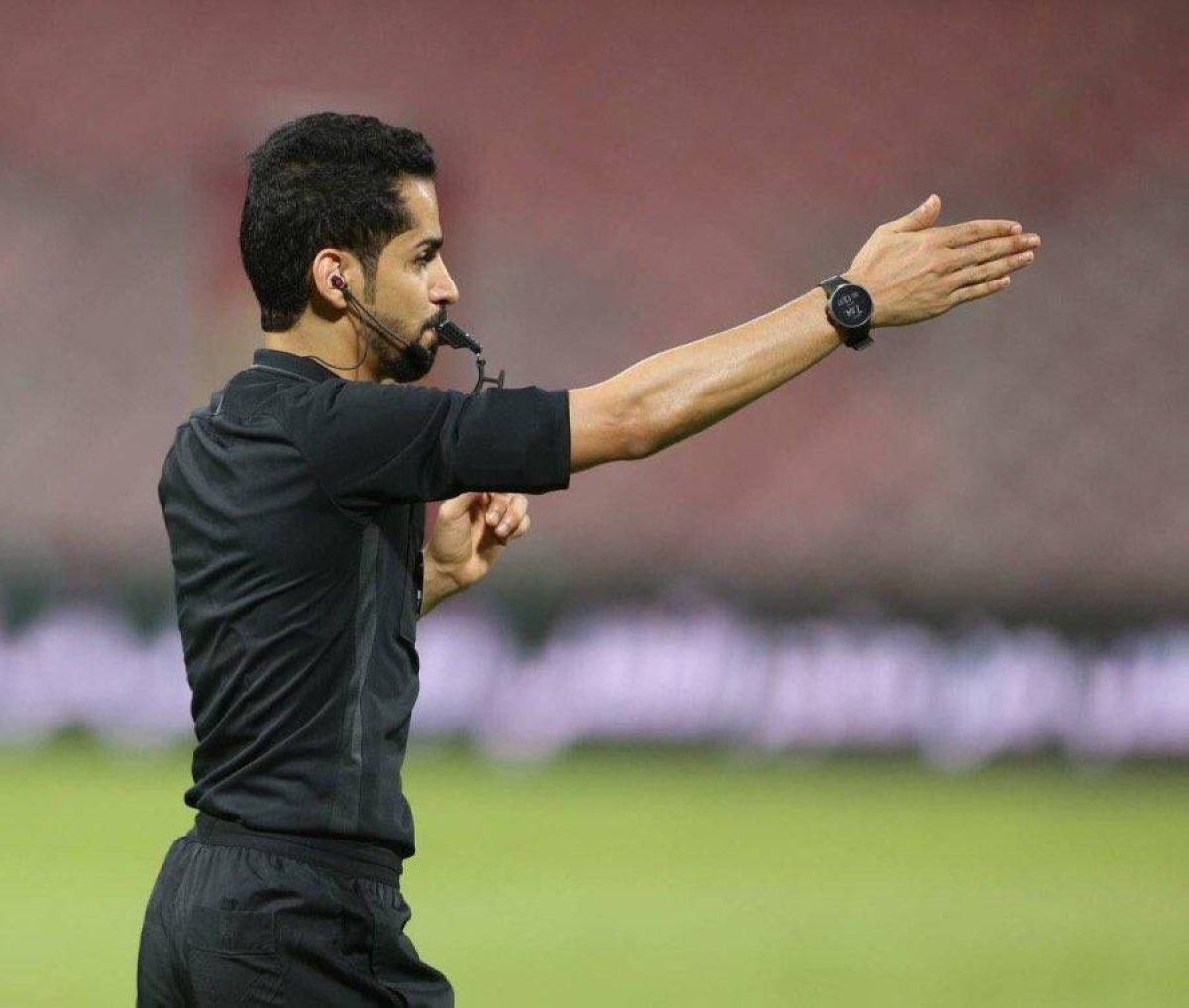
ويبلغ العدد الإجمالي للحُكام 81 (27 حكم ساحة، و54 حكماً مساعداً) من 35 اتحاداً وطنياً، وتم اختيار الحكم الدولي فيصل البلوي حكم ساحة، وكذلك تم اختيار فيصل القحطاني وإبراهيم الدخيل حكمين مساعدين.
وبهذه المناسبة، قال رئيس لجنة حكام FIFA بييرلويجي كولينا: «ستكون نسخة هذا العام من كأس العالم تحت 17 سنة FIFA بطولة تاريخية نظراً إلى كونها تشهد مشاركة نجوم الغد، وستمنح الحكام الموهوبين فرصة ممتازة لصقل خبراتهم في أجواء تنافسية. كما ستكون فرصة إضافية بالنسبة لنا كي نختبر نظام الفيديو المساعِد، والبناء على الخلاصات التي توصلنا إليها في السابق».
من جهته، قال مدير قسم التحكيم لدى FIFA ماسيمو بوساكا: «اخترنا مجموعة من الحكام الذين سيستفيدون من هذه التجربة الجديدة، ولديهم ما يؤهلهم للتحكيم في بطولات FIFA المستقبلية. يتماشى هذا مع هدفنا المتمثل بإعداد جيل جديد من الحكام المؤهَّلين على مستوى عالٍ».
يُذكر أنه تم تجريب نظام الفيديو المساعِد العام الماضي خلال بطولتي كأس العالم للسيدات تحت 20 سنة FIFA™ في كولومبيا وكأس العالم للسيدات تحت 17 سنة FIFA™ في جمهورية الدومنيكان. وقد تم التأكد على أنه سيتم اختباره مجدداً هذا العام في بطولتي كأس العالم تحت 20 سنة FIFA™ في تشيلي، وكأس العالم للسيدات تحت 17 سنة FIFA المغرب FIFA™، إضافة إلى قطر 2025.
وقد جرت الاختبارات على نظام الفيديو المساعِد إثر تلقي الاتحاد الدولي للعبة عدة طلبات من الاتحادات الوطنية لتوفير طريقة بديلة غير مكلفة لدعم الحكام تكنولوجياً. ولذلك، طوَّر هذا النظام الذي يختلف عن نظام التحكيم بمساعدة الفيديو بأنه لا يحتاج إلى حُكام فيديو، وبالتالي لا يتحقق من كافة الحالات التي قد تغير مسار المباراة.
وبالتالي تقع المسؤولية على مدربَي الفريقين، اللذين يُسمح لكل منهما بتقديم عدد محدد من طلبات المراجعة في المباراة الواحدة في حال اعتقادهما بحصول خطأ واضح مثل تلك المتعلقة بالأهداف وضربات الجزاء ورفع البطاقة الحمراء دون إنذار سابق والخطأ في تحديد هوية اللاعبين واللاعبات. كما يمكن للاعبين واللاعبات التواصل مع مدربهم/مدربتهم لطلب مراجعة.
بقيادة فيصل البلوي.. «فيفا» يختار 3 سعوديين لضبط مباريات مونديال الناشئين
21 أغسطس 2025 - 20:08
|
آخر تحديث 21 أغسطس 2025 - 20:08


تابع قناة عكاظ على الواتساب
صالح عابد الحربي (جدة) Saleh_okaz@
The FIFA Disciplinary Committee announced the list of referees who will officiate the matches of the Under-17 World Cup, which will be held in Qatar from November 3 to 27. This tournament is the first expanded version to include the participation of 48 teams.
The total number of referees is 81 (27 center referees and 54 assistant referees) from 35 national federations. International referee Faisal Al-Balawi has been selected as a center referee, along with Faisal Al-Qahtani and Ibrahim Al-Dakheel as assistant referees.
On this occasion, FIFA Referees Committee Chairman Pierluigi Collina said, “This year’s edition of the FIFA U-17 World Cup will be a historic tournament as it features the stars of tomorrow, and it will provide talented referees with an excellent opportunity to hone their skills in a competitive environment. It will also be an additional opportunity for us to test the Video Assistant Referee system and build on the conclusions we reached previously.”
For his part, FIFA Refereeing Director Massimo Busacca stated, “We have selected a group of referees who will benefit from this new experience and are qualified to officiate in future FIFA tournaments. This aligns with our goal of preparing a new generation of highly qualified referees.”
It is worth noting that the Video Assistant Referee system was tested last year during the FIFA U-20 Women’s World Cup in Colombia and the FIFA U-17 Women’s World Cup in the Dominican Republic. It has been confirmed that it will be tested again this year in the FIFA U-20 World Cup in Chile and the FIFA U-17 Women’s World Cup in Morocco, in addition to Qatar 2025.
The tests on the Video Assistant Referee system came after the FIFA received several requests from national federations to provide a cost-effective alternative to support referees technologically. Therefore, this system was developed, which differs from the Video Assistant Referee system in that it does not require video referees, and thus does not review all situations that may change the course of the match.
Consequently, the responsibility lies with the coaches of both teams, each of whom is allowed to submit a limited number of review requests in a single match if they believe a clear error has occurred, such as those related to goals, penalty kicks, issuing a red card without a prior warning, and mistakes in identifying players. Players can also communicate with their coach to request a review.
The total number of referees is 81 (27 center referees and 54 assistant referees) from 35 national federations. International referee Faisal Al-Balawi has been selected as a center referee, along with Faisal Al-Qahtani and Ibrahim Al-Dakheel as assistant referees.
On this occasion, FIFA Referees Committee Chairman Pierluigi Collina said, “This year’s edition of the FIFA U-17 World Cup will be a historic tournament as it features the stars of tomorrow, and it will provide talented referees with an excellent opportunity to hone their skills in a competitive environment. It will also be an additional opportunity for us to test the Video Assistant Referee system and build on the conclusions we reached previously.”
For his part, FIFA Refereeing Director Massimo Busacca stated, “We have selected a group of referees who will benefit from this new experience and are qualified to officiate in future FIFA tournaments. This aligns with our goal of preparing a new generation of highly qualified referees.”
It is worth noting that the Video Assistant Referee system was tested last year during the FIFA U-20 Women’s World Cup in Colombia and the FIFA U-17 Women’s World Cup in the Dominican Republic. It has been confirmed that it will be tested again this year in the FIFA U-20 World Cup in Chile and the FIFA U-17 Women’s World Cup in Morocco, in addition to Qatar 2025.
The tests on the Video Assistant Referee system came after the FIFA received several requests from national federations to provide a cost-effective alternative to support referees technologically. Therefore, this system was developed, which differs from the Video Assistant Referee system in that it does not require video referees, and thus does not review all situations that may change the course of the match.
Consequently, the responsibility lies with the coaches of both teams, each of whom is allowed to submit a limited number of review requests in a single match if they believe a clear error has occurred, such as those related to goals, penalty kicks, issuing a red card without a prior warning, and mistakes in identifying players. Players can also communicate with their coach to request a review.


