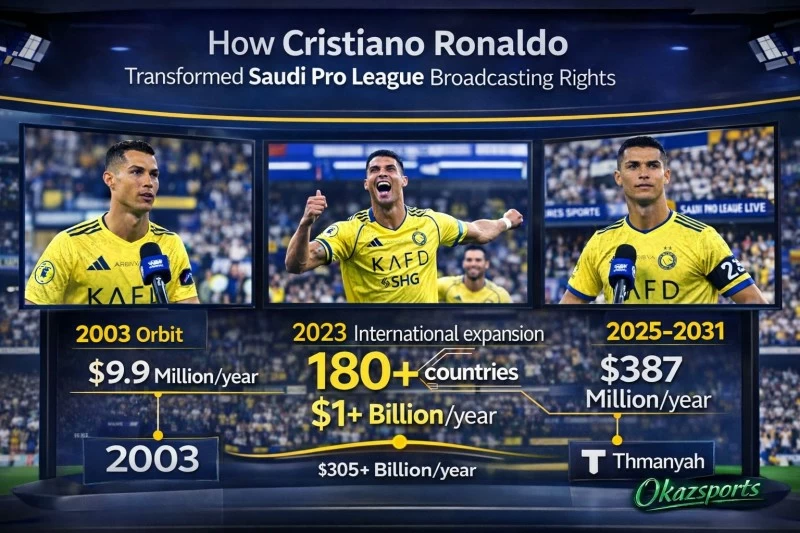
شهدت حقوق النقل التلفزيوني للدوري السعودي خلال عقدين تحولًا اقتصاديًا يعكس انتقال المنتج الكروي من نطاق جماهيري محلي إلى صناعة إعلامية ذات امتداد دولي. الأرقام التاريخية تكشف مسارًا تصاعديًا واضحًا في تسعير المحتوى الرياضي، مدفوعًا بتغيرات الاستثمار، وتوسع المنصات الرقمية، وارتفاع الطلب العالمي على الدوريات الناشئة.
في عام 2003 بلغت قيمة حقوق النقل نحو 29.7 مليون ريال لـ3 مواسم عبر شبكة أوربت، بمتوسط سنوي 9.9 مليون ريال. المرحلة التالية بين 2006 و2011 سجلت قفزة إلى 300 مليون ريال عبر ART، بمتوسط 60 مليون ريال سنويًا، ما عكس توسع قاعدة المشاهدة داخل المنطقة العربية.
عام 2014 دخل الدوري مرحلة الاقتصاد الإعلامي طويل الأمد عبر اتفاقية MBC بقيمة 4.1 مليار ريال لـ10 أعوام، بمتوسط 410 ملايين ريال سنويًا، وهو مستوى قريب من الدوريات الأوروبية المتوسطة في تلك الفترة. لاحقًا رفعت STC في 2018 قيمة السوق إلى 6.6 مليار ريال، بمتوسط 660 مليون ريال سنويًا، متجاوزة عدة مسابقات آسيوية وأفريقية من حيث القيمة التجارية للبث.
التحول الهيكلي بدأ مع موسم 2023 عقب وصول كريستيانو رونالدو إلى نادي النصر. توسعت خريطة النقل إلى أكثر من 180 دولة عبر شبكات أوروبية وأمريكية وآسيوية، مع ارتفاع الطلب على الحقوق الدولية بنسبة تقديرية قاربت 35٪ خلال موسم واحد. سوق البث الخارجي أصبح عنصرًا رئيسيًا في معادلة الإيرادات، إلى جانب الاشتراكات الرقمية والمنصات المباشرة.
مقارنة عالمية تظهر تمركز الدوري السعودي ضمن فئة الدوريات الصاعدة اقتصاديًا؛ متوسط حقوق النقل السنوي يقترب من مستويات الدوري البرتغالي والدوري الهولندي، مع معدل نمو أسرع نتيجة الاستثمار السيادي، وقوة العلامات التجارية للأندية، واتساع الانتشار الجماهيري العالمي.
الاتفاقية الحديثة الممتدة حتى 2031 بقيمة 2.32 مليار ريال تؤكد انتقال القيمة من مجرد نقل مباريات إلى اقتصاد محتوى متكامل يشمل الإنتاج الرقمي، والإعلانات المدمجة، وحقوق المقاطع القصيرة، والتوزيع عبر المنصات متعددة الشاشات.
النتيجة الاقتصادية تشير إلى دخول الدوري السعودي مرحلة إعادة تسعير عالمية، حيث تحولت المنافسة من نطاق رياضي إلى تنافس على سوق المشاهدة الدولية، في نموذج يعيد رسم موقع المنطقة داخل صناعة الإعلام الرياضي العالمي.
The television broadcasting rights for the Saudi league have witnessed an economic transformation over two decades, reflecting the shift of the football product from a local audience scope to an international media industry. Historical figures reveal a clear upward trajectory in the pricing of sports content, driven by changes in investment, the expansion of digital platforms, and the rising global demand for emerging leagues.
In 2003, the value of broadcasting rights was approximately 29.7 million riyals for 3 seasons through Orbit Network, averaging 9.9 million riyals annually. The next phase between 2006 and 2011 saw a leap to 300 million riyals through ART, with an average of 60 million riyals per year, reflecting the expansion of the viewing base within the Arab region.
In 2014, the league entered a long-term media economy phase through an MBC agreement worth 4.1 billion riyals for 10 years, averaging 410 million riyals annually, a level close to that of mid-tier European leagues at that time. Later, STC raised the market value in 2018 to 6.6 billion riyals, averaging 660 million riyals annually, surpassing several Asian and African competitions in terms of broadcasting commercial value.
The structural transformation began with the 2023 season following Cristiano Ronaldo's arrival at Al Nassr Club. The broadcasting map expanded to over 180 countries through European, American, and Asian networks, with the demand for international rights rising by an estimated 35% within a single season. The external broadcasting market has become a key element in the revenue equation, alongside digital subscriptions and direct platforms.
A global comparison shows the Saudi league positioned within the category of economically rising leagues; the average annual broadcasting rights are approaching the levels of the Portuguese and Dutch leagues, with a faster growth rate due to sovereign investment, the strength of club brands, and the broadening of global audience reach.
The recent agreement extending until 2031, valued at 2.32 billion riyals, confirms the transition of value from merely broadcasting matches to a comprehensive content economy that includes digital production, integrated advertising, short clip rights, and distribution across multi-screen platforms.
The economic outcome indicates that the Saudi league has entered a phase of global repricing, where competition has shifted from a sports scope to a competition for the international viewing market, in a model that redefines the region's position within the global sports media industry.