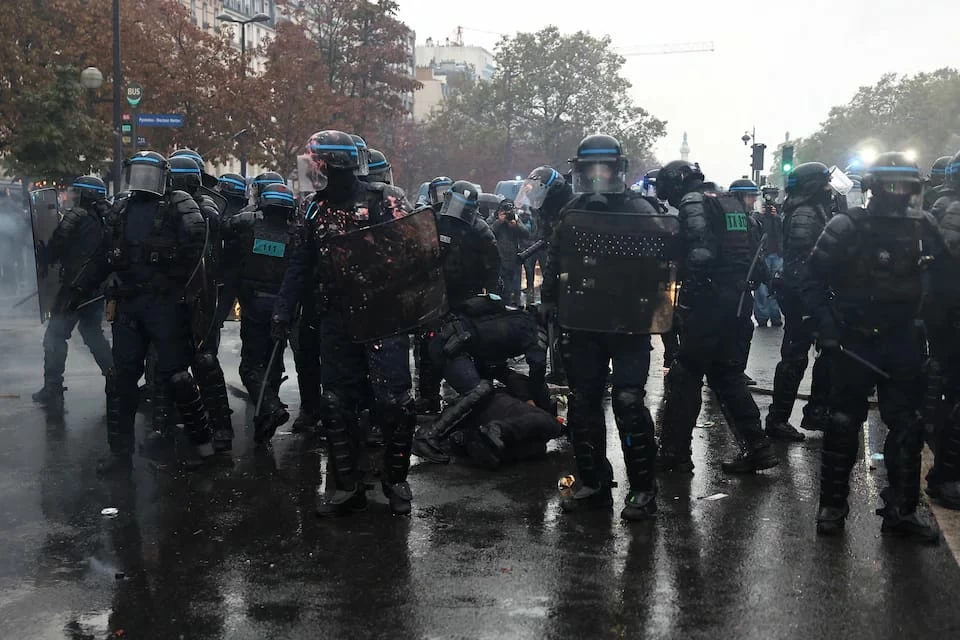
تستعد فرنسا لموجة جديدة من الاحتجاجات والاضطرابات، مع إعلان السلطات نشر 70 ألف شرطي في مختلف أنحاء البلاد، اليوم (السبت)، لتأمين المظاهرات المرتقبة التي تأتي وسط تصاعد الغضب الشعبي بسبب ارتفاع تكاليف المعيشة وتراجع الخدمات العامة، والاعتراض على سياسات حكومة الرئيس إيمانويل ماكرون.
وتتزامن الاحتجاجات، التي تأتي في يوم عيد الهالوين، مع مخاوف من تكرار أعمال الشغب والنهب التي شهدتها مدن فرنسية قبل أسبوعين، وفاجأت قوات الأمن وأسفرت عن تضرر متاجر ومبانٍ عامة ومنشآت تجارية في مناطق مختلفة من البلاد.
وتعهد وزير الداخلية الفرنسي لوران نونيز بمنع تكرار تلك الأحداث، مؤكداً أن الأجهزة الأمنية ستتعامل بحزم مع أي أعمال عنف أو إخلال بالنظام العام.
وقال نونيز، خلال مؤتمر صحفي في وقت سابق من الأسبوع، إن السلطات وضعت جميع أجهزتها في حالة استعداد لضمان «استجابة شديدة الحزم لأي اضطرابات»، واصفاً يوم الاحتجاجات بأنه يحمل «مخاطر مرتفعة للغاية».
وتراقب السلطات أيضاً احتمال استغلال بعض مثيري الشغب أقنعة الهالوين لإخفاء هوياتهم، فيما أشار وزير الداخلية إلى أن القوانين الفرنسية تسمح بالفعل للشرطة بمنع تغطية الوجوه عندما يكون النظام العام معرضاً للخطر.
وفي تحذير للمسافرين، دعت السفارة الأمريكية في فرنسا مواطنيها إلى تجنب المناطق التي تشهد مظاهرات أو تجمعات حاشدة.
أزمة المعيشة والديون تشعل الشارع الفرنسي
وتصاعدت الاحتجاجات منذ أواخر سبتمبر الماضي، بالتزامن مع بدء حكومة ماكرون، التي لا تحظى بأغلبية برلمانية، مناقشات ميزانية عام 2027، في وقت تواجه فيه البلاد أزمة مالية متفاقمة، مع اقتراب الدين العام من 120% من الناتج الاقتصادي، وارتفاع تكاليف الاقتراض.
وتواجه الحكومة ضغوطاً متزايدة لخفض الإنفاق العام، وهو ما يحد من قدرتها على تقديم تنازلات مالية لاحتواء الغضب الشعبي.
وانضم طلاب غاضبون من تدهور أوضاع العديد من المدارس، واكتظاظ الفصول الدراسية، وما يعتبرونه نظاماً غير عادل للقبول بالجامعات، إلى النقابات العمالية وحركة «السترات الصفراء» التي عادت إلى الواجهة، للمطالبة بإجراءات تخفف أعباء المعيشة وارتفاع الأسعار.
ورغم تعهدات الحكومة بإصلاح منظومة التعليم وتخفيف تكاليف الوقود، لم تنجح هذه الوعود في تهدئة الاحتقان.
احتجاجات فرنسا تمتد إلى أكثر من 30 مدينة ألمانية
ولم تقتصر تداعيات الغضب الفرنسي على حدود البلاد، إذ ألهمت الاحتجاجات تحركات شبابية في أنحاء أوروبا، مع التخطيط لتنظيم مظاهرات في أكثر من 30 مدينة ألمانية، (السبت).
وعلى الصعيد السياسي، أسهمت الاضطرابات في تعزيز موقف زعيمة اليمين المتطرف مارين لوبان، التي تتصدر استطلاعات الرأي قبل الانتخابات الرئاسية المقررة في أبريل القادم، بينما لا تزال الشخصيات الوسطية المحتملة لخلافة ماكرون منقسمة فيما بينها.
وتأتي هذه التطورات لتضيف ضغوطاً جديدة على الاقتصاد الفرنسي، الذي أظهرت بيانات صدرت (الجمعة) أنه سجل انكماشاً بالفعل خلال الربع الثالث من العام.
خسائر تتجاوز مليار يورو.. ومتاجر فاخرة ضمن المستهدفين
وامتدت الأضرار الاقتصادية لأعمال الشغب السابقة إلى قطاع التجارة، إذ قدرت غرفة التجارة الفرنسية خسائر تجار التجزئة بأكثر من مليار يورو، أي ما يعادل نحو 1.1 مليار دولار.
وتشير تقديرات أخرى إلى أن إجمالي الخسائر قد يصل إلى ضعف هذا الرقم عند احتساب الأضرار غير المؤمّن عليها والإيرادات التي فقدتها الشركات والمتاجر.
وفي شوارع التسوق الرئيسية بالعاصمة باريس، أضاءت زينة عيد الميلاد المبكرة واجهات المتاجر المحاطة بالألواح الخشبية والحواجز الأمنية، في مشهد يعكس استمرار تداعيات الاضطرابات السابقة.
وكانت متاجر تابعة لعلامات تجارية فاخرة، من بينها «هيرميس» و«لويس فويتون» و«بربري»، ضمن المنشآت التي تعرضت للاستهداف خلال أعمال الشغب الماضية.
وفي محاولة للحد من تكرار أعمال العنف، تمضي الحكومة الفرنسية في تطبيق قانون مثير للجدل، يسمح بتحميل مثيري الشغب مسؤولية تعويضات تصل إلى 10 آلاف يورو، بما يعادل نحو 11 ألف دولار، عن الأضرار التي يتسببون فيها بشكل مباشر أو التي تتسبب فيها مجموعات يُعتبرون جزءاً منها.
لكن منظمات حقوقية وعدد من المحامين حذروا من أن هذا الإجراء قد يقوض الحق في التظاهر السلمي، ويثير تساؤلات بشأن حدود المسؤولية القانونية للأفراد عن أفعال جماعية.
France is preparing for a new wave of protests and unrest, with authorities announcing the deployment of 70,000 police officers across the country today (Saturday) to secure the anticipated demonstrations, which come amid rising public anger over the cost of living, declining public services, and opposition to the policies of President Emmanuel Macron's government.
The protests, coinciding with Halloween, raise fears of a repeat of the riots and looting that occurred in French cities two weeks ago, which surprised security forces and resulted in damage to shops, public buildings, and commercial establishments in various parts of the country.
French Interior Minister Laurent Nunez has vowed to prevent a recurrence of such events, emphasizing that security forces will respond firmly to any acts of violence or disturbances of public order.
Nunez stated during a press conference earlier this week that authorities have put all their resources on alert to ensure a "very firm response to any disturbances," describing the day of protests as carrying "extremely high risks."
Authorities are also monitoring the possibility that some rioters may use Halloween masks to conceal their identities, while the Interior Minister noted that French laws already allow police to prohibit face coverings when public order is at risk.
In a warning to travelers, the U.S. Embassy in France has urged its citizens to avoid areas experiencing protests or large gatherings.
The Cost of Living Crisis and Debt Ignite the French Streets
Protests have escalated since late September, coinciding with the start of budget discussions for 2027 by Macron's government, which lacks a parliamentary majority, at a time when the country is facing a worsening financial crisis, with public debt approaching 120% of economic output and rising borrowing costs.
The government is under increasing pressure to cut public spending, which limits its ability to make financial concessions to quell public anger.
Angry students, frustrated by the deteriorating conditions of many schools, overcrowded classrooms, and what they perceive as an unfair university admission system, have joined labor unions and the "Yellow Vests" movement, which has resurfaced, to demand measures that alleviate the burdens of living costs and rising prices.
Despite government pledges to reform the education system and ease fuel costs, these promises have failed to calm the unrest.
Protests in France Extend to Over 30 German Cities
The repercussions of French anger have not been confined to the country's borders, as the protests have inspired youth movements across Europe, with plans to organize demonstrations in more than 30 German cities on Saturday.
Politically, the unrest has bolstered the position of far-right leader Marine Le Pen, who is leading in opinion polls ahead of the presidential elections scheduled for next April, while potential centrist candidates to succeed Macron remain divided among themselves.
These developments add new pressures on the French economy, which data released on Friday indicated has already contracted during the third quarter of the year.
Losses Exceeding One Billion Euros... Luxury Stores Among the Targets
The economic damage from previous riots has extended to the retail sector, with the French Chamber of Commerce estimating retail losses at over one billion euros, equivalent to about 1.1 billion dollars.
Other estimates suggest that total losses could be double this figure when accounting for uninsured damages and the revenues lost by businesses and stores.
In the main shopping streets of Paris, early Christmas decorations illuminated the storefronts surrounded by wooden boards and security barriers, reflecting the ongoing repercussions of previous unrest.
Stores belonging to luxury brands, including "Hermès," "Louis Vuitton," and "Burberry," were among the establishments targeted during the past riots.
In an effort to curb the recurrence of violence, the French government is moving forward with a controversial law that allows for holding rioters financially responsible for damages up to 10,000 euros, equivalent to about 11,000 dollars, for damages they directly cause or that are caused by groups they are considered part of.
However, human rights organizations and several lawyers have warned that this measure could undermine the right to peaceful protest and raise questions about the legal liability of individuals for collective actions.