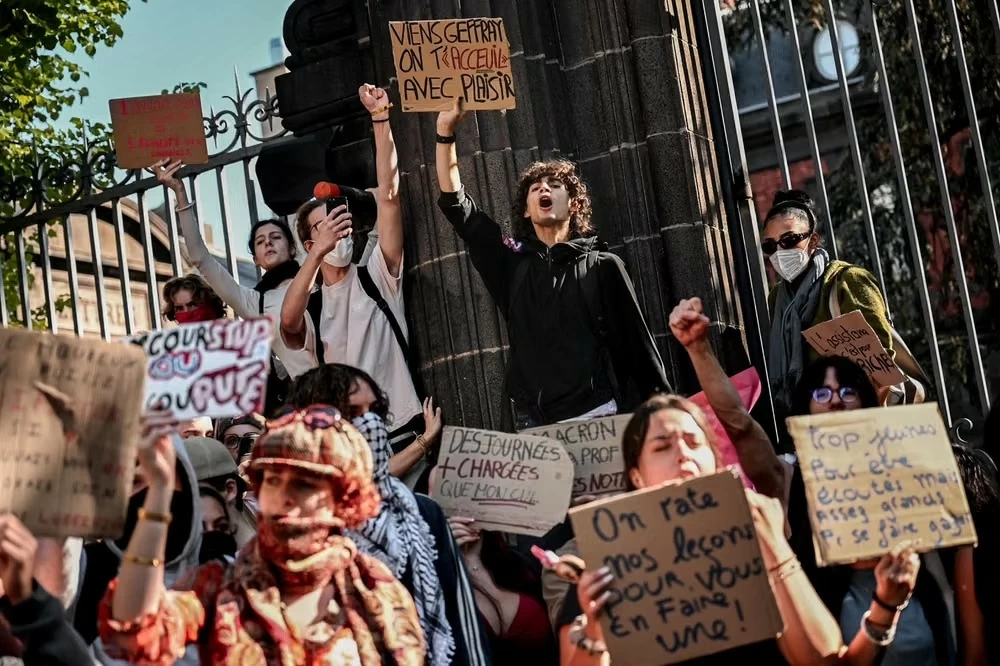
دخلت الاحتجاجات الطلابية في فرنسا، (الثلاثاء) 6 أكتوبر، مرحلة جديدة من التصعيد، مع اتساع التحركات من المدارس الثانوية إلى الجامعات، وانضمام المعلمين وأولياء الأمور والنقابات إلى المسيرات في عدد من المدن، وسط انتشار أمني ووقوع مواجهات في بعض المناطق.
891 مؤسسة تعليمية متضررة
وبحسب وزارة التعليم الفرنسية، شهدت 891 مؤسسة تعليمية تعليقًا كليًا أو جزئيًا للدروس (الثلاثاء)، بينها نحو 250 مؤسسة في منطقة إيل دو فرانس. وقدّرت وزارة الداخلية مشاركة نحو 86 ألف شخص في احتجاجات خارج باريس خلال ساعات الصباح، فيما خرجت تجمعات إضافية في العاصمة خلال فترة بعد الظهر.
وتقول اتحادات طلابية إن حجم التحرك أكبر من الأرقام الرسمية، إذ أعلنت إغلاق أو محاصرة 57 موقعًا جامعيًا، بينما تؤكد السلطات أرقامًا مختلفة بشأن نطاق الاضطرابات.
من أزمة المدارس إلى الجامعات
تركز مطالب المحتجين على نقص المدرسين، واكتظاظ الفصول، وتدهور المباني والتجهيزات، ونقص الموارد، إلى جانب الاعتراض على طول ساعات الدراسة والصعوبات المرتبطة بنظام القبول الجامعي «باركورسوپ». وأصبحت صور تسرب المياه وسوء حالة بعض المدارس ونقص التجهيزات من أبرز رموز الحركة الاحتجاجية.
مواجهات واعتقالات ترفع التوتر
ورافق التظاهرات تصعيد أمني، إذ استخدمت الشرطة الغاز المسيل للدموع في رين وستراسبورغ وليون، بعدما تحولت بعض الاحتجاجات إلى إلقاء مقذوفات وإشعال حرائق. وأعلنت السلطات توقيف أكثر من 6100 شخص منذ بدء الحركة، معظمهم من القاصرين، فيما أصيب 715 من أفراد الشرطة و215 مراهقًا، بحسب مكتب رئيس الوزراء.
وأثارت إصابة فتى يبلغ 15 عامًا بجروح خطيرة في يده، خلال حادث مرتبط بقنبلة تستخدمها الشرطة لتفريق المتظاهرين، انتقادات بشأن أساليب التعامل الأمني، في حين دافعت وزارة الداخلية عن تناسب تدخلاتها في معظم الحالات.
الحكومة تفتح باب الحوار
وفي محاولة لاحتواء التصعيد، أطلقت وزارة التعليم استشارة وطنية عبر منصة «أغورا» تستمر حتى 23 أكتوبر، ودعت جميع طلاب المرحلة الثانوية إلى تقديم شكاواهم ومقترحاتهم بصورة مجهولة. كما طلب رئيس الوزراء سيباستيان لوكورنو إعداد مقترحات بشأن تعويض المدرسين الغائبين، وإصلاح المباني، وإعادة النظر في تنظيم اليوم الدراسي قبل نهاية أكتوبر.
لكن استمرار الاحتجاجات يشير إلى أن الحكومة تواجه اختبارًا صعبًا، خصوصًا مع اقتراب الانتخابات الرئاسية القادمة وتصاعد الضغوط السياسية والاقتصادية عليها.
The student protests in France entered a new phase of escalation on Tuesday, October 6, with movements expanding from high schools to universities, and teachers, parents, and unions joining the marches in several cities, amid a heavy security presence and clashes in some areas.
891 Educational Institutions Affected
According to the French Ministry of Education, 891 educational institutions experienced a complete or partial suspension of classes on Tuesday, including about 250 institutions in the Île-de-France region. The Ministry of the Interior estimated that around 86,000 people participated in protests outside Paris during the morning hours, while additional gatherings took place in the capital during the afternoon.
Student unions claim that the scale of the movement is larger than the official figures, as they announced the closure or blockade of 57 university sites, while the authorities confirm different numbers regarding the extent of the disturbances.
From School Crisis to Universities
The protesters' demands focus on the shortage of teachers, overcrowded classrooms, deteriorating buildings and facilities, and lack of resources, alongside objections to long school hours and difficulties associated with the university admission system "Parcoursup." Images of water leaks and the poor condition of some schools and lack of facilities have become prominent symbols of the protest movement.
Clashes and Arrests Raise Tensions
The demonstrations were accompanied by heightened security measures, as police used tear gas in Rennes, Strasbourg, and Lyon, after some protests turned into throwing projectiles and starting fires. Authorities announced the arrest of more than 6,100 people since the start of the movement, most of whom are minors, while 715 police officers and 215 teenagers were injured, according to the Prime Minister's office.
The serious injury of a 15-year-old boy to his hand during an incident related to a police bomb used to disperse protesters sparked criticism regarding security handling methods, while the Ministry of the Interior defended the appropriateness of its interventions in most cases.
The Government Opens the Door for Dialogue
In an attempt to contain the escalation, the Ministry of Education launched a national consultation via the "Agora" platform that will last until October 23, inviting all high school students to submit their complaints and suggestions anonymously. Prime Minister Sébastien Lecornu also requested proposals regarding compensating absent teachers, repairing buildings, and reconsidering the organization of the school day before the end of October.
However, the continuation of the protests indicates that the government is facing a difficult test, especially with the upcoming presidential elections and increasing political and economic pressures on it.