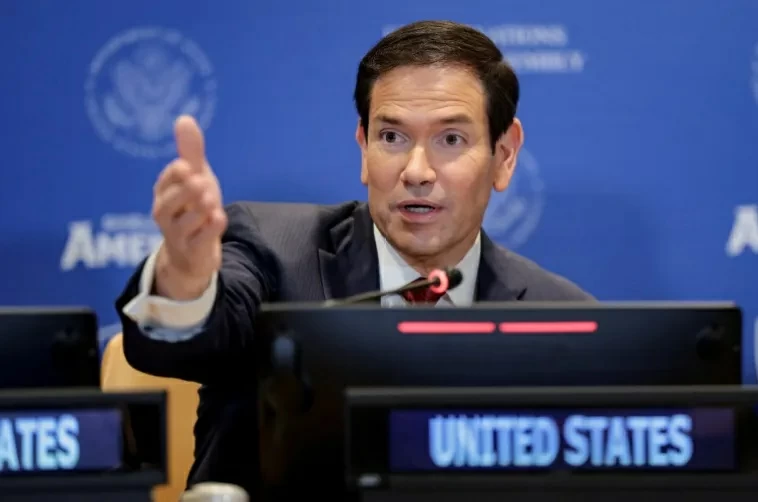
وصف وزير الخارجية الأمريكي مارك روبيو اليوم (الأربعاء) ما يرتكبه الحوثي في اليمن بـ«المشكلة العميقة»، مؤكداً أن بلاده تنسق بصورة وثيقة مع دول مجلس التعاون الخليجي.
وقال روبيو في مؤتمر صحفي: «هناك إجماع على أن ما يحدث مع الحوثيين وفي اليمن يمثل مشكلة خطيرة للغاية»، مبيناً أن هناك إجماع على أن أنشطة إيران في المنطقة خبيثة.
ولفت إلى أن المعبر الجنوبي من مضيق هرمز مفتوح، مشدداً على أن التوصل إلى اتفاق مع إيران يتطلب عملاً شاقاً على مدى فترة من الزمن.
وأضاف روبيو: سنواصل الدفاع عن المضائق وضمان بقائها مفتوحة، مؤكداً أن هناك دعماً دولياً للعقوبات الأمريكية على إيران.
وأشار إلى أن لدى ترمب عدداً من الخيارات المتاحة ومنها الخيارات العسكرية، موضحاً أن كل دول المنطقة تواجه تهديداً من وكلاء إيران.
وشدد بالقول:«إيران تعتقد أن الديمقراطيين سيربحون الانتخابات وأن الرئيس ترمب لن يتمكن من اتخاذ إجراءات ضدها»، موضحاً أن أمريكا تتصرف دائماً وفق مصلحتها الوطنية ولن تضع النظام الدولي فوق مصالحها.
ولفت إلى أن هناك إجماع مع دول الخليج على ضرورة بقاء المضائق مفتوحة وحرة دون أي هجوم.
وحول الوضع في أوكرانيا، قال روبيو: روسيا وأوكرانيا أبدتا اهتماماً بوقف إطلاق نار محدود يشمل الحبوب والطاقة، مبيناً أن الحرب في أوكرانيا لن تنتهي في ساحة المعركة وإنما عبر تسوية تفاوضية.
وأشار إلى أن التوصل لوقف محدود لإطلاق النار بين روسيا وأوكرانيا لن يكون سهلاً ومستعدون للعب دور بناء.
وجاء مؤتمر روبيو بعد دقائق من خطاب الرئيس الإيراني مسعود بزشكيان أمام الجمعية العامة للأمم المتحدة والذي شهد مغادرة الوفد الأمريكي في الجمعية.
وتحدث بزشكيان عن عدد من الجوانب وأبدى استعداده للتفاوض لكنه وضع شروطاً من ضمنها وقف التهديد، كما جدد تمسك بلاده بعرقلة الملاحة في مضيق هرمز.
U.S. Secretary of State Mark Rubio described today (Wednesday) the actions of the Houthis in Yemen as a "deep problem," affirming that his country is coordinating closely with the Gulf Cooperation Council countries.
Rubio said at a press conference: "There is a consensus that what is happening with the Houthis and in Yemen represents a very serious problem," indicating that there is agreement that Iran's activities in the region are malign.
He noted that the southern passage from the Strait of Hormuz is open, stressing that reaching an agreement with Iran requires hard work over a period of time.
Rubio added: "We will continue to defend the straits and ensure they remain open," affirming that there is international support for U.S. sanctions on Iran.
He pointed out that Trump has a number of options available, including military options, explaining that all countries in the region face a threat from Iran's proxies.
He emphasized: "Iran believes that the Democrats will win the elections and that President Trump will not be able to take action against it," clarifying that America always acts in accordance with its national interest and will not place the international order above its interests.
He noted that there is a consensus with the Gulf countries on the necessity of keeping the straits open and free from any attack.
Regarding the situation in Ukraine, Rubio said: "Russia and Ukraine have expressed interest in a limited ceasefire that includes grain and energy," indicating that the war in Ukraine will not end on the battlefield but through a negotiated settlement.
He pointed out that reaching a limited ceasefire between Russia and Ukraine will not be easy and that they are ready to play a constructive role.
Rubio's conference came just minutes after Iranian President Masoud Bezhashkian's speech before the United Nations General Assembly, during which the U.S. delegation left the assembly.
Bezhashkian spoke about several aspects and expressed his willingness to negotiate but set conditions, including stopping threats, while reiterating his country's commitment to obstruct navigation in the Strait of Hormuz.