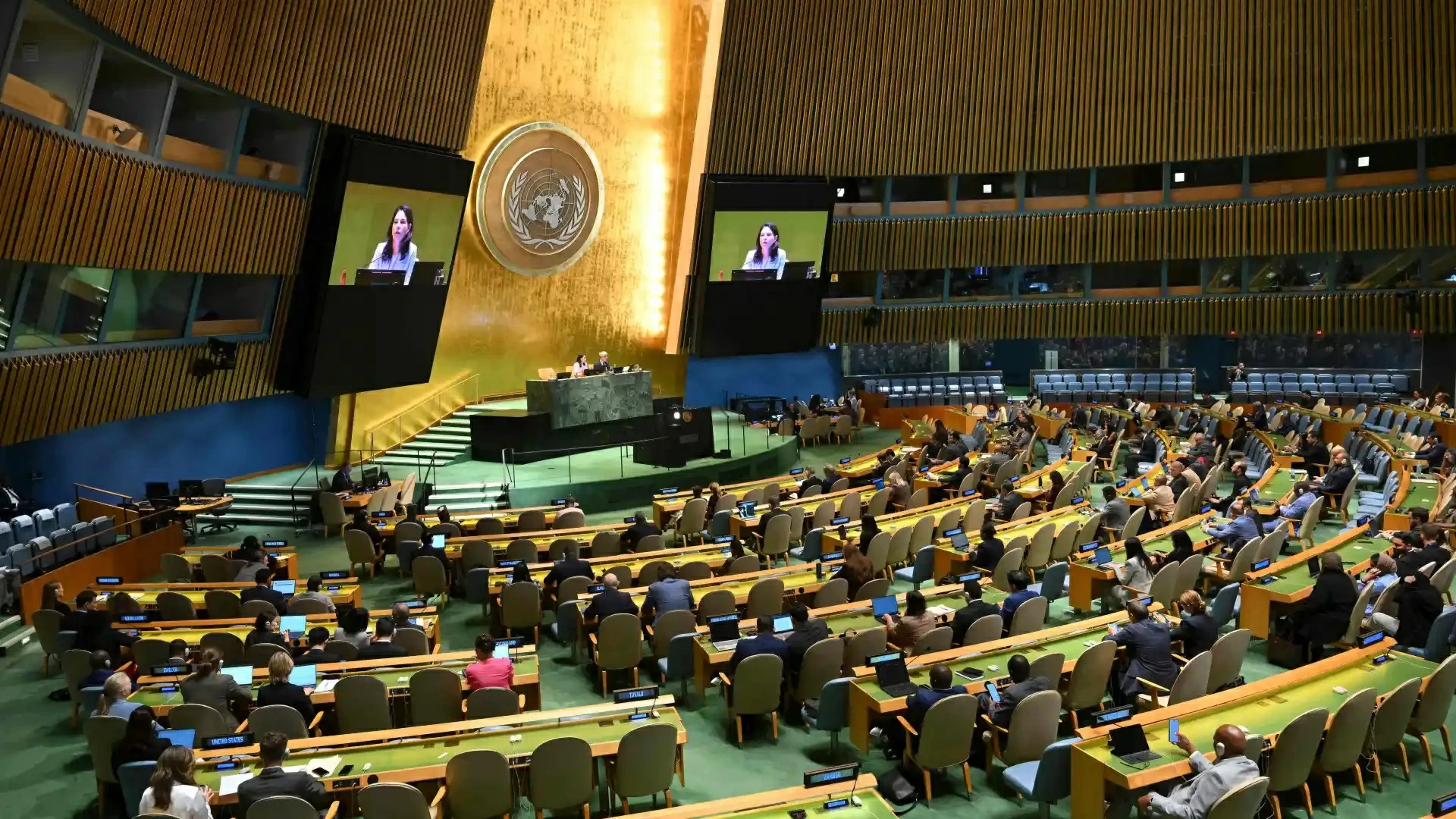
بدأ قادة العالم التوافد إلى نيويورك للمشاركة في أعمال الدورة الـ81 للجمعية العامة للأمم المتحدة، التي تنطلق اليوم (الثلاثاء)، وسط مشهد دولي أكثر اضطراباً من العام الماضي، تهيمن عليه حربا أوروبا والشرق الأوسط، وتقلبات الاقتصاد العالمي، وتغير موازين القوى الدولية.
وقال الأمين العام للأمم المتحدة أنطونيو غوتيريش إن قادة العالم يجتمعون في «حقبة تتسم بقدر عميق من عدم اليقين»، مؤكداً أن تغير موازين القوى يفرض على المؤسسات الدولية مواكبة التحولات التي يشهدها العالم.
وتتصدر الحرب بين الولايات المتحدة وإيران أجندة اجتماعات نيويورك، في ظل جمود دبلوماسي وتهديدات متبادلة بالتصعيد، فيما تتجه الأنظار إلى اللقاءات الثنائية التي قد يجريها قادة الدول على هامش اجتماعات الجمعية العامة، لبحث تداعيات الحرب وأمن الملاحة في مضيق هرمز.
وتشارك إيران بوفد أصغر من العام الماضي، يقوده الرئيس مسعود بيزشكيان، الذي يلقي كلمته أمام الجمعية العامة غداً (الأربعاء)، فيما أبدى الرئيس الأمريكي دونالد ترمب انفتاحاً على عقد لقاء مع نظيره الإيراني على هامش الاجتماعات، رغم عدم إدراج اجتماع بينهما على جدول الأعمال المعلن حتى الآن.
وبالتزامن مع ذلك، تتواصل الحرب الروسية ـ الأوكرانية دون مؤشرات على تسوية قريبة، بعد أكثر من أربعة أعوام على اندلاعها، وسط تصعيد ميداني وفشل جهود دبلوماسية متكررة في تحقيق اختراق ينهي القتال.
ولا تقتصر أزمات القادة المجتمعين في نيويورك على الحروب؛ إذ تعود مخاطر الأوبئة إلى الواجهة مع تفشي إيبولا في جمهورية الكونغو الديمقراطية وأوغندا، فيما تفرض الفيضانات والحرائق المتزايدة ملف تغير المناخ وتداعيات الاحترار العالمي على جدول النقاش الدولي.
ويرى دبلوماسيون ومسؤولون حاليون وسابقون أن الأمم المتحدة تواجه اختباراً صعباً بشأن قدرتها على التعامل مع أزمات متزامنة، في ظل تراجع التوافق الدولي حول ملفات السلام والأمن والمناخ والقانون الدولي.
وقال السفير الأمريكي السابق لدى الأمم المتحدة روبرت وود إن المنظمة الدولية تقف عند «منعطف حاسم»، مؤكداً أن المرحلة الحالية تمثل اختباراً لإمكان معالجة بعض الأزمات عبر الدبلوماسية.
وقال وزير الخارجية السلوفيني توني كايزر إن التحالفات والصداقات الدولية قابلة للتغير، فيما تبقى المصالح هي العامل الثابت، داعياً إلى التوفيق بينها بما يسمح بتجنب استمرار الصراعات.
World leaders have begun to arrive in New York to participate in the 81st session of the United Nations General Assembly, which kicks off today (Tuesday), amid a more turbulent international scene than last year, dominated by wars in Europe and the Middle East, global economic fluctuations, and shifting balances of power.
The United Nations Secretary-General António Guterres stated that world leaders are gathering in a "period characterized by a profound level of uncertainty," emphasizing that changing balances of power require international institutions to keep pace with the transformations occurring in the world.
The war between the United States and Iran tops the agenda of the meetings in New York, amid diplomatic stalemate and mutual threats of escalation, while attention is focused on the bilateral meetings that leaders may hold on the sidelines of the General Assembly to discuss the implications of the war and the security of navigation in the Strait of Hormuz.
Iran is participating with a smaller delegation than last year, led by President Masoud Pezeshkian, who will deliver his speech before the General Assembly tomorrow (Wednesday), while U.S. President Donald Trump has expressed openness to holding a meeting with his Iranian counterpart on the sidelines of the meetings, despite no meeting between them being included in the announced agenda so far.
At the same time, the Russia-Ukraine war continues with no signs of a near settlement, after more than four years since its outbreak, amid escalating ground conflict and repeated diplomatic efforts failing to achieve a breakthrough to end the fighting.
The crises facing the leaders gathered in New York are not limited to wars; the risks of pandemics are resurfacing with the outbreak of Ebola in the Democratic Republic of the Congo and Uganda, while increasing floods and fires are bringing climate change and the implications of global warming to the forefront of international discussions.
Current and former diplomats and officials believe that the United Nations is facing a tough test regarding its ability to handle simultaneous crises, amid a decline in international consensus on issues of peace, security, climate, and international law.
Former U.S. Ambassador to the United Nations Robert Wood stated that the international organization stands at a "critical juncture," emphasizing that the current phase represents a test of the possibility of addressing some crises through diplomacy.
Slovenian Foreign Minister Tanja Fajon noted that international alliances and friendships are subject to change, while interests remain the constant factor, calling for a reconciliation between them that allows for the avoidance of ongoing conflicts.