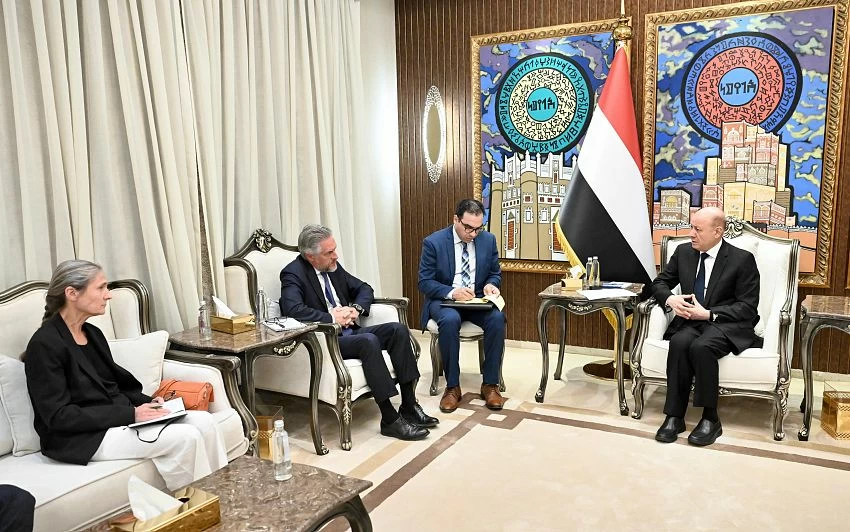
أكد رئيس مجلس القيادة الرئاسي الدكتور رشاد محمد العليمي أن الدولة اليمنية لن تتراجع عن استعادة مؤسساتها وبسط سلطتها على كامل أراضي البلاد، محذراً من محاولات تحويل باب المندب إلى «هرمز آخر»، واليمن إلى منصة ابتزاز جيوسياسي لمصلحة النظام الإيراني.
جاء ذلك خلال استقباله، اليوم (الخميس)، رئيس بعثة الاتحاد الأوروبي لدى اليمن باتريك سيمونيه، وسفيرة هولندا جانيت سيبين، حيث بحث معهما مستجدات الأوضاع المحلية والتطورات الإقليمية، ومجالات التعاون والدعم الأوروبي لليمن.
ووضع العليمي المسؤولين الأوروبيين أمام تطورات التصعيد الحوثي، خصوصاً في اتجاه باب المندب وجبهات الساحل الغربي بمحافظة تعز، مؤكداً أن الحكومة لم تبدأ جولة التصعيد الحالية، وأن مليشيا الحوثي هي التي اختارت العودة إلى العمليات العدائية، بما في ذلك مهاجمة المدنيين ومخيمات النازحين وميناء المخا والمنشآت المدنية.
وقال إن اليمن، وهو يدافع عن باب المندب وسواحله ومياهه الإقليمية، لا يحمي أمنه وسيادته فقط، بل يسهم في حماية الأمن الدولي ومصالح العالم، وتأمين أحد أهم الممرات البحرية للتجارة وإمدادات الطاقة والسلع الغذائية، داعياً إلى شراكة دولية أكثر فاعلية لتعزيز قدرة الدولة اليمنية على حماية هذا الممر الاستراتيجي.
وربط رئيس مجلس القيادة التصعيد الحوثي بـ«إستراتيجية الضغط الإيرانية الأوسع»، معتبراً أن طهران تسعى إلى نقل كلفة الضغط الدولي عليها إلى دول المنطقة، عبر تهديد منشآت الطاقة والبحر الأحمر وسلاسل الإمداد، وتحويل أزمتها مع المجتمع الدولي إلى أزمة إقليمية واقتصادية عالمية.
وشدد العليمي على ضرورة عدم التعامل مع التصعيد بمنطق مساواة المسؤوليات، قائلاً إن «من بدأ التصعيد يجب أن يسمى، ومن يهاجم يجب أن يتحمل مسؤولية التصعيد وتداعياته».
ودعا الاتحاد الأوروبي والأمم المتحدة والمانحين إلى تحرك عاجل لإغاثة النازحين ودعم السلطات المحلية، كما طالب بتشديد إجراءات منع تهريب الأسلحة والتكنولوجيا والمكونات ذات الاستخدام العسكري إلى الحوثيين، وتنفيذ قرارات مجلس الأمن ذات الصلة.
وأكد أن دعم الدولة اليمنية اقتصادياً وإنسانياً وتنموياً يمثل مدخلاً لتعزيز الاستقرار، محذراً من أن «السلام الذي يقوم على عجز الدولة واحتفاظ المليشيات بالسلاح وقرار الحرب، هو مجرد هدنة إلى الجولة التالية».
The Chairman of the Presidential Leadership Council, Dr. Rashad Mohammed Alimi, confirmed that the Yemeni state will not retreat from restoring its institutions and asserting its authority over all the country's territory, warning against attempts to turn Bab al-Mandab into a "second Hormuz," and Yemen into a platform for geopolitical blackmail in favor of the Iranian regime.
This came during his meeting today (Thursday) with the Head of the European Union Mission to Yemen, Patrick Simonnet, and the Dutch Ambassador, Janneke Snijder-Hazelhoff, where they discussed the latest developments in local situations and regional developments, as well as areas of cooperation and European support for Yemen.
Alimi presented the European officials with the developments of the Houthi escalation, particularly towards Bab al-Mandab and the fronts on the western coast in Taiz Governorate, emphasizing that the government did not initiate the current escalation, and that the Houthi militia is the one that chose to return to hostile operations, including attacking civilians, displaced persons' camps, the port of Mocha, and civilian facilities.
He stated that Yemen, while defending Bab al-Mandab and its coasts and territorial waters, is not only protecting its own security and sovereignty but also contributing to the protection of international security and global interests, securing one of the most important maritime routes for trade, energy supplies, and food commodities, calling for a more effective international partnership to enhance the Yemeni state's capacity to protect this strategic corridor.
The Chairman of the Presidential Leadership Council linked the Houthi escalation to the "broader Iranian pressure strategy," considering that Tehran seeks to transfer the cost of international pressure on it to the countries of the region by threatening energy facilities, the Red Sea, and supply chains, and turning its crisis with the international community into a regional and global economic crisis.
Alimi stressed the necessity of not treating the escalation with a logic of equal responsibilities, stating that "those who initiated the escalation should be named, and those who attack must bear the responsibility for the escalation and its repercussions."
He called on the European Union, the United Nations, and donors to take urgent action to assist the displaced and support local authorities, as well as to tighten measures to prevent the smuggling of weapons, technology, and military-use components to the Houthis, and to implement relevant Security Council resolutions.
He affirmed that supporting the Yemeni state economically, humanitarianly, and developmentally represents an entry point to enhance stability, warning that "peace based on the state's incapacity and the militias' retention of weapons and the decision of war is merely a truce until the next round."