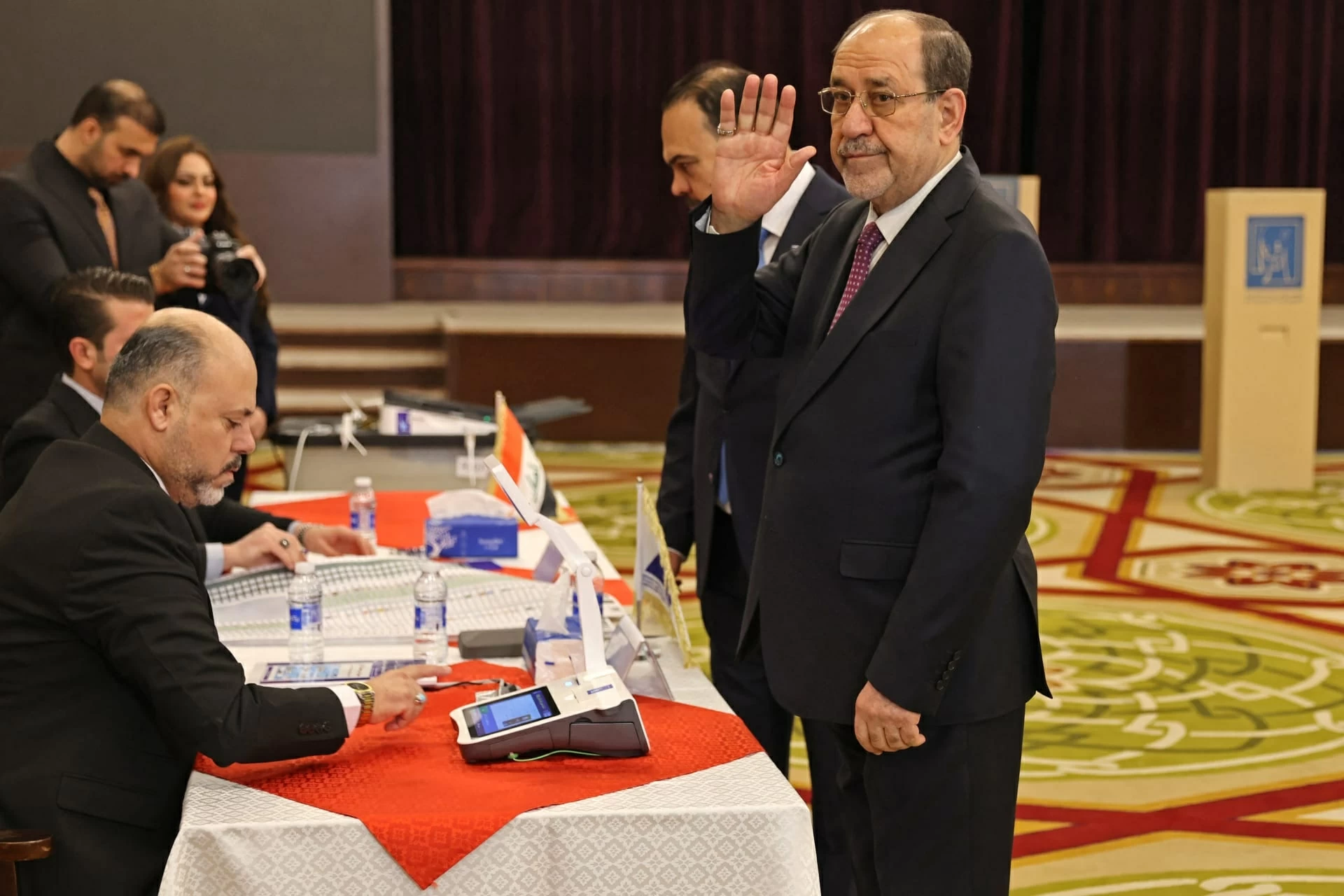
حذر رئيس ائتلاف دولة القانون نوري المالكي، اليوم (الأربعاء)، من محاولات لإشعال "حرائق" في المشهد السياسي وإرباك الواقع العراقي، مؤكداً دعم الإطار التنسيقي لاستمرار الحكومة ورفض تغييرها أو إسقاطها.
وشدد المالكي على ضرورة معالجة ملف حصر السلاح بيد الدولة بعيداً عن التصعيد أو المواجهة.
وقال المالكي خلال لقائه عدداً من المحللين والمختصين بالشأن السياسي، وفق بيان صدر عن مكتبه، إن العراق يمر بمرحلة حساسة تتطلب قدراً عالياً من الحكمة والمسؤولية، مشيراً إلى وجود محاولات لإرباك المشهد السياسي، في وقت يواصل فيه الإطار التنسيقي دعمه للحكومة حرصاً على استقرار البلاد ومصالحها العليا.
وشدد على ضرورة معالجة ملف حصر السلاح بيد الدولة بعيداً عن التصعيد أو المواجهة، محذراً من أن تحول هذا الملف إلى صدام بين الدولة والفصائل سيكون بالغ الخطورة، وقد يهدد استقرار العراق ويفتح الباب أمام مواقف سياسية متباينة.
وأكد المالكي أن أي مواجهة داخلية ستكون "خسارة للعراق بأكمله"، وليس لطرف أو مكون بعينه، معتبراً أن من يتصور أن أي صراع محتمل سيكون "شيعياً ـ شيعياً" هو واهم، لأن تداعياته ستطال الدولة والمجتمع وجميع المكونات.
وأضاف أن الحكومة والإطار التنسيقي لن يسمحا بانزلاق البلاد إلى اقتتال داخلي، داعياً إلى بلورة رؤية وطنية وإقليمية واضحة تحول دون تعرض العراق للمخاطر، وتمنع تحوله إلى ساحة لتصفية الصراعات أو تنازع المصالح الإقليمية والدولية، بما يحفظ أمنه وسيادته واستقراره.
وفي الشأن الحكومي، دعا المالكي إلى الإسراع في استكمال الكابينة الوزارية وإنهاء ملف الوزارات الشاغرة، مشيراً إلى أن رئيس الوزراء علي الزيدي لديه الرغبة ذاتها في حسم هذا الملف.
وأكد أن الإطار التنسيقي يقف إلى جانب الحكومة ويدعم استمرارها، مبيناً أن وجود ملاحظات على الأداء الحكومي لا يعني القبول بتغيير الحكومة أو إسقاطها، وإنما يستدعي معالجة جوانب الخلل وتصحيح مسار الأداء.
وشدد المالكي على أن الأولوية في المرحلة الراهنة تتمثل في الحفاظ على العراق واستقراره، ومنع أي صراع داخلي أو إقليمي من التأثير في أمنه، مؤكداً أن الحوار والتفاهم وتغليب المصلحة الوطنية تمثل الطريق الأمثل لمعالجة الملفات الخلافية وتجاوز التحديات التي تواجه البلاد.
ويعد ملف الفصائل المسلحة من أكثر الملفات حساسية أمام الحكومة العراقية، مع اقتراب موعد سبتمبر الذي حددته القوى السياسية الرئيسية سقفاً لحصر السلاح بيد المؤسسات الرسمية.
ويتزامن موعد 30 سبتمبر كذلك مع الاستحقاقات المتعلقة بإنهاء الوجود العسكري للتحالف الدولي في العراق، وهو ما تستخدمه بعض الفصائل أساساً لربط مستقبل سلاحها بانسحاب القوات الأجنبية.
The head of the State of Law Coalition, Nouri al-Maliki, warned today (Wednesday) against attempts to ignite "fires" in the political scene and to confuse the Iraqi reality, affirming the coordination framework's support for the continuation of the government and rejecting any changes or its overthrow.
Al-Maliki emphasized the necessity of addressing the issue of weapon control in the hands of the state, away from escalation or confrontation.
During his meeting with a number of analysts and specialists in political affairs, according to a statement issued by his office, al-Maliki stated that Iraq is going through a sensitive phase that requires a high degree of wisdom and responsibility, pointing to attempts to confuse the political scene, while the coordination framework continues to support the government in order to ensure the stability of the country and its higher interests.
He stressed the need to address the issue of weapon control in the hands of the state, away from escalation or confrontation, warning that turning this issue into a clash between the state and factions would be extremely dangerous and could threaten Iraq's stability and open the door to varying political positions.
Al-Maliki confirmed that any internal confrontation would be a "loss for all of Iraq," not just for one party or component, considering that those who believe any potential conflict will be "Shia against Shia" are mistaken, as its repercussions will affect the state, society, and all components.
He added that the government and the coordination framework will not allow the country to slip into internal fighting, calling for the formulation of a clear national and regional vision to prevent Iraq from facing risks and to stop it from becoming a battleground for settling conflicts or competing regional and international interests, thus preserving its security, sovereignty, and stability.
Regarding government affairs, al-Maliki called for the swift completion of the ministerial cabinet and the resolution of the vacant ministries, noting that Prime Minister Ali al-Zaydi shares the same desire to resolve this issue.
He affirmed that the coordination framework stands by the government and supports its continuation, indicating that having observations on the government's performance does not mean accepting a change or overthrow of the government, but rather requires addressing the aspects of dysfunction and correcting the performance path.
Al-Maliki stressed that the priority at this stage is to preserve Iraq and its stability, and to prevent any internal or regional conflict from affecting its security, affirming that dialogue, understanding, and prioritizing national interests represent the best way to address contentious issues and overcome the challenges facing the country.
The issue of armed factions is considered one of the most sensitive files facing the Iraqi government, with the approaching date of September, which the main political forces have set as a deadline for weapon control in the hands of official institutions.
The date of September 30 also coincides with the obligations related to ending the military presence of the international coalition in Iraq, which some factions use as a basis to link the future of their weapons to the withdrawal of foreign forces.