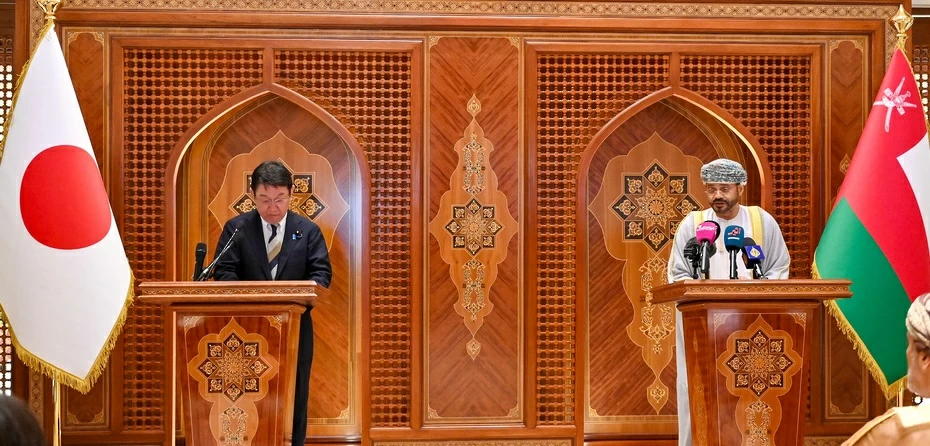
أكد وزير الخارجية العماني بدر بن حمد البوسعيدي أن المرور الآمن عبر المضيق يرتبط ارتباطاً وثيقاً بأمن المنطقة وازدهارها، باعتباره أحد أهم طرق الشحن في العالم، موضحاً أن العديد من الدول والاقتصادات خارج المنطقة تعتمد على الطاقة والسلع الأساسية التي تمر عبره.
وقال البوسعيدي في مؤتمر صحفي مع وزير الخارجية الياباني توشيميتسو موتيجي إن بلاده ملتزمة بالأمن البحري والقانون الدولي، وترفض المزيد من التصعيد أو الصراع، مبيناً أن تحقيق أمن مستدام في مضيق هرمز يتطلب إحلال سلام دائم في المنطقة، من خلال ضبط النفس والدبلوماسية والانخراط المستمر في معالجة الأسباب الكامنة وراء عدم الاستقرار، بما في ذلك سياسات الإقصاء وعدم الالتزام بالقانون الدولي.
ولفت إلى أن سلطنة عُمان عازمة على مواصلة العمل مع اليابان وجميع الشركاء الدوليين لدعم الحوار والعدالة والحلول السلمية، مشيراً إلى أن الشراكات القائمة على الثقة والواقعية والدبلوماسية تكتسب أهمية متزايدة في حالة عدم اليقين التي تشهدها المنطقة والعالم.
من جانبه، أكد وزير الخارجية الياباني موتيجي توشيميتسو أن الوضع المتعلق بإيران يمر بمرحلة حرجة للغاية، متطلعاً إلى إجراء مناقشات صريحة بهدف تهدئة الأوضاع في أقرب وقت ممكن، وتعزيز التنسيق مع سلطنة عُمان لضمان حرية الملاحة وأمنها عبر مضيقي هرمز وباب المندب.
من جهة أخرى، قال رئيس الوزراء وزير الخارجية القطري الشيخ محمد بن عبدالرحمن إن الدوحة تركز على الوساطة بين طهران وواشنطن، مشدداً في الوقت نفسه على أن حرية الملاحة «لا يجب أن تكون رهينة لأي ابتزاز سياسي».
Oman's Foreign Minister Badr bin Hamad al-Busaidi confirmed that safe passage through the Strait is closely linked to the security and prosperity of the region, as it is one of the most important shipping routes in the world, explaining that many countries and economies outside the region depend on the energy and essential goods that pass through it.
Al-Busaidi stated in a press conference with Japanese Foreign Minister Toshimitsu Motegi that his country is committed to maritime security and international law, and rejects further escalation or conflict, indicating that achieving sustainable security in the Strait of Hormuz requires establishing lasting peace in the region through restraint, diplomacy, and continuous engagement in addressing the underlying causes of instability, including exclusionary policies and non-compliance with international law.
He pointed out that the Sultanate of Oman is determined to continue working with Japan and all international partners to support dialogue, justice, and peaceful solutions, noting that partnerships based on trust, realism, and diplomacy are gaining increasing importance in the face of the uncertainty experienced by the region and the world.
For his part, Japanese Foreign Minister Toshimitsu Motegi confirmed that the situation regarding Iran is at a very critical stage, looking forward to having candid discussions aimed at calming the situation as soon as possible and enhancing coordination with the Sultanate of Oman to ensure freedom of navigation and its security through the Straits of Hormuz and Bab el-Mandeb.
On another note, Qatari Prime Minister and Foreign Minister Sheikh Mohammed bin Abdulrahman stated that Doha is focusing on mediation between Tehran and Washington, emphasizing at the same time that freedom of navigation "should not be hostage to any political blackmail."