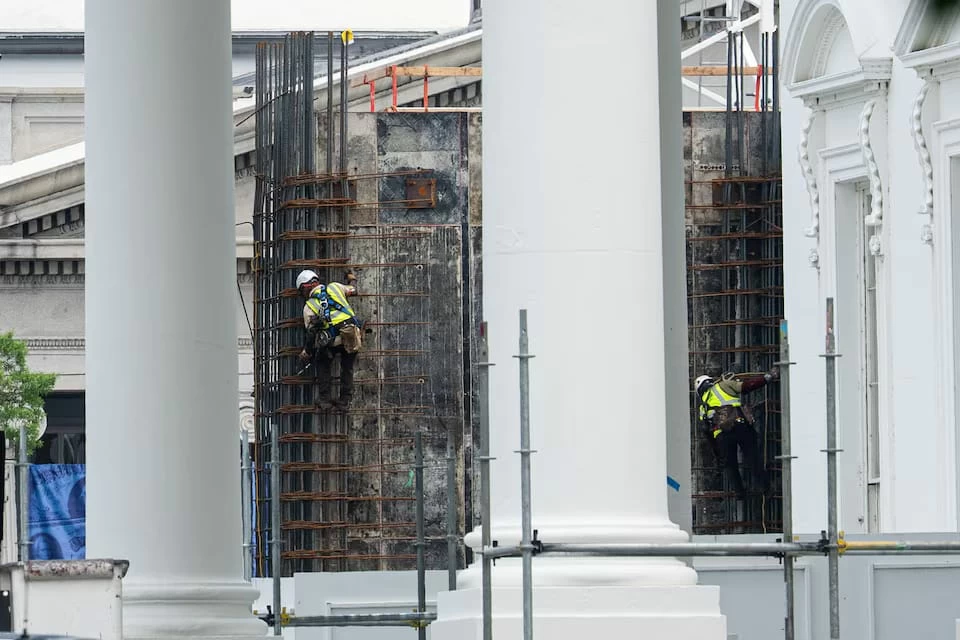
وجّه القضاء الأمريكي ضربة جديدة إلى الرئيس دونالد ترمب، بعدما أمرت محكمة استئناف اتحادية إدارة الرئيس الجمهوري بوقف أعمال البناء فوق الأرض في مشروع قاعة احتفالات ضخمة تبلغ تكلفتها نحو 400 مليون دولار، يجري تشييدها في موقع الجناح الشرقي الذي هُدم من مبنى البيت الأبيض.
ويمثل القرار انتكاسة كبيرة لترمب في معركة قضائية تختبر حدود السلطة الرئاسية وقدرة الرئيس على إجراء تغييرات جوهرية في أحد أهم المعالم التاريخية في الولايات المتحدة دون الحصول على موافقة الكونغرس.
وقالت محكمة الاستئناف الأمريكية لدائرة مقاطعة كولومبيا، في قرار صدر بأغلبية قاضيين مقابل واحد، إن الرئيس «مستأجر مؤقت، وليس مالكًا، للبيت الأبيض»، وبالتالي لا يملك صلاحية إعادة تشكيل المبنى بصورة جوهرية دون موافقة الكونغرس.
مشروع ضخم في قلب البيت الأبيض
وأيّد القرار أمرًا قضائيًا أوليًا سبق أن حصلت عليه منظمة «ناشونال ترست فور هيستوريك بريزرفيشن» المعنية بالحفاظ على التراث التاريخي، والتي رفعت دعوى قضائية ضد إدارة ترمب بعدما أقدمت على هدم الجناح الشرقي وبدأت أعمال بناء قاعة احتفالات تبلغ مساحتها نحو 90 ألف قدم مربعة، أي ما يعادل قرابة 8360 مترًا مربعًا.
وأكدت أغلبية هيئة المحكمة أن مسألة بناء قاعة احتفالات بهذا الحجم يجب أن تكون من اختصاص الكونغرس، وليس قرارًا تنفيذيًا منفردًا من البيت الأبيض.
وكتبت المحكمة في قرارها أن تحديد ما إذا كان ينبغي تشييد قاعة ضخمة بهذا الحجم «هو أمر يقرره الكونغرس»، وليس مسألة يمكن للسلطة التنفيذية حسمها بمفردها.
وقف مؤقت وإمكانية اللجوء إلى المحكمة العليا
ورغم قرار وقف أعمال البناء فوق الأرض، أبقت محكمة الاستئناف حكمها معلقًا لمدة 14 يومًا، لإتاحة الفرصة أمام إدارة ترمب للطعن عليه أمام المحكمة العليا الأمريكية.
وكان ترمب قد استأنف الحكم بعد أن أصدر قاضي المحكمة الجزئية الأمريكية ريتشارد ليون، الذي عيّنه الرئيس الجمهوري الأسبق جورج دبليو بوش، قرارين بمنع أعمال البناء فوق الأرض في الموقع، مع السماح باستمرار الأعمال تحت الأرض.
ويعني حكم محكمة الاستئناف أن البناء فوق الأرض سيتوقف خلال فترة نظر القضية، إلى أن تحصل إدارة البيت الأبيض على موافقة الكونغرس، وفقًا لما خلص إليه القضاة في الأغلبية.
ترمب: المشروع ضرورة أمنية
ودافع ترمب بشدة عن المشروع، مؤكدًا في منشور على منصته «تروث سوشيال» أن القاعة ليست مجرد مساحة لاستضافة المناسبات الرسمية، بل تمثل ضرورة أمنية للبيت الأبيض.
ووصف ترمب المنشأة بأنها «مركز عسكري»، معلنًا أن إدارته ستطعن في قرار محكمة الاستئناف أمام المحكمة العليا.
ووصف الرئيس الأمريكي الحكم بأنه «فظيع» وذو دوافع سياسية، معتبرًا أنه يعرضه ومسؤولي البيت الأبيض والزوار لخطر الهجمات.
وقال إن تصميم القاعة يتضمن ملاجئ ضد القنابل، ومنشآت طبية، وأنظمة حماية من الطائرات المسيّرة والصواريخ، إلى جانب مجموعة أخرى من الإجراءات الأمنية، معتبرًا أن هذه العناصر تشكل منظومة واحدة ضخمة ومكلفة ومعقدة.
منظمة الحفاظ على التراث ترحب بالحكم
من جهته، رحب برنت ليجز، رئيس منظمة «ناشونال ترست فور هيستوريك بريزرفيشن»، بالحكم، معتبرًا أنه يمثل انتصارًا مهمًا للبلاد ولحق الأمريكيين في إبداء آرائهم بشأن المواقع التاريخية التي يعتزون بها، وفي مقدمتها البيت الأبيض.
وترى المنظمة أن إدارة ترمب تجاوزت صلاحياتها عندما شرعت في تنفيذ المشروع وهدمت الجناح الشرقي دون الحصول على موافقة الكونجرس المطلوبة.
الأمن القومي في مواجهة القانون
وخلال جلسة المرافعات أمام محكمة الاستئناف في 5 يونيو، دافع محامي وزارة العدل الأمريكية ياكوف روث عن موقف الإدارة، قائلًا إن المحاكم لا ينبغي أن تتدخل في مشروع ممول من القطاع الخاص.
وأكد أن ما وصفه بـ«التفضيل المعماري» لمنظمة الحفاظ على التراث لا ينبغي أن يتقدم على اعتبارات الأمن القومي، مشيرًا إلى أدلة تقول الإدارة إنها تثبت أن الجناح الشرقي السابق كان يجعل الرئيس وغيره من الموجودين في البيت الأبيض أكثر عرضة للهجمات.
لكن القاضيين باتريشيا ميليت وبراد جارسيا، وهما من القضاة الذين عيّنهم رؤساء ديمقراطيون، رفضا اعتبار الأمن القومي مبررًا تلقائيًا لتجاوز القوانين.
وقالت الأغلبية إن الحجج المتعلقة بالأمن القومي «ليست بطاقة إعفاء تلقائية من القانون»، محذرة من أن السماح للسلطة التنفيذية بالتصرف بصورة غير قانونية وهدم معالم تاريخية مهمة دون إمكانية تدخل القضاء يتعارض مع النظام الدستوري الأمريكي.
في المقابل، عارضت القاضية نيومي راو، التي عيّنها ترمب خلال ولايته الأولى، القرار، معتبرة أن أمر وقف المشروع يتجاوز الاختصاص المناسب للمحاكم الفيدرالية، وأن أعمال البناء ينبغي أن تستمر.
مشروع ترمب الأكبر لتغيير واشنطن
ويُعد مشروع القاعة واحدًا من أبرز مساعي ترمب لإعادة تشكيل المشهد العمراني في قلب العاصمة واشنطن، بما يشمل المباني الحكومية والمعالم الوطنية.
وفي قضية منفصلة، أصدر قاضٍ مؤخرًا حكمًا قال فيه إن اسم ترمب أُضيف بصورة غير قانونية إلى الواجهة الخارجية لمركز كينيدي للفنون المسرحية، وأمر بإزالته.
أما مشروع قاعة البيت الأبيض، فقد تضاعفت تكلفته المقدرة مقارنة بالتقديرات الأولية، وهو ما دافع عنه ترمب في منشور سابق، قائلًا إن ارتفاع التكلفة يعود إلى أن القاعة أصبحت أكبر بنحو الضعف، وبجودة أعلى بكثير من التصميم الأصلي.
وأكد ترمب أن القاعة ستكون «رائعة وآمنة ومؤمّنة»، في وقت تتجه فيه القضية إلى مواجهة جديدة أمام المحكمة العليا، لتحديد حدود السلطة التنفيذية في إعادة تشكيل أحد أبرز الرموز التاريخية في الولايات المتحدة.
The American judiciary dealt a new blow to President Donald Trump after a federal appeals court ordered the Republican administration to halt construction on the land for a massive $400 million event hall being built on the site of the demolished East Wing of the White House.
The decision represents a significant setback for Trump in a legal battle testing the limits of presidential power and the president's ability to make substantial changes to one of the most important historical landmarks in the United States without congressional approval.
The U.S. Court of Appeals for the District of Columbia Circuit, in a decision passed by a majority of two judges to one, stated that the president is a "temporary tenant, not the owner, of the White House," and thus does not have the authority to fundamentally reshape the building without congressional approval.
A Massive Project in the Heart of the White House
The ruling upheld a preliminary injunction previously obtained by the "National Trust for Historic Preservation," an organization dedicated to preserving historical heritage, which filed a lawsuit against the Trump administration after it demolished the East Wing and began construction on an event hall covering approximately 90,000 square feet, equivalent to about 8,360 square meters.
The majority of the court affirmed that the issue of constructing an event hall of this size should fall under the jurisdiction of Congress, rather than being a unilateral executive decision from the White House.
The court wrote in its ruling that determining whether a massive hall of this size should be built "is a matter for Congress to decide," not something that the executive branch can resolve on its own.
Temporary Halt and Possibility of Appeal to the Supreme Court
Despite the order to halt construction on the land, the appeals court suspended its ruling for 14 days to allow the Trump administration to appeal to the U.S. Supreme Court.
Trump had appealed the ruling after U.S. District Judge Richard Leon, appointed by former Republican President George W. Bush, issued two decisions prohibiting construction on the land while allowing underground work to continue.
The appeals court ruling means that above-ground construction will stop during the case's consideration until the White House obtains congressional approval, according to what the majority of judges concluded.
Trump: The Project is a Security Necessity
Trump strongly defended the project, asserting in a post on his platform "Truth Social" that the hall is not just a space for hosting official events, but represents a security necessity for the White House.
He described the facility as a "military center," announcing that his administration would appeal the appeals court's decision to the Supreme Court.
The American president described the ruling as "terrible" and politically motivated, arguing that it exposes him, White House officials, and visitors to the risk of attacks.
He stated that the hall's design includes bomb shelters, medical facilities, and protection systems against drones and missiles, along with a range of other security measures, considering these elements to form a single massive, costly, and complex system.
The Preservation Organization Welcomes the Ruling
For his part, Brent Leggs, president of the "National Trust for Historic Preservation," welcomed the ruling, considering it an important victory for the country and for Americans' right to express their opinions about the historical sites they cherish, foremost among them the White House.
The organization believes that the Trump administration exceeded its authority when it began implementing the project and demolished the East Wing without obtaining the necessary congressional approval.
National Security vs. the Law
During the oral arguments before the appeals court on June 5, U.S. Justice Department attorney Yakov Roth defended the administration's position, stating that courts should not interfere in a project funded by the private sector.
He asserted that what he described as the "architectural preference" of the preservation organization should not take precedence over national security considerations, pointing to evidence that the administration claims shows the former East Wing made the president and others in the White House more susceptible to attacks.
However, judges Patricia Millett and Brad Garcia, both appointed by Democratic presidents, rejected the notion that national security is an automatic justification for circumventing laws.
The majority stated that national security arguments "are not a get-out-of-jail-free card," warning that allowing the executive branch to act unlawfully and demolish important historical landmarks without judicial intervention contradicts the American constitutional system.
In contrast, Judge Neomi Rao, appointed by Trump during his first term, opposed the ruling, arguing that the order to halt the project exceeds the proper jurisdiction of federal courts and that construction should continue.
Trump's Largest Project to Reshape Washington
The event hall project is one of Trump's most prominent efforts to reshape the urban landscape in the heart of Washington, D.C., including government buildings and national monuments.
In a separate case, a judge recently ruled that Trump's name was unlawfully added to the exterior of the Kennedy Center for the Performing Arts and ordered its removal.
The estimated cost of the White House hall project has doubled compared to initial estimates, which Trump defended in a previous post, stating that the increased cost is due to the hall becoming nearly twice as large and of much higher quality than the original design.
Trump confirmed that the hall will be "magnificent, safe, and secure," as the case heads toward a new confrontation in the Supreme Court to determine the limits of executive power in reshaping one of the most prominent historical symbols in the United States.