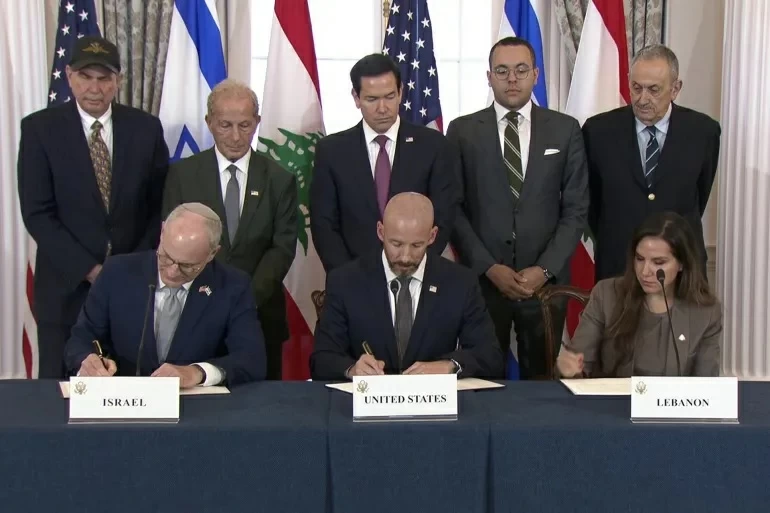
لم يكد يجف حبر «اتفاق الإطار» الثلاثي الموقع بين لبنان وإسرائيل في واشنطن برعاية أمريكية، هندسها وزير الخارجية ماركو روبيو، حتى تلاشت العناوين الاحتفالية صباح اليوم لتحل مكانها معركة التنفيذ والمصير.
إعادة رسم التوازنات الداخلية
فالأزمة الراهنة في لبنان تتجاوز بنود الاتفاق لتطال معادلة إعادة رسم التوازنات الداخلية وعلاقة بيروت بالإقليم. وفي العمق السياسي، يأتي هذا الاتفاق خطوةً أمريكيةً حاسمةً لفصل الساحات؛ تهدف إلى سحب الملف اللبناني من دائرة الابتزاز المقايض بالتفاهمات مع طهران، ويضعه في مسار مشروط يربط الانسحاب الإسرائيلي المتدرج بتفكيك البنية العسكرية لحزب الله، وبسط سيادة الدولة عبر «مناطق تجريبية» يتسلّمها الجيش اللبناني مدعوماً بحظر صارم يمنع وصول أموال إعادة الإعمار أو المساعدات (100 مليون دولار إنسانية و30 مليون دولار عسكرية) إلى أي فصيل مسلح.
ويترافق ذلك مع إنشاء آلية تنسيق ومراقبة أمريكية مباشرة وملحق أمني سري، إضافة إلى التمهيد لتشكيل مجموعات عمل لاحقة تبحث في ترتيبات أمنية أوسع. وهي صيغة تعكس انتقال واشنطن من دور الوسيط إلى دور الضامن التنفيذي لمراحل الاتفاق.
جبهة رفض سياسية شرسة
هذا المنعطف فجّر جبهة رفض سياسية شرسة قادها رئيس مجلس النواب نبيه بري، الذي سارع في عناوين اليوم إلى وصف الاتفاق بأنه «إملاءات أسوأ بعشر مرات من اتفاق 17 مايو 1983»، جازماً بأن «هذا الاتفاق لن يمر ولن يُنفّذ».
وضمن قراءة استراتيجية لحراك عين التينة، يتضح أن بري تعمّد عدم الدعوة إلى مواجهة في الشارع أو إسقاط حكومة نواف سلام، بل اختار الرهان على «استحالة التنفيذ» وتلغيم المسار من الداخل. فالرجل يدرك أن أي تعثّر في حلقة نزع السلاح كفيل بتجميد تعهدات الانسحاب الإسرائيلي. واستباقاً للضغوط الدولية التي قد تدفع باتجاه صدام داخلي، فرض بري خطاً أحمر حول قيادة الجيش برئاسة العماد رودولف هيكل، مانعاً أي محاولة لإقالته، معتبراً أن مخرج لبنان الوحيد يكمن في التوازنات التي ينتجها المسار التفاوضي الأمريكي-الإيراني الأوسع لا الاتفاقات المنفردة.
في المقابل، يدفع الرئيس جوزيف عون ورئيس الحكومة نواف سلام باتجاه تثبيت الاتفاق مساراً دولياً قابلاً للتدرّج، مع التركيز على ما يعتبرانه فرصة لإعادة تفعيل دور الدولة واستعادة الدعم العربي والدولي، رغم إدراكهما لحجم التعقيدات الداخلية المحيطة بالتنفيذ.
مأزق الحصار السياسي والمالي
ميدانياً، يضع الاتفاق حزب الله أمام مأزق الحصار السياسي والمالي، ورغم إعلانه الحرب على ما يزعم أنه «اتفاق ذل وعار ينزع ورقة لبنان من يد إيران»، إلا أن حساباته تتسم بالحذر. إذ يعمل على تجنب الصدام الأهلي الذي حذّر منه بري بوصفه «فتنة»، مراهناً على عجز السلطة اللبنانية عن تطبيق بنود نزع السلاح بالقوة، وعينه على الأوراق الإقليمية البديلة كالتصعيد الموازي في مضيق هرمز.
هذا الانقسام الداخلي يلتقي مع الشكوك الإستراتيجية في تل أبيب. فبينما يحتفي بنيامين نتنياهو بانتزاع شرعية البقاء في «المنطقة الأمنية» حتى زوال التهديد، تعكس تحليلات الأوساط العسكرية العبرية، كقراءة الخبير رونين بيرغمان توجساً حقيقياً من خلو الاتفاق من جداول زمنية واضحة أو آليات لوقف إطلاق النار، والتشكيك بقدرة لبنان على التنفيذ التي قد تحوّل الوثيقة إلى حبر على ورق ما لم تتبعها خيارات «الحسم العسكري»، وهو ما يجعل معركة التنفيذ على الأرض أكثر تعقيداً وضراوة من معركة التوقيع في واشنطن.
The ink of the "framework agreement" signed between Lebanon and Israel in Washington under American sponsorship, orchestrated by Secretary of State Marco Rubio, had barely dried before the celebratory headlines faded this morning, replaced by a battle for implementation and destiny.
Redrawing Internal Balances
The current crisis in Lebanon goes beyond the terms of the agreement to touch upon the equation of redrawing internal balances and Beirut's relationship with the region. At a political depth, this agreement represents a decisive American step to separate the arenas; it aims to remove the Lebanese file from the circle of extortion linked to understandings with Tehran, placing it on a conditional path that ties the gradual Israeli withdrawal to dismantling Hezbollah's military structure and asserting state sovereignty through "experimental areas" handed over to the Lebanese army, supported by a strict ban preventing reconstruction funds or aid (100 million dollars humanitarian and 30 million dollars military) from reaching any armed faction.
This is accompanied by the establishment of a direct American coordination and monitoring mechanism and a secret security annex, in addition to paving the way for the formation of subsequent working groups to discuss broader security arrangements. This formula reflects Washington's transition from a mediator role to that of an executive guarantor of the agreement's phases.
A Fierce Political Rejection Front
This turning point has triggered a fierce political rejection front led by Speaker of the House Nabih Berri, who hastened to describe the agreement in today's headlines as "impositions ten times worse than the May 17, 1983 agreement," asserting that "this agreement will not pass and will not be implemented."
In a strategic reading of the Ain al-Tineh movement, it is clear that Berri deliberately chose not to call for a confrontation in the streets or to topple Prime Minister Nawaf Salam's government, but instead opted to bet on the "impossibility of implementation" and to undermine the process from within. The man understands that any stumbling in the disarmament phase is sufficient to freeze the commitments of the Israeli withdrawal. Anticipating international pressures that might push towards internal conflict, Berri imposed a red line around the army leadership headed by General Rudolf Hekel, preventing any attempt to dismiss him, considering that Lebanon's only exit lies in the balances produced by the broader American-Iranian negotiating process rather than individual agreements.
On the other hand, President Joseph Aoun and Prime Minister Nawaf Salam are pushing to establish the agreement as a gradual international path, focusing on what they consider an opportunity to reactivate the state's role and regain Arab and international support, despite their awareness of the magnitude of the internal complications surrounding implementation.
The Dilemma of Political and Financial Siege
On the ground, the agreement places Hezbollah in a dilemma of political and financial siege, and despite declaring war on what it claims is an "agreement of humiliation and shame that removes Lebanon's card from Iran's hands," its calculations are marked by caution. It seeks to avoid the civil clash that Berri warned of as a "sedition," betting on the Lebanese authority's inability to enforce disarmament provisions by force, while keeping an eye on alternative regional cards such as parallel escalation in the Strait of Hormuz.
This internal division aligns with strategic doubts in Tel Aviv. While Benjamin Netanyahu celebrates the legitimacy of remaining in the "security zone" until the threat is eliminated, analyses from Hebrew military circles, like that of expert Ronen Bergman, reflect a genuine concern over the absence of clear timelines or mechanisms for a ceasefire in the agreement, and skepticism about Lebanon's ability to implement it, which could turn the document into ink on paper unless followed by "military resolution" options, making the battle for implementation on the ground more complicated and fierce than the signing battle in Washington.