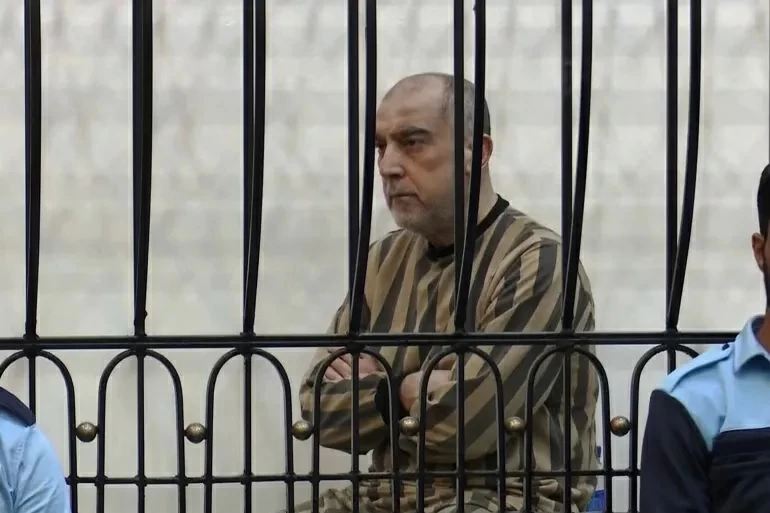
في ثاني جلسات محاكمته ضمن ملف الانتهاكات التي شهدتها محافظة درعا خلال حكم نظام بشار الأسد المخلوع، مثل الرئيس السابق لفرع الأمن السياسي في درعا عاطف نجيب، اليوم (الأحد)، مجدداً أمام القضاء في دمشق.
ووجه قاضي محكمة الجنايات الرابعة إلى عاطف نجيب أكثر من 10 تهم، تشمل القتل والتعذيب والمسؤولية عن مجزرتي الأمن السياسي والجامع العمري.
ورفع 75 مدعياً دعاوى ضد نجيب، وسيدلون بشهاداتهم في المحكمة التي عقدت جلسة مغلقة بعد جلسة مفتوحة استمرت ساعة تقريباً، فيما طلب القاضي أن تكون الجلسة مغلقة بحضور بعض الشهود السريين.
وبحسب الوكالة العربية السورية للأنباء (سانا)، تنصب جلسة المحاكمة بشكل أساسي على استجواب المتهم نجيب، وتوجيه مطالعة النيابة والتهم المنسوبة إليه.
ويحضر الجلسة ذوو الضحايا وعدد من أعضاء الهيئة الوطنية للعدالة الانتقالية، وممثلون عن منظمات قانونية وإنسانية دولية، وفق الوكالة نفسها.
وكانت محكمة الجنايات في دمشق عقدت في 26 أبريل الماضي، الجلسة العلنية الأولى لمحاكمة نجيب، في أول محاكمة تعلنها الحكومة السورية ضمن مسار محاسبة مسؤولي نظام الرئيس المخلوع بشار الأسد.
وأعلنت الهيئة الوطنية للعدالة الانتقالية أن محاكمة نجيب تأتي في إطار معالجة ملفات الجرائم والانتهاكات الجسيمة وفق الأصول القانونية، بما يمثل جزءاً من مسار مستمر قائم على المحاسبة وكشف الحقيقة.
ويُعرف نجيب بتوليه ملاحقة المعارضين والناشطين في محافظة درعا، وكان له دور مباشر في التعامل مع حادثة اعتقال أطفال درعا، الذين تعرضوا للتعذيب بعد كتابتهم شعارات مناهضة لنظام الأسد على جدران مدرستهم.
واعتقلت قوات إدارة الأمن العام التابعة لوزارة الداخلية السورية، نجيب في يناير 2025، خلال حملة أمنية لملاحقة فلول النظام السابق في محافظة اللاذقية.
وشكّل توقيفه أحد أبرز الاعتقالات التي طالت مسؤولين أمنيين سابقين، كونه شغل موقعاً أمنياً حساساً في درعا عند بداية الثورة.
In the second session of his trial regarding the violations that occurred in the Daraa governorate during the rule of the ousted Bashar al-Assad regime, the former head of the political security branch in Daraa, Atef Najib, appeared again before the judiciary in Damascus today (Sunday).
The judge of the Fourth Criminal Court charged Atef Najib with more than 10 counts, including murder, torture, and responsibility for the massacres at the political security branch and the Omari Mosque.
Seventy-five plaintiffs have filed lawsuits against Najib, and they will give their testimonies in a court session that was held behind closed doors after an open session that lasted about an hour, while the judge requested that the session be closed in the presence of some confidential witnesses.
According to the Syrian Arab News Agency (SANA), the trial session primarily focuses on interrogating the accused Najib, presenting the prosecution's arguments, and the charges against him.
Family members of the victims and several members of the National Commission for Transitional Justice, along with representatives from international legal and humanitarian organizations, are attending the session, according to the same agency.
The Criminal Court in Damascus held the first public session for Najib's trial on April 26, marking the first trial announced by the Syrian government as part of the accountability process for officials of the ousted President Bashar al-Assad's regime.
The National Commission for Transitional Justice announced that Najib's trial is part of addressing files related to crimes and serious violations according to legal procedures, representing a part of an ongoing process based on accountability and uncovering the truth.
Najib is known for pursuing opponents and activists in Daraa, and he played a direct role in dealing with the incident of the detention of Daraa's children, who were tortured after writing anti-Assad slogans on the walls of their school.
Najib was arrested by the General Security Directorate of the Syrian Ministry of Interior in January 2025 during a security campaign to pursue remnants of the former regime in the governorate of Latakia.
His arrest was one of the most prominent detentions of former security officials, as he held a sensitive security position in Daraa at the beginning of the revolution.