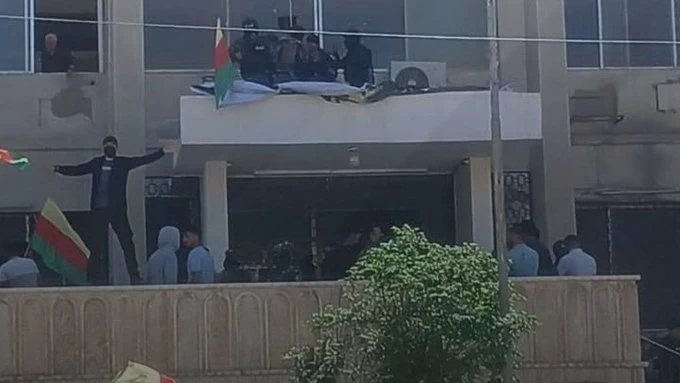
لليوم الثالث على التوالي شهد محيط القصر العدلي في مدينة الحسكة شمال شرق سورية شغباً من قبل عدد من الشبان، الذين أقدموا على إنزال اليافطة الجديدة التي علقت أعلى المبنى القضائي، احتجاجاً على عدم الكتابة عليها باللغة الكردية إلى جانب اللغة العربية.
وشدد محافظ الحسكة نور الدين أحمد، اليوم (السبت)، على أن ما يقوم به بعض الشباب من أعمال تخريب في محيط القصر العدلي تصرف مرفوض لا يخدم مصلحة المجتمع ولا يعكس قيم أبناء المنطقة المعروفين بالوعي والمسؤولية، بحسب ما نقل التلفزيون الرسمي السوري.
وأكد أن المؤسسات العامة والممتلكات ملك لكل المواطنين، والاعتداء عليها لا يؤدي إلا إلى زيادة التوتر، وتعطيل مصالح الناس، وإضعاف النسيج المجتمعي.
ودعا الجميع في هذا الظرف الحساس إلى التحلي بالمسؤولية والابتعاد عن كل ما من شأنه تأجيج الأوضاع أو نشر الفوضى.
وكان عدد من الشبان من أنصار «قوات سورية الديموقراطية» (قسد) عمدوا خلال اليومين الماضيين إلى إنزال اليافطة التي رفعت على قصر العدل في المدينة ذات الأغلبية الكردية، وفق وسائل إعلام محلية. واحتج عدد من الأشخاص، الخميس، على وضع لافتة باللغة العربية والإنجليزية دون الكردية، فاعتلوا سطح المبنى وأنزلوها. ثم بعد أن رفعت لافتة جديدة باللغة العربية فقط، عمدوا مجدداً إلى إنزالها.
من جانبه، قال نائب محافظ الحسكة أحمد الهلالي: «اللغة الكردية لغة جميلة، وهي لغتي الأم، ونعتز بها كما نعتز بكل مكونات هذه المحافظة الغنية بتنوعها».
وأوضح أن عدم وضع لافتة على مبنى قصر العدل باللغة الكردية مرده إلى أن «اللغة العربية هي اللغة الرسمية للدولة، أما الكردية، فبحسب المرسوم رقم (13)، تُعد لغة وطنية، يسمح بتدريسها في المدارس الحكومية والخاصة في المناطق التي يشكل فيها الكرد نسبة ملحوظة من السكان، ضمن المناهج الاختيارية أو الأنشطة الثقافية والتعليمية».
يذكر أن اتفاقاً وقع في العاشر من مارس 2025 بين الرئيس السوري أحمد الشرع وقائد «قسد» مظلوم عبدي نص على دمج القوات الكردية في الجيش السوري، وتسليم جميع المؤسسات المدنية والعسكرية في شمال وشرق سورية بما فيها المعابر الحدودية، والمطار، وحقول النفط والغاز إلى الدولة، فضلاً عن الاعتراف بالمجتمع الكردي كمكون أصيل، وضمان حقوقه الدستورية والاعتراف بلغته، وغيرها.
إلا أن هذا الاتفاق لم يطبق على مدى أشهر، ما فجَّر توترات ومعارك بين الجيش والقوات الكردية، قبل أن يتفق الجانبان في يناير 2026 على وقف جديد لإطلاق النار، وتسليم «قسد» مراكزها في شمال شرق البلاد إلى القوات السورية، لتنتهي بذلك عملياً ما كانت تسمى «الإدارة الذاتية»، وتبسط الدولة سيادتها على مناطق شمال وشرق سورية.
For the third consecutive day, the area surrounding the courthouse in the city of Hasakah in northeastern Syria witnessed unrest from a number of young men, who took down the new banner that was hung at the top of the judicial building, protesting the lack of writing on it in Kurdish alongside Arabic.
Hasakah Governor Nour al-Din Ahmed emphasized today (Saturday) that the acts of vandalism by some youth around the courthouse are unacceptable behaviors that do not serve the interests of the community and do not reflect the values of the region's residents, who are known for their awareness and responsibility, according to the Syrian state television.
He confirmed that public institutions and properties belong to all citizens, and attacking them only leads to increased tension, disrupts people's interests, and weakens the social fabric.
He called on everyone in this sensitive situation to act responsibly and to avoid anything that could escalate the situation or spread chaos.
A number of young supporters of the "Syrian Democratic Forces" (SDF) took down the banner that was raised at the courthouse in the predominantly Kurdish city over the past two days, according to local media. Several individuals protested on Thursday against the placement of a sign in Arabic and English without Kurdish, climbing onto the roof of the building to take it down. After a new sign was raised in Arabic only, they again took it down.
For his part, Hasakah Deputy Governor Ahmed Al-Hilali stated: "The Kurdish language is a beautiful language, and it is my mother tongue. We take pride in it just as we take pride in all the components of this province, which is rich in its diversity."
He explained that the absence of a sign on the courthouse building in Kurdish is due to the fact that "Arabic is the official language of the state, while Kurdish, according to Decree No. (13), is considered a national language, and it is allowed to be taught in public and private schools in areas where Kurds make up a significant percentage of the population, within optional curricula or cultural and educational activities."
It is noteworthy that an agreement was signed on March 10, 2025, between Syrian President Ahmad al-Shara and SDF leader Mazloum Abdi, which stipulated the integration of Kurdish forces into the Syrian army and the transfer of all civil and military institutions in northern and eastern Syria, including border crossings, the airport, and oil and gas fields to the state, in addition to recognizing the Kurdish community as an original component and ensuring its constitutional rights and recognition of its language, among other things.
However, this agreement was not implemented for months, which sparked tensions and battles between the army and Kurdish forces, before both sides agreed in January 2026 on a new ceasefire and the transfer of SDF positions in northeastern Syria to Syrian forces, effectively ending what was called "self-administration" and allowing the state to assert its sovereignty over northern and eastern Syria.