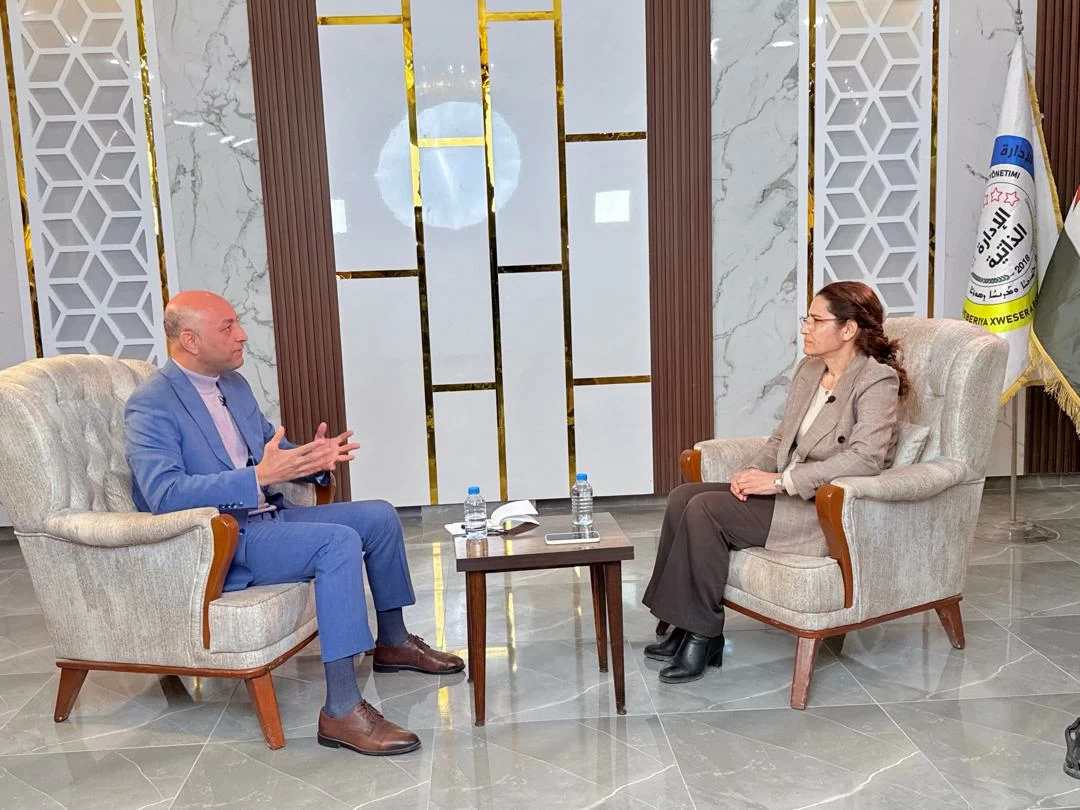
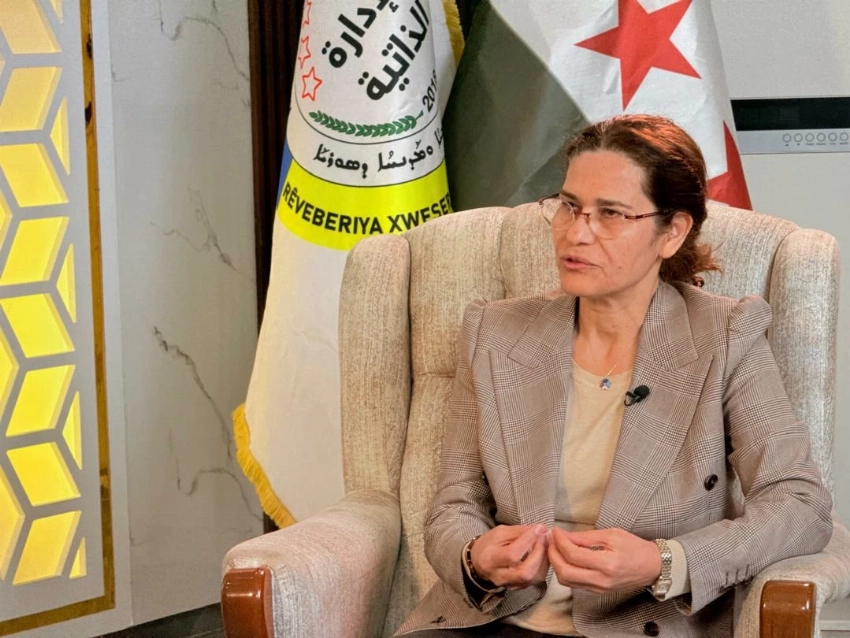
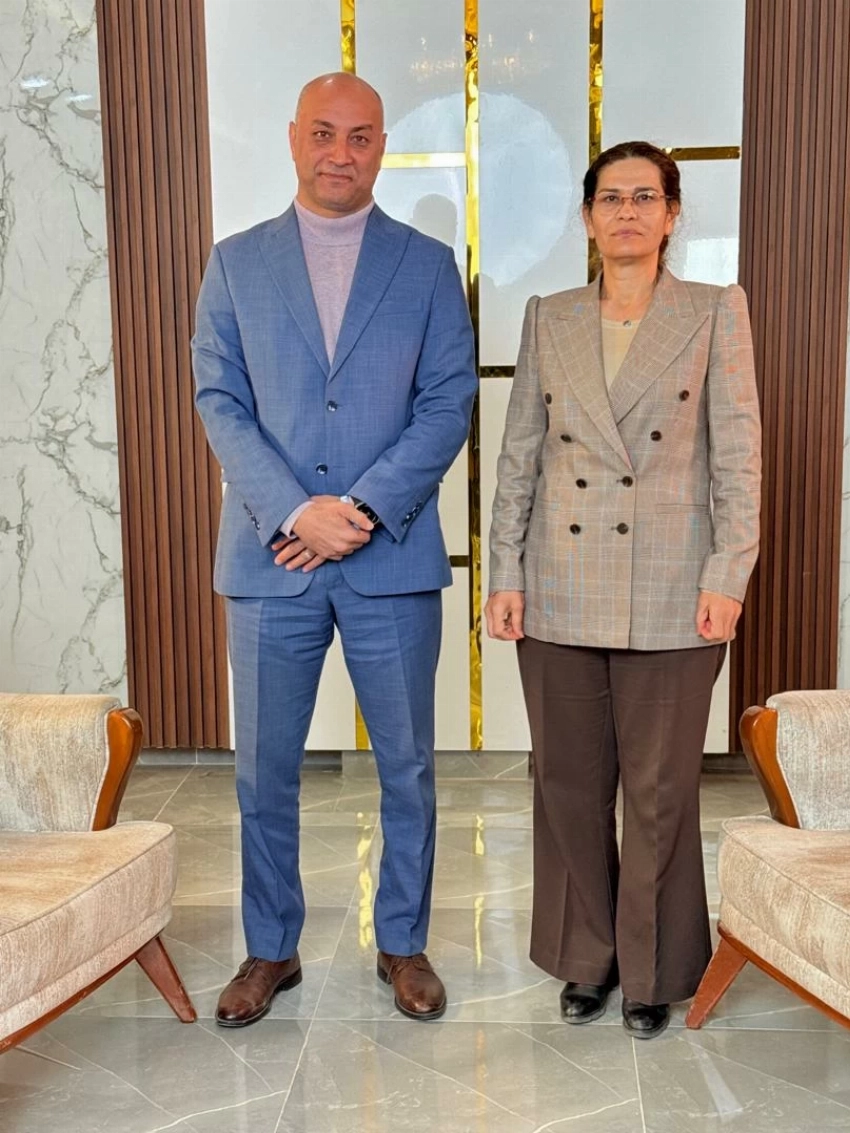
أكدت الرئيسة المشتركة لهيئة العلاقات الخارجية في الإدارة الذاتية الكردية لشمال وشرق سورية إلهام أحمد أن عملية الدمج العسكري لمؤسسات «الإدارة» مع مؤسسات الدولة، شبه منتهية وفق الترتيبات الأخيرة، إذ تمت الموافقة على 4 ألوية.
ووصفت في حديث مع «عكاظ»، تعيين نائب لوزير الدفاع السوري لشؤون المنطقة الشرقية بـ«المؤشر الجيد» على سير الاندماج، مضيفة أن العملية تحتاج إلى وقت طويل لدمج كل إدارات الإدارة الذاتية في الحكومة السورية.
ورأت إلهام أن من حق الإدارة الذاتية أن يكون لها وزراء في الحكومة السورية وممثلون على المستوى الدبلوماسي في الخارج، كاشفة وجود نقاش لتعيينها في منصب نائب وزير الخارجية السوري.
وإلى الحوار:
• هل لا تزال الإدارة الذاتية قائمة، خصوصاً أن أعلامها لا تزال موجودة في مقراتها؟
•• ستعمل إلى أن تنتهي عملية الدمج، وهذه المؤسسات التابعة للإدارة الذاتية ستكون بكامل كوادرها ضمن المؤسسات والدوائر الحكومية.
• هل تمت عملية الدمج أم لا، باعتبار أن هذه المؤسسات لا تزال قائمة؟
•• تم البدء بإجراءات الدمج، لكن لم تنتهِ بعد، يوجد العديد من المديريات والمؤسسات التابعة للإدارة الذاتية، لم تندمج بعد في المؤسسات الحكومية، لدينا قوائم بأسماء العاملين والإداريين، تم تقديمها لوزارة الدفاع، ويتم العمل كل فترة على الدمج في مديرية معينة أو وزارة من وزارات الدولة، عن طريق محافظ الحسكة.
إلهام.
• عملية الدمج العسكري بالتحديد كانت نقطة الخلاف مع الحكومة.. هل انتهت؟
•• يمكنني القول إنها انتهت تقريباً، إذ تم تشكيل 4 ألوية، وتعيين مسؤول للألوية كنائب لقائد الفرقة، وتعيين ممثل عن المنطقة الشرقية كمعاون لوزير الدفاع، ولا يزال النقاش دائراً حول الأعداد المتبقية من المقاتلين.
• هل يمكن الاطلاع على النقاشات.. وهل من عوائق للدمج؟
•• أعداد مقاتلي قوات سورية الديمقراطية كانت كبيرة، وقد تم تشكيل الألوية بقوام 1300 مقاتل لكل لواء، ولدينا أعداد فائضة، نعمل على إيجاد طرق لتوظيفها ضمن القوات العسكرية أو قوات الحماية.
• وحدات حماية المرأة تبقى مثاراً للجدال، إذ صرحت قائدة الوحدات بأنها لن تندمج ولن تنحل؟
•• جرى لقاء بين وحدات حماية المرأة ووزير الدفاع، لمناقشة هذا الأمر، ولا يزال الأمر قيد النقاش، إذ ننتظر جواب الوزارة حول آلية دمج هذه الوحدات في إطار تشكيلات الجيش السوري.
• لا تزال هناك أصوات كردية تقول لم تكن هناك حاجة لوجود قوات «قسد» في مناطق الأغلبية العربية وهذه إحدى سلبيات الإدارة الذاتية؟
•• قوات «قسد» لم تكن كردية فقط، والاعتراض كان مسيساً، فالمنطقة تم تحريرها بقوات عربية وكردية، وبقاء «قسد» لم يكن يعني بقاء القوات الكردية، وإنما القوات المشتركة والمجالس المحلية التي كانت مكونة من أبناء المنطقة، وتم التركيز على الاعتراضات من قبل الإعلام، لكنها لم تكن كما يتم تصويرها، فقد تم تحرير المنطقة من «داعش»، والانتظار حتى قيام نظام سياسي جديد في سورية.
• هل يمكن القول إن الولايات المتحدة تخلت عن الكرد في سورية؟
•• الأمريكيون لم يعطونا وعوداً بالبقاء في سورية للأبد ولم يعدونا بالحماية، ولكننا كنا نتحدث دوماً عن علاقات جيدة وتعاون مشترك، ولكنهم انسحبوا من مناطق عدة حصلت فيها مواجهات مع تركيا كما في تل أبيض ورأس العين، وتكرر ذلك أخيراً، ولكن لا يمكن القول إنهم تخلوا، كنا نعلم أنهم سيغادرون على الرغم من وجود مصالح لهم في مناطق أخرى، وبقاؤهم كان أصلاً لمحاربة «داعش» فقط، ولا يزال هناك تواصل معهم ولقاءات.
إلهام والغضوي.
• كيف واقع العلاقة بينكم والدولة السورية؟
•• نحن لا نزال في مرحلة الاندماج، والعلاقة لم تكن يوماً في إطار معادٍ للدولة السورية، ما يجعل استمرارها أمراً طبيعياً، تبعاً للعلاقة الطويلة بين الجانبين، والعلاقة تقوم على خدمة الشعب السوري، خصوصاً الأكراد.
• حين كنتم في الإدارة الذاتية هل كان من الممكن قبول طرف له علاقة مع دولة أخرى؟
•• لا تزال الإدارة الذاتية تمتلك تواصلاً دولياً واسعاً مع دول أوروبية وعربية ومع أمريكا، ككيان إداري يتمثل في الإدارة الذاتية، لا تزال هذه العلاقات مستمرة، ومستقبلاً يمكن حدوث دمج دبلوماسي في إطار وزارة الخارجية على سبيل المثال، فلدينا ممثليات في الخارج، ويمكن التخطيط للدمج في السياق الدبلوماسي أيضاً، وفي حال حدوث اتفاق مع الحكومة، لا مانع من نقل شبكة العلاقات الخارجية إلى دمشق.
• ما هي صيغة الاتفاق الذي تريده الإدارة الذاتية فيما يتعلق بالملف الخارجي؟
•• بداية نحن بحاجة لدستور جديد لسورية الجديدة، لكن كمكونات ككرد يجب مراعاة تنمية الثقافات وضمان حقوقهم في إطار الدستور السوري، ويمكن من خلال الدستور إحداث دمج في العلاقات الدبلوماسية، يكون لنا ممثلون في السفارات وفي وزارة الخارجية والوزارات الأخرى، وأعتقد أن ذلك من حق الكرد والمكونات الأخرى، وجود تمثيل لهم، وقد لا نتحدث عن محاصصة ولكن نطالب بالتمثيل ونتمنى أن يكون رد الحكومة إيجابياً.
• كنتم دوماً ترددون أنه لا يمكن العودة إلى 2011.. ماذا عن الآن، وكيف تصفون هذه المرحلة بالنسبة لكم؟
•• يمكن وصفها بمرحلة انتقالية، هناك عملية دمج قائمة، تضمن الحفاظ على العاملين في مؤسسات الإدارة الذاتية، كموظفين في الدوائر الحكومية، وستكون القوات ضمن ألوية لها خصوصيتها، فالاتفاق يشمل بنداً يقر الحفاظ على خصوصية المناطق الكردية، وضمن هذا الحفاظ، تتمتع المنطقة بثقافة خاصة ومعتقدات وتمثيل، فلا يمكن العودة للوراء لـ2011، ولا يمكن القبول بالعودة للمركزية المشددة، وهذا ينطبق على كافة المحافظات باعتقادي، وهي أيضاً لا تمثل اللامركزية الحقيقية، فنحن نسعى لصلاحيات حقيقية، تشمل التنمية والإثراء الثقافي، ففي منطقتنا مثلاً توجد الثقافة السريانية والكردية والعربية، ما يوجب الحفاظ على خصوصية المنطقة، فيما يتعلق بأمور كالتعليم باللغة الأم، فيما يخص الأكراد.
• هل لديكم تواصل مع الدولة التركية؟
•• لدينا تواصل ونرغب في رفع سقف هذا التواصل، فنحن ننظر لدور تركيا وتأثيرها على الملف السوري وهي دولة جارة، والوصول لسلام في المنطقة يحتم أن يكون هناك تواصل وتفاهمات فيما يخص أمن المنطقة.
• هل يزعج ذلك الحكومة السورية؟
•• لديهم علم بهذا التواصل، ولم نسمع أي تعليق سلبي على ذلك.
• متى كان آخر تواصل مع دمشق؟
•• التواصل الهاتفي موجود بشكل يومي بيننا وبين الحكومة في سياق عملية الدمج، ولكن نلمس في بعض الأحيان تباطؤاً في تنفيذ التفاهمات والاتفاقيات المبرمة بيننا، ويوجد فريق من الرئاسة في المنطقة، نتواصل معهم بشكل مباشر، والتواصل موجود أيضاً مع وزارة الخارجية.
• تم حل حزب البعث في المرحلة الانتقالية والكثير من الأحزاب، ولكن هذا لم ينطبق على حزب الاتحاد الديمقراطي؟
•• حزب الاتحاد الديمقراطي وغيره من الأحزاب الكردية لا يمكن حلها، وننتظر قانون ترخيص الأحزاب، إذ طلبت الحكومة حلها، إلا أننا لم نقبل بذلك، ضمن إطار الحفاظ على خصوصية المنطقة، وتبعاً لقدم هذه الأحزاب وفعالياتها ونشاطاتها، وهي انعكاس للحياة السياسية في المنطقة، علماً بأن حزب الاتحاد وبقية الأحزاب الكردية تمارس أنشطتها واجتماعاتها علناً.
• ما السقف الزمني المتوقع لإنهاء جهود الدمج؟
•• استمرت النقاشات لمدة شهر، ولكن المرحلة العملية لا يمكن تحديدها بسقف، نظراً لتعقيدات العملية والتحديات التي تظهر على أرض الواقع، إلى جانب التعيينات في مؤسسات الحكومة، إذ تم حتى الآن دمج مديريتين فقط في الوزارات، وهذا يحتاج لوقت، كما ندعو الحكومة للتخلص من المماطلة، كما في موضوع الأسرى مثلاً، أخذ حيزاً زمنياً كبيراً، والكثير من العائلات تعيش حالة ترقب بسبب ذلك، وكذلك فيما يتعلق بموضوع عودة النازحين والمهجرين، إذ لا يزال نحو 9 آلاف شخص لم يعودوا لعفرين، وكذلك أهالي رأس العين.
• يشاع أنك مرشحة لنيابة وزير الخارجية؟
•• هذا الترشيح مطروح، وأنا أعمل بناء على رغبة شعبي، ويجب أن أذكر هنا أننا بناء على اللقاءات غير المكثفة، لمست فرقاً في طريقة تفكير الحكومة، تبعاً لاختلاف الثقافات، إلا أن ذلك يتلاشى حين نفكر بالمصلحة العليا للشعب، فتمثيل الكرد في العاصمة مهم جداً، وذلك يتطلب جهداً لتجاوز العقبات.
• في أكثر من موقع تذكرين الكرد.. هل تقصدين الكرد بتوجهاتهم السياسية من حزب الاتحاد والمجلس الوطني الكردي أم هم خارج الحسابات في عملية الدمج؟
•• بالتأكيد عملية الدمج تشملهم، وسيطالهم التمثيل في وزارات أخرى، ولا يزال الكونفرنس الذي حدث في الماضي قائماً، وسيكون لهم مناصب في المنطقة.
• ماذا عن التواصل مع العلويين والدروز؟
•• التواصل مع المكونات الأخرى قديم، وغير مرتبط بسقوط «قسد»، لدينا علاقات معهم وستبقى، ولن تكون في إطار معارضة جهة معينة، وذلك أمر طبيعي، وقد طرحنا موضوع السويداء مع الحكومة، وأبدينا استعدادنا لدعم أي تفاهم بين الطرفين، باعتبار أننا نحظى بعلاقات جيدة مع الدروز، للتوصل لحل وتفاهم على شكل وساطة، ولا نفكر بإرسال عناصر من الأكراد للسويداء.
• علم الإدارة الذاتية ما زال قائماً.. ما هي معايير بقاء علم واحد في سورية، ومتى يكون لديكم علم سورية فقط؟
•• تنوع الأعلام من وجهة نظري ليس بالضرورة يناقض وحدة الأراضي السورية، على العكس هو يعبر عن التنوع، فالرمز لكل مكون، لا يعني عدم وحدة الأراضي السورية، وفرض علم واحد من طرف واحد، يؤدي لظهور ضغوطات مستقبلية، ما يعني أن تقبل الرمز لكل مكون بوعي تاريخي ورحابة صدر ينعكس إيجابياً على تماسك الوحدة السورية، وكل مقاطعة في دول أوروبا لديها رمز يعبر عنها، إلا أن التمثيل الخارجي يكون بعلم واحد، وهذا لا يتعارض مع وحدة الدولة.
The co-chair of the Foreign Relations Authority in the Kurdish Autonomous Administration of North and East Syria, Ilham Ahmed, confirmed that the military integration process of the "administration" institutions with state institutions is nearly complete according to the latest arrangements, as four brigades have been approved.
In an interview with "Okaz," she described the appointment of a deputy to the Syrian Minister of Defense for Eastern Region Affairs as a "good indicator" of the progress of the integration, adding that the process will take a long time to integrate all the administrations of the autonomous administration into the Syrian government.
Ilham believes that the autonomous administration has the right to have ministers in the Syrian government and representatives at the diplomatic level abroad, revealing discussions about her appointment to the position of Deputy Minister of Foreign Affairs of Syria.
And now to the dialogue:
• Is the autonomous administration still in place, especially since its flags are still present in its headquarters?
•• It will continue until the integration process is complete, and these institutions belonging to the autonomous administration will be fully integrated within the government institutions and departments.
• Has the integration process been completed or not, considering that these institutions are still in place?
•• The integration procedures have begun, but they are not yet complete. There are many directorates and institutions belonging to the autonomous administration that have not yet integrated into the government institutions. We have lists of names of workers and administrators that have been submitted to the Ministry of Defense, and integration is being worked on periodically in a specific directorate or ministry of the state, through the governor of Hasakah.
إلهام.
• The military integration process, in particular, was a point of contention with the government... Has it ended?
•• I can say it is nearly complete, as four brigades have been formed, a commander for the brigades has been appointed as a deputy to the division commander, and a representative from the eastern region has been appointed as an assistant to the Minister of Defense. Discussions are still ongoing regarding the remaining number of fighters.
• Can we access the discussions... Are there obstacles to the integration?
•• The number of Syrian Democratic Forces fighters was large, and the brigades were formed with a composition of 1,300 fighters each, and we have surplus numbers. We are working to find ways to employ them within the military forces or protection forces.
• The Women's Protection Units remain a point of contention, as the leader of the units stated that they will not integrate or dissolve?
•• A meeting was held between the Women's Protection Units and the Minister of Defense to discuss this matter, and it is still under discussion, as we are awaiting the ministry's response regarding the mechanism for integrating these units within the framework of the Syrian army formations.
• There are still Kurdish voices saying there was no need for the presence of "SDF" forces in predominantly Arab areas, and this is one of the negatives of the autonomous administration?
•• The "SDF" forces were not only Kurdish, and the objection was politicized. The region was liberated by Arab and Kurdish forces, and the presence of "SDF" did not mean the presence of Kurdish forces alone, but rather the joint forces and local councils that were composed of the region's inhabitants. The media focused on the objections, but they were not as portrayed. The region was liberated from "ISIS," and we are waiting for the establishment of a new political system in Syria.
• Can we say that the United States has abandoned the Kurds in Syria?
•• The Americans did not promise us to stay in Syria forever, nor did they promise us protection, but we always talked about good relations and mutual cooperation. However, they withdrew from several areas where confrontations occurred with Turkey, such as Tal Abyad and Ras al-Ain, and this has been repeated recently. But we cannot say they abandoned us; we knew they would leave despite their interests in other areas. Their presence was primarily to fight "ISIS," and there is still communication with them and meetings.
إلهام والغضوي.
• What is the reality of the relationship between you and the Syrian state?
•• We are still in the integration phase, and the relationship has never been in an adversarial framework with the Syrian state, which makes its continuation a natural matter, given the long relationship between the two sides. The relationship is based on serving the Syrian people, especially the Kurds.
• When you were in the autonomous administration, was it possible to accept a party that has relations with another state?
•• The autonomous administration still has extensive international communication with European and Arab countries and with America. As an administrative entity represented in the autonomous administration, these relations are still ongoing. In the future, diplomatic integration could occur within the framework of the Ministry of Foreign Affairs, for example. We have representations abroad, and we can plan for integration in the diplomatic context as well. If an agreement is reached with the government, there is no objection to transferring the network of foreign relations to Damascus.
• What is the format of the agreement that the autonomous administration wants regarding the external file?
•• First, we need a new constitution for the new Syria, but as components, as Kurds, we must consider the development of cultures and guarantee their rights within the framework of the Syrian constitution. Through the constitution, diplomatic relations can be integrated, and we can have representatives in embassies and in the Ministry of Foreign Affairs and other ministries. I believe that this is the right of the Kurds and other components to have representation. We may not talk about power-sharing, but we demand representation and hope that the government's response will be positive.
• You have always repeated that there can be no return to 2011... What about now, and how do you describe this phase for you?
•• It can be described as a transitional phase. There is an ongoing integration process that ensures the preservation of workers in the institutions of the autonomous administration as employees in government departments. The forces will be within brigades that have their own specificity. The agreement includes a clause that acknowledges the preservation of the specificity of Kurdish areas, and within this preservation, the region enjoys a special culture, beliefs, and representation. There can be no return to 2011, and we cannot accept a return to strict centralization. I believe this applies to all governorates, and it also does not represent true decentralization. We seek real powers that include development and cultural enrichment. For example, in our region, there are Syriac, Kurdish, and Arab cultures, which necessitates preserving the region's specificity regarding matters such as education in the mother tongue concerning the Kurds.
• Do you have communication with the Turkish state?
•• We have communication and wish to raise the level of this communication. We look at Turkey's role and its influence on the Syrian file, as it is a neighboring country. Achieving peace in the region necessitates communication and understandings regarding the security of the area.
• Does this disturb the Syrian government?
•• They are aware of this communication, and we have not heard any negative comments about it.
• When was the last communication with Damascus?
•• There is daily phone communication between us and the government in the context of the integration process, but we sometimes notice a slowdown in implementing the understandings and agreements made between us. There is a team from the presidency in the region, and we communicate with them directly, and there is also communication with the Ministry of Foreign Affairs.
• The Ba'ath Party was dissolved during the transitional phase, along with many parties, but this did not apply to the Democratic Union Party?
•• The Democratic Union Party and other Kurdish parties cannot be dissolved. We are waiting for the party licensing law, as the government requested their dissolution, but we did not accept that, in the framework of preserving the region's specificity, and according to the history of these parties and their activities. They reflect the political life in the region, noting that the Democratic Union Party and other Kurdish parties conduct their activities and meetings publicly.
• What is the expected timeframe for completing the integration efforts?
•• Discussions lasted for a month, but the practical phase cannot be defined by a timeframe due to the complexities of the process and the challenges that arise on the ground, in addition to appointments in government institutions. So far, only two directorates have been integrated into the ministries, and this takes time. We also call on the government to eliminate procrastination, as in the case of prisoners, for example, which has taken a long time, and many families are living in a state of anticipation because of that. Also, regarding the return of displaced persons and refugees, about 9,000 people have not yet returned to Afrin, as well as the families of Ras al-Ain.
• It is rumored that you are a candidate for the Deputy Minister of Foreign Affairs?
•• This nomination is proposed, and I work based on the wishes of my people. I must mention here that based on the non-intensive meetings, I have noticed a difference in the way the government thinks, due to cultural differences. However, this fades when we think about the higher interest of the people. Kurdish representation in the capital is very important, and this requires effort to overcome obstacles.
• In several instances, you mention the Kurds... Are you referring to the Kurds with their political orientations from the Union Party and the Kurdish National Council, or are they outside the calculations in the integration process?
•• Certainly, the integration process includes them, and they will have representation in other ministries. The conference that took place in the past is still valid, and they will have positions in the region.
• What about communication with the Alawites and Druze?
•• Communication with other components is old and not related to the fall of "SDF." We have relations with them, and they will remain, and it will not be in the context of opposing a certain party, which is a natural matter. We raised the issue of Sweida with the government and expressed our readiness to support any understanding between the two parties, considering that we have good relations with the Druze, to reach a solution and understanding in the form of mediation. We do not think of sending Kurdish elements to Sweida.
• The flag of the autonomous administration is still present... What are the criteria for having one flag in Syria, and when will you have only the Syrian flag?
•• The diversity of flags, in my opinion, does not necessarily contradict the unity of Syrian territory. On the contrary, it expresses diversity. The symbol for each component does not mean the lack of unity of Syrian territory, and imposing one flag from one side leads to future pressures. This means that accepting the symbol for each component with historical awareness and open-mindedness positively reflects on the cohesion of Syrian unity. Each district in European countries has a symbol that expresses it, but external representation is with one flag, and this does not contradict the unity of the state.