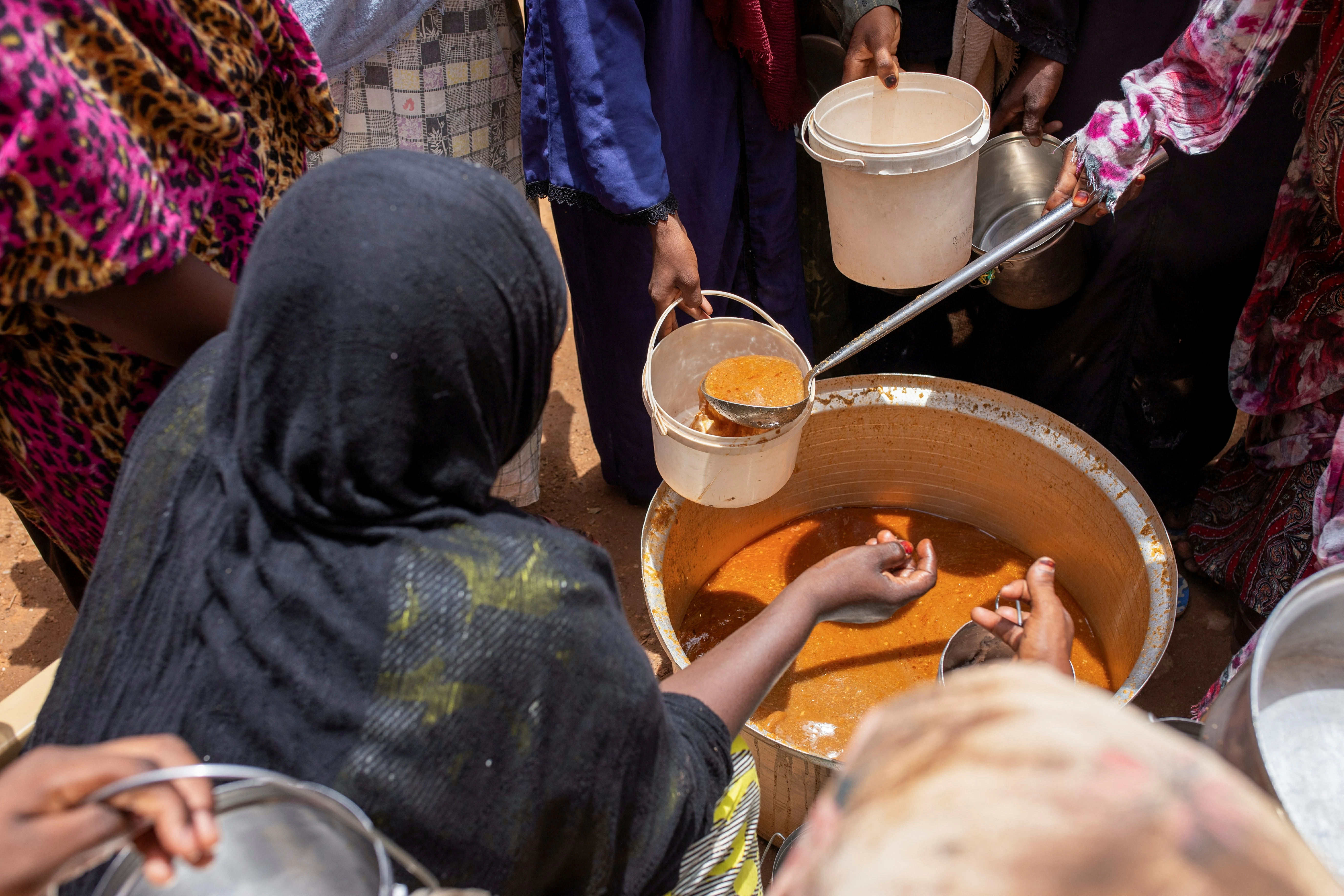
فيما تتفاقم أزمة الغذاء وتتزايد المخاوف من انتشارها، كشف تقرير نشرته مجموعة من المنظمات غير الحكومية، اليوم الإثنين، أن الملايين في السودان يعيشون على وجبة واحدة فقط في اليوم.
ولفت تقرير منظمة العمل ضد الجوع وهيئة كير الدولية ولجنة الإنقاذ الدولية ومنظمة ميرسي كور والمجلس النرويجي للاجئين، إلى أنه «في المنطقتين الأكثر نكبة بالصراع- شمال دارفور وجنوب كردفان- لا تتناول ملايين العائلات إلا وجبة واحدة في اليوم».
وأضاف التقرير الصادر: «في كثير من الأحيان، يمضون أياماً كاملة من دون أي طعام»، لافتاً إلى أن كثيرين لجأوا إلى أكل أوراق الشجر وأعلاف الحيوانات من أجل البقاء على قيد الحياة.
وبحسب خطة الحاجات الإنسانية والاستجابة لعام 2026، يعاني نحو 61.7% من سكان السودان، أي ما يعادل 28.9 مليون نسمة، من انعدام الأمن الغذائي الحاد.
وأكدت الأمم المتحدة وقوع فظائع واسعة النطاق وموجات من العنف على أساس عرقي. وفي نوفمبر، أعلن مرصد عالمي للجوع للمرة الأولى وجود مجاعة في مدينة الفاشر، وكذلك في كادقلي.
وأشار التصنيف المرحلي المتكامل للأمن الغذائي، وهو مرصد عالمي لمراقبة الجوع مدعوم من الأمم المتحدة، إلى أن مستويات سوء التغذية الحاد تجاوزت معايير المجاعة في منطقة أمبرو وكذلك في كرنوي.
وفصل التقرير، الذي يستند إلى مقابلات مع مزارعين وتجار وعاملين في مجال الإغاثة الإنسانية داخل السودان، كيف تدفع الحرب الدائرة في البلاد السكان لأتون المجاعة؛ نتيجة تعطل الزراعة، فضلاً عن استخدام التجويع سلاحاً في الحرب، بما في ذلك التدمير المتعمد للمزارع والأسواق.
وذكر أن مطابخ جماعية (خيرية) باتت عاجزة بشكل متزايد عن تلبية الحاجات المتنامية، في وقت تعيق فيه التخفيضات الكبيرة في تمويل الجهات المانحة قدرة وكالات الإغاثة على الاستجابة.
وأكد أن النساء والفتيات تضررن بدرجة أكبر، إذ يواجهن خطراً كبيراً بتعرضهن للاغتصاب والتحرش عند التوجه إلى الحقول أو زيارة الأسواق أو جلب المياه. وأضاف أن الأسر التي تعيلها نساء أكثر عرضة بثلاثة أمثال لانعدام الأمن الغذائي مقارنة بالأسر التي يعيلها رجال.
وتسببت الحرب الدائرة في السودان بين الجيش السوداني وقوات الدعم السريع، التي تدخل عامها الثالث، في انتشار الجوع ونزوح الملايين، وأدت إلى واحدة من أكبر الأزمات الإنسانية في العالم.
As the food crisis worsens and fears of its spread increase, a report published today, Monday, by a group of non-governmental organizations revealed that millions in Sudan are living on just one meal a day.
The report from the World Food Programme, CARE International, the International Rescue Committee, Mercy Corps, and the Norwegian Refugee Council noted that "in the two most conflict-affected areas—North Darfur and South Kordofan—millions of families are consuming only one meal a day."
The report added: "Often, they go entire days without any food," pointing out that many have resorted to eating tree leaves and animal feed to survive.
According to the Humanitarian Needs and Response Plan for 2026, about 61.7% of Sudan's population, equivalent to 28.9 million people, suffers from severe food insecurity.
The United Nations confirmed the occurrence of widespread atrocities and waves of violence based on ethnicity. In November, a global hunger observatory announced for the first time the existence of famine in the city of El Fasher, as well as in Kadugli.
The Integrated Food Security Phase Classification, a global hunger monitoring observatory supported by the United Nations, indicated that levels of acute malnutrition have exceeded famine thresholds in the Ambru area as well as in Kernei.
The report, which is based on interviews with farmers, traders, and humanitarian workers inside Sudan, detailed how the ongoing war in the country is driving the population into famine; due to the disruption of agriculture, as well as the use of starvation as a weapon of war, including the deliberate destruction of farms and markets.
It mentioned that communal kitchens (charitable) are increasingly unable to meet the growing needs, while significant cuts in donor funding hinder the ability of relief agencies to respond.
It emphasized that women and girls are disproportionately affected, facing a greater risk of being subjected to rape and harassment when going to the fields, visiting markets, or fetching water. It added that households headed by women are three times more likely to experience food insecurity compared to those headed by men.
The ongoing war in Sudan between the Sudanese army and the Rapid Support Forces, which is entering its third year, has led to the spread of hunger and the displacement of millions, resulting in one of the largest humanitarian crises in the world.