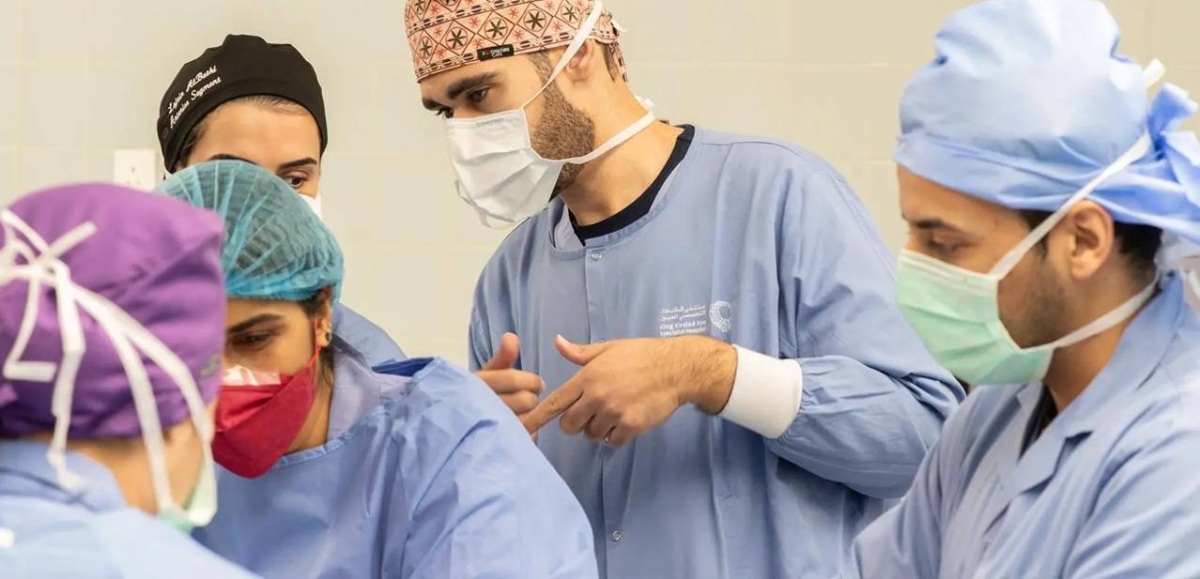
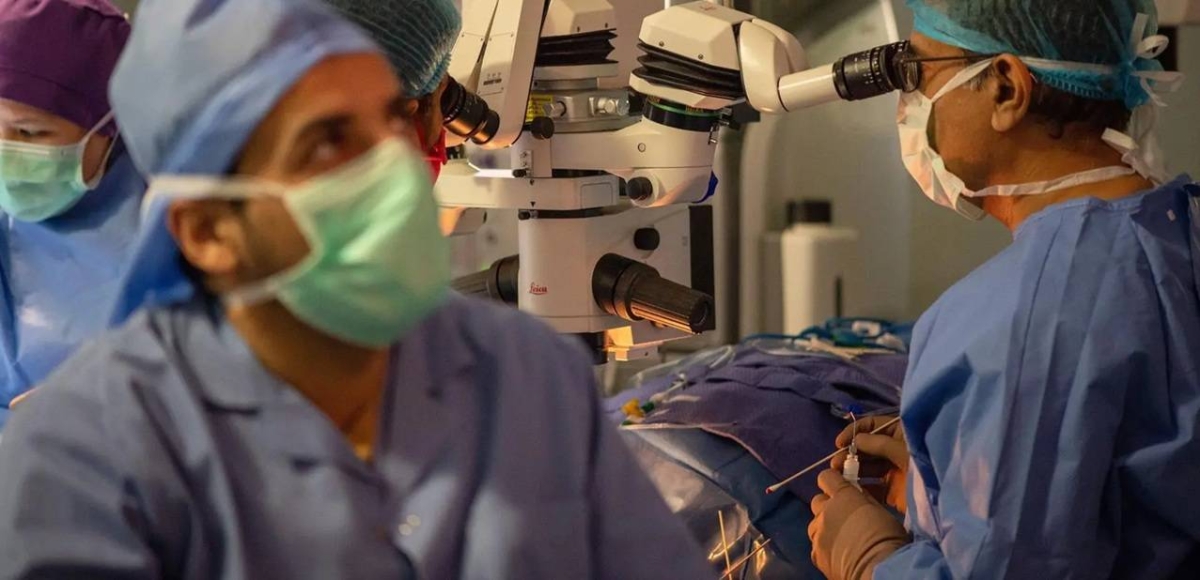
نجح فريق طبي في مستشفى الملك خالد التخصصي للعيون ومركز الأبحاث بإعادة النظر إلى مريضة سعودية بعد نجاح العملية التي أجريت لها لزراعة قرنية صناعية من نوع (Boston Type II Keratoprosthesis, B-KPro II)، وهي أول عملية باستخدام هذا النوع على مستوى الشرق الأوسط.
وتُعدّ من العمليات النادرة على مستوى العالم، التي تتطلب خبرة جراحية متقدمة، وتجرى غالباً في المراكز المرجعية الرائدة عالمياً.
وأوضح الفريق الطبي أن العملية أجريت لمريضة تعاني من التهاب مناعي في ملتحمة العين أدى إلى حدوث تليفات فيها وندبات، إضافة إلى التهابات شديدة في قرنية العين، وكانت قبل الجراحة قد فقدت قدرتها على التمييز البصري فلا تُبصر سوى حركة اليد أمام العين.
وأجرى الفريق الطبي العملية، وأُزِيلَت التليفات من الملتحمة، ومن ثم استبدال قرنية المريضة بالقرنية الصناعية وإزالة السائل الزجاجي وزراعة أنبوب داخل العين لتخفيف ضغط العين مستقبلاً.
واختتمت العملية بخياطة الجفون ببعضهما لحماية العين والقرنية الصناعية مع ترك فتحة صغيرة في المنتصف تطل منها القرنية الصناعية لتسمح للمريضة بالإبصار.
وبتوفيق من الله تكللت العملية بالنجاح، وتحسن مستوى رؤية المريضة في اليوم الثاني من إجراء العملية إلى 20/70 مع النظارة، وأصبحت قادرة على الرؤية البعيدة والقريبة؛ ما مكنها من استعادة استقلاليتها وممارسة حياتها بشكل طبيعي.
يذكر أن «قرنية بوسطن الصناعية 2» (B-KPro II) تُعدّ نسخة مطورة لـ«قرنية بوسطن الصناعية 1» (B-KPro I) التي تزرع في المستشفى منذ عقود، إلا أن استخدامها يقتصر على الحالات الشديدة التي لا تمتلك سطحاً عينياً طبيعياً أو جفناً سليماً، مثل متلازمة ستيفنز–جونسون أو الالتهاب الفقاعي المتندّب.
يُثَبَّت النوع الأول من القرنية الصناعية في العين التي ما زال سطحها يسمح بالترطيب الطبيعي عبر الدموع والجفون، بينما صُمِّم النوع الثاني بحيث يبقى جزء صغير من سطح القرنية الصناعية ظاهراً من خلال الجفن؛ ما يتيح الرؤية حتى في غياب الترطيب السطحي للعين.
وهذا التصميم الفريد يجعل (B-KPro II) الخيار الوحيد لاستعادة البصر في الحالات المستعصية التي تفشل فيها كل أنواع الزراعة التقليدية أو حتى القرنيات الصناعية من النوع الأول.
وإجراء مثل هذه العمليات المتقدمة عالمياً يضع مستشفى الملك خالد التخصصي للعيون ومركز الأبحاث في مصاف المراكز العالمية بما يقدمه من رعاية متكاملة للعين وتوطين الخبرات والتميز في الخدمات.
A medical team at King Khalid Eye Specialist Hospital and Research Center successfully restored vision to a Saudi patient after a successful surgery to implant a Boston Type II Keratoprosthesis (B-KPro II), marking the first operation using this type in the Middle East.
This is considered one of the rare surgeries worldwide, requiring advanced surgical expertise, and is often performed at leading global referral centers.
The medical team explained that the surgery was performed on a patient suffering from an autoimmune inflammation of the conjunctiva, which led to fibrosis and scarring, in addition to severe inflammation of the cornea. Before the surgery, she had lost her ability to perceive visual details and could only see hand movements in front of her eye.
The medical team conducted the surgery, removing the fibrous tissue from the conjunctiva, then replacing the patient's cornea with the artificial cornea and removing the vitreous humor, as well as implanting a tube inside the eye to reduce intraocular pressure in the future.
The surgery concluded with the eyelids being stitched together to protect the eye and the artificial cornea, leaving a small opening in the center for the artificial cornea to allow the patient to see.
By the grace of God, the surgery was successful, and the patient's vision improved to 20/70 with glasses on the second day post-surgery, enabling her to see both distant and near objects; this allowed her to regain her independence and live her life normally.
It is noteworthy that the "Boston Artificial Cornea 2" (B-KPro II) is an advanced version of the "Boston Artificial Cornea 1" (B-KPro I), which has been implanted at the hospital for decades. However, its use is limited to severe cases that lack a normal ocular surface or healthy eyelids, such as Stevens-Johnson syndrome or scarring bullous keratopathy.
The first type of artificial cornea is fixed in an eye whose surface still allows for natural moisture through tears and eyelids, while the second type is designed so that a small part of the artificial cornea remains visible through the eyelid, allowing for vision even in the absence of surface moisture in the eye.
This unique design makes the (B-KPro II) the only option for restoring sight in desperate cases where all types of traditional implants or even first-type artificial corneas fail.
Performing such advanced surgeries globally places King Khalid Eye Specialist Hospital and Research Center among the world's leading centers, providing comprehensive eye care and localizing expertise and excellence in services.