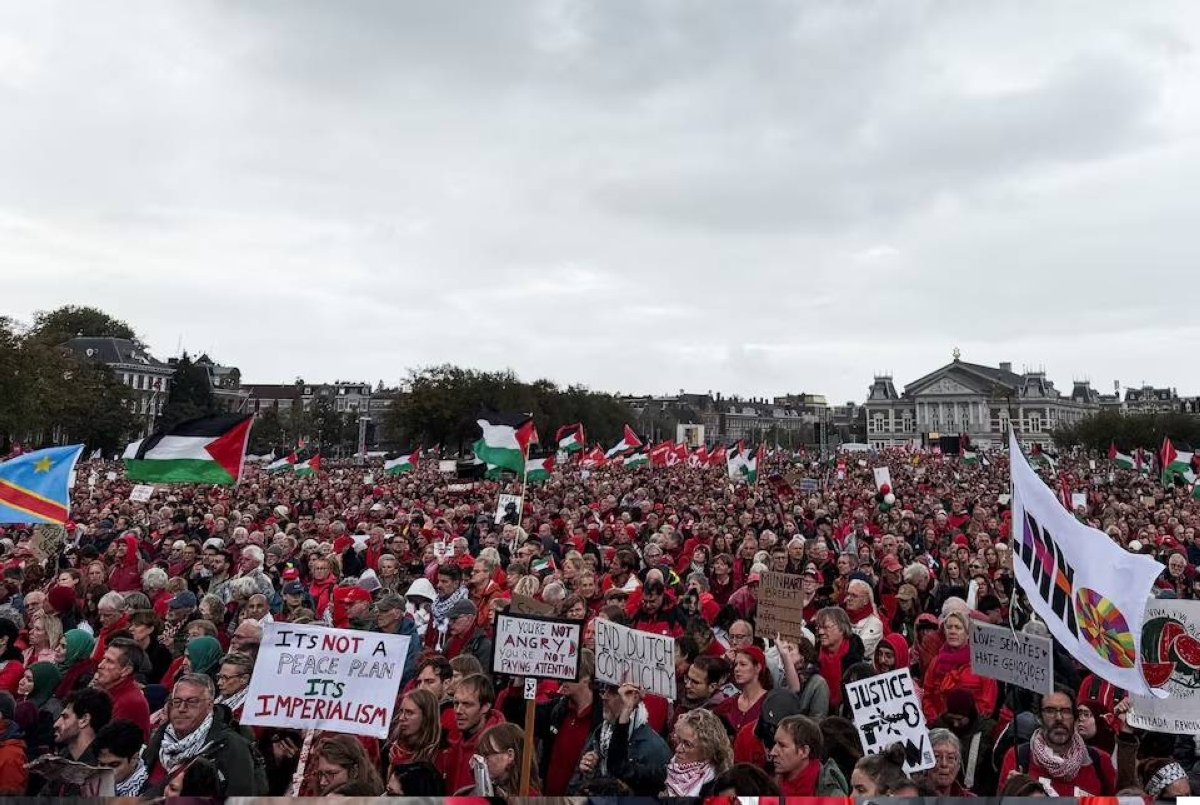
شهدت العاصمة الهولندية أمستردام، اليوم (الأحد)، مسيرة احتجاجية هائلة شارك فيها نحو 250 ألف شخص، وفقاً لتقديرات المنظمين والشرطة المحلية، مطالبين الحكومة الهولندية باتخاذ موقف أقوى ضد الحرب الإسرائيلية في غزة.
وأُطلق على المسيرة اسم «الخط الأحمر» (Red Line)، حيث ارتدى معظم المتظاهرين الملابس الحمراء رمزاً للحد الأخير الذي تجاوزته إسرائيل في حصارها للقطاع، وسط أمطار غزيرة لم تثنِ الآلاف من مختلف الأعمار عن المشاركة في مسيرة طولها 6 كيلومترات عبر شوارع العاصمة الهولندية.
سلسلة احتجاجات ضخمة
بدأت المسيرة من ساحة ميوزيوم بلين (Museumplein)، حيث أقامت برنامجاً فنياً وكلمات لناشطين، بما في ذلك الصحفية الغزاوية ريتا بارود، وسامح جابر من المجتمع الفلسطيني في هولندا، والوزيرة السابقة هيدي دأنكونا، ولويس دي كلاين من «أطباء من أجل غزة».
ورفع المتظاهرون أعلام فلسطين، مرددين «حرة حرة فلسطين»، وحملوا لافتات تقول «عارٌ عليكِ يا إسرائيل!» و«لن نكون أحراراً حتى تحرر غزة».
ومن بين المشاركين عائلات مواطنين هولنديين كانوا على متن أسطول المساعدات «الصمود العالمي» الذي أوقفته إسرائيل الأسبوع الماضي. وقالت إميليا ريڤيرو (27 عاماً) من مدينة أوتريخت: «نحن هنا لإدانة كل ما يحدث في غزة. أشعر أن هذا أقل ما يمكننا فعله أمام هذه المجازر».
هذه المسيرة الثالثة في سلسلة «الخط الأحمر»، بعد احتجاجات ضخمة في لاهاي في مايو (100 ألف مشارك) ويونيو (150 ألفاً)، وهي الأكبر في هولندا منذ عقود.
ضغط على الحكومة
ونظمت المسيرة 134 منظمة، بما في ذلك منظمة العفو الدولية، أوكسفام نوفيب، باكس، BDS هولندا، علماء هولنديون من أجل فلسطين، صوت يهودي آخر، إيرف راف، سيڤ ذا تشيلدرن، ومنتدى الحقوق.
وطالبت بـ«أقصى ضغط على جميع الأطراف لتحقيق وقف إطلاق نار دائم في غزة»، و«عقوبات سياسية واقتصادية ودبلوماسية فعالة ضد إسرائيل»، و«التعرف على إبادة جماعية في غزة وانتهاكات حقوق الإنسان».
وأكد المنظمون أن خطة الرئيس الأمريكي دونالد ترمب لإنهاء الحرب لم تغير عزيمتهم، رغم أملهم في السلام، مشيرين إلى أنها «لا تلبي المتطلبات الأساسية للعدالة».
وأثرت المسيرة على حركة النقل، حيث أضافت شركة NS قطارات إضافية، وتعطلت الترامات جزئياً، مع تشغيل المترو بكثافة أعلى.
من الحذر إلى العقوبات
ومنذ مظاهرة مايو، غيرت الحكومة الهولندية، التي كانت حليفة تقليدية لإسرائيل، موقفها تدريجياً. في يوليو، فرضت حظراً على سفر وزيري اليمين المتطرف الإسرائيليين إيتمار بن غفير وبيساليل سموتريتش، متهمة إياهما بـ«التحريض على العنف ضد الفلسطينيين، والدعوة لتطهير عرقي في غزة».
وفي الشهر الماضي، أعلنت خطة لحظر استيراد سلع من المستوطنات اليهودية في الأراضي الفلسطينية المحتلة، ودعمت تعليق الاتحاد الأوروبي إجراءات تجارية في اتفاقية الاتحاد مع إسرائيل.
وفي 3 أكتوبر، أمرت المحكمة العليا الهولندية الحكومة بمراجعة سياسة تصدير أجزاء طائرات F-35 إلى إسرائيل، بعد حكم سابق في فبراير 2024 بوقف التصدير بسبب «مخاطر واضحة لانتهاكات القانون الإنساني في غزة». وأكد وزير الخارجية ديفيد فان ويل أن التصدير «غير محتمل في الوضع الحالي»، مشيراً إلى أن هولندا ستقرر خلال 6 أسابيع.
تراجع دعم إسرائيل
مع ذلك، أدلى رئيس الوزراء المؤقت ديك شوف بتعليق يعترف بـ«غضب المتظاهرين وعجزهم»، داعياً إلى «إنهاء الوضع الإنساني الرهيب والحرب»، وتأكيد أهمية إدخال المساعدات، وإطلاق الرهائن.
وفي استطلاع Ipsos I&O لأبريل، انخفض دعم سياسة الحكومة الهولندية المؤيدة لإسرائيل إلى 15%، مع 54% يطالبون بنقد أقوى.
The Dutch capital Amsterdam witnessed a massive protest today (Sunday), with around 250,000 people participating, according to estimates from organizers and local police, demanding the Dutch government take a stronger stance against the Israeli war in Gaza.
The march was called the "Red Line," as most demonstrators wore red clothing symbolizing the last limit that Israel has crossed in its siege of the Gaza Strip, amidst heavy rain that did not deter thousands of people of all ages from participating in a 6-kilometer march through the streets of the Dutch capital.
Series of Massive Protests
The march began at Museumplein, where an artistic program and speeches were held by activists, including Gaza journalist Rita Baroud, Samah Jaber from the Palestinian community in the Netherlands, former minister Heidi D'Ancona, and Louis de Klein from "Doctors for Gaza."
Demonstrators raised Palestinian flags, chanting "Free, free Palestine," and carried signs saying "Shame on you, Israel!" and "We will not be free until Gaza is free."
Among the participants were families of Dutch citizens who were on board the "Global Solidarity" aid fleet that Israel stopped last week. Emilia Rivero (27) from Utrecht said, "We are here to condemn everything happening in Gaza. I feel this is the least we can do in the face of these massacres."
This was the third march in the "Red Line" series, following massive protests in The Hague in May (100,000 participants) and June (150,000), making it the largest in the Netherlands in decades.
Pressure on the Government
The march was organized by 134 organizations, including Amnesty International, Oxfam Novib, Pax, BDS Netherlands, Dutch Scientists for Palestine, Another Jewish Voice, IRF RAV, Save the Children, and the Rights Forum.
They called for "maximum pressure on all parties to achieve a permanent ceasefire in Gaza," "effective political, economic, and diplomatic sanctions against Israel," and "recognition of genocide in Gaza and human rights violations."
Organizers emphasized that U.S. President Donald Trump's plan to end the war did not change their resolve, despite their hope for peace, noting that it "does not meet the basic requirements for justice."
The march affected transportation, with NS adding extra trains, trams partially disrupted, and the metro operating at a higher frequency.
From Caution to Sanctions
Since the May demonstration, the Dutch government, which has traditionally been an ally of Israel, has gradually changed its stance. In July, it imposed a travel ban on the far-right Israeli ministers Itamar Ben Gvir and Bezalel Smotrich, accusing them of "inciting violence against Palestinians and calling for ethnic cleansing in Gaza."
Last month, it announced a plan to ban the import of goods from Jewish settlements in the occupied Palestinian territories and supported the European Union's suspension of trade measures in its agreement with Israel.
On October 3, the Dutch Supreme Court ordered the government to review its policy on exporting F-35 aircraft parts to Israel, following a previous ruling in February 2024 to halt exports due to "clear risks of violations of humanitarian law in Gaza." Foreign Minister David van Wil confirmed that exports are "unlikely in the current situation," indicating that the Netherlands will decide within 6 weeks.
Declining Support for Israel
Nonetheless, interim Prime Minister Dick Schoof made a statement acknowledging the "anger of the protesters and their helplessness," calling for "an end to the horrific humanitarian situation and the war," and emphasizing the importance of delivering aid and releasing hostages.
In an Ipsos I&O poll from April, support for the Dutch government's pro-Israel policy dropped to 15%, with 54% calling for stronger criticism.