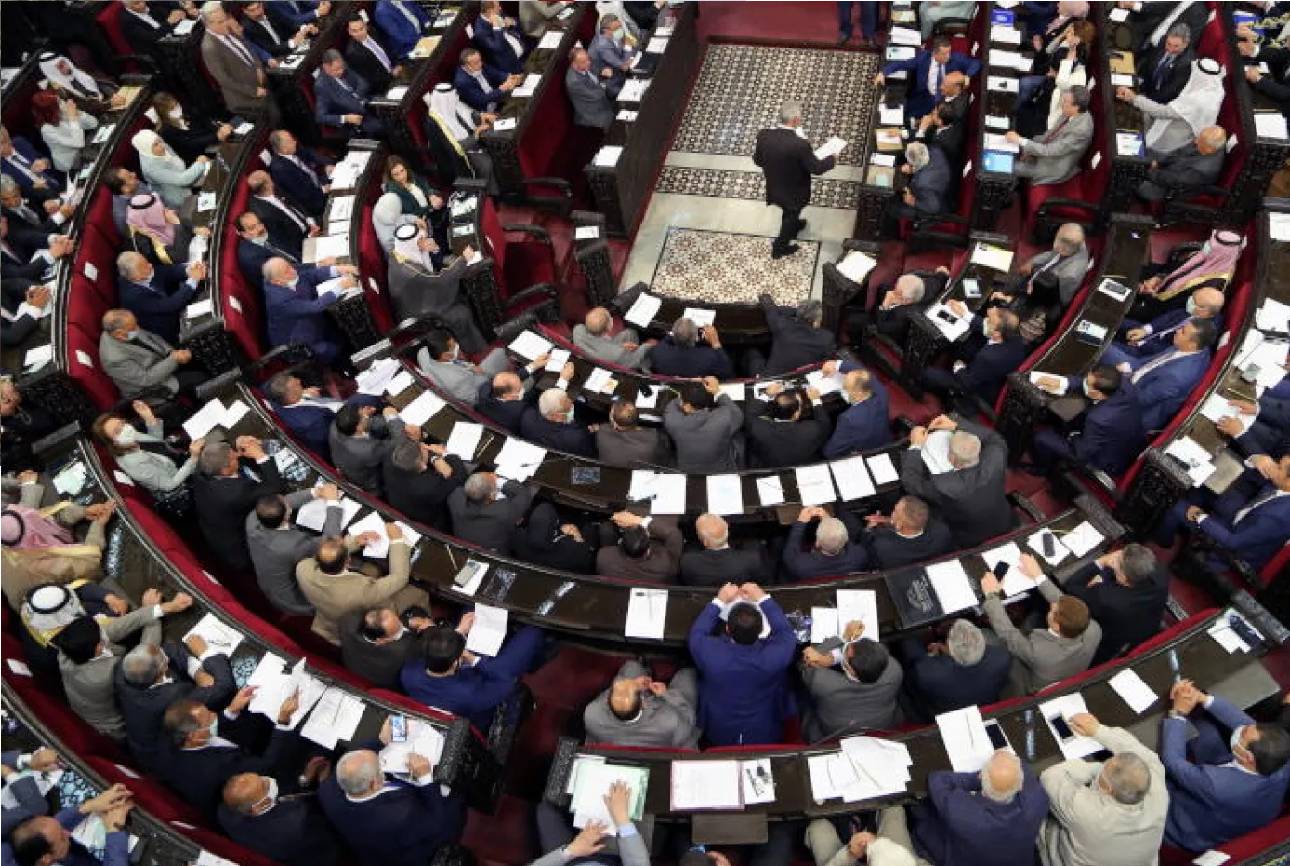
تستعد سورية لتشكيل أول برلمان لها منذ الإطاحة بالرئيس السابق بشار الأسد، في خطوة تُعدّ معلماً هاماً في الانتقال من حكمه إلى حكم الرئيس السوري الجديد أحمد الشرع.
وستُجرى انتخابات البرلمان في يوم 5 أكتوبر القادم، لاختيار ثلثي أعضاء الجمعية الشعبية، التي تتكون من 210 مقاعد، عبر لجان إقليمية حددت مجمعات انتخابية، بينما يعين الرئيس الشرع الثلث المتبقي.
اختارت السلطات هذا النظام بدلاً من الاقتراع العام بسبب نقص البيانات السكانية الموثوقة والتشريد الناجم عن سنوات الحرب.
كيف ستُجرى الانتخابات؟
شباب يلوحون بعلم سورية.
بحسب الوكالة العربية السورية للأنباء «سانا»، تسلّم الرئيس السوري أحمد الشرع، الأحد الماضي، مشروع قانون للانتخابات الذي يعدل مرسوماً سابقاً ويرفع عدد المقاعد من 150 إلى 210، وسيعين الشرع شاغلي ثلث هذه المقاعد، فيما ستُوزّع المقاعد الجديدة وفقاً لبيانات تعداد 2011، على أن يُعيّن الرئيس 70 عضواً من بينهم، كما يُنتظر أن تبلغ نسبة تمثيل المرأة في الهيئات الناخبة 20% على الأقل.
ومن أبرز التعديلات التي تضمنتها النسخة النهائية السماح للأشخاص بالترشح في المنطقة الانتخابية التي يقيمون فيها، وإن لم يكونوا من مواليد هذه المنطقة، شريطة أن يكونوا مقيمين فيها منذ خمس سنوات فأكثر وأن يثبتوا ذلك بالوثائق سواء بوثيقة نقل قيده أو سند إقامة.
من بين التعديلات الأخرى التي تم إدراجها في النسخة الأخيرة هو زيادة عدد المناطق (الدوائر) الانتخابية إلى أكثر من 65 منطقة.
وتُدار العملية من قبل هيئة عليا تتكون من 11 عضواً عينهم الشرع في يونيو، والتي بدورها شكلت لجاناً فرعية إقليمية اختارت أعضاء المجمعات الانتخابية بعد مشاورات محلية.
ماذا قال الشرع؟
الرئيس السوري أحمد الشرع.
من جانبه، أكد الشرع أن تشكيل الجمعية يتم بطريقة «مقبولة» لمرحلة انتقالية، واصفاً إياها بأنها «ليست حالة دائمة».
وأوضح أن إجراء انتخابات وطنية مستحيل بسبب «فقدان الوثائق»، مشيراً إلى أن العديد من السوريين خارج البلاد ويفتقرون إلى الوثائق.
وكان الشرع قد أعرب في يناير لمجلة «الإيكونوميست» عن دعمه للحكم الديمقراطي، قائلاً إن الديمقراطية تعني أن «الشعب يقرر من يحكمه ومن يمثله في البرلمان»، وأن سورية تسير في هذا الاتجاه.
صلاحيات البرلمان
وفقاً للدستور المؤقت المُعتمد في مارس، يتمتع البرلمان بصلاحيات محدودة، ولا يُطلب من الحكومة نيل ثقته، ويمكن للجمعية اقتراح القوانين وإقرارها، وتستمر ولايتها لمدة 30 شهراً قابلة للتجديد، حتى يتم اعتماد دستور دائم وتنظيم انتخابات جديدة.
Syria is preparing to form its first parliament since the ousting of former President Bashar al-Assad, in a step considered a significant milestone in the transition from his rule to that of the new Syrian President Ahmad al-Shara.
The parliamentary elections will be held on October 5, to elect two-thirds of the members of the People's Assembly, which consists of 210 seats, through regional committees that have designated electoral districts, while President al-Shara will appoint the remaining third.
The authorities chose this system instead of general voting due to a lack of reliable demographic data and the displacement resulting from years of war.
How will the elections be conducted?
شباب يلوحون بعلم سورية.
According to the Syrian Arab News Agency "SANA," Syrian President Ahmad al-Shara received last Sunday a draft law for the elections that amends a previous decree and raises the number of seats from 150 to 210. Al-Shara will appoint the occupants of one-third of these seats, while the new seats will be distributed according to the 2011 census data, with the president expected to appoint 70 members from among them. It is also anticipated that the representation of women in the electoral bodies will reach at least 20%.
One of the most notable amendments included in the final version allows individuals to run in the electoral district where they reside, even if they are not originally from that area, provided they have been residents for five years or more and can prove this with documents such as a transfer of residency or a residency certificate.
Among other amendments included in the final version is the increase in the number of electoral districts to more than 65 areas.
The process is managed by a high commission consisting of 11 members appointed by al-Shara in June, which in turn formed regional subcommittees that selected members of the electoral districts after local consultations.
What did al-Shara say?
الرئيس السوري أحمد الشرع.
For his part, al-Shara confirmed that the formation of the assembly is being done in an "acceptable" manner for a transitional phase, describing it as "not a permanent situation."
He explained that conducting national elections is impossible due to the "loss of documents," noting that many Syrians are outside the country and lack documentation.
Al-Shara had expressed his support for democratic governance in January to "The Economist," stating that democracy means that "the people decide who governs them and who represents them in parliament," and that Syria is moving in this direction.
Powers of the Parliament
According to the interim constitution adopted in March, the parliament has limited powers, and the government is not required to gain its confidence. The assembly can propose and approve laws, and its term lasts for 30 months, renewable until a permanent constitution is adopted and new elections are organized.