


أعلن الرئيس السوري أحمد الشرع رفضه نسخ تجربة «الاتفاقات الإبراهيمية» لأن الظروف بين إسرائيل وسورية تختلف عن الدول العربية الأخرى، مستبعداً نسخ الاتفاقية في بلاده، وبحسب ما نشرته وسائل إعلام عربية فإن الشرع شدد على أن الجولان أرض محتلة والأولوية هي العودة لاتفاق فك الاشتباك عام 1974 أو شيء مشابه، وضبط الوضع الأمني في جنوب سورية بإشراف دولي.
وقال الشرع: إن سورية التي لديها عوامل قوة وحلفاء لن تنجر إلى أي حرب، بل ركزت على شرح موقفها وحصلت على دعم لسورية موحدة وقوية.
وأشار إلى أن إستراتيجيته هي تصفير المشكلات وحل الخلافات، وفي رده على سؤال خلال لقاء مع وفد عربي ضم رؤساء تحرير وسائل إعلام ووزراء سابقين في القصر الرئاسي السوري في دمشق، عن زيارته القادمة إلى نيويورك في أول مشاركة رئاسية سورية في اجتماعات الجمعية العامة منذ يونيو 1967، أوضح الشرع أن سورية كانت في «عزلة ضمن عزلة» بسبب ممارسات النظام السابق وموقف الدول منه ومشاركتي هي أحد العناوين الكبرى التي تدل على تصحيح المواقف من سورية سواءً بسبب سياسات سورية أو بسبب سياسات بعض الدول نحو سورية.
وأضاف: «لا شك أن الزيارة هي من عناوين التحول البارزة في سورية»، لافتاً إلى أنه كانت هناك عقوبات أمريكية منذ 1979، أما الآن فهناك علاقات جيدة مع أمريكا والسعودية وتركيا والإمارات وقطر والأردن والدول الأوروبية.
وسئل عن اتفاق فك الاشتباك لعام 1974، فأجاب: «النظام السابق كان مرتبطاً باتفاق فك الاشتباك لعام 1974 وهناك قوات دولية لتطبيق اتفاق فك الاشتباك».
ولفت إلى أن أي سياسة ترمي إلى نوع من التقسيم في سورية، لن تنجح، فالجولان محتلة منذ عام 1967، ولم يعترف أحد باحتلاله، ولا يحظى بدعم عربي وإقليمي ودولي؛ لأن الدول ضد تقسيم الدول، لأنها لا تريد العدوى، وتريد الحفاظ على وحدة الدول، مضيفاً:: «خلاصة الكلام أنه عندما تلوح إسرائيل بالتقسيم، فالهدف هو الضغط، هذا غير واقعي؛ لأنه سيصطدم بالواقع، هناك كتلة شعبية سورية كبيرة ضد التقسيم».
وأشار إلى أن الأولوية حالياً للعودة لاتفاق فك الاشتباك لعام 1974 أو شيء مشابه، أي ضبط الوضع الأمني في جنوب سورية بإشراف دولي، مبيناً أن إنجاز الاتفاق الأمني يتوقف على مضمونه، وعندما ننجز أي شيء لن نكون خجولين، سنعلن أي خطوة نقوم بها إذا كانت فيها مصلحة للبلد وتساهم في تحقيق الاستقرار.
وعن لبنان، تحدث الشرع عن الخصوصية الجغرافية للعلاقة بين دمشق وبيروت، قائلاً: «لبنان عانى كثيراً من السياسة السورية خلال حكم النظام السابق. وهناك ما يسمى قهر الجغرافيا، فالجغرافيا أثرت سلبياً في لبنان»، مضيفاً: «نحتاج إلى صفحة جديدة بيضاء بين سورية ولبنان يكتب فيها تاريخ جديد للعلاقات بين البلدين، ويجب إلغاء الذاكرة السلبية بينهما، وهناك عزيمة لإلغائها».
وأوضح الرئيس السوري أن لبنان في حاجة إلى الاستقرار وتحسين الوضع الاقتصادي وبإمكان لبنان أن يستفيد كثيراً من الهبة الاقتصادية في سورية، لافتاً إلى أن هناك الكثير من المشتركات من موانئ وطرق وإمكانات للتعاون، ويجب أن لا يفهم أن سورية تريد أن تتحكم في لبنان، دخول البيوت يجب أن يتم من الأبواب وهذا أفضل شيء، وهذا ما قمت به، لقد تحدثت إلى الرئيس اللبناني ورئيس الوزراء نواف سلام.
ولفت إلى أنه بعد وصوله إلى دمشق وسقوط الأسد لم يصرح بأي تصريح يتعلق بالشأن الداخلي اللبناني لأنه يريد أن يكون على مسافة واحدة من الجميع، مضيفاً: في الشرق الأوسط «غليان، من غزة إلى الضفة الغربية وغيرها، هناك أطراف في المنطقة تريد أن يكون لها دور وتريد استغلال بعض الأمور، إيران خسرت كثيراً ومحورها خسر كثيراً وهي تحاول استغلال بعض الأمور للعودة».
وأشار إلى أن المنطقة تحتاج إلى تصفير المشكلات، مبيناً أنه عندما وقعت أزمة في سورية تأثرت كل المنطقة، لذلك نريد الدفع نحو الاستقرار في المنطقة، وركزت على العمل على تحسين وضع سورية واقتصادها وتقديم نموذج للمنطقة ودعم الاستقرار فيها، وبعثت برسالة إلى لبنان والعراق وبعض دول المنطقة عبر تشكيل الحكومة السورية، إنني أرفض المحاصصة، وقلت إننا نريد المشاركة والتشاركية في إدارة البلد ونريد تعزيز المواطنة وهذا هو الأساس.
وفيما يتعلق بالعراق، قال الشرع إنه «خلال معركة «ردع العدوان» وتحرير سورية لاحظت أن بعض الأطراف تحاول استغلال الوضع، وإنه بعد تحرير حلب في نوفمبر كانت عيوني على مواقف أطراف كثيرة بينها العراق، كانت هناك حالة ضاغطة على القرار في العراق، فلم أتوان عن طمأنة الحالة العراقية، تدخُّل العراق في الشأن السوري كان سيعقِّد الأمور، فأرسلت رسائل طمأنة». مضيفاً: السوداني استجاب واكتفى بحماية الحدود دون التدخل في سورية، هذه خطوة في الاتجاه الصحيح، أنا أدخل من الأبواب وأصررت على الدخول عبر الحكومة العراقية.
وشدد بالقول: «أنا تابعت رئيس الوزراء محمد شياع السوداني واهتماماته وأولوياته التنموية ورغبته في تحقيق الاستقرار وتشجيع الاستثمار، والسوداني لديه رغبة في تحسين العلاقات وأنا لدي رغبة ونحن نسير بالتدرج، رغم الجروح الناتجة من تدخل بعض الأطراف العراقية في سورية».
وأشار إلى أن التحرير أعاد روح الانتماء عند السوريين، ولدينا خطط إستراتيجية لبناء سورية المستقبل تتضمن ربط موانئ سورية وطرق وسكك سورية بالدول المجاورة والعالم.
وفيما يتعلق بأحداث الساحل والسويداء، أكد الشرع في رده على الأسئلة أن معظم أهالي السويداء مرتبطون بدمشق وكانت هناك قلة قليلة تسبب اضطرابات وبعضها ينسق مع إسرائيل. وهناك قوات عسكرية فيها ضباط من النظام السابق وتجار مخدرات، مضيفاً: حصلت اشتباكات بين الدروز والبدو وحصلت أخطاء من كل الأطراف وتدخلت قوات الأمن، وربما حصلت بعض الأخطاء.
وأكد الشرع أن حل الأمور بالصبر والعمل على ترميم الأمور بين الدروز والبدو والذهاب إلى حالات من التفاهم، أما بعض الطروحات بالتقسيم بدعم من إسرائيل فهي حالمة، وأهل السويداء موقفهم مشرف عبر تاريخ سورية وموقف فئة معينة لا يعني الكل.
وأشار إلى أن سورية موحدة والسلاح تحت سلطة الدولة، أما السلاح المنفلت فلن يؤدي إلى الاستقرار ويضر بسورية والإقليم والجوار.
وفيما تعلق بشمال شرق سورية، ميز الشرع بين «قسد» والأكراد، قائلاً: أنا متعاطف مع الأكراد ومعاناتهم بسبب بعض التصرفات عبر عقود سابقة، مضيفاً: إذا كان الهدف هو حقوق الأكراد، فلا داعٍ لنقطة دم، لأن هذه الحقوق ستكون في الدستور، أما المحاصصة فهي غير مقبولة.
وفي رده على سؤال حول قوانين سورية، أكد أن المهم هو تعريف الفيدرالية أو اللامركزية، وإذا كانت تعني التقسيم، فهذا غير مقبول.
وسئل عن تجربته الشخصية، فأجاب الشرع أن أي مرحلة بالتاريخ يجب أن تقاس بظروفها وقوانين المرحلة، وأنه لا يمكن محاكمة الماضي بقوانين الحاضر أو محاكمة الحاضر بقوانين الماضي.
رفض التطبيع مع إسرائيل وشدد على عودة الجولان
الشرع: وحدة سورية خط أحمر.. لا تقسيم ولا انفصال
26 أغسطس 2025 - 21:02
|
آخر تحديث 26 أغسطس 2025 - 21:02
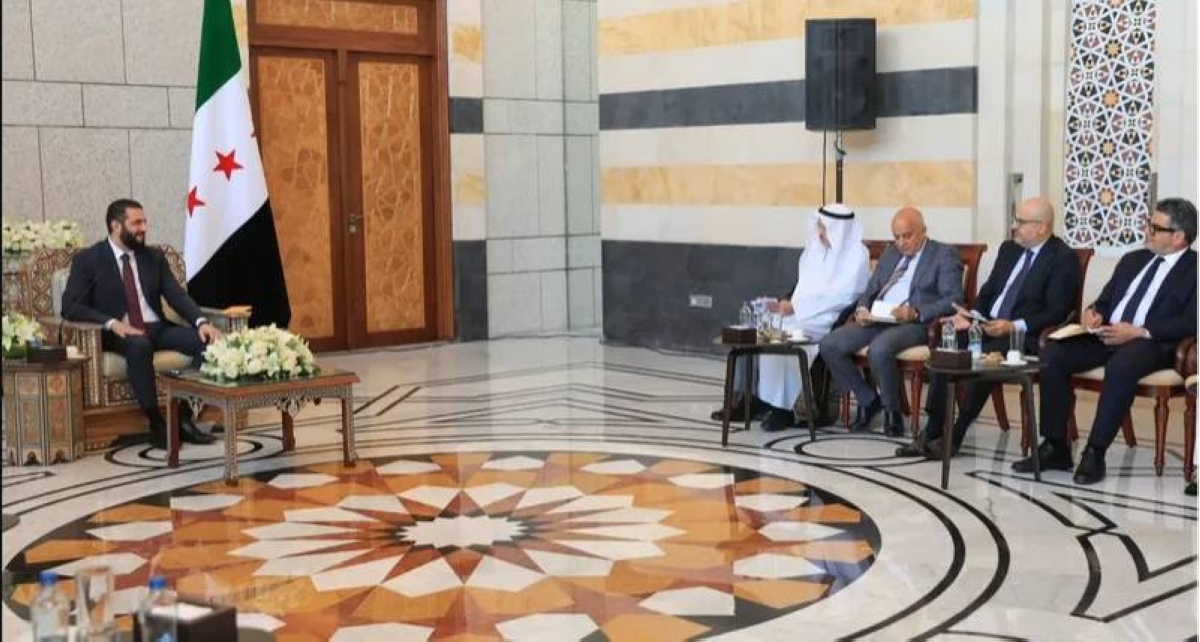
الشرع مستقبلاً الوفد الإعلامي العربي.


تابع قناة عكاظ على الواتساب
«عكاظ» (جدة) okaz_online@
The Syrian President Ahmad al-Shara announced his rejection of copying the experience of the "Abraham Accords," stating that the circumstances between Israel and Syria differ from those of other Arab countries, ruling out the possibility of replicating the agreement in his country. According to what was published by Arab media, al-Shara emphasized that the Golan Heights is occupied land, and the priority is to return to the disengagement agreement of 1974 or something similar, and to regulate the security situation in southern Syria under international supervision.
Al-Shara stated that Syria, which has factors of strength and allies, will not be drawn into any war, but rather focused on explaining its position and has received support for a unified and strong Syria.
He pointed out that his strategy is to eliminate problems and resolve disputes. In response to a question during a meeting with an Arab delegation that included editors-in-chief of media outlets and former ministers at the Syrian presidential palace in Damascus about his upcoming visit to New York, which marks the first Syrian presidential participation in the General Assembly meetings since June 1967, al-Shara clarified that Syria has been in "isolation within isolation" due to the practices of the previous regime and the stance of countries towards it. His participation is one of the major indicators that signal a correction of positions towards Syria, whether due to Syrian policies or the policies of some countries towards Syria.
He added: "There is no doubt that the visit is one of the prominent indicators of transformation in Syria," noting that there have been American sanctions since 1979, but now there are good relations with the U.S., Saudi Arabia, Turkey, the UAE, Qatar, Jordan, and European countries.
When asked about the disengagement agreement of 1974, he replied: "The previous regime was linked to the disengagement agreement of 1974, and there are international forces to implement the disengagement agreement."
He pointed out that any policy aimed at some form of division in Syria will not succeed, as the Golan has been occupied since 1967, and no one recognizes its occupation, nor does it enjoy Arab, regional, or international support; because countries are against the division of states, as they do not want contagion and want to maintain the unity of states, adding: "In summary, when Israel threatens division, the goal is pressure; this is unrealistic because it will collide with reality, there is a large Syrian popular bloc against division."
He indicated that the current priority is to return to the disengagement agreement of 1974 or something similar, meaning regulating the security situation in southern Syria under international supervision, explaining that achieving the security agreement depends on its content, and when we accomplish anything, we will not be shy; we will announce any step we take if it serves the country's interest and contributes to achieving stability.
Regarding Lebanon, al-Shara spoke about the geographical specificity of the relationship between Damascus and Beirut, saying: "Lebanon has suffered a lot from Syrian policy during the rule of the previous regime. There is what is called the oppression of geography; geography has negatively affected Lebanon," adding: "We need a new blank page between Syria and Lebanon to write a new history of relations between the two countries, and we must eliminate the negative memory between them, and there is a determination to eliminate it."
The Syrian president clarified that Lebanon needs stability and improving the economic situation, and Lebanon can benefit greatly from the economic boon in Syria, noting that there are many commonalities in ports, roads, and opportunities for cooperation, and it should not be understood that Syria wants to control Lebanon; entering homes should be done through the doors, and this is the best thing, and this is what I have done. I spoke to the Lebanese president and Prime Minister Nawaf Salam.
He pointed out that after arriving in Damascus and the fall of Assad, he did not make any statements regarding the internal Lebanese affairs because he wants to be at an equal distance from everyone, adding: In the Middle East, "there is boiling, from Gaza to the West Bank and elsewhere, there are parties in the region that want to have a role and want to exploit some matters; Iran has lost a lot, and its axis has lost a lot, and it is trying to exploit some matters to return."
He noted that the region needs to eliminate problems, explaining that when the crisis occurred in Syria, the entire region was affected, so we want to push towards stability in the region, and I focused on working to improve Syria's situation and economy and providing a model for the region and supporting stability in it. I sent a message to Lebanon, Iraq, and some countries in the region through the formation of the Syrian government, stating that I reject sectarian quotas, and I said that we want participation and partnership in managing the country, and we want to enhance citizenship, and this is the foundation.
Regarding Iraq, al-Shara said that "during the battle of 'Deterring Aggression' and liberating Syria, I noticed that some parties were trying to exploit the situation, and after the liberation of Aleppo in November, my eyes were on the positions of many parties, including Iraq. There was a pressing situation on the decision in Iraq, so I did not hesitate to reassure the Iraqi situation. Iraq's intervention in the Syrian affair would complicate matters, so I sent reassuring messages." He added: Al-Sudani responded and was content with protecting the borders without intervening in Syria; this is a step in the right direction. I enter through the doors and insisted on entering through the Iraqi government.
He emphasized: "I have followed Prime Minister Muhammad Shia al-Sudani and his developmental interests and priorities, his desire to achieve stability, and encourage investment. Al-Sudani has a desire to improve relations, and I have a desire, and we are progressing gradually, despite the wounds resulting from the intervention of some Iraqi parties in Syria."
He pointed out that liberation has restored the spirit of belonging among Syrians, and we have strategic plans for building the future of Syria that include linking Syrian ports, roads, and railways with neighboring countries and the world.
Regarding the events in the coast and Sweida, al-Shara confirmed in response to questions that most of the people of Sweida are connected to Damascus, and there were a few who caused disturbances, some of whom coordinate with Israel. There are military forces with officers from the previous regime and drug dealers, adding: There were clashes between the Druze and the Bedouins, and mistakes occurred from all parties, and security forces intervened, and perhaps some mistakes occurred.
Al-Shara confirmed that resolving matters requires patience and working to repair relations between the Druze and the Bedouins and moving towards understanding. As for some proposals for division supported by Israel, they are dreamy, and the people of Sweida have a dignified position throughout the history of Syria, and the position of a certain group does not represent everyone.
He pointed out that Syria is united, and weapons are under the authority of the state, while loose weapons will not lead to stability and will harm Syria, the region, and its neighbors.
Regarding northeastern Syria, al-Shara distinguished between "SDF" and the Kurds, saying: I sympathize with the Kurds and their suffering due to some actions over previous decades, adding: If the goal is Kurdish rights, there is no need for a drop of blood, because these rights will be in the constitution, while sectarian quotas are unacceptable.
In response to a question about Syrian laws, he confirmed that the important thing is to define federalism or decentralization, and if it means division, this is unacceptable.
When asked about his personal experience, al-Shara replied that any stage in history should be measured by its circumstances and the laws of the stage, and that one cannot judge the past by the laws of the present or judge the present by the laws of the past.
Al-Shara stated that Syria, which has factors of strength and allies, will not be drawn into any war, but rather focused on explaining its position and has received support for a unified and strong Syria.
He pointed out that his strategy is to eliminate problems and resolve disputes. In response to a question during a meeting with an Arab delegation that included editors-in-chief of media outlets and former ministers at the Syrian presidential palace in Damascus about his upcoming visit to New York, which marks the first Syrian presidential participation in the General Assembly meetings since June 1967, al-Shara clarified that Syria has been in "isolation within isolation" due to the practices of the previous regime and the stance of countries towards it. His participation is one of the major indicators that signal a correction of positions towards Syria, whether due to Syrian policies or the policies of some countries towards Syria.
He added: "There is no doubt that the visit is one of the prominent indicators of transformation in Syria," noting that there have been American sanctions since 1979, but now there are good relations with the U.S., Saudi Arabia, Turkey, the UAE, Qatar, Jordan, and European countries.
When asked about the disengagement agreement of 1974, he replied: "The previous regime was linked to the disengagement agreement of 1974, and there are international forces to implement the disengagement agreement."
He pointed out that any policy aimed at some form of division in Syria will not succeed, as the Golan has been occupied since 1967, and no one recognizes its occupation, nor does it enjoy Arab, regional, or international support; because countries are against the division of states, as they do not want contagion and want to maintain the unity of states, adding: "In summary, when Israel threatens division, the goal is pressure; this is unrealistic because it will collide with reality, there is a large Syrian popular bloc against division."
He indicated that the current priority is to return to the disengagement agreement of 1974 or something similar, meaning regulating the security situation in southern Syria under international supervision, explaining that achieving the security agreement depends on its content, and when we accomplish anything, we will not be shy; we will announce any step we take if it serves the country's interest and contributes to achieving stability.
Regarding Lebanon, al-Shara spoke about the geographical specificity of the relationship between Damascus and Beirut, saying: "Lebanon has suffered a lot from Syrian policy during the rule of the previous regime. There is what is called the oppression of geography; geography has negatively affected Lebanon," adding: "We need a new blank page between Syria and Lebanon to write a new history of relations between the two countries, and we must eliminate the negative memory between them, and there is a determination to eliminate it."
The Syrian president clarified that Lebanon needs stability and improving the economic situation, and Lebanon can benefit greatly from the economic boon in Syria, noting that there are many commonalities in ports, roads, and opportunities for cooperation, and it should not be understood that Syria wants to control Lebanon; entering homes should be done through the doors, and this is the best thing, and this is what I have done. I spoke to the Lebanese president and Prime Minister Nawaf Salam.
He pointed out that after arriving in Damascus and the fall of Assad, he did not make any statements regarding the internal Lebanese affairs because he wants to be at an equal distance from everyone, adding: In the Middle East, "there is boiling, from Gaza to the West Bank and elsewhere, there are parties in the region that want to have a role and want to exploit some matters; Iran has lost a lot, and its axis has lost a lot, and it is trying to exploit some matters to return."
He noted that the region needs to eliminate problems, explaining that when the crisis occurred in Syria, the entire region was affected, so we want to push towards stability in the region, and I focused on working to improve Syria's situation and economy and providing a model for the region and supporting stability in it. I sent a message to Lebanon, Iraq, and some countries in the region through the formation of the Syrian government, stating that I reject sectarian quotas, and I said that we want participation and partnership in managing the country, and we want to enhance citizenship, and this is the foundation.
Regarding Iraq, al-Shara said that "during the battle of 'Deterring Aggression' and liberating Syria, I noticed that some parties were trying to exploit the situation, and after the liberation of Aleppo in November, my eyes were on the positions of many parties, including Iraq. There was a pressing situation on the decision in Iraq, so I did not hesitate to reassure the Iraqi situation. Iraq's intervention in the Syrian affair would complicate matters, so I sent reassuring messages." He added: Al-Sudani responded and was content with protecting the borders without intervening in Syria; this is a step in the right direction. I enter through the doors and insisted on entering through the Iraqi government.
He emphasized: "I have followed Prime Minister Muhammad Shia al-Sudani and his developmental interests and priorities, his desire to achieve stability, and encourage investment. Al-Sudani has a desire to improve relations, and I have a desire, and we are progressing gradually, despite the wounds resulting from the intervention of some Iraqi parties in Syria."
He pointed out that liberation has restored the spirit of belonging among Syrians, and we have strategic plans for building the future of Syria that include linking Syrian ports, roads, and railways with neighboring countries and the world.
Regarding the events in the coast and Sweida, al-Shara confirmed in response to questions that most of the people of Sweida are connected to Damascus, and there were a few who caused disturbances, some of whom coordinate with Israel. There are military forces with officers from the previous regime and drug dealers, adding: There were clashes between the Druze and the Bedouins, and mistakes occurred from all parties, and security forces intervened, and perhaps some mistakes occurred.
Al-Shara confirmed that resolving matters requires patience and working to repair relations between the Druze and the Bedouins and moving towards understanding. As for some proposals for division supported by Israel, they are dreamy, and the people of Sweida have a dignified position throughout the history of Syria, and the position of a certain group does not represent everyone.
He pointed out that Syria is united, and weapons are under the authority of the state, while loose weapons will not lead to stability and will harm Syria, the region, and its neighbors.
Regarding northeastern Syria, al-Shara distinguished between "SDF" and the Kurds, saying: I sympathize with the Kurds and their suffering due to some actions over previous decades, adding: If the goal is Kurdish rights, there is no need for a drop of blood, because these rights will be in the constitution, while sectarian quotas are unacceptable.
In response to a question about Syrian laws, he confirmed that the important thing is to define federalism or decentralization, and if it means division, this is unacceptable.
When asked about his personal experience, al-Shara replied that any stage in history should be measured by its circumstances and the laws of the stage, and that one cannot judge the past by the laws of the present or judge the present by the laws of the past.


