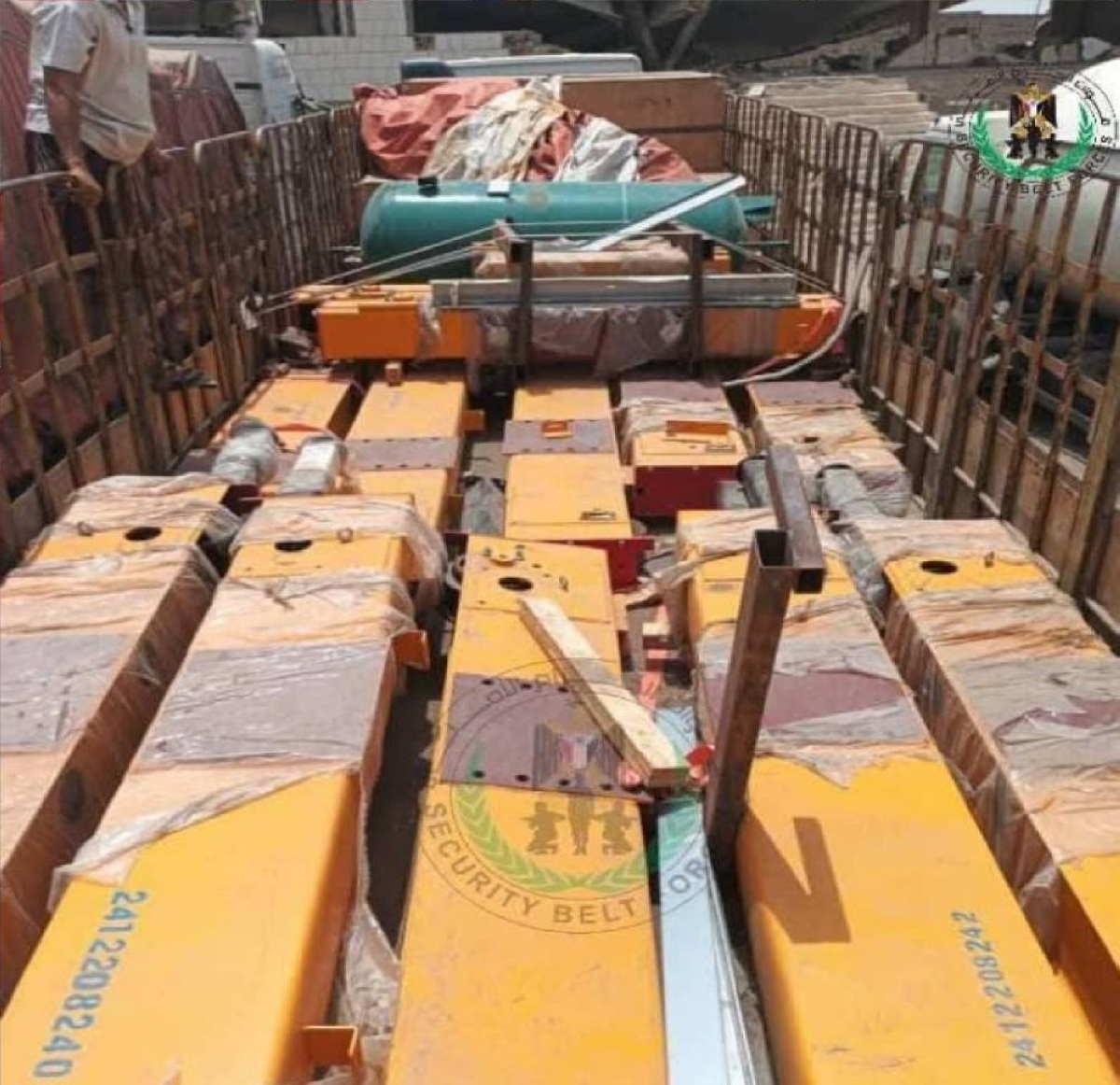
فيما نشرت القوات اليمنية اعترافات خلية تهريب الأسلحة التي ضبطت الشهر الماضي قبالة السواحل اليمنية، كشف مصدر أمني يمني في محافظة لحج اليوم (السبت) عن إحباط محاولة لتهريب معدات بحرية حساسة ورافعات مخصصة لإنزال حاويات السفن إلى مناطق الحوثي.
وقال المصدر إنه أثناء التفتيش الاعتيادي في نقطة الحسيني الأمنية شمال مدينة الحوطة، اشتبه أفراد النقطة بإحدى الشاحنات ليتم توقيفها وتفتيشها بدقة، والعثور بداخلها على رافعات مخفية بإحكام تحت «طرابيل» ثقيلة، في محاولة لإخفاء طبيعة الحمولة، مبيناً أن التحقيقات الأولية أظهرت أن الشحنة تم تحميلها من أحد «الهناجر» في منطقة الرباط، وتجهيزها للنقل باتجاه صنعاء، على أن تُسلك طريقها لاحقاً إلى الحديدة.
وأشار المصدر إلى أن السائق ومرافقيه أقروا بتفاصيل الحمولة والوجهة النهائية، وهو ما دفع الأجهزة الأمنية إلى مباشرة الإجراءات القانونية، وفتح تحقيق موسّع لتحديد الأطراف المتورطة في عملية النقل، سواء من داخل المناطق المحررة أو خارجها.
من جهة أخرى، أعلنت المقاومة الوطنية (إحدى فصائل الجيش اليمني) أن طاقم سفينة «الشروا» المضبوطة أخيراً التي كانت تحمل أسلحة تزن 750 طناً أقروا بأدوات ومسارات التهريب ونوعية الأسلحة الإستراتيجية والكيمائية، ومعسكرات الحوثي وأسماء القيادات المتورطة داخل اليمن وخارجه في عملية التهريب والتجنيد للمهربين، وتتكون خلية التهريب المضبوطة من 7 عناصر.
وأكد عناصر الخلية (المهربون) الطرق التي سلكوها للوصول إلى الدولة ومصدر الأسلحة ووجهتهم النهائية المتمثلة بـ«ميناء الصليف»، مؤكدين أنهم هربوا شحنات من دول عدة إلى اليمن.
وعرض المتهمون أساليب تجنيدهم من قبل الحوثيين وطرق سفرهم الجوية والبحرية والبرية، واستقبال «حزب الله» لهم ونقلهم إلى سورية ومنها إلى دول أخرى.
وأشاروا إلى أنه يقودهم القيادي الحوثي محمد جعفر الطالبي، مؤكدين أن هناك ثلاثة مسارات للتهريب أحدها إلى الصومال ومن إحدى الدول الأفريقية، وأنهم يستخدمون طرقاً وأساليب للتمويه من بينها عدم المرور من الطريق الدولي بباب المندب، وإنما من الجانب الغربي باتجاه إرتيريا، موضحين أن جميع عملياتهم تتم بغطاء تجاري ومموهة في أجسام معدات ورش ومولدات ومحولات كهربائية ومضخات هواء وأعمدة هيدروليك، موضحين أن الحوثيون يقودون خلايا التهريب من مدينة الحديدة ويتولى التنسيق والقيادة من سواحل الحديدة القيادات؛ حسين حامد حمزة محسن العطاس، ومحمد درهم قاسم المؤيد المعروف بـ«إبراهيم المؤيد»، ويحيى محمد حسن قاسم العراقي المعروف بـ«يحيى جنية»، وفيصل أحمد غالب الحمزي، فيما يعمل إياد محمد عمر مقبول عطيني، ووائل محمد سعيد عبدالودود، وعمر أحمد عمر حاج مساعدون للعطاس.
While the Yemeni forces published confessions from the arms smuggling cell that was seized last month off the Yemeni coast, a Yemeni security source in Lahij province revealed today (Saturday) the thwarting of an attempt to smuggle sensitive maritime equipment and cranes designated for unloading ship containers to Houthi areas.
The source stated that during a routine inspection at the Al-Husseini security checkpoint north of Al-Hawta city, the checkpoint personnel suspected one of the trucks, leading to its detention and thorough inspection, where hidden cranes were found securely concealed under heavy "tarpaulins," in an attempt to disguise the nature of the cargo. He indicated that initial investigations showed that the shipment was loaded from one of the "hangars" in the Al-Ribat area and prepared for transport towards Sana'a, with plans to later route it to Al-Hudaydah.
The source pointed out that the driver and his companions admitted to the details of the cargo and the final destination, which prompted the security agencies to initiate legal procedures and open an extensive investigation to identify the parties involved in the transport operation, whether from within the liberated areas or outside them.
On another note, the National Resistance (one of the factions of the Yemeni army) announced that the crew of the recently seized ship "Al-Sharwa," which was carrying 750 tons of weapons, acknowledged the tools and routes of smuggling, the types of strategic and chemical weapons, Houthi camps, and the names of the leaders involved both inside and outside Yemen in the smuggling and recruitment of smugglers. The seized smuggling cell consists of 7 members.
The members of the cell (the smugglers) confirmed the routes they took to reach the country, the source of the weapons, and their final destination represented by "Al-Salif Port," asserting that they smuggled shipments from several countries to Yemen.
The accused presented the methods of their recruitment by the Houthis and their means of travel by air, sea, and land, as well as the reception by "Hezbollah" and their transfer to Syria and then to other countries.
They indicated that they are led by Houthi leader Muhammad Jaafar Al-Talabi, confirming that there are three smuggling routes, one of which is to Somalia and from one of the African countries, and that they use methods and tactics for camouflage, including not passing through the international road at Bab al-Mandab, but rather from the western side towards Eritrea. They clarified that all their operations are conducted under commercial cover and camouflaged in the bodies of equipment, workshops, generators, electrical transformers, air pumps, and hydraulic columns, explaining that the Houthis lead the smuggling cells from the city of Al-Hudaydah, with coordination and leadership from the coasts of Al-Hudaydah by leaders; Hussein Hamid Hamza Mohsen Al-Attas, Muhammad Dirham Qasim Al-Muayyad known as "Ibrahim Al-Muayyad," Yahya Muhammad Hassan Qasim Al-Iraqi known as "Yahya Jinnia," and Faisal Ahmed Ghaleb Al-Hamzi, while Iyad Muhammad Omar Maqbul Atini, Wael Muhammad Said Abdul-Wadud, and Omar Ahmed Omar Haj are assistants to Al-Attas.