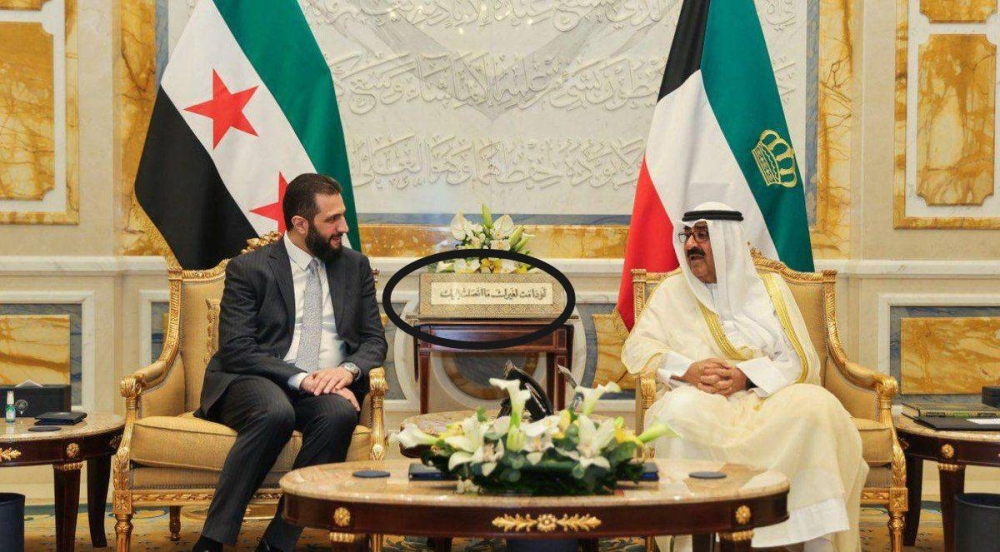
أثارت جملة مكتوبة على لافتة بالقصر الأميري الكويتي، خلال الاجتماع بين أمير الكويت الشيخ مشعل الأحمد الجابر الصباح، والرئيس السوري أحمد الشرع تفاعلا وجدلا واسعاً.
وتداول نشطاء على مواقع التواصل الاجتماعي صورا من اجتماع أمير الكويت والشرع في قصر بيان بالكويت، نشرتها وكالة الأنباء الكويتية.
وكُتب على اللافتة التي وضعت بين أمير الكويت والشرع خلال الاجتماع: «لو دامت لغيرك لما اتصلت إليك»، ما أثار تفاعلا وحالة من الجدل والتفسيرات المختلفة.
وتشير مصادر كويتية موثوقة إلى أن العبارة تعد رمزاً بارزاً في الكويت وقد حرص أمير البلاد الشيخ مشعل الأحمد الصباح على هذه العبارة التي تظهر منقوشة في قصر الحكم، ليؤكد أنها ليست مجرد كلمات مكتوبة على واجهة قصر الحكم، بل هي قصة تحمل في طياتها أعباء التاريخ والثقافة الكويتية.
وتعود جذورها التاريخية إلى الشيخ سالم المبارك الصباح، حاكم الكويت الثالث، الذي أمر بنقش هذه المقولة على واجهة قصر السيف في عام 1917.
وكان الشيخ سالم يهدف من ذلك إلى تذكير الناس بأن الدنيا فانية، وأن العلاقات بين الناس يجب أن تقوم على أساس العدل والمساواة.
ومنذ ذلك الحين أصبحت هذه المقولة من أشهر المقولات في الكويت، وأصبحت تتردد على ألسنة الناس في مختلف المناسبات.
وأوضح الإعلامي الكويتي حمزة العليان في كتابه «زمان الكويت الأول: مشاهد وذكريات» قصة هذه المقولة ونقشها على قصر السيف.
وقال في كتابه: «كان الشيخ مبارك الكبير مولعاً بالخيول، ثم قرر أن يبني مكان إسطبل الخيول قصراً أطلق عليه قصر السيف، أصبح خلال ما يزيد على 100 عام رمزاً من رموز الكويت الحديثة».
وأضاف أنه في عهد الشيخ سالم المبارك تمت التوسعة الأولى للقصر وتشييد درج وضعت عليه العبارة الشهيرة «لو دامت لغيرك ما اتصلت إليك».
والعبارة في الأصل مقولة عربية قديمة، ينسبها البعض إلى الخليفة العباسي المأمون، وآخرون إلى الخليفة المتوكل، وتحث الحاكم في معناها البسيط على العدل والإخلاص وعدم التمسك بالسلطة أو استغلالها لأنها في النهاية ستزول منه كما زالت ممن سبقه ووصلت إليه.
كما تحمل المقولة دعوة إلى التواضع وعدم الغرور، فالإنسان مهما بلغ من المكانة أو السلطة فهو لا يستحق أن يتعامل بكبرياء أو تعالٍ، لأن هذه الأشياء ليست دائمة، بل قد تزول في أي وقت.
وتذكر أيضاً بأهمية العدل والمساواة؛ وهو ما حاول جميع حكام الكويت تطبيقه خلال العقود الماضية.
A phrase written on a sign at the Kuwaiti royal palace during a meeting between the Emir of Kuwait, Sheikh Mishal Al-Ahmad Al-Jaber Al-Sabah, and the Syrian President Ahmad Al-Shara sparked widespread interaction and controversy.
Activists circulated images on social media from the meeting between the Emir of Kuwait and Al-Shara at Bayan Palace in Kuwait, published by the Kuwaiti News Agency.
The sign placed between the Emir of Kuwait and Al-Shara during the meeting read: "If it had lasted for others, it would not have reached you," which provoked reactions and a state of debate and various interpretations.
Reliable Kuwaiti sources indicate that the phrase is a prominent symbol in Kuwait, and the Emir of the country, Sheikh Mishal Al-Ahmad Al-Sabah, has been keen on this phrase, which is engraved in the ruling palace, to emphasize that it is not just words written on the facade of the ruling palace, but a story that carries the burdens of history and Kuwaiti culture.
Its historical roots trace back to Sheikh Salem Al-Mubarak Al-Sabah, the third ruler of Kuwait, who ordered this saying to be engraved on the facade of the Seif Palace in 1917.
Sheikh Salem aimed to remind people that the world is transient and that relationships among people should be based on justice and equality.
Since then, this saying has become one of the most famous sayings in Kuwait and is often repeated by people on various occasions.
Kuwaiti media figure Hamza Al-Alyan explained the story of this saying and its engraving on the Seif Palace in his book "The First Times of Kuwait: Scenes and Memories."
He stated in his book: "Sheikh Mubarak the Great was fond of horses, and then he decided to build a palace in place of the horse stable, which he named Seif Palace, becoming a symbol of modern Kuwait for over 100 years."
He added that during Sheikh Salem Al-Mubarak's reign, the first expansion of the palace took place, and a staircase was built on which the famous phrase "If it had lasted for others, it would not have reached you" was placed.
The phrase is originally an ancient Arabic saying, attributed by some to the Abbasid Caliph Al-Ma'mun, and by others to the Caliph Al-Mutawakkil. In its simple meaning, it urges the ruler to practice justice and sincerity and not to cling to power or exploit it, as it will eventually fade away from him just as it did from those who preceded him and reached it.
Moreover, the saying carries a call for humility and not arrogance; no matter how high a person's status or power may be, they do not deserve to act with pride or superiority, as these things are not permanent and can vanish at any moment.
It also reminds us of the importance of justice and equality, which all the rulers of Kuwait have tried to implement over the past decades.