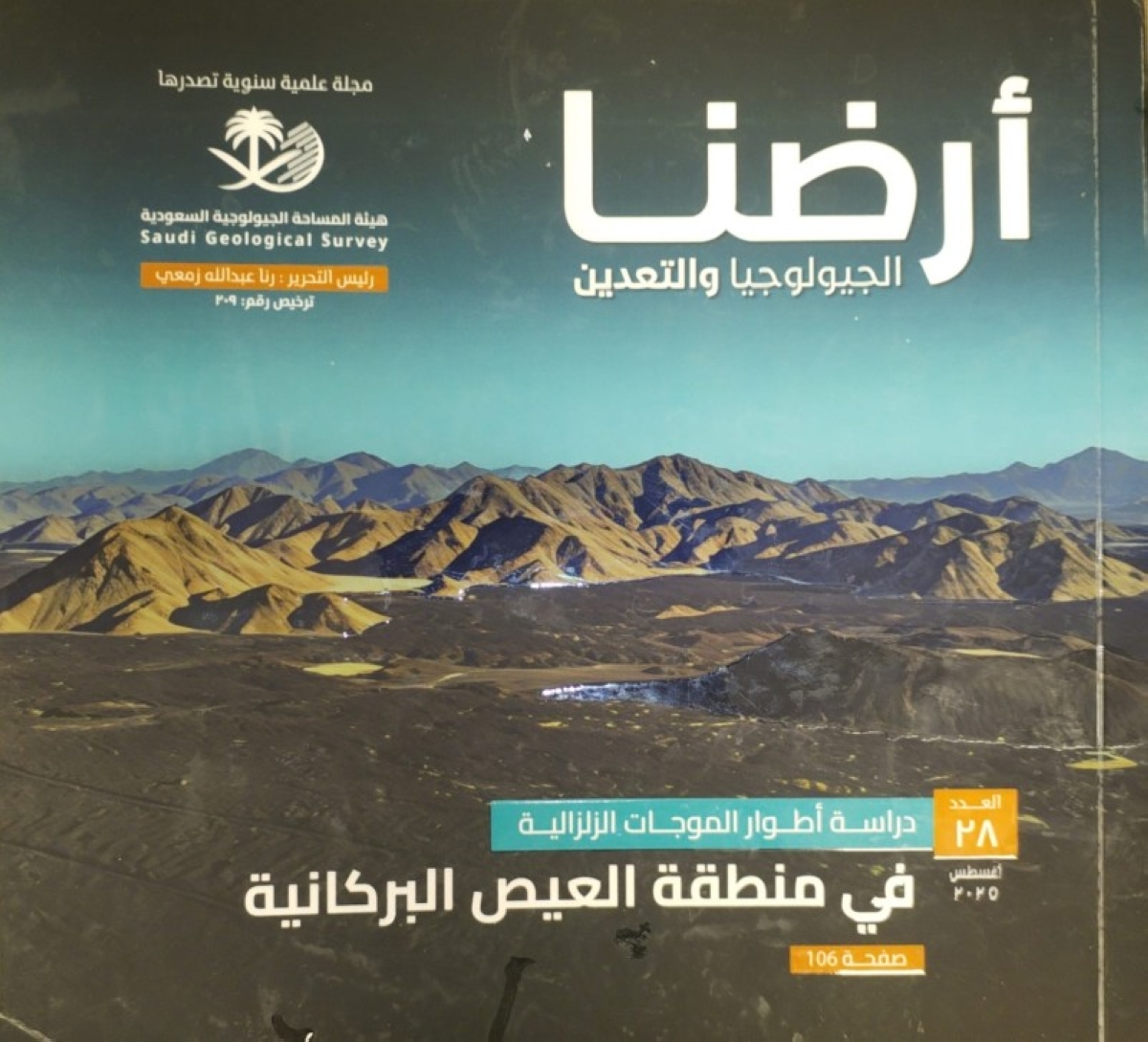
أصدرت هيئة المساحة الجيولوجية السعودية، العدد الثامن والعشرين، من المجلة العلمية السنوية «أرضنا.. الجيولوجيا والتعدين»، الذي صدر في شهر أغسطس الماضي، باللغتين العربية والإنجليزية، وحمل غلاف العدد عنوان «دراسة في أطوار الموجات الزلزالية في منطقة العيص البركانية». واحتوى العدد على مشاركات متنوعة، من مجموعة من المتخصصين، في موضوعات شتى، شملت مقالات ودراسات وأبحاثاً علمية رائدة في مجلات الجيولوجيا والتعدين، قدمت رؤى جديدة وتحليلات عميقة للتوجهات المستقبلية لهذا القطاع؛ لتعزيز الفهم العميق للأهمية الحيوية التي يشكلها في الاقتصاد الوطني.
قصة نجاح سعودي
افتتح العدد بموضوع «قصة نجاح سعودي.. إدراج شمال الرياض وسلمى جيوبارك في قائمة اليونسكو العالمية»، لمدير أعلى الجيوبارك السعودية المدير التنفيذي لشمال الرياض جيوبارك المدير التنفيذي لسلمى جيوبارك م. حسام التركي، الذي أوضح أن كلا من شمال الرياض وجيوبارك أدرجا في قوائم الجيوبارك العالمية التابعة لمنظمة الأمم المتحدة للتربية والعلوم الثقافة «اليونسكو»، وبذلك تصبح السعودية من أوائل الدول العربية الكائنة في منطقة الشرق الأوسط، التي تحتضن موقعين جيوبارك عالميين؛ ما يعكس ريادتها في الحفاظ على إرثها الجيولوجي والتنوع الفريد.
وتحت عنوان «هل يمكن للذكاء الاصطناعي استبدال الجيولوجي»، أشار خبير الذكاء الاصطناعي في قطاعات الطاقة د. سالم الغربي، إلى أن تطوير القدرات التقنية لم يعد خياراً بل ضرورة، ويجب على الجميع السعي المستمر لاكتساب مهارات الذكاء الاصطناعي وتطبيقها في الأعمال اليومية.
إنتاج الطاقة الحرارية
وبين المهندس الجيولوجي هيثم برنجي، في موضوع «عصر جديد في استكشاف مصادر جيولوجية لإنتاج الطاقة الحرارية الأرضية في السعودية»، أن استكشاف مصادر الحرارة الجوفية يجب تقييمها جيولوجياً من خلال الدراسات الجيولوجية التي تبدأ من دراسة الخرائط الجيولوجية، وكذلك عمل قياس للتراكيب الجيولوجية، مثل الصدوع والشقوق، والدراسات الهيدرولوجية وتحاليل المياه.
وفي موضوع دور «مختبر الجيولوجيا الهندسية في ضمان سلامة المشاريع واستدامتها»، ألقى رئيس مختبر الجيولوجيا الهندسية م. رائد العمري، الضوء على أهمية مختبر الجيولوجيا في دراسة الخواص الفيزيائية والميكانيكية والجيوتقية للتربة والصخور؛ للتعرف على الخصائص الجيولوجية ومدى ملائمتها للمشاريع الهندسية.
ثروات معدنية هائلة
وبعنوان «علوم الأرض والتعدين في المملكة في ظل رؤية 2030.. مستقبل مشرق بقيادة العلم والابتكار»، أوضح عميد كلية علوم الأرض بجامعة المك عبدالعزيز أ. د. بدر حكمي تميز قطاع التعدين بالمملكة بكونه أحد أكبر القطاعات الواعدة، خصوصاً مع وجود ثروات معدنية هائلة، تشمل الذهب، الفوسفات البوكسيت، النحاس، الحديد، معادن الأرض النادرة التي تزداد أهميتها عالمياً في ظل التوجهات الجديدة نحو التكنولوجيا المتقدمة والطاقة المتجددة.
وبعنوان «حصاد المياه في محمية الإمام تركي بن عبدالله الملكية.. نحو تنمية بيئية مستدامة»، ذكر أستاذ البيئة والاستشعار عن بعد بجامعة القصيم أ. د. أحمد الدغيري، أن الدراسة تعد محاولة علمية لتحليل إمكانات حصاد المياه في المحمية من خلال توظيف منهج علمي متكامل يجمع بين التحليل الهيدرولوجي والبيئي والجييوفيزيائيب، مستنداً إلى أدوات الاستشعار عن بعد، ونظم المعلومات الجغرافية لتحديد المواقع المثلي للحصاد ودعم التنوع الحيوي في الموائل الطبيعية.
وتحت عنوان «كل ما حولنا جيولوجيا.. الجيولوجيا والبيئة»، أوضح مؤسس ورئيس مجلس إدارة جمعية الجيولوجيون السعوديون أ. د. عبدالعزيز بن لعبون، أن الجيولوجيا ليست مجرد علم، بل هي مفتاح لفهم البيئات المختلفة لكوكبنا، وتفاعلها المعقد مع الإنسان؛ لأنها توفر الأدوات لفهم الماضي والتحكم في الحاضر والتخطيط لمستقبل أكثر استقراراً.
مشاريع التنقيب الأثري
وكشف موضوع «مشاريع أعمال التنقيب الأثري بمواقع التعدين القديمة بالمملكة العربية السعودية»، الذي تناوله كلا من مدير عمليات التنقيب الأثري بهيئة التراث خالد الزهراني، وأخصائي أول عمليات التنقيب بالهيئة وهايب الصيخان، أن الأعمال الأثرية بالمواقع كشفت العديد من النتائج، كما وثقت هذه الأعمال أدوات صهر المعادن والتعدين ووسائله، وكذلك وثقت مستوطنات ومواقع رئيسية للتعدين ذات بنية تحتية متكاملة من مساجد ودور سكن وأماكن عمل.
وعن «قاعدة المعلومات الجيولوجية الوطنية»، نوه مالك مبادرة قاعدة المعلومات الجيولوجية الوطنية بهيئة المساحة الجيولوجية السعودية م. مصطفى مكي، إلى أن القاعدة تعد إحدى أهم دعائم الإستراتيجية الوطنية الشاملة للتعدين؛ لما توفره من بيانات جيولوجية إقليمية متعددة، تدعم اتخاذ القرار لاستغلال الثروات المعدنية.
The Saudi Geological Survey has released the twenty-eighth issue of the annual scientific journal "Our Earth... Geology and Mining," which was published last August in both Arabic and English. The cover of this issue is titled "A Study on the Phases of Seismic Waves in the Al-Ays Volcanic Area." The issue contains diverse contributions from a group of specialists on various topics, including articles, studies, and pioneering scientific research in the fields of geology and mining, offering new insights and in-depth analyses of future trends in this sector to enhance the deep understanding of its vital importance to the national economy.
A Saudi Success Story
The issue opens with the topic "A Saudi Success Story... The Inclusion of North Riyadh and Salma Geopark in the UNESCO Global List," presented by the Executive Director of North Riyadh Geopark and Salma Geopark, Eng. Hussam Al-Turki. He explained that both North Riyadh and the Geopark have been included in the global geopark lists of the United Nations Educational, Scientific and Cultural Organization (UNESCO), making Saudi Arabia one of the first Arab countries in the Middle East to host two global geopark sites, reflecting its leadership in preserving its geological heritage and unique diversity.
Under the title "Can Artificial Intelligence Replace Geologists?", AI expert in the energy sectors Dr. Salem Al-Gharbi pointed out that the development of technical capabilities is no longer an option but a necessity, and everyone must continuously strive to acquire artificial intelligence skills and apply them in daily work.
Geothermal Energy Production
Geological engineer Haitham Barinji, in the topic "A New Era in Exploring Geological Sources for Geothermal Energy Production in Saudi Arabia," stated that the exploration of geothermal sources must be evaluated geologically through geological studies that begin with the study of geological maps, as well as measuring geological structures such as faults and fractures, hydrological studies, and water analyses.
In the topic "The Role of the Geotechnical Laboratory in Ensuring Project Safety and Sustainability," the head of the Geotechnical Laboratory, Eng. Raed Al-Omari, highlighted the importance of the geology laboratory in studying the physical, mechanical, and geotechnical properties of soils and rocks to identify geological characteristics and their suitability for engineering projects.
Immense Mineral Wealth
Under the title "Earth Sciences and Mining in the Kingdom in Light of Vision 2030... A Bright Future Led by Science and Innovation," the Dean of the College of Earth Sciences at King Abdulaziz University, Prof. Dr. Badr Hakami, clarified that the mining sector in the Kingdom is distinguished as one of the largest promising sectors, especially with the presence of immense mineral wealth, including gold, phosphate, bauxite, copper, iron, and rare earth metals, which are gaining global importance in light of new trends towards advanced technology and renewable energy.
Under the title "Water Harvesting in the Imam Turki bin Abdullah Royal Reserve... Towards Sustainable Environmental Development," Professor of Environmental Science and Remote Sensing at Qassim University, Prof. Dr. Ahmed Al-Dughayri, mentioned that the study is a scientific attempt to analyze the potential for water harvesting in the reserve through employing a comprehensive scientific approach that combines hydrological, environmental, and geophysical analysis, relying on remote sensing tools and geographic information systems to identify optimal harvesting locations and support biodiversity in natural habitats.
Under the title "Everything Around Us is Geology... Geology and the Environment," the founder and chairman of the Saudi Geologists Association, Prof. Dr. Abdulaziz bin Laboun, explained that geology is not just a science; it is a key to understanding the different environments of our planet and their complex interactions with humans, as it provides the tools to understand the past, control the present, and plan for a more stable future.
Archaeological Excavation Projects
The topic "Archaeological Excavation Projects at Ancient Mining Sites in the Kingdom of Saudi Arabia," discussed by both the Director of Archaeological Excavation Operations at the Heritage Authority, Khalid Al-Zahrani, and Senior Excavation Operations Specialist at the Authority, Haib Al-Saihan, revealed that the archaeological work at the sites uncovered many results, documenting tools for metal smelting and mining methods, as well as documenting settlements and major mining sites with integrated infrastructure, including mosques, housing, and workplaces.
Regarding the "National Geological Information Database," the owner of the National Geological Information Database initiative at the Saudi Geological Survey, Eng. Mustafa Maki, noted that the database is one of the most important pillars of the comprehensive national mining strategy, as it provides multiple regional geological data that support decision-making for the exploitation of mineral resources.