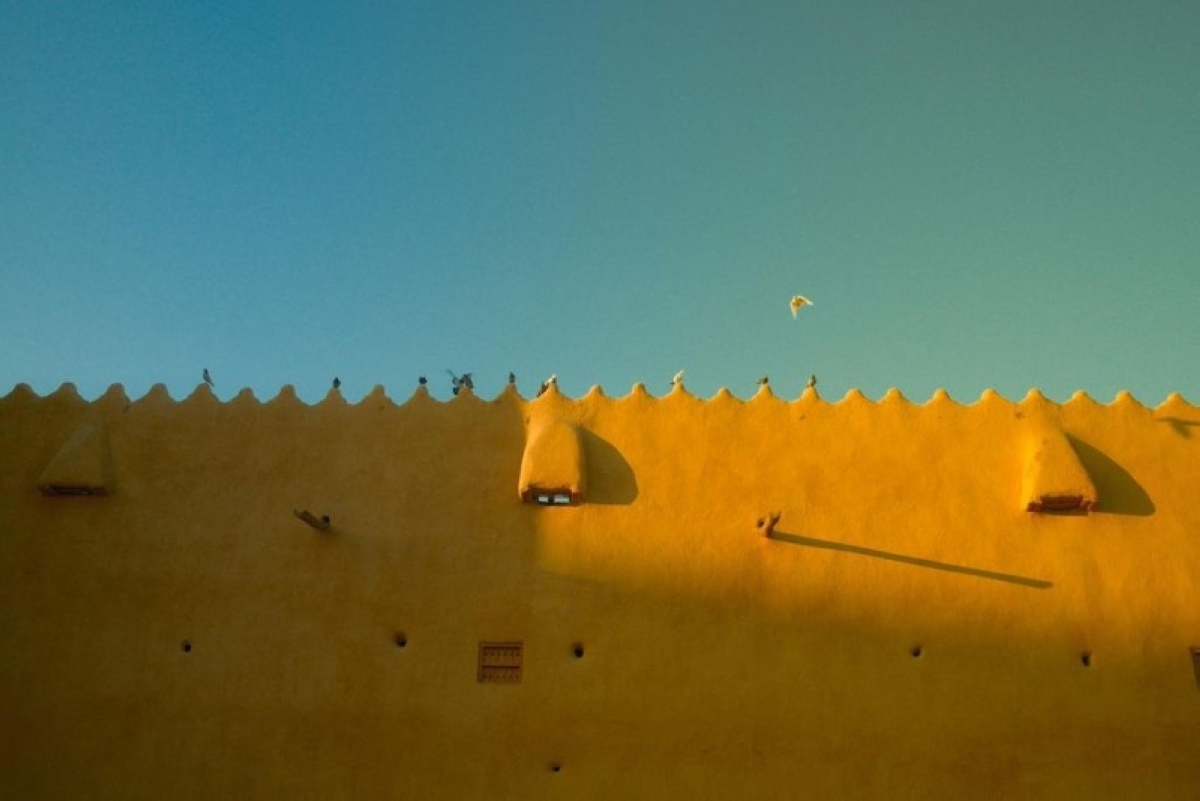
يقف قصر القشلة في قلب مدينة حائل شاهدًا على أول أوامر الملك المؤسس عبدالعزيز بن عبدالرحمن آل سعود -طيب الله ثراه- في التنمية والعمارة بالمنطقة قبل أكثر من ثمانية عقود، فقد أمر -رحمه الله- عام 1360هـ/1941 ببناء هذا القصر ليكون ثكنة عسكرية ومقرًا للجند، فشيّده الأمير عبدالعزيز بن مساعد بن جلوي في عهد لم يتجاوز فيه البناء سنة ونصف السنة، متخذًا من الطراز النجدي قاعدة معمارية راسخة.
إرث معماري وعسكري
بُني القصر من الطين واللبن والحجارة وزُخرف بالجص بزخارف هندسية ونباتية، ليعكس أصالة العمارة النجدية. وتظهر على جدرانه الخارجية ثمانية أبراج دفاعية أسطوانية بارتفاع 12 مترًا، منها أربعة أبراج داخلية تُسمى «الساندة». يضم القصر 143 غرفة موزعة على طابقين، خصصت بعضها للإدارة والضباط ومخازن الأسلحة، فيما خُصصت 53 غرفة في الدور العلوي للنوم. يتوسطه فناء واسع كان مقرًا لتدريب الجند واستعراض القوات، وتطل عليه أروقة مسقوفة من الجريد وجذوع الأثل، بينما يتوسطه مسجد داخلي بثلاثة صفوف من الأعمدة.
تبلغ مساحة القصر أكثر من 19 ألف متر مربع، بطول 241 مترًا من الشرق إلى الغرب، وعرض 141 مترًا من الشمال إلى الجنوب، ليصبح أحد أكبر القصور الطينية التراثية القائمة في المملكة والعالم.
قصر القشلة التاريخي
خلال افتتاح مشروع تطوير قصر القشلة التاريخي الذي نفذته هيئة التراث بتمويل من برنامج جودة الحياة، في 23 أبريل 2024 وصف أمير منطقة حائل الأمير عبدالعزيز بن سعد القصر بأنه من أكبر قصور العالم التاريخية من حيث المساحة، مؤكّدًا أن هذا الصرح يحق أن يُفتخر به سعوديًا وعربيًا وإسلاميًا. وقال: «من هنا خرجت السرايا في سبيل توحيد البلاد تحت راية التوحيد بقيادة الملك الموحد عبدالعزيز، الذي صنع معجزة التاريخ الحديث، وجمع الشتات والقلوب تحت راية التوحيد، وثبّت أركان وحدود دولتنا العزيزة».
وأشار الأمير إلى أن كل غرفة في القصر تمثل ورقة من كتاب تاريخ المملكة، مشيدًا بالبرامج النوعية للحفاظ على التراث التي توليها القيادة دعمها ورعايتها، والمتابعة المباشرة من وزير الثقافة الأمير بدر بن عبدالله بن فرحان. وأضاف أن القصر اليوم لا يقتصر على قيمته التاريخية فحسب، بل أصبح منبرًا للاستثمار الثقافي ووجهة للفعاليات المستمرة.
ذاكرة وطنية
اليوم، ومع احتفالات المملكة بذكرى اليوم الوطني السعودي الـ95، يعود قصر القشلة إلى الواجهة رمزًا لأول أوامر التنمية والعمارة في حائل، ومَعلمًا حضاريًا وثقافيًا يعكس وحدة الماضي والحاضر؛ فالقصر الذي بدأ ثكنة عسكرية، تحول إلى معلم تراثي عالمي يُبرز ملامح العمارة السعودية التقليدية، ويحمل في جدرانه قصة وطن خرج من داخله الجنود موحدين، ليبقى شاهدًا على أن التنمية بدأت بأمر ملكي، واستمرت برؤية لا تنطفئ.
The Qasr Al-Qashlah stands in the heart of Hail city as a testament to the first orders of the founding king, Abdulaziz bin Abdulrahman Al Saud - may God have mercy on him - regarding development and architecture in the region over eight decades ago. He ordered - may he rest in peace - in the year 1360 AH/1941 to build this palace to serve as a military barracks and headquarters for the troops. It was constructed by Prince Abdulaziz bin Musaed bin Jalawi in a time when the building process did not exceed one and a half years, adopting the Najdi style as a solid architectural base.
Architectural and Military Heritage
The palace was built from mud, bricks, and stones, adorned with plaster featuring geometric and floral decorations, reflecting the authenticity of Najdi architecture. Its exterior walls showcase eight cylindrical defensive towers, each 12 meters high, including four internal towers known as "Al-Sanid." The palace contains 143 rooms distributed over two floors, some of which are designated for administration, officers, and weapon storage, while 53 rooms on the upper floor are allocated for sleeping. A spacious courtyard in the center served as a training ground for the troops and a venue for military parades, surrounded by covered corridors made of palm fronds and acacia trunks, while an internal mosque with three rows of columns occupies the center.
The area of the palace exceeds 19,000 square meters, measuring 241 meters from east to west and 141 meters from north to south, making it one of the largest existing heritage mud palaces in the Kingdom and the world.
The Historic Qasr Al-Qashlah
During the inauguration of the development project for the historic Qasr Al-Qashlah, implemented by the Heritage Authority with funding from the Quality of Life Program on April 23, 2024, the Prince of Hail Region, Prince Abdulaziz bin Saad, described the palace as one of the largest historical palaces in the world in terms of area, emphasizing that this edifice is a source of pride for Saudis, Arabs, and Muslims. He stated: "From here, the campaigns emerged in the pursuit of unifying the country under the banner of monotheism, led by the unifying king Abdulaziz, who created a miracle in modern history, bringing together the scattered and the hearts under the banner of monotheism, and solidifying the foundations and borders of our dear state."
The prince pointed out that each room in the palace represents a page from the history of the Kingdom, praising the quality programs aimed at preserving heritage that the leadership supports and nurtures, with direct oversight from the Minister of Culture, Prince Badr bin Abdullah bin Farhan. He added that the palace today is not only of historical value but has also become a platform for cultural investment and a destination for ongoing events.
National Memory
Today, as the Kingdom celebrates the 95th Saudi National Day, Qasr Al-Qashlah returns to the forefront as a symbol of the first orders of development and architecture in Hail, and a cultural and civilizational landmark that reflects the unity of the past and present; the palace that began as a military barracks has transformed into a global heritage landmark that highlights the features of traditional Saudi architecture, carrying within its walls the story of a nation from which soldiers emerged united, remaining a testament that development began with a royal decree and continued with an unquenchable vision.