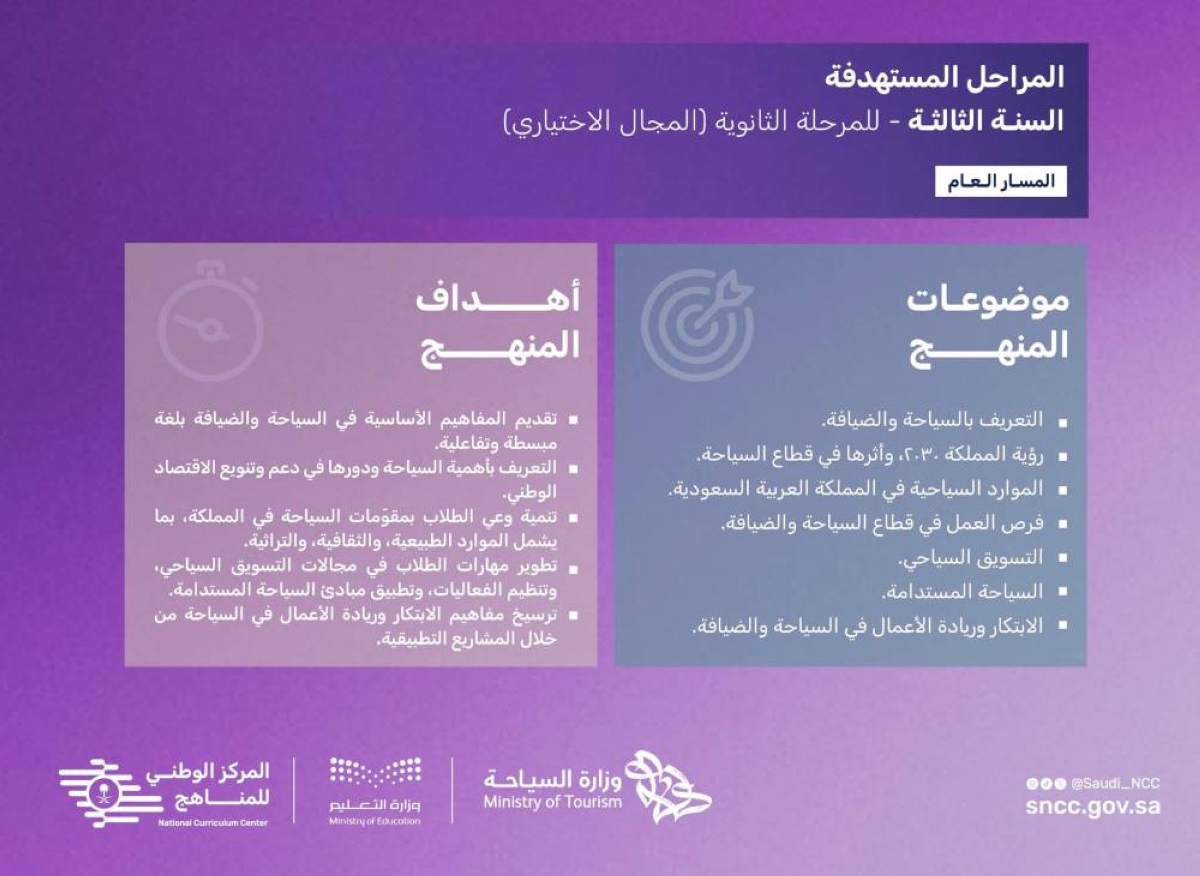
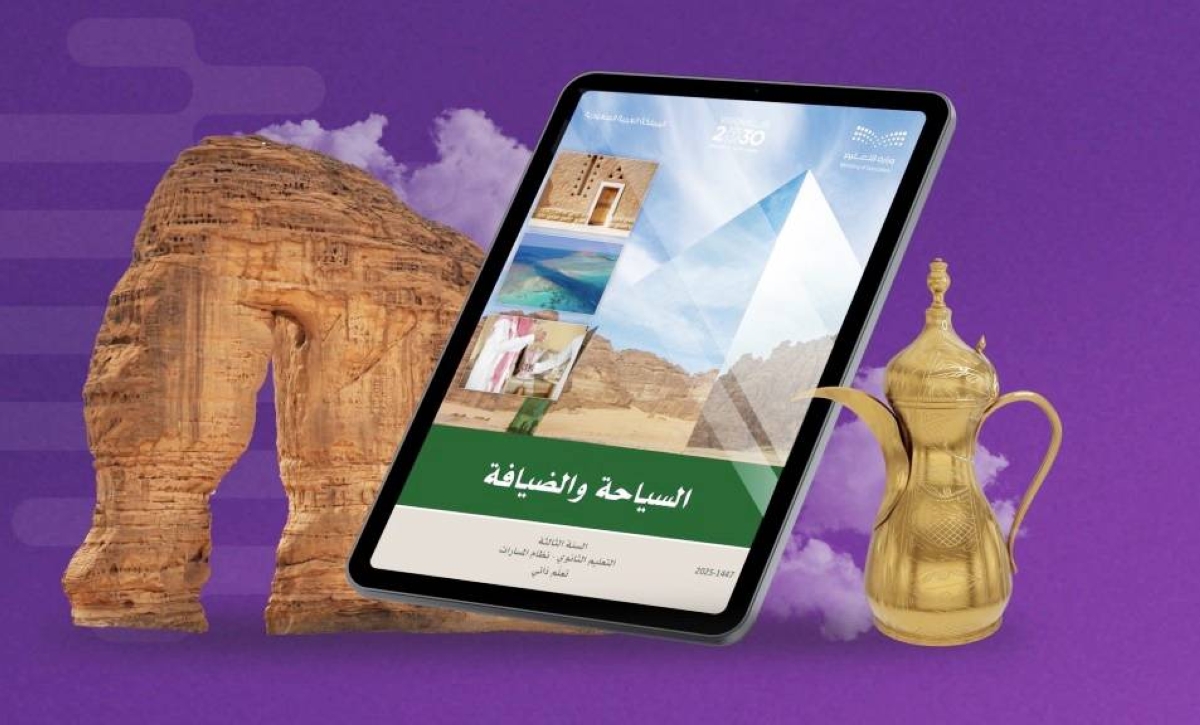
في خطوة تعكس توجه المملكة نحو الاستثمار في رأس المال البشري وتعزيز مكانة القطاع السياحي كونه واحداً من ركائز الاقتصاد الوطني، أعلنت وزارة التعليم إدراج منهج «السياحة والضيافة» لطلاب وطالبات الصف الثالث الثانوي، ليكون إحدى اللبنات الأساسية في بناء مهارات التخطيط السياحي وخدمات الضيافة لدى الأجيال. ويهدف المنهج الجديد إلى تزويد الطلبة بمهارات عملية تتعلق بخدمة الضيف وتجربة السائح، وتصميم الرحلات والمسارات السياحية، ومبادئ الفندقة وإدارة الفعاليات، إضافة إلى السلامة والاستدامة السياحية، مع التركيز على إبراز الهوية الوطنية عبر السرد القصصي للثقافة والتراث، ويأتي ذلك ضمن مساعي وزارة التعليم لمواءمة المخرجات التعليمية مع سوق العمل، ودعم استراتيجية المملكة الهادفة إلى استقبال 150 مليون زائر سنويّاً بحلول عام 2030.
وأكد المستشار الاقتصادي عيد العيد أن إدراج المنهج يُمثّل خطوة إيجابية، إلا أنه شدّد على أهمية أن تبدأ الثقافة السياحية من المراحل المبكرة. «المفاهيم السياحية يجب أن تُغرس منذ المرحلة الابتدائية، عبر مواد مبسّطة تنمّي سلوكيات الضيافة والاعتزاز بالهوية الوطنية. أما في المرحلة الثانوية فيمكن الانتقال إلى المهارات التطبيقية الأكثر عمقاً».
وأضاف أن المادة تحتاج إلى متخصصين في السياحة والضيافة لتدريسها، محذراً من إسنادها إلى معلمين من تخصصات أخرى، إذ إن ذلك سيؤثر سلباً على جودة المخرجات التعليمية.
من جانبه، أوضح الدكتور وليد الغصاب أن السياحة قطاع اقتصادي مضاعف الأثر، وأن كل وظيفة مباشرة فيه تخلق وظائف غير مباشرة في الخدمات والإمداد. وقال: «نجاح المنهج يعتمد بالدرجة الأولى على تأهيل المعلمين والمعلمات من خلال برامج تدريبية متخصصة قبل التنفيذ، أو تعيين كوادر أكاديمية درست السياحة والضيافة بشكل مباشر».
وأشار إلى أن إدخال مفاهيم اقتصاديات السياحة مثل إدارة المواسم والتسعير الديناميكي سيمنح الطلبة وعياً عمليّاً بكيفية عمل السوق، ويساعد على ربط المادة بواقع القطاع.
ورصدت «عكاظ» عدداً من التجارب الدولية التي سبقت المملكة في إدراج السياحة والضيافة ضمن المناهج التعليمية ففي المملكة المتحدة تقدم مساقات Travel & Tourism لطلاب الثانوية، وتجمع بين المعرفة النظرية والتطبيق الميداني، أما الولايات المتحدة فتتيح مسارات CTE المهنية التي تشمل الضيافة والسياحة، مع تدريب عملي في الفنادق والمطاعم، وفي سنغافورة تعتمد المادة على برامج تطبيقية داخل المنشآت السياحية، مع التركيز على خدمة العملاء. أما سويسرا فهي رائدة في تعليم الضيافة من خلال النظام الثنائي الذي يجمع بين الدراسة الأكاديمية والتدريب الميداني في الفنادق العالمية.
ويمثل إدراج منهج «السياحة والضيافة» في الثالث ثانوي خطوة استراتيجية لتأهيل الطلبة بمهارات تخدم توجه المملكة في جعل القطاع السياحي أحد أعمدة الاقتصاد الوطني. ويتفق خبراء الاقتصاد والتعليم على أن الانطلاقة المبكرة، والتخصص الأكاديمي، والتأهيل المهني للمعلمين تبقى عوامل أساسية لضمان نجاح التجربة وتحقيق أهدافها المستقبلية.
In a move that reflects the Kingdom's direction towards investing in human capital and enhancing the status of the tourism sector as one of the pillars of the national economy, the Ministry of Education announced the inclusion of the "Tourism and Hospitality" curriculum for male and female students in the third year of secondary school, making it one of the fundamental building blocks in developing skills related to tourism planning and hospitality services for future generations. The new curriculum aims to equip students with practical skills related to guest service and tourist experience, designing trips and tourist routes, principles of hospitality and event management, as well as safety and sustainable tourism, with a focus on highlighting national identity through storytelling of culture and heritage. This comes as part of the Ministry of Education's efforts to align educational outcomes with the labor market and support the Kingdom's strategy to welcome 150 million visitors annually by 2030.
Economic advisor Eid Al-Eid confirmed that the inclusion of the curriculum represents a positive step, but he emphasized the importance of instilling a tourism culture from early stages. "Tourism concepts should be ingrained from the elementary stage through simplified materials that develop hospitality behaviors and pride in national identity. In secondary school, we can transition to more in-depth practical skills."
He added that the subject requires specialists in tourism and hospitality to teach it, warning against assigning it to teachers from other specialties, as this would negatively impact the quality of educational outcomes.
For his part, Dr. Walid Al-Ghasab explained that tourism is a multiplier economic sector, and every direct job in it creates indirect jobs in services and supply. He stated, "The success of the curriculum primarily depends on qualifying teachers through specialized training programs before implementation or hiring academic staff who have studied tourism and hospitality directly."
He pointed out that introducing concepts of tourism economics, such as season management and dynamic pricing, will provide students with practical awareness of how the market operates and help connect the subject to the reality of the sector.
“Okaz” has documented several international experiences that preceded the Kingdom in incorporating tourism and hospitality into educational curricula. In the United Kingdom, Travel & Tourism courses are offered to secondary students, combining theoretical knowledge with field application. In the United States, CTE career pathways include hospitality and tourism, with practical training in hotels and restaurants. In Singapore, the subject relies on applied programs within tourism establishments, focusing on customer service. Switzerland is a leader in hospitality education through a dual system that combines academic study with field training in global hotels.
The inclusion of the "Tourism and Hospitality" curriculum in the third year of secondary school represents a strategic step to equip students with skills that serve the Kingdom's direction in making the tourism sector one of the pillars of the national economy. Economists and education experts agree that an early start, academic specialization, and professional training for teachers remain essential factors to ensure the success of the experience and achieve its future goals.