



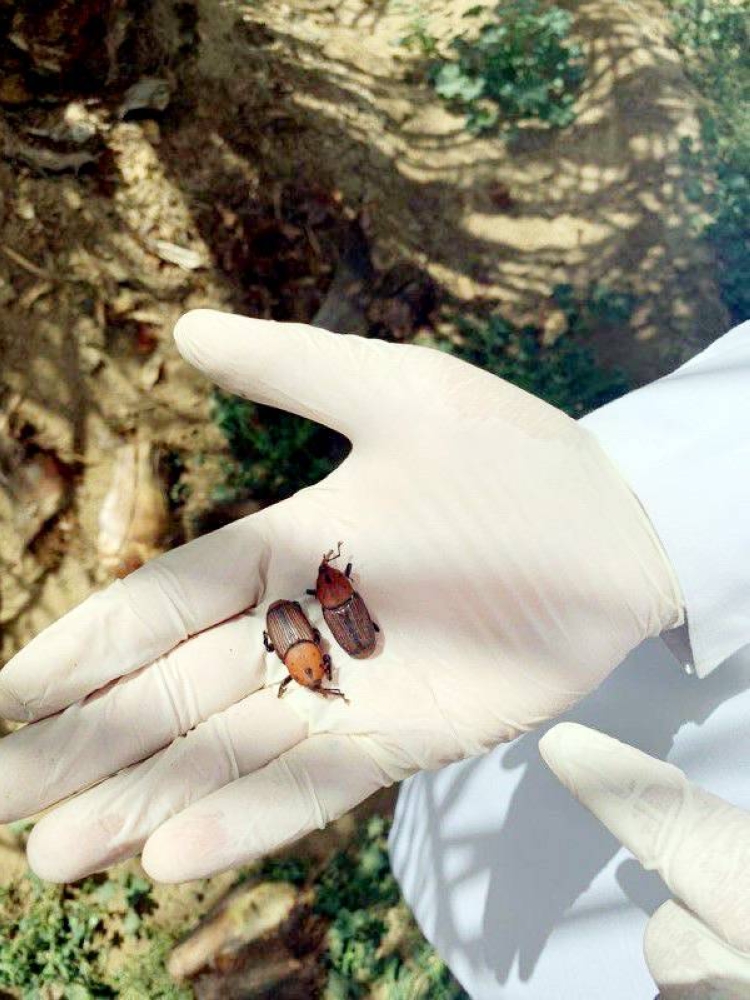
حذّر الأكاديمي والباحث الزراعي الدكتور عبدالرحمن الصقير، من سوسة النخيل الحمراء الآفة الخطيرة التي تهدد أشجار النخيل وانتشرت الحشرة في مناطق مختلفة، بما في ذلك المدينة المنورة، مهددة نحو 8.3 مليون نخلة، وتعتبر المدينة المنورة ثاني أكبر منطقة في المملكة في عدد النخيل. وتنتج نحو 220 ألف طن من مختلف أنواع التمور سنوياً، وكان أول اكتشاف للسوسة الحمراء في 1987، بمحافظة القطيف، قبل أن تنتشر وتصيب النخيل في مختلف المناطق.
ونشرت منصة استطلاع، عبر موقعها الإلكتروني، تواريخ انتشار الحشرة، إذ سجلت أول إصابة بالمنطقة الشرقية سنة 1987، والرياض وتبوك 1989، ومكة المكرمة 1992، وحائل سنة 1993، والمدينة المنورة والباحة 1993، والقصيم 1998، ونجران 1999، والجوف 2015، وعسير 2016، وجازان سنة 2022.
ووصف عبدالرحمن الصقير، السوسة بأنها آفة خطيرة أثرت ولا تزال تؤثر بقوة على قطاع النخيل، ويعتبر طور اليرقة الطور الضار للآفة نظراً لشراهتها في التغذي على الأنسجة الداخلية للنخلة محدثةً أنفاقاً داخلها لتتحول النخلة إلى جسم مجوف من الداخل، ما يسرع سقوطها عند هبوب الرياح. ورغم قصر دورة حياة الحشرة التي تراوح بين 2 - 4 أشهر، إلا أنها تنتج كمية كبيرة من البيض تصل إلى 500 بيضة. وما يزيد من خطورة الحشرة، إضافة إلى وجودها داخل تجاويف النخلة قدرتها على الطيران والانتقال، إذ تتمكن من الطيران لمسافة تبلغ 1.2كم، كما أن وجودها داخل تجاويف النخلة يؤدي إلى صعوبة التشخيص المبكر وتسقط النخيل المصابة فجأة دون علامات واضحة، وعندما يقوم المزارع بحرق النخيل المصابة فإن ذلك لا يؤدي إلى موت اليرقات أو الحشرات في كثير من الأحيان.
ونظراً للخسائر الفادحة الناجمة عن السوسة الحمراء، خصصت الدولة ميزانية ضخمة لبرنامج مكافحة سوسة النخيل، إذ رصد للبرنامج مبلغ تجاوز 1.7 مليار ريال، واستمرت الآفة في إحداث الخسائر لهذا القطاع الحيوي، وعلى سبيل المثال وبحسب إحصاءات رسمية، أزيل عام 2023، وحده ما يقارب 4,000 نخلة.
تحديات تواجه المكافحة
وأشار الصقير إلى أن هناك تحديات تواجه المكافحة، منها غياب المعلومة الدقيقة عن مدى انتشار الحشرة، وسهولة انتقال الفسائل التي قد تكون مصابة مما يوسع نطاق الإصابة بالآفة وينقلها إلى مناطق جديدة، كما أن تدني الوعي، وغياب المسؤولية عند بعض المزارعين يتسبب في تعثر برامج المكافحة، يضاف إلى ذلك ضعف الممكنات المتاحة للمزارعين خصوصاً في المشاريع الصغيرة.
وينصح الأكاديمي الصقير المزارعين بفحص النخيل بانتظام بحثاً عن علامات الإصابة، في فترات تكاثر الحشرة، والتخلّص من النخيل المصابة والميتة لمنع انتشار الحشرة، والتعاون مع الجهات المختصة في مكافحة سوسة النخيل الحمراء، واستخدام المبيدات الحشرية، والاهتمام بالنظافة العامة للمزرعة والتخلّص من المخلفات النباتية.
«سوسة النخيل».. تحدّيات تواجه المكافحة.. خبير ينصح المزارعين: تخلّصوا من المخلّفات
7 يوليو 2025 - 05:15
|
آخر تحديث 7 يوليو 2025 - 05:15


تابع قناة عكاظ على الواتساب
محمد الوسمي (مهد الذهب) alwasmi_ mh@
The academic and agricultural researcher Dr. Abdulrahman Al-Suqair warned about the red palm weevil, a dangerous pest that threatens palm trees and has spread to various regions, including Medina, threatening about 8.3 million palm trees. Medina is considered the second largest area in the Kingdom in terms of the number of palm trees, producing about 220,000 tons of various types of dates annually. The first discovery of the red weevil was in 1987 in the Qatif Governorate, before it spread and affected palm trees in different areas.
The survey platform published on its website the dates of the pest's spread, noting that the first infestation in the Eastern Province was recorded in 1987, followed by Riyadh and Tabuk in 1989, Mecca in 1992, Hail in 1993, Medina and Al-Baha in 1993, Al-Qassim in 1998, Najran in 1999, Al-Jouf in 2015, Asir in 2016, and Jazan in 2022.
Abdulrahman Al-Suqair described the weevil as a dangerous pest that has significantly affected and continues to impact the palm sector. The larval stage is considered the harmful phase of the pest due to its voracious feeding on the internal tissues of the palm, creating tunnels inside it, which turns the palm into a hollow structure, accelerating its fall when strong winds occur. Despite the short life cycle of the pest, which ranges between 2 to 4 months, it produces a large quantity of eggs, reaching up to 500 eggs. What increases the danger of the pest, in addition to its presence inside the cavities of the palm, is its ability to fly and move, as it can fly a distance of 1.2 km. Additionally, its presence inside the palm cavities makes early diagnosis difficult, and infected palms can suddenly collapse without clear signs. When farmers burn the infected palms, this often does not lead to the death of the larvae or insects.
Due to the severe losses caused by the red weevil, the state allocated a huge budget for the palm weevil control program, with an amount exceeding 1.7 billion riyals allocated for the program. The pest continued to cause losses to this vital sector; for example, according to official statistics, around 4,000 palm trees were removed in 2023 alone.
Challenges Facing Control Efforts
Al-Suqair pointed out that there are challenges facing control efforts, including the lack of accurate information about the extent of the pest's spread and the ease of transferring potentially infected seedlings, which expands the scope of infestation and transfers it to new areas. Additionally, low awareness and lack of responsibility among some farmers hinder control programs, compounded by the limited resources available to farmers, especially in small projects.
The academic Al-Suqair advises farmers to regularly inspect palm trees for signs of infestation during the pest's breeding periods, to dispose of infected and dead palms to prevent the spread of the pest, to cooperate with the relevant authorities in combating the red palm weevil, to use insecticides, and to pay attention to the general cleanliness of the farm and dispose of plant waste.
The survey platform published on its website the dates of the pest's spread, noting that the first infestation in the Eastern Province was recorded in 1987, followed by Riyadh and Tabuk in 1989, Mecca in 1992, Hail in 1993, Medina and Al-Baha in 1993, Al-Qassim in 1998, Najran in 1999, Al-Jouf in 2015, Asir in 2016, and Jazan in 2022.
Abdulrahman Al-Suqair described the weevil as a dangerous pest that has significantly affected and continues to impact the palm sector. The larval stage is considered the harmful phase of the pest due to its voracious feeding on the internal tissues of the palm, creating tunnels inside it, which turns the palm into a hollow structure, accelerating its fall when strong winds occur. Despite the short life cycle of the pest, which ranges between 2 to 4 months, it produces a large quantity of eggs, reaching up to 500 eggs. What increases the danger of the pest, in addition to its presence inside the cavities of the palm, is its ability to fly and move, as it can fly a distance of 1.2 km. Additionally, its presence inside the palm cavities makes early diagnosis difficult, and infected palms can suddenly collapse without clear signs. When farmers burn the infected palms, this often does not lead to the death of the larvae or insects.
Due to the severe losses caused by the red weevil, the state allocated a huge budget for the palm weevil control program, with an amount exceeding 1.7 billion riyals allocated for the program. The pest continued to cause losses to this vital sector; for example, according to official statistics, around 4,000 palm trees were removed in 2023 alone.
Challenges Facing Control Efforts
Al-Suqair pointed out that there are challenges facing control efforts, including the lack of accurate information about the extent of the pest's spread and the ease of transferring potentially infected seedlings, which expands the scope of infestation and transfers it to new areas. Additionally, low awareness and lack of responsibility among some farmers hinder control programs, compounded by the limited resources available to farmers, especially in small projects.
The academic Al-Suqair advises farmers to regularly inspect palm trees for signs of infestation during the pest's breeding periods, to dispose of infected and dead palms to prevent the spread of the pest, to cooperate with the relevant authorities in combating the red palm weevil, to use insecticides, and to pay attention to the general cleanliness of the farm and dispose of plant waste.


