في كشف أثري نادر، أعلنت مجلة Communications Biology، التابعة لمجموعة Nature العلمية العالمية، أول دليل مادي مؤرخ إشعاعياً لاستخدام نبات الحرمل في طقوس التبخير، خلال العصر الحديدي في موقع قرية الأثري شمال غربي السعودية.
ويُعد الاكتشاف، الذي نُشر في 23 مايو 2025، نقلة نوعية في فهم الممارسات الطبية والروحية القديمة في الجزيرة العربية، ويؤكد الدور الثقافي المتقدم الذي كانت تلعبه المنطقة في تاريخ الطب التقليدي واستخدام النباتات.
ويقع الموقع في واحة «قُرَيّة» التابعة لمنطقة تبوك، وهو أحد أهم المواقع الأثرية المرتبطة بالعصر الحديدي، إذ عثر خلال أعمال التنقيب على مبخرات فخارية تحتوي على بقايا عضوية، خضعت لتحليل علمي متقدم باستخدام تقنيات التحليل الطيفي الكتلي. وكشف التحليل وجود مركبات الهارمين والهارمان، وهي قلويدات معروفة بارتباطها بنبات الحرمل، الذي يُستخدم حتى اليوم في التبخير الشعبي والطقوس العلاجية في المنطقة.
الدراسة، التي قادها فريق بحثي دولي بالتعاون مع هيئة التراث السعودية، ومعهد ماكس بلانك لعلوم التاريخ البشري في ألمانيا، وجامعات من المملكة المتحدة، كشفت أن استخدام الحرمل في طقوس التبخير لم يكن عشوائياً، بل كان ضمن معرفة نباتية دقيقة وثقافة علاجية متجذرة.
ويؤكد الباحثون، أن هذا هو أقدم دليل مادي معروف عالمياً على استخدام الحرمل بهذه الطريقة، ما يعكس مدى تطور المعرفة الطبية والسلوكية لدى المجتمعات القديمة في شمال الجزيرة العربية قبل أكثر من 2,500 عام.
دراسة قادها فريق بحثي بالتعاون مع هيئة التراث في واحة «قُرَيّة»
«الحرمل» يكشف أسرار طقوس العرب القدماء في الطب التقليدي
26 مايو 2025 - 09:13
|
آخر تحديث 26 مايو 2025 - 09:13
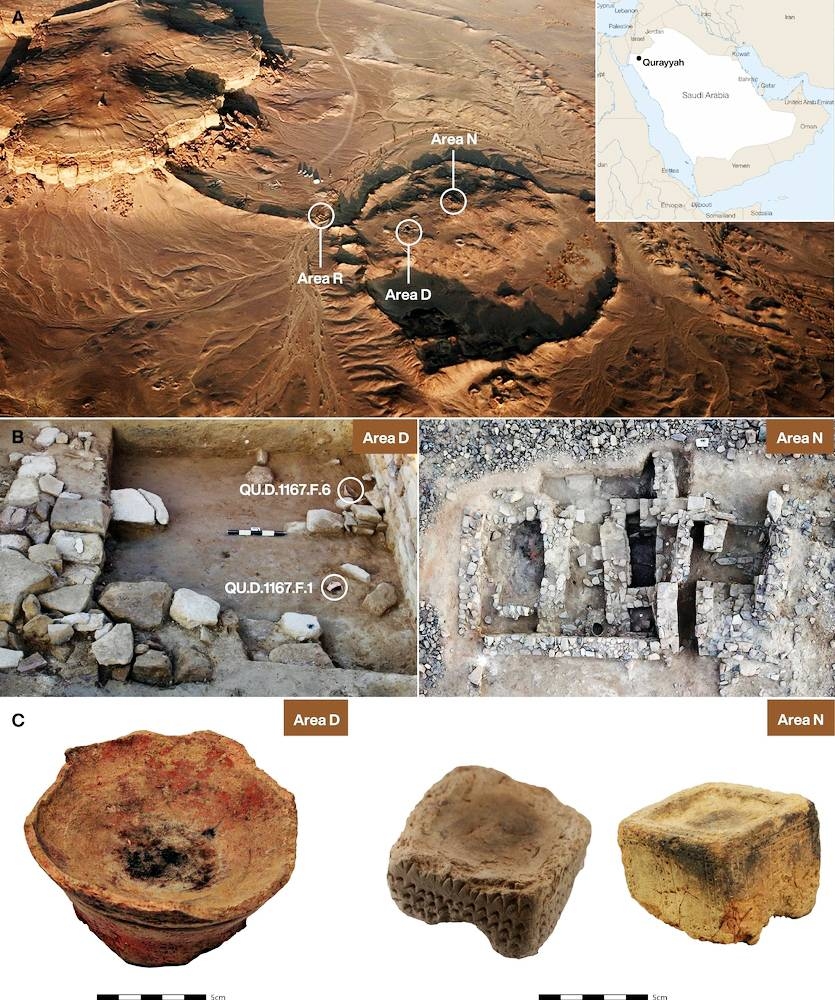
عثر خلال التنقيب على مبخرات فخارية تحتوي على بقايا عضوية.


تابع قناة عكاظ على الواتساب
متعب العواد (حائل) Motabalawwd@
In a rare archaeological discovery, the journal Communications Biology, part of the global Nature scientific group, announced the first radiocarbon-dated physical evidence of the use of the plant harmel in incense rituals during the Iron Age at the archaeological site of the village in northwestern Saudi Arabia.
This discovery, published on May 23, 2025, marks a significant advancement in understanding ancient medical and spiritual practices in the Arabian Peninsula, confirming the advanced cultural role that the region played in the history of traditional medicine and the use of plants.
The site is located in the oasis of "Qurayyah," which is part of the Tabuk region, and it is one of the most important archaeological sites associated with the Iron Age. Excavation work uncovered pottery incense burners containing organic remains, which underwent advanced scientific analysis using mass spectrometry techniques. The analysis revealed the presence of harmine and harmaline compounds, alkaloids known to be associated with the harmel plant, which is still used today in popular incense and therapeutic rituals in the region.
The study, led by an international research team in collaboration with the Saudi Heritage Authority, the Max Planck Institute for Human History in Germany, and universities from the United Kingdom, revealed that the use of harmel in incense rituals was not random, but rather part of precise botanical knowledge and a deep-rooted therapeutic culture.
The researchers confirm that this is the oldest known physical evidence globally of the use of harmel in this way, reflecting the level of development of medical and behavioral knowledge among ancient communities in northern Arabia over 2,500 years ago.
This discovery, published on May 23, 2025, marks a significant advancement in understanding ancient medical and spiritual practices in the Arabian Peninsula, confirming the advanced cultural role that the region played in the history of traditional medicine and the use of plants.
The site is located in the oasis of "Qurayyah," which is part of the Tabuk region, and it is one of the most important archaeological sites associated with the Iron Age. Excavation work uncovered pottery incense burners containing organic remains, which underwent advanced scientific analysis using mass spectrometry techniques. The analysis revealed the presence of harmine and harmaline compounds, alkaloids known to be associated with the harmel plant, which is still used today in popular incense and therapeutic rituals in the region.
The study, led by an international research team in collaboration with the Saudi Heritage Authority, the Max Planck Institute for Human History in Germany, and universities from the United Kingdom, revealed that the use of harmel in incense rituals was not random, but rather part of precise botanical knowledge and a deep-rooted therapeutic culture.
The researchers confirm that this is the oldest known physical evidence globally of the use of harmel in this way, reflecting the level of development of medical and behavioral knowledge among ancient communities in northern Arabia over 2,500 years ago.