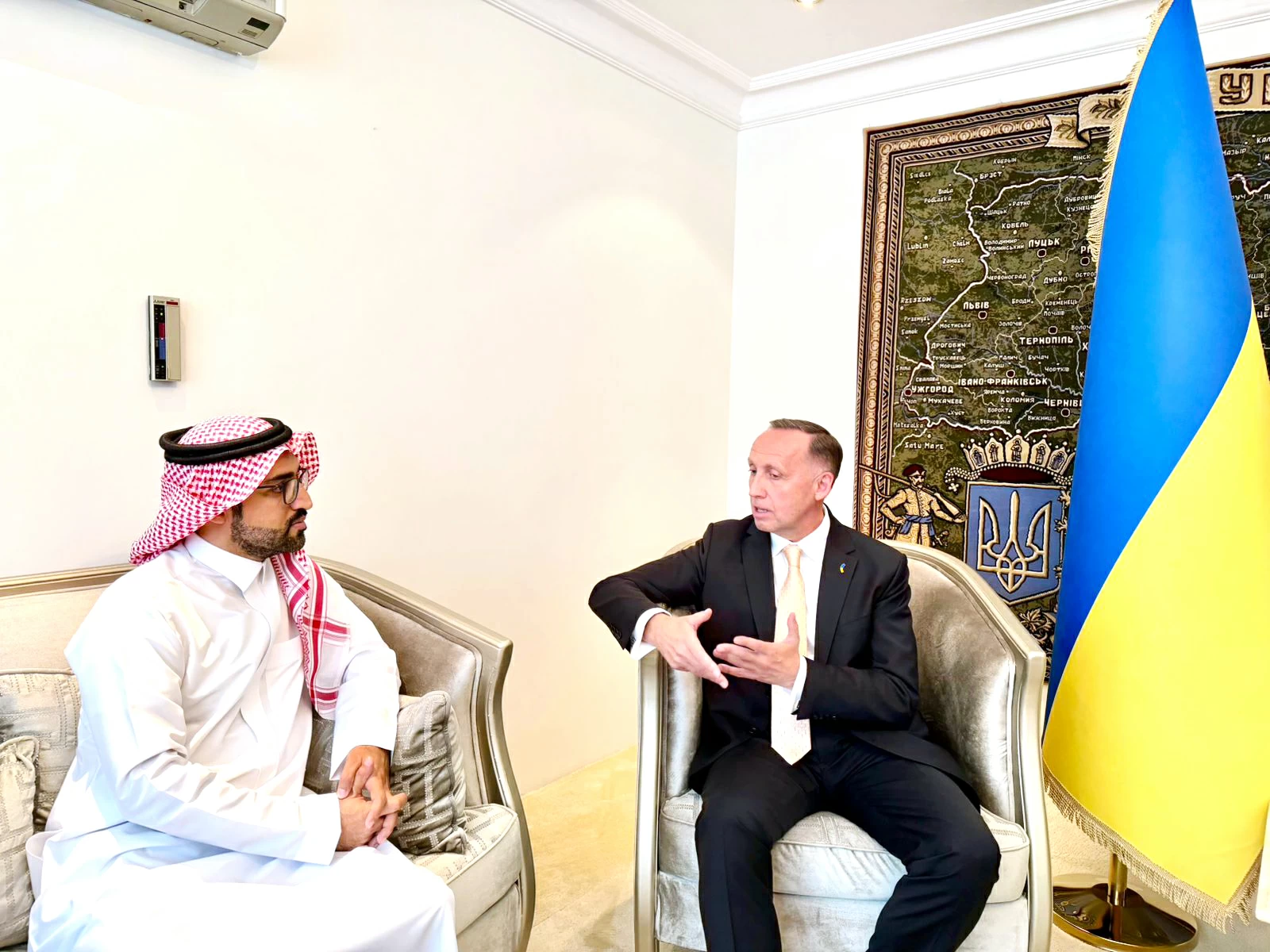
تتجه العلاقات السعودية الأوكرانية نحو مرحلة أكثر عمقاً واتساعاً، تتجاوز التعاون التقليدي إلى شراكات إستراتيجية مدفوعة بحوار سياسي متنامٍ وفرص اقتصادية واستثمارية واسعة. وقد عززت المملكة حضورها طرفاً دولياً موثوقاً في الجهود الرامية إلى إنهاء الحرب في أوكرانيا، مستفيدة من علاقاتها المتوازنة وقدرتها على التواصل مع مختلف الأطراف.
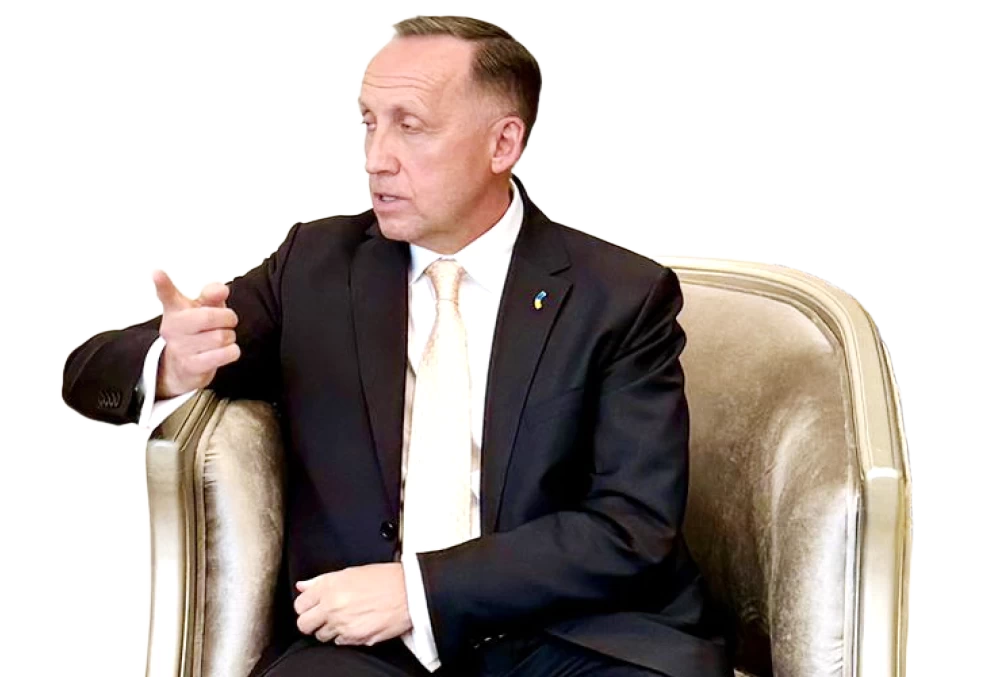
وفي حديثه لـ«عكاظ»، يؤكد السفير الأوكراني بيترنكو أناتولي، أن الرياض تمتلك من الثقل السياسي والثقة الدولية ما يجعلها قادرة على لعب دور أكثر تأثيراً في مسار السلام، خصوصاً في الملفات الإنسانية وإطلاق مسار دبلوماسي جاد. كما يشير إلى توجه البلدين لتوسيع التعاون في الصناعات الدفاعية والتقنيات المتقدمة والطاقة والأمن الغذائي والاستثمار، مؤكداً أن كييف تتطلع إلى نموذج يقوم على الإنتاج والتطوير المشترك ونقل التقنية وتوطينها داخل المملكة. ويضيف السفير أن أمام المستثمر السعودي فرصاً واسعة في مشاريع إعادة إعمار أوكرانيا.
وفي ما يلي نص الحوار:
• كيف تقيّم كييف الدور الذي لعبته المملكة في استضافة اجتماعات الحرب الأوكرانية والحفاظ على التواصل مع الأطراف المختلفة؟
•• نقدّر عالياً الدور الذي تضطلع به المملكة، لما تمتلكه من ثقل سياسي وثقة لدى عواصم مختلفة، إلى جانب قدرتها على الحفاظ على حوار عملي مع دول تتباين مواقفها بصورة جوهرية. وهو ما يؤهل الرياض لأداء دور فاعل في القضايا التي تتطلب نتائج عملية وملموسة.
ويستند هذا الدور إلى حوار سياسي مكثف بين المملكة وأوكرانيا؛ فمنذ 2023، زار الرئيس الأوكراني فولوديمير زيلينسكي المملكة 6 مرات، وأُجريت 8 مكالمات هاتفية بينه وبين ولي العهد رئيس مجلس الوزراء الأمير محمد بن سلمان، كان آخرها في 10 أغسطس من هذا العام. وعلى مستوى وزيري الخارجية عُقد ما لا يقل عن 11 لقاءً واتصالاً هاتفياً، بما يعكس مستوى التواصل المنتظم بين البلدين، ولا ننسى المساعدات التي قدمتها المملكة لأوكرانيا؛ ففي فبراير 2023، زار وزير الخارجية الأمير فيصل بن فرحان كييف، وقدمت المملكة حزمة مساعدات بقيمة 400 مليون دولار، منها 100 مليون دولار مساعدات إنسانية و300 مليون دولار على شكل مشتقات نفطية. كما أدت المملكة دوراً مهماً في الوساطة التي أسفرت عن الإفراج عن 10 أسرى حرب أجانب.
ونعوّل على استمرار الدور السعودي الفاعل، خصوصاً في القضايا الإنسانية، والإفراج عن أسرى الحرب والمدنيين، وإعادة الأطفال الأوكرانيين، والأمن الغذائي، إلى جانب الإسهام في تهيئة الظروف لإطلاق عملية دبلوماسية حقيقية.
تعزيز قدرات البلدين
• ما آفاق التعاون السعودي ـ الأوكراني في مجالات الصناعات الدفاعية والتقنيات المتقدمة؟
• أعتبر هذا المجال من أكثر مجالات العلاقات الثنائية الواعدة، فلم نعد نتحدث عن إمكانات نظرية، بل عن تعاون عملي وملموس. وفي 27 مارس من هذا العام وُقّعت في جدة مذكرة تفاهم بين وزارتي الدفاع في أوكرانيا والمملكة بشأن التعاون الدفاعي، لتوفير أساس للعقود المستقبلية والتعاون التكنولوجي والاستثمارات. وتمتلك أوكرانيا خبرات وتقنيات فيما تتمتع المملكة بقدرات صناعية ومالية وإنتاجية كبيرة، ما يفتح المجال أمام نموذج تعاون يعزز قدرات البلدين. طموحنا يشمل التطوير المشترك، وتوطين الإنتاج في المملكة، ونقل التقنية، وإجراء البحوث المشتركة وتطوير أنظمة جديدة.
أوكرانيا تريد السلام
• بعد سنوات من الحرب، كيف تصفون الوضع الراهن سياسياً وعسكرياً، وهل ترون أن فرص التوصل إلى تسوية سياسية قد تحسنت؟
•• ما يجري هو حرب واسعة النطاق ولا تزال شديدة الحدة، إذ يمتد خط الجبهة النشط لنحو 1,200 كيلومتر، فيما تسيطر روسيا على نحو 20% من الأراضي الأوكرانية المعترف بها دولياً، بما فيها شبه جزيرة القرم، وسياسياً، تتواصل الجهود الدبلوماسية، وتحافظ أوكرانيا على اتصالات مكثفة مع الولايات المتحدة وشركائها الأوروبيين ودول الشرق الأوسط، إلا أنه لا توجد حتى الآن عملية تفاوضية مستقرة يمكن أن تقود فعلياً إلى إنهاء الحرب، وتعددت قنوات التواصل، لكن الوصول إلى تسوية حقيقية يتطلب إرادة سياسية لوقف الحرب. أوكرانيا تريد السلام، لكنها تريد سلاماً يمنع تكرار الحرب، وليس هدنة مؤقتة تسبق جولة جديدة من القتال.
رؤية ومحاور رئيسية
• أعلنت كييف تقديم مقترحات إلى الولايات المتحدة لإنهاء الحرب.. ما أبرز ملامح الرؤية الأوكرانية للسلام؟
•• تقوم الرؤية الأوكرانية للسلام على عدة محاور رئيسية، في مقدمتها وقف فعلي لإطلاق النار على الأرض وفي الجو والبحر، مع إخضاعه لآلية دولية واضحة للرقابة والمتابعة، ويأتي الملف الإنساني في المرتبة الثانية، ويشمل تبادل أسرى الحرب، وإعادة المدنيين المحتجزين والأطفال الأوكرانيين الذين نُقلوا قسراً، أما المحور الثالث فيتعلق بالضمانات الأمنية، التي تعد مسألة أساسية بالنسبة إلى أوكرانيا، على أن تتضمن التزامات واضحة، وقدرات عسكرية أوكرانية كافية، وآليات لتقديم المساعدة السريعة في حال تجدد التهديد، كما تتمسك كييف بمبدأ عدم إضفاء الشرعية القانونية على الاستيلاء على أراضي دولة أخرى بالقوة، على أن يتولى المسار الدبلوماسي معالجة القضايا السياسية والترتيبات الأمنية وصولاً إلى إنهاء مستدام للحرب. نريد سلاماً دائماً ومستداماً.
تبادل أسرى الحرب
• هل أوكرانيا مستعدة للدخول في مفاوضات مباشرة مع روسيا، وما أبرز «الخطوط الحمراء» التي ترى كييف أنه لا يمكن تجاوزها؟
•• نعم، أوكرانيا مستعدة للحوار المباشر، بما في ذلك المفاوضات على أعلى مستوى سياسي، متى توافرت فرصة للوصول إلى نتائج حقيقية، ويمكن التفاوض بشأن وقف إطلاق النار، وتبادل أسرى الحرب وإعادة المدنيين والأطفال، ووضع محطة زابوريجيا للطاقة النووية، وأمن الملاحة في البحر الأسود، وغيرها من القضايا الإنسانية والأمنية.
لكن هناك قضايا لا يمكن أن تكون موضع مساومة؛ إذ لن تعترف أوكرانيا بالأراضي المحتلة باعتبارها أراضي روسية، ولن تقبل بمنح روسيا حق النقض على خياراتها في السياسة الخارجية، كما ترفض أي قيود تضعف قدرة قواتها المسلحة وصناعتها الدفاعية على حماية البلاد، وأي اتفاق سلام دون ضمانات أمنية حقيقية لن يحل المشكلة، بل سيؤجلها.
تحول العلاقات إلى شراكة
• شهدت العلاقات السعودية ـ الأوكرانية تطوراً ملحوظاً خلال السنوات الأخيرة، وانتقلت إلى مجالات تعاون أوسع. كيف تصفون مستوى العلاقات حالياً؟
•• نمر اليوم بمرحلة انتقال من علاقات الصداقة التقليدية إلى شراكة أكثر عملية واتساعاً، تشمل إلى جانب الحوار السياسي والتجارة مجالات الأمن والتقنيات الدفاعية والطاقة والأمن الغذائي والاستثمار وإعادة الإعمار، وخلال الفترة من يناير إلى يونيو 2026، بلغ حجم التبادل التجاري بين أوكرانيا والمملكة نحو 649.8 مليون دولار، متجاوزاً إجمالي التجارة خلال عام 2025 بأكمله، الذي بلغ 530.8 مليون دولار، وبعد انقطاع طويل، استأنف مجلس الأعمال الأوكراني السعودي نشاطه، فيما عُرضت مشاريع استثمارية أوكرانية تتجاوز قيمتها مليار دولار على الشركاء السعوديين، مع التخطيط لعقد الاجتماع القادم للجنة الأوكرانية السعودية المشتركة في الرياض للمرة الأولى منذ اجتماعها في كييف عام 2018.
وتبرز فرص واعدة للتعاون في الصناعات الزراعية والأمن الغذائي، والتقنيات الدفاعية، وتقنية المعلومات والحلول الرقمية، والطاقة والبنية التحتية، إلى جانب الصناعات الدوائية والرعاية الصحية.
تعزيز الترابط الاقتصادي
• ما الخطوات المطلوبة لترجمة هذا الزخم المتنامي في العلاقات السعودية ـ الأوكرانية إلى شراكة إستراتيجية ومستدامة بين البلدين؟
•• المطلوب هو تحويل الثقة السياسية إلى مشاريع ملموسة، واستثمارات وتقنيات مشتركة، بما يعزز الترابط الاقتصادي ويعود بالنفع على البلدين، نريد شراكة أوسع تقوم على البحوث والتقنيات والقدرات الإنتاجية المشتركة، والوصول معاً إلى أسواق دول العالم.
تكامل الحاجات وفرص الاستثمار
• ما أبرز الفرص الاستثمارية التي تتيحها أوكرانيا للمستثمرين السعوديين، لاسيما في مشاريع إعادة الإعمار والبنية التحتية؟
•• ستكون إعادة إعمار أوكرانيا واحدة من أكبر العمليات الاستثمارية التي تشهدها أوروبا منذ عقود، ووفق أحدث تقييم مشترك للحكومة الأوكرانية والبنك الدولي والمفوضية الأوروبية والأمم المتحدة، إذ تقدر حاجات التعافي وإعادة الإعمار خلال السنوات العشر القادمة بنحو 588 مليار دولار، منها أكثر من 96 مليار دولار للنقل، ونحو 91 ملياراً للطاقة، و90 ملياراً للإسكان، وأكثر من 63 ملياراً للتجارة والصناعة. وتتكامل هذه الحاجات مع إمكانات المملكة وتوجهات رؤية السعودية 2030، ما يفتح فرصاً واسعة أمام الاستثمارات السعودية في النقل والخدمات اللوجستية، والطاقة وتحديث شبكات الكهرباء والطاقة المتجددة وتخزينها، إضافة إلى الإسكان والتطوير الحضري، والصناعات الزراعية والغذائية، والمعادن الحيوية، والصناعات الدوائية والرعاية الصحية، وتقنية المعلومات، ولا أرى ضرورة لانتظار انتهاء الحرب رسمياً لبدء العمل والاستثمار؛ إذ توجد بالفعل آليات للشراكة بين القطاعين العام والخاص، وضمانات دولية وأدوات للتأمين ضد مخاطر الحرب والمخاطر السياسية.
مورد رئيسي للغذاء
• كيف أثرت الحرب في الصادرات الأوكرانية والأمن الغذائي العالمي، وما أبرز فرص تعزيز التعاون الزراعي والغذائي مع المملكة؟
•• تمتلك أوكرانيا واحدة من أخصب الأراضي في العالم، وكانت على مدى عقود مورداً رئيسياً للغذاء في الأسواق العالمية. وحتى في ظل الظروف الراهنة، يُتوقع أن يبلغ محصول الحبوب خلال عام 2026 نحو 60.4 مليون طن، ومن هذا المنطلق، أنظر إلى التعاون الأوكراني ـ السعودي في القطاع الزراعي بمنظور إستراتيجي، يمكن أن يشمل عقوداً طويلة الأجل لتوريد المنتجات الغذائية، واستثمارات سعودية مباشرة في الإنتاج الزراعي الأوكراني، ومرافق تخزين الحبوب، ومصانع التصنيع الغذائي، إضافة إلى البنية التحتية للموانئ والخدمات اللوجستية، وبذلك تحصل أوكرانيا على رأس المال والسوق والطلب المستقر، فيما تحصل المملكة على مصدر غذائي طويل الأجل ومستقر وقابل للتنبؤ.
وقفة ودعم المملكة
• أخيراً، كيف تنظرون إلى مستقبل العلاقات السعودية ـ الأوكرانية، وما آفاق تطويرها نحو شراكة إستراتيجية أكثر رسوخاً؟
•• أتوجه بالشكر إلى قيادة المملكة وشعبها على دعمهم لأوكرانيا، ومواقفهم الداعمة لوحدة أراضيها، وجهودهم في الوساطة واستضافة المفاوضات، والأهم بالنسبة لنا هو البناء على هذا الدعم نحو مستقبل مشترك؛ فأوكرانيا تمتلك الخبرة التكنولوجية والصناعات الدفاعية والقطاع الزراعي وتقنية المعلومات، فيما تمتلك المملكة رأس المال والقدرات الصناعية والزخم الذي توفره رؤية السعودية 2030. ومن خلال تكامل هذه الإمكانات، يمكن بناء شراكة إستراتيجية تشمل الأمن والطاقة والأمن الغذائي، إلى جانب الاستثمارات والتقنيات والبنية التحتية والإنتاج المشترك.
The Saudi-Ukrainian relations are moving towards a deeper and broader phase, surpassing traditional cooperation to strategic partnerships driven by an increasing political dialogue and wide-ranging economic and investment opportunities. The Kingdom has strengthened its presence as a reliable international party in efforts to end the war in Ukraine, benefiting from its balanced relationships and ability to communicate with various parties.
In an interview with "Okaz," Ukrainian Ambassador Anatoliy Petrenko confirms that Riyadh possesses the political weight and international trust that enable it to play a more influential role in the peace process, particularly in humanitarian issues and launching a serious diplomatic track. He also points to the two countries' intention to expand cooperation in defense industries, advanced technologies, energy, food security, and investment, emphasizing that Kyiv looks forward to a model based on joint production and development, technology transfer, and localization within the Kingdom. The ambassador adds that Saudi investors have vast opportunities in the reconstruction projects in Ukraine.
Below is the text of the interview:
• How does Kyiv assess the role played by the Kingdom in hosting meetings regarding the Ukrainian war and maintaining communication with different parties?
•• We highly appreciate the role that the Kingdom plays, given its political weight and trust among various capitals, along with its ability to maintain a practical dialogue with countries that have fundamentally different positions. This qualifies Riyadh to play an active role in issues that require practical and tangible results.
This role is based on intensive political dialogue between the Kingdom and Ukraine; since 2023, Ukrainian President Volodymyr Zelensky has visited the Kingdom six times, and there have been eight phone calls between him and Crown Prince and Prime Minister Mohammed bin Salman, the latest of which was on August 10 of this year. At the level of foreign ministers, at least 11 meetings and phone calls have been held, reflecting the level of regular communication between the two countries. We should also not forget the assistance provided by the Kingdom to Ukraine; in February 2023, Foreign Minister Prince Faisal bin Farhan visited Kyiv, and the Kingdom provided a package of assistance worth $400 million, including $100 million in humanitarian aid and $300 million in the form of petroleum derivatives. The Kingdom also played an important role in the mediation that resulted in the release of 10 foreign prisoners of war.
We rely on the continuation of the active Saudi role, especially in humanitarian issues, the release of prisoners of war and civilians, the return of Ukrainian children, food security, in addition to contributing to creating the conditions for launching a genuine diplomatic process.
Enhancing the capabilities of the two countries
• What are the prospects for Saudi-Ukrainian cooperation in the fields of defense industries and advanced technologies?
• I consider this area to be one of the most promising fields of bilateral relations, as we are no longer talking about theoretical possibilities, but about practical and tangible cooperation. On March 27 of this year, a memorandum of understanding was signed in Jeddah between the defense ministries of Ukraine and the Kingdom regarding defense cooperation, to provide a basis for future contracts, technological cooperation, and investments. Ukraine possesses expertise and technologies, while the Kingdom has significant industrial, financial, and production capabilities, which opens the door for a cooperation model that enhances the capabilities of both countries. Our ambition includes joint development, localizing production in the Kingdom, technology transfer, conducting joint research, and developing new systems.
Ukraine wants peace
• After years of war, how do you describe the current situation politically and militarily, and do you see that the chances of reaching a political settlement have improved?
•• What is happening is a large-scale war that remains very intense, with an active front line extending for about 1,200 kilometers, while Russia controls about 20% of internationally recognized Ukrainian territory, including Crimea. Politically, diplomatic efforts continue, and Ukraine maintains intensive communications with the United States, its European partners, and Middle Eastern countries. However, there is currently no stable negotiation process that can effectively lead to an end to the war. Communication channels have multiplied, but reaching a real settlement requires the political will to stop the war. Ukraine wants peace, but it wants a peace that prevents the recurrence of war, not a temporary truce that precedes a new round of fighting.
Vision and main axes
• Kyiv has announced proposals to the United States to end the war.. What are the main features of the Ukrainian vision for peace?
•• The Ukrainian vision for peace is based on several main axes, foremost of which is an actual ceasefire on land, in the air, and at sea, subject to a clear international mechanism for monitoring and follow-up. The humanitarian file comes second, including the exchange of prisoners of war, the return of detained civilians, and Ukrainian children who were forcibly transferred. The third axis relates to security guarantees, which are a fundamental issue for Ukraine, to include clear commitments, sufficient Ukrainian military capabilities, and mechanisms for providing rapid assistance in case the threat recurs. Kyiv also insists on the principle of not legitimizing the legal seizure of another country's territory by force, with the diplomatic track addressing political issues and security arrangements leading to a sustainable end to the war. We want a lasting and sustainable peace.
Exchange of prisoners of war
• Is Ukraine ready to enter into direct negotiations with Russia, and what are the main "red lines" that Kyiv believes cannot be crossed?
•• Yes, Ukraine is ready for direct dialogue, including negotiations at the highest political level, whenever there is an opportunity to achieve real results. Negotiations can be held regarding a ceasefire, the exchange of prisoners of war, the return of civilians and children, the status of the Zaporizhzhia nuclear power plant, maritime security in the Black Sea, and other humanitarian and security issues.
However, there are issues that cannot be subject to compromise; Ukraine will not recognize occupied territories as Russian land, nor will it accept giving Russia a veto over its foreign policy choices. It also rejects any restrictions that weaken its armed forces' ability and defense industry to protect the country, and any peace agreement without real security guarantees will not solve the problem but will only postpone it.
Transforming relations into a partnership
• Saudi-Ukrainian relations have witnessed significant development in recent years, moving into broader areas of cooperation. How do you describe the current level of relations?
•• We are currently in a phase of transition from traditional friendship relations to a more practical and broader partnership, which includes, in addition to political dialogue and trade, areas of security, defense technologies, energy, food security, investment, and reconstruction. From January to June 2026, the volume of trade between Ukraine and the Kingdom reached approximately $649.8 million, surpassing the total trade for the entire year of 2025, which was $530.8 million. After a long hiatus, the Ukrainian-Saudi Business Council resumed its activities, while Ukrainian investment projects worth over $1 billion were presented to Saudi partners, with plans to hold the next meeting of the Ukrainian-Saudi Joint Committee in Riyadh for the first time since its meeting in Kyiv in 2018.
Promising opportunities for cooperation in agricultural industries, food security, defense technologies, information technology and digital solutions, energy, and infrastructure, as well as pharmaceutical industries and healthcare, are emerging.
Enhancing economic connectivity
• What steps are needed to translate this growing momentum in Saudi-Ukrainian relations into a strategic and sustainable partnership between the two countries?
•• What is required is to transform political trust into tangible projects, shared investments, and technologies, enhancing economic connectivity and benefiting both countries. We want a broader partnership based on research, technologies, and shared production capabilities, reaching together to global markets.
Integration of needs and investment opportunities
• What are the main investment opportunities that Ukraine offers to Saudi investors, especially in reconstruction and infrastructure projects?
•• The reconstruction of Ukraine will be one of the largest investment operations seen in Europe in decades. According to the latest joint assessment by the Ukrainian government, the World Bank, the European Commission, and the United Nations, the recovery and reconstruction needs over the next ten years are estimated at about $588 billion, including more than $96 billion for transport, about $91 billion for energy, $90 billion for housing, and more than $63 billion for trade and industry. These needs align with the Kingdom's capabilities and the directions of Saudi Vision 2030, opening wide opportunities for Saudi investments in transport and logistics services, energy, upgrading electricity networks, renewable energy, and storage, in addition to housing and urban development, agricultural and food industries, vital minerals, pharmaceutical industries and healthcare, and information technology. I see no need to wait for the official end of the war to start work and investment; there are already mechanisms for public-private partnerships, international guarantees, and tools to insure against war risks and political risks.
A major food supplier
• How has the war affected Ukrainian exports and global food security, and what are the main opportunities to enhance agricultural and food cooperation with the Kingdom?
•• Ukraine has some of the most fertile lands in the world and has been a major food supplier in global markets for decades. Even under current circumstances, the grain harvest in 2026 is expected to reach about 60.4 million tons. From this perspective, I view Ukrainian-Saudi cooperation in the agricultural sector as strategic, which can include long-term contracts for food product supply, direct Saudi investments in Ukrainian agricultural production, grain storage facilities, and food processing plants, in addition to port infrastructure and logistics services. This way, Ukraine gains capital, market, and stable demand, while the Kingdom secures a long-term, stable, and predictable food source.
A moment of support from the Kingdom
• Finally, how do you view the future of Saudi-Ukrainian relations, and what are the prospects for developing them into a more solid strategic partnership?
•• I would like to thank the leadership of the Kingdom and its people for their support for Ukraine, their supportive positions on its territorial integrity, their mediation efforts, and hosting negotiations. The most important thing for us is to build on this support towards a shared future; Ukraine possesses technological expertise, defense industries, the agricultural sector, and information technology, while the Kingdom has capital, industrial capabilities, and the momentum provided by Saudi Vision 2030. Through the integration of these capabilities, a strategic partnership can be built that includes security, energy, food security, as well as investments, technologies, infrastructure, and joint production.