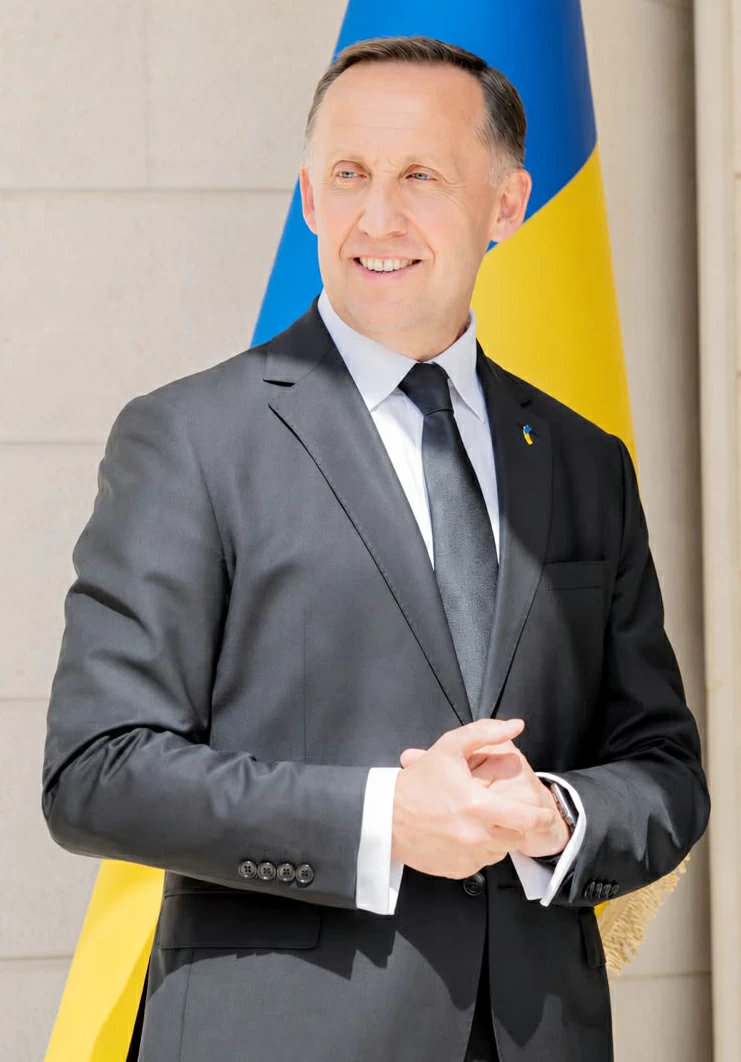
في ظل التحولات التي فرضتها الحرب الروسية في أوكرانيا، وما تبعها من تداعيات على الأمن الغذائي وسلاسل الإمداد والطاقة، تبرز العلاقات السعودية - الأوكرانية بوصفها مسارًا متناميًا من التعاون السياسي والاقتصادي والإنساني.
وفي هذا الحوار مع «عكاظ»، يتحدث سفير أوكرانيا لدى المملكة أناتولي بيترينكو، عن واقع العلاقات بين الرياض وكييف، وأولويات المرحلة القادمة، ودور السعودية في دعم الجهود السلمية والإنسانية، إضافة إلى تأثير الحرب على الاقتصاد الأوكراني وصادرات الحبوب والموانئ، وفرص التعاون في مجالات الأمن الغذائي والطاقة وإعادة الإعمار.
من الحوار التقليدي إلى العمل المنهجي
• كيف تقيمون المستوى الحالي للعلاقات السعودية - الأوكرانية، وأبرز ما تحقق بين البلدين رغم الحرب؟
•• تكتسب العلاقات بين أوكرانيا والسعودية ملامح الشراكة الإستراتيجية، فمنذ إقامة العلاقات الدبلوماسية بين البلدين في أبريل ١٩٩٣، انتقلنا من الحوار السياسي التقليدي والمعتاد، إلى التعاون العملي والمنهجي ليشمل مجالات متعددة وكثيرة.
لكن الحرب وحالة عدم الاستقرار في الشرق الأوسط، أثرت للأسف على مصالح البلدين، خصوصًا في مجالات الأمن والطاقة والغذاء.
ونثمن عاليًا الدعم الإنساني الذي قدمته السعودية لأوكرانيا، إذ خصصت ما مجموعه ٤١٠ ملايين دولار مساعدات لأوكرانيا، استخدم منها نحو ٩٢.٦ مليون دولار لتلبية الاحتياجات المدنية والطبية، واحتياجات قطاع الطاقة للشعب الأوكراني، كما يشهد التعاون الاقتصادي نشاطًا متزايدًا، ولا سيما في مجالات التجارة والاستثمار والزراعة والطاقة، والعلاقات بين مجتمعي الأعمال في البلدين.
• ما القضايا التي تمثل أولوية لأوكرانيا في علاقاتها مع السعودية؟
•• أظهرت التحديات الدولية الراهنة، أن أوكرانيا والمملكة، تتشاركان في مصالح كثيرة، منها الأمن والمرونة في قطاع الطاقة، وكذلك الاستقرار الغذائي، وهذه المجالات تشكل أساسًا مهمًا لتطوير شراكتنا مستقبلًا.
وعبر الرئيس فولوديمير زيلينسكي بوضوح عن هذه الرؤية، عقب لقائه ولي العهد رئيس مجلس الوزراء الأمير محمد بن سلمان، في جدة في ٢٤ أبريل ٢٠٢٦، حين أشار إلى ثلاثة مسارات رئيسية، هي تصدير الخبرات والقدرات الأوكرانية في مجال الأمن والدفاع عن الأجواء، والتعاون في قطاع الطاقة، والتعاون في مجال الأمن الغذائي، نحن نعمل معًا من أجل تعزيز قدرات شعبينا وشركائنا، ونتطلع إلى توسيع هذه المجالات بما يخدم المصالح المشتركة.
• ما أبرز الاتفاقيات أو الشراكات القائمة حالياً بين البلدين؟
•• تمتلك أوكرانيا والمملكة قاعدة واسعة للتعاون في المجالات الاقتصادية والإنسانية والزراعية، والطاقة والتعليم والأمن، ومن أبرز نتائج المرحلة الأخيرة التوصل في مارس ٢٠٢٦، إلى ترتيبات للتعاون الدفاعي بين وزارتي الدفاع في البلدين، وهو ما يفتح آفاقًا لفرص جديدة وتعاون تكنولوجي واستثمارات مستقبلية، كما تقوم اللجنة الحكومية المشتركة الأوكرانية - السعودية، للتعاون التجاري والاقتصادي والعلمي والتقني، بأدوار رئيسية لتطوير وتحديث أجندة التعاون الاقتصادي، ويجري التخطيط الآن لعقد اجتماعات في السابع من سبتمبر القادم.
وفي إطار التحضيرات لهذا الاجتماع، يجري العمل على وثائق في مجالات كفاءة الطاقة، والطاقة المتجددة، والتعاون الإعلامي، والسياحة، والرعاية الصحية، والتعاون الجمركي والضريبي، والطيران المدني، والملاحة التجارية، وصناعة الطيران، والتعليم.
ولكن يظل التعاون الزراعي من المجالات التقليدية والمهمة في علاقاتنا، فأوكرانيا تهتم وتحرص على زيادة صادرات الحبوب والزيوت النباتية، ومكونات الأعلاف وغيرها من المنتجات الغذائية إلى المملكة، فمجلس الأعمال المشترك الأوكراني - السعودي، يؤدي دورًا مهمًا في تعزيز التواصل المباشر بين البلدين، وتحويل التفاهمات السياسية إلى مشاريع عملية ملموسة.
سلام عادل ودائم
• كيف تنظر أوكرانيا إلى الدور السعودي في دعم التهدئة والحوار الرامي إلى إنهاء الحرب؟
•• في الظروف الراهنة، تكتسب الدول التي تتمتع بثقل سياسي ومكانة دولية وقنوات تواصل مع مختلف الأطراف أهمية خاصة، وتعد المملكة من أهم هذه الدول.
لقد قدمت المملكة إسهامات مهمة في دعم الجهود السلمية والإنسانية المرتبطة بالحرب الروسية في أوكرانيا، فساهمت في دعم صيغة السلام التي طرحها الرئيس فولوديمير زيلينسكي، واستضافت لقاءات واتصالات تفاوضية، وشاركت في الجهود المتعلقة بتبادل أسرى الحرب، فموقف المملكة يستند إلى مبادئ القانون الدولي وميثاق الأمم المتحدة، واحترام سيادة الدول ووحدة أراضيها، وهي المبادئ التي يجب أن يقوم عليها أي سلام عادل ودائم.
ونحن كذلك ندرك ونتفهم التحديات التي تعمل المملكة على معالجتها في اليمن، وأوكرانيا تدعم الحكومة اليمنية الشرعية المعترف بها دوليًا.
من الضروري أن يؤدي السلام إلى إنهاء العدوان والصراع، وأن تقوم التسوية على العدالة واحترام القانون الدولي، والمملكة قادرة على أداء دور مهم في دعم الحوار، والحلول الإنسانية وتعزيز الدعم الدولي لتحقيق السلام العادل.
آثار اقتصادية وإنسانية واسعة النطاق
• ما تأثير الحرب على الاقتصاد الأوكراني والبنية التحتية وحياة المدنيين؟
•• خلّفت الحرب آثارًا اقتصادية وإنسانية واسعة النطاق على أوكرانيا، أدى ذلك إلى فقدان القدرات الإنتاجية، وتدمير الأصول، وتعطيل سلاسل الإمداد والخدمات اللوجستية، وارتفاع تكاليف النقل والتأمين والإجراءات الأمنية. وقد تضررت بصورة خاصة قطاعات الطاقة والنقل والزراعة والبنية التحتية الحيوية.
فالحرب أصبحت تهديدًا يوميًا للحياة، وتدميرًا للمساكن، ونزوحًا قسريًا، وانقطاعات للكهرباء، وفقدانًا لفرص العمل، وضغوطًا نفسية مستمرة. ومع ذلك، تواصل بلادنا الحفاظ على عمل مؤسسات الدولة، ودعم الاقتصاد، وضمان الصادرات، والوفاء بالتزاماتها الدولية.
• ماذا عن صادرات الحبوب الأوكرانية، ولا سيما القمح والذرة والزيوت النباتية؟
•• أدت الحرب إلى تعقيد صادرات الحبوب والزيوت النباتية بصورة كبيرة، ورغم ذلك، حافظت أوكرانيا على قدرتها على تزويد الأسواق العالمية بالقمح والذرة والشعير وزيت دوار الشمس وغيرها من المنتجات الزراعية وفي الوقت نفسه، خلقت الحرب مشكلة خطيرة أخرى، تمثلت في نقل الحبوب الأوكرانية بصورة غير قانونية من بلادنا.
• ما حجم التحديات التي تواجهها الموانئ الأوكرانية على البحر الأسود؟
•• منذ بداية الحرب، تم تعطيل الصادرات الأوكرانية واستهدفت البنية التحتية للموانئ، والسفن التجارية ومستودعات الحبوب، إضافة إلى زرع الألغام في الممرات البحرية. وتضررت وتدمرت بعض منشآت البنية التحتية للموانئ، إضافة إلى تضرر بعض السفن المدنية، وهذا يؤثر على الاقتصاد الأوكراني ويهدد سلاسل الإمداد العالمية، نظرًا إلى أن جزءًا كبيرًا من الإنتاج الزراعي الأوكراني يصدر تقليديًا إلى الأسواق الخارجية.
ومع ذلك، واصلت أوكرانيا تشغيل خدماتها اللوجستية البحرية، فقد أتاح الممر البحري الأوكراني، الذي أطلق في سبتمبر ٢٠٢٣، استمرار نقل البضائع بصورة منتظمة إلى ٥٥ دولة، وحتى ٢٠ مايو ٢٠٢٦، تم من خلال هذا الممر.
• في رأيك، إلى أي مدى تأثرت الأسواق الغذائية العالمية بالحرب في أوكرانيا؟
•• حافظت أوكرانيا على قدرتها على إنتاج السلع الزراعية، وتصديرها بصورة مشروعة إلى الأسواق العالمية، ولا تزال الحبوب الأوكرانية تشكل عنصرًا مهمًا في الأمن الغذائي لدول الشرق الأوسط وأفريقيا وغيرها من المناطق، التي تحتاج إلى وصول مستقر من المحاصيل الغذائية الأساسية، وأوكرانيا مستعدة للتعاون مع شركائها.
• هل تستطيع أوكرانيا زيادة صادراتها الزراعية والغذائية إلى المملكة خلال الفترة القادمة؟
•• نعم، فالمملكة تمثل بالنسبة لنا سوقًا مهمًا وشريكًا أساسيًا في مجال الأمن الغذائي، كما يمكن للمنتجات الأوكرانية أن تشكل مصدرًا إضافيًا لتنويع الإمدادات.
وسيشمل ذلك القمح والذرة والشعير، إضافة إلى الزيوت النباتية والأعلاف وغيرها من منتجات القطاع الزراعي والغذائي. ومن الأدلة العملية على هذا التوجه، القرار الإيجابي الذي أصدرته الهيئة العامة للغذاء والدواء في المملكة، بشأن إعادة السماح بدخول منتجات وتواصل سفارة أوكرانيا العمل مع الجهات المختصة السعودية، لتعزيز وصول السلع والخدمات الأوكرانية إلى أسواق المملكة.
ومن المهم بالنسبة لنا، أن ينمو حجم الصادرات على أساس الجودة وإثبات المنشأ القانوني للمنتجات، وهو ما يحد من المخاطر والمشكلات مستقبلا، ويؤسس لعقود طويلة الأمد بين الشركاء الأوكرانيين والسعوديين.
إعادة إعمار أوكرانيا
• ما الدور المحتمل للمملكة في دعم إعادة إعمار أوكرانيا بعد انتهاء الحرب؟
•• تفتح عملية إعادة إعمار أوكرانيا أمام المملكة فرصاً للمشاركة، من خلال الاستثمارات والتمويل وشركات المقاولات ودعم القطاعات الحيوية للاقتصاد.
ومن المجالات الواعدة للمملكة في هذا الإطار: تعزيز مرونة قطاع الطاقة، وتطوير البنية التحتية للنقل والموانئ والخدمات اللوجستية، والصناعات الزراعية والغذائية، وتخزين الأغذية ومعالجتها، والرعاية الصحية، والإسكان، والتحول الرقمي.
ويمكن أن تشارك في هذه الجهود المؤسسات الحكومية السعودية والخاصة، وصناديق التنمية والشركات الاستثمارية، وفي مقدمتها الصندوق السعودي للتنمية، فهو قادر أن يؤدي دوراً مهماً في تمويل المشاريع المتعلقة بالبنية التحتية والخدمات الاجتماعية والمبادرات الإنسانية، فيما تظل شركات سعودية أخرى من الشركاء المحتملين في مجالي الزراعة والأمن الغذائي.
• ما رسالتكم في نهاية الحوار؟
•• رسالتنا هي إلى الشعب السعودي، وهي رسالة امتنان صادق واحترام عميق، وانفتاح على مزيد من التقدم في علاقاتنا الثنائية.
تقدّر أوكرانيا عاليًا الدعم الذي تقدمه القيادة السعودية لشعبنا في هذه المرحلة الصعبة، ونحن ننظر إلى المملكة بوصفها شريكًا مهمًا في منطقة الشرق الأوسط وعلى الساحة الدولية.
ويمتلك بلدانا إمكانات كبيرة للتعاون في مختلف المجالات، وفي الوقت ذاته، نأمل أن يتعرف المجتمع السعودي بصورة أكبر على أوكرانيا، فهي بلد صاحب تاريخ عريق وثقافة غنية، ونحن نرحب دائماً بأصدقائنا السعوديين لزيارة أوكرانيا واكتشافها، سواء لأغراض خاصة أو في إطار الأعمال والتعاون.
ورغم الحرب، ستظل أوكرانيا شريكاً دولياً مسؤولاً؛ فهي تدافع عن حريتها وكرامتها وشعبها، وتحافظ على اقتصادها ومواردها، وتواصل إنتاج الغذاء لشعبها وللعالم، وتؤمّن الإمدادات لتصل إلى الأسواق العالمية، وتسهم في تعزيز الأمن الغذائي لكل البشر.
على دعمها ونرحب بتعزيز العلاقات معها
نستعد
لاجتماعات تناقش ملفات كفاءة الطاقة وصناعة الطيران
In light of the transformations imposed by the Russian war in Ukraine, and the subsequent repercussions on food security, supply chains, and energy, Saudi-Ukrainian relations emerge as a growing path of political, economic, and humanitarian cooperation.
In this interview with "Okaz," Ukraine's Ambassador to the Kingdom, Anatoly Petrenko, discusses the reality of relations between Riyadh and Kyiv, the priorities for the upcoming phase, and Saudi Arabia's role in supporting peaceful and humanitarian efforts, in addition to the impact of the war on the Ukrainian economy, grain exports, and ports, as well as opportunities for cooperation in the fields of food security, energy, and reconstruction.
From Traditional Dialogue to Methodical Work
• How do you evaluate the current level of Saudi-Ukrainian relations, and what has been achieved between the two countries despite the war?
•• The relations between Ukraine and Saudi Arabia are taking on the features of a strategic partnership. Since the establishment of diplomatic relations between the two countries in April 1993, we have moved from traditional and usual political dialogue to practical and methodical cooperation covering multiple and diverse fields.
However, the war and the state of instability in the Middle East have unfortunately affected the interests of both countries, especially in the fields of security, energy, and food.
We highly appreciate the humanitarian support that Saudi Arabia has provided to Ukraine, as it has allocated a total of $410 million in aid to Ukraine, of which about $92.6 million has been used to meet civil and medical needs, as well as the energy sector needs of the Ukrainian people. Economic cooperation is also witnessing increased activity, particularly in the fields of trade, investment, agriculture, and energy, along with the relations between the business communities of both countries.
• What issues represent a priority for Ukraine in its relations with Saudi Arabia?
•• Current international challenges have shown that Ukraine and the Kingdom share many interests, including security and resilience in the energy sector, as well as food stability. These areas form an important basis for developing our partnership in the future.
President Volodymyr Zelensky clearly expressed this vision after his meeting with Crown Prince and Prime Minister Mohammed bin Salman in Jeddah on April 24, 2026, when he referred to three main pathways: exporting Ukrainian expertise and capabilities in the field of security and air defense, cooperation in the energy sector, and collaboration in food security. We are working together to enhance the capabilities of our peoples and partners, and we look forward to expanding these areas to serve our common interests.
• What are the most notable agreements or partnerships currently in place between the two countries?
•• Ukraine and the Kingdom have a broad base for cooperation in economic, humanitarian, agricultural, energy, education, and security fields. Among the most significant outcomes of the recent phase was the agreement reached in March 2026 for defense cooperation between the ministries of defense of both countries, which opens up new opportunities for technological cooperation and future investments. The Ukrainian-Saudi joint governmental committee for commercial, economic, scientific, and technical cooperation plays a key role in developing and modernizing the economic cooperation agenda, and meetings are currently being planned for September 7.
In preparation for this meeting, work is underway on documents in the fields of energy efficiency, renewable energy, media cooperation, tourism, healthcare, customs and tax cooperation, civil aviation, commercial navigation, aerospace, and education.
However, agricultural cooperation remains one of the traditional and important areas in our relations. Ukraine is keen to increase exports of grains, vegetable oils, feed components, and other food products to the Kingdom. The Ukrainian-Saudi joint business council plays an important role in enhancing direct communication between the two countries and turning political understandings into tangible practical projects.
Just and Lasting Peace
• How does Ukraine view Saudi Arabia's role in supporting de-escalation and dialogue aimed at ending the war?
•• In the current circumstances, countries that possess political weight and international standing, along with communication channels with various parties, hold special importance, and the Kingdom is among the most important of these countries.
The Kingdom has made significant contributions to supporting peaceful and humanitarian efforts related to the Russian war in Ukraine. It has contributed to supporting the peace formula proposed by President Volodymyr Zelensky, hosted meetings and negotiation communications, and participated in efforts related to the exchange of prisoners of war. The Kingdom's position is based on the principles of international law and the United Nations Charter, as well as respect for the sovereignty of states and their territorial integrity, which are the principles upon which any just and lasting peace must be built.
We also recognize and understand the challenges the Kingdom is addressing in Yemen, and Ukraine supports the internationally recognized legitimate Yemeni government.
It is essential that peace leads to the end of aggression and conflict, and that the settlement is based on justice and respect for international law. The Kingdom is capable of playing an important role in supporting dialogue, humanitarian solutions, and enhancing international support to achieve just peace.
Widespread Economic and Humanitarian Impacts
• What is the impact of the war on the Ukrainian economy, infrastructure, and civilian life?
•• The war has left widespread economic and humanitarian impacts on Ukraine, leading to the loss of production capacities, destruction of assets, disruption of supply chains and logistics services, and increased transportation, insurance, and security costs. The energy, transportation, agriculture, and critical infrastructure sectors have been particularly affected.
The war has become a daily threat to life, destruction of homes, forced displacement, power outages, loss of job opportunities, and ongoing psychological pressures. Nevertheless, our country continues to maintain the functioning of state institutions, support the economy, ensure exports, and fulfill its international obligations.
• What about Ukrainian grain exports, particularly wheat, corn, and vegetable oils?
•• The war has significantly complicated the exports of grains and vegetable oils. Nevertheless, Ukraine has maintained its ability to supply global markets with wheat, corn, barley, sunflower oil, and other agricultural products. At the same time, the war has created another serious problem, which is the illegal transfer of Ukrainian grains from our country.
• What is the scale of the challenges facing Ukrainian ports on the Black Sea?
•• Since the beginning of the war, Ukrainian exports have been disrupted, and the infrastructure of ports, commercial ships, and grain warehouses has been targeted, in addition to the planting of mines in maritime corridors. Some port infrastructure facilities have been damaged or destroyed, along with some civilian ships. This affects the Ukrainian economy and threatens global supply chains, given that a large part of Ukrainian agricultural production is traditionally exported to foreign markets.
However, Ukraine has continued to operate its maritime logistics services. The Ukrainian maritime corridor, launched in September 2023, has allowed for the regular transport of goods to 55 countries, and by May 20, 2026, this corridor has facilitated significant trade.
• In your opinion, to what extent have global food markets been affected by the war in Ukraine?
•• Ukraine has maintained its ability to produce agricultural goods and export them legally to global markets. Ukrainian grains continue to be an important element in the food security of Middle Eastern and African countries and other regions that require stable access to essential food crops, and Ukraine is ready to cooperate with its partners.
• Can Ukraine increase its agricultural and food exports to the Kingdom in the coming period?
•• Yes, the Kingdom represents an important market and a key partner for us in the field of food security, and Ukrainian products can serve as an additional source for diversifying supplies.
This will include wheat, corn, barley, as well as vegetable oils, feed, and other products from the agricultural and food sectors. A practical example of this direction is the positive decision made by the Saudi Food and Drug Authority regarding the re-allowance of Ukrainian products. The Ukrainian Embassy continues to work with the relevant Saudi authorities to enhance the access of Ukrainian goods and services to the Kingdom's markets.
It is important for us that the volume of exports grows based on quality and proving the legal origin of the products, which limits future risks and problems, and establishes long-term contracts between Ukrainian and Saudi partners.
Reconstruction of Ukraine
• What is the potential role of the Kingdom in supporting the reconstruction of Ukraine after the war ends?
•• The reconstruction process in Ukraine opens up opportunities for the Kingdom to participate through investments, financing, contracting companies, and supporting vital sectors of the economy.
Among the promising areas for the Kingdom in this context are: enhancing the resilience of the energy sector, developing transportation and port infrastructure, logistics services, agricultural and food industries, food storage and processing, healthcare, housing, and digital transformation.
Saudi governmental and private institutions, development funds, and investment companies can participate in these efforts, led by the Saudi Fund for Development, which is capable of playing an important role in financing projects related to infrastructure, social services, and humanitarian initiatives, while other Saudi companies remain potential partners in the fields of agriculture and food security.
• What is your message at the end of the interview?
•• Our message is to the Saudi people, a message of sincere gratitude and deep respect, and an openness to further progress in our bilateral relations.
Ukraine highly appreciates the support that the Saudi leadership provides to our people during this difficult phase, and we view the Kingdom as an important partner in the Middle East and on the international stage.
Our two countries have great potential for cooperation in various fields, and at the same time, we hope that the Saudi community will become more familiar with Ukraine, a country with a rich history and culture. We always welcome our Saudi friends to visit Ukraine and discover it, whether for personal purposes or within the framework of business and cooperation.
Despite the war, Ukraine will remain a responsible international partner; it defends its freedom, dignity, and people, maintains its economy and resources, continues to produce food for its people and the world, secures supplies to reach global markets, and contributes to enhancing food security for all humanity.
We are preparing to enhance our relations with it.
We are ready for meetings discussing energy efficiency and aviation industries.