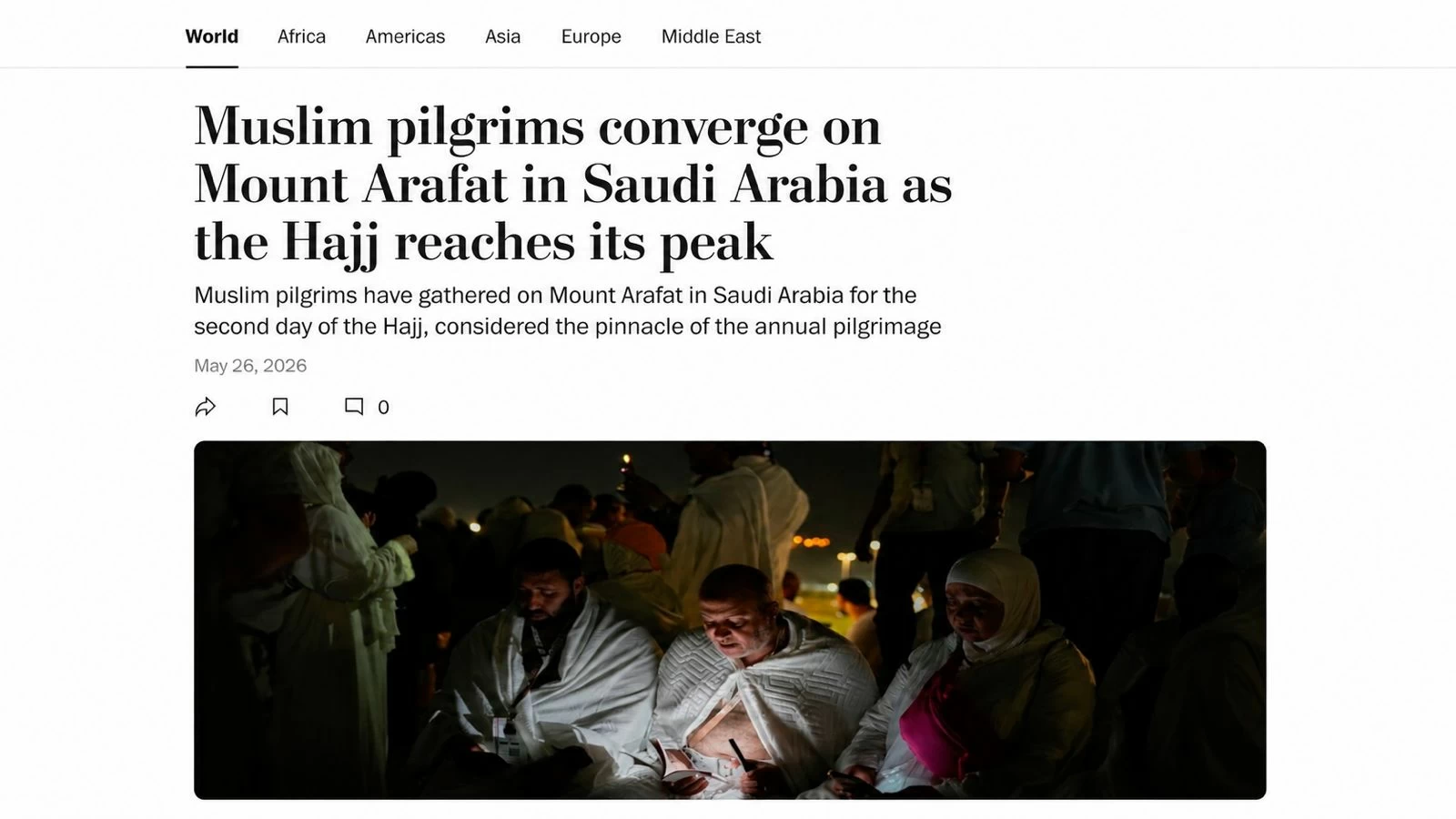
قدّمت صحيفة واشنطن بوست موسم حج 2026 بوصفه مشهداً إيمانياً عالمياً جرى وسط ظروف سياسية ومناخية معقّدة، إذ تابعت الصحيفة بدء المناسك في مكة، والوقوف بعرفة، ورمي الجمرات في مِنى، مع تركيز واضح على قدرة السعودية على إدارة الحشود في ظل حرارة مرتفعة وتوترات إقليمية قائمة.
وأشارت الصحيفة إلى وصول أكثر من 1.5 مليون حاج من خارج المملكة مع بداية الموسم، في وقت كانت المنطقة تعيش أجواء توتر سياسي، فيما ظلّ المشهد في مكة والمشاعر المقدسة قائماً على الأمن والطمأنينة وانسيابية الحركة، إذ انصرف الحجاج إلى أداء الركن الخامس في أجواء عبادة وسكينة.
وفي تغطيتها لوقفة عرفات، وصفت الصحيفة المشهد بأنه ذروة الحج الروحية، إذ اجتمع الحجاج على صعيد عرفات للدعاء وطلب الرحمة والمغفرة، وسط صور المظلات البيضاء، والأيدي المرفوعة، والدموع التي تختصر رحلة العمر لكثير من المسلمين.
ورغم حضور الحرارة العالية في تفاصيل التغطية، ظلّ البعد الإيماني العنوان الأبرز للمشهد، إذ بدا الحج حدثاً تتقدم فيه السكينة على ضجيج السياسة، وتنتصر فيه وحدة المسلمين على اضطرابات المنطقة.
وتعززت قراءة النجاح التنظيمي من خلال الأرقام الرسمية السعودية، إذ بلغ إجمالي عدد حجاج موسم 2026 نحو 1.707.301 حاج، بينهم 1.546.655 حاجاً من خارج المملكة و160.646 حاجاً من الداخل، وهو رقم يعكس حجم العملية التشغيلية التي أدارتها السعودية في أيام محدودة، بين المنافذ، والمشاعر المقدسة، والنقل، والخدمات، والأمن، والصحة.
وفي مِنى، ركزت الصحيفة على أداء الحجاج رمي الجمرات مع بداية عيد الأضحى تحت حرارة تجاوزت 42 درجة مئوية، مشيرة إلى استخدام الحجاج الماء والمظلات للتخفيف من الإجهاد، وإلى الإرشادات السعودية المتعلقة بشرب المياه وتجنب التعرض المباشر للشمس.
هذه الزاوية عكست أن التحدي في حج 2026 كان مزدوجاً: إدارة كثافة بشرية ضخمة، وحماية الحجاج من ظروف مناخية قاسية، مع الحفاظ على انسيابية المناسك.
وتكشف قراءة واشنطن بوست أن الحج، رغم التوترات السياسية في الإقليم، حافظ على صورته كمساحة آمنة للعبادة، وأن السعودية نجحت في تحويل موسم شديد الحساسية إلى نموذج تنظيمي قائم على الأمن، والانضباط، وإدارة الحشود، وخدمة ضيوف الرحمن.
وبين أرقام تتجاوز 1.7 مليون حاج، ومشاهد عرفات ومِنى، حضرت المملكة في التغطية الأمريكية بوصفها مركز الثقل الديني والتنظيمي للموسم، وحضر الحاج بوصفه إنساناً يطلب الطمأنينة في أقدس رحلة، وسط عالم يزدحم بالتوترات.
The Washington Post presented the 2026 Hajj season as a global faith scene occurring amidst complex political and climatic conditions, as the newspaper followed the beginning of the rituals in Mecca, the standing at Arafat, and the stoning of the Jamarat in Mina, with a clear focus on Saudi Arabia's ability to manage crowds under high temperatures and ongoing regional tensions.
The newspaper noted the arrival of more than 1.5 million pilgrims from outside the Kingdom at the start of the season, while the region was experiencing a climate of political tension, yet the scene in Mecca and the holy sites remained one of security, reassurance, and smooth movement, as the pilgrims devoted themselves to performing the fifth pillar in an atmosphere of worship and tranquility.
In its coverage of the Day of Arafat, the newspaper described the scene as the spiritual peak of the Hajj, as pilgrims gathered on the plain of Arafat to pray and seek mercy and forgiveness, amidst images of white umbrellas, raised hands, and tears that encapsulate a lifetime journey for many Muslims.
Despite the presence of high temperatures in the details of the coverage, the spiritual dimension remained the most prominent aspect of the scene, as the Hajj appeared to be an event where tranquility prevailed over the noise of politics, and the unity of Muslims triumphed over the region's disturbances.
The reading of organizational success was reinforced by official Saudi figures, as the total number of pilgrims for the 2026 season reached approximately 1,707,301, including 1,546,655 pilgrims from outside the Kingdom and 160,646 from within, a number that reflects the scale of the operational process managed by Saudi Arabia in a limited number of days, across the entry points, holy sites, transportation, services, security, and health.
In Mina, the newspaper focused on the pilgrims' performance of the stoning of the Jamarat at the beginning of Eid al-Adha under temperatures exceeding 42 degrees Celsius, noting the use of water and umbrellas by the pilgrims to alleviate exhaustion, and the Saudi guidelines related to drinking water and avoiding direct sun exposure.
This perspective reflected that the challenge in the 2026 Hajj was twofold: managing a massive human density and protecting the pilgrims from harsh climatic conditions while maintaining the smoothness of the rituals.
The Washington Post's analysis reveals that the Hajj, despite the political tensions in the region, maintained its image as a safe space for worship, and that Saudi Arabia succeeded in transforming a highly sensitive season into an organizational model based on security, discipline, crowd management, and serving the guests of the Merciful.
Amid numbers exceeding 1.7 million pilgrims and scenes from Arafat and Mina, the Kingdom was present in the American coverage as the center of religious and organizational gravity for the season, and the pilgrim was portrayed as a person seeking reassurance in the holiest journey, amidst a world crowded with tensions.