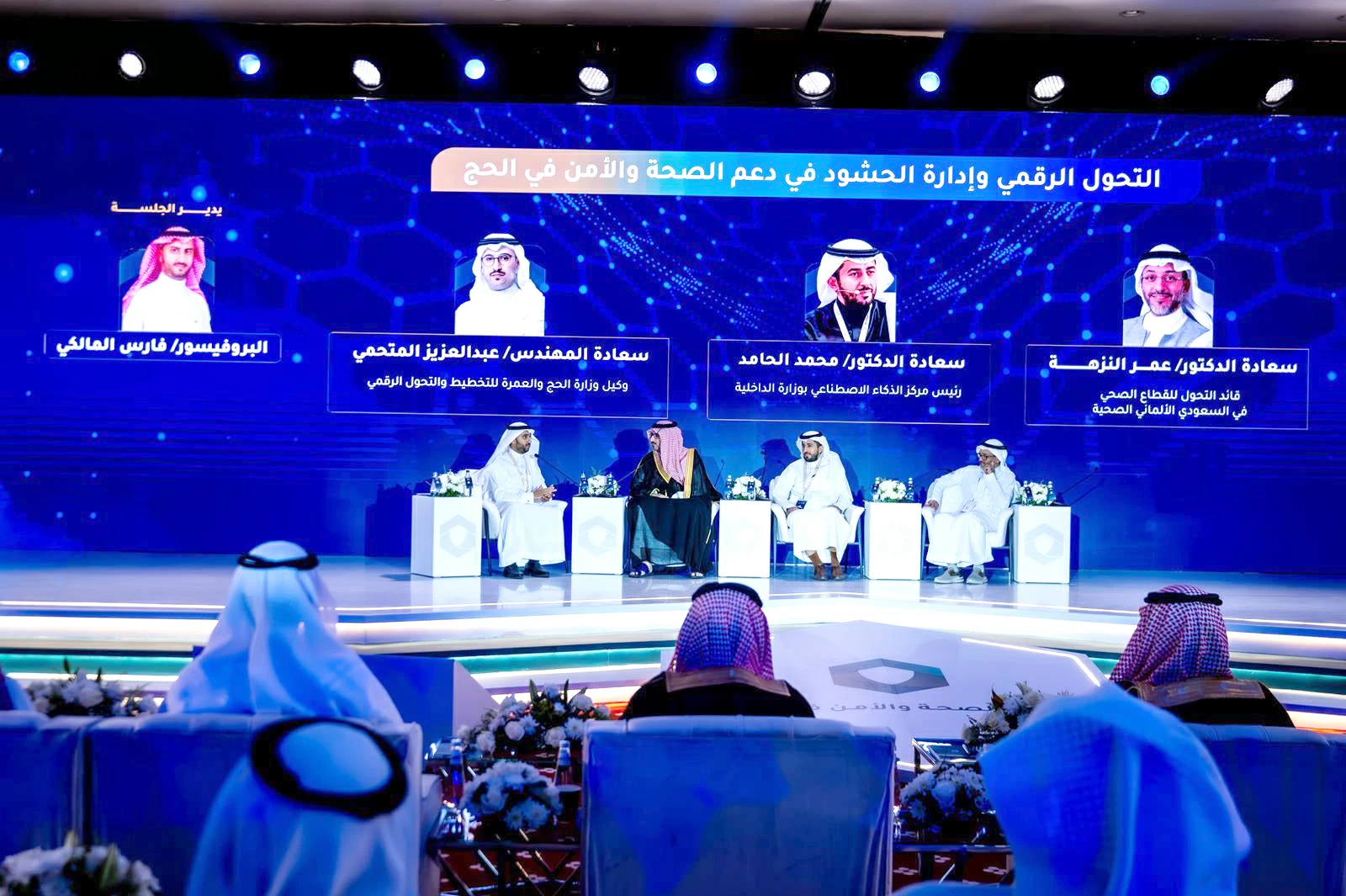
ناقشت جلسة منتدى «الصحة والأمن» في الحج، أمس، دور التحول الرقمي في إدارة الحشود وتعزيز سلامة الحجاج. واستعرضت الجلسة الحلول الذكية التي تحسن حركة الحشود، وتدعم المراقبة والاستجابة السريعة، وتضمن بيئة أكثر أماناً. واستعرض وكيل وزارة الحج والعمرة للتحول الرقمي المهندس عبدالعزيز المتحمي، تطوير الأنظمة الرقمية المتقدمة لإدارة الحشود وتنظيم حركة الحجاج، مؤكداً أن التكامل بين الجهات الحكومية عنصر أساسي في نجاح خطط السلامة التشغيلية، وأن البيانات الذكية أصبحت ركيزة لتحسين جودة الخدمات.
من جانبه، أوضح رئيس مركز الذكاء الاصطناعي بوزارة الداخلية الدكتور محمد الحامد، أن تقنيات الذكاء الاصطناعي باتت تلعب دوراً مباشراً في تحليل حركة الحشود والتنبؤ بالكثافات البشرية، مما يعزز الأمن ويرفع سرعة الاستجابة الميدانية، ويسهم في بناء منظومة استباقية تدعم اتخاذ القرار في الوقت الفعلي.
فيما تناول الدكتور عمر النزهة، دور التحول الرقمي في رفع مستوى السلامة الصحية، مبيناً أن البيانات والتحليلات الذكية حسّنت سرعة التعامل مع الحالات الطارئة. وفي جلسة حوارية أخرى أشار وكيل الالتزام والتراخيص بوزارة الصحة المهندس عبدالله النعيم، إلى أن تطبيق الاشتراطات التنظيمية ورفع مستويات الامتثال يسهمان في تحسين كفاءة المنشآت والخدمات المقدمة للحجاج، وأوضح أن الوزارة تعمل وفق خطط رقابية متكاملة تشمل الجولات الميدانية والتقييم المستمر للمنشآت الصحية. وأشار النعيم إلى أن التحول الرقمي والتقنيات الحديثة أسهما في تطوير آليات الرقابة عبر الأنظمة الذكية لرصد المخالفات وتحليل البيانات وقياس مؤشرات الامتثال، مما يرفع جودة الخدمات الصحية المقدمة للحجاج.
The "Health and Security" forum session yesterday discussed the role of digital transformation in crowd management and enhancing the safety of pilgrims. The session reviewed smart solutions that improve crowd movement, support monitoring and rapid response, and ensure a safer environment. The Deputy Minister of Hajj and Umrah for Digital Transformation, Engineer Abdulaziz Al-Mutahmi, presented the development of advanced digital systems for managing crowds and organizing the movement of pilgrims, emphasizing that integration among government entities is a key element in the success of operational safety plans, and that smart data has become a cornerstone for improving service quality.
For his part, Dr. Mohammed Al-Hamed, Head of the Artificial Intelligence Center at the Ministry of Interior, explained that artificial intelligence technologies now play a direct role in analyzing crowd movement and predicting human densities, which enhances security, increases the speed of field response, and contributes to building a proactive system that supports real-time decision-making.
Meanwhile, Dr. Omar Al-Nazha discussed the role of digital transformation in raising health safety standards, indicating that data and smart analytics have improved the speed of dealing with emergency situations. In another panel discussion, Engineer Abdullah Al-Nuaim, Deputy of Compliance and Licensing at the Ministry of Health, pointed out that applying regulatory requirements and raising compliance levels contribute to improving the efficiency of facilities and services provided to pilgrims. He clarified that the ministry operates according to comprehensive regulatory plans that include field visits and continuous evaluation of health facilities. Al-Nuaim noted that digital transformation and modern technologies have contributed to developing monitoring mechanisms through smart systems to detect violations, analyze data, and measure compliance indicators, thereby enhancing the quality of health services provided to pilgrims.