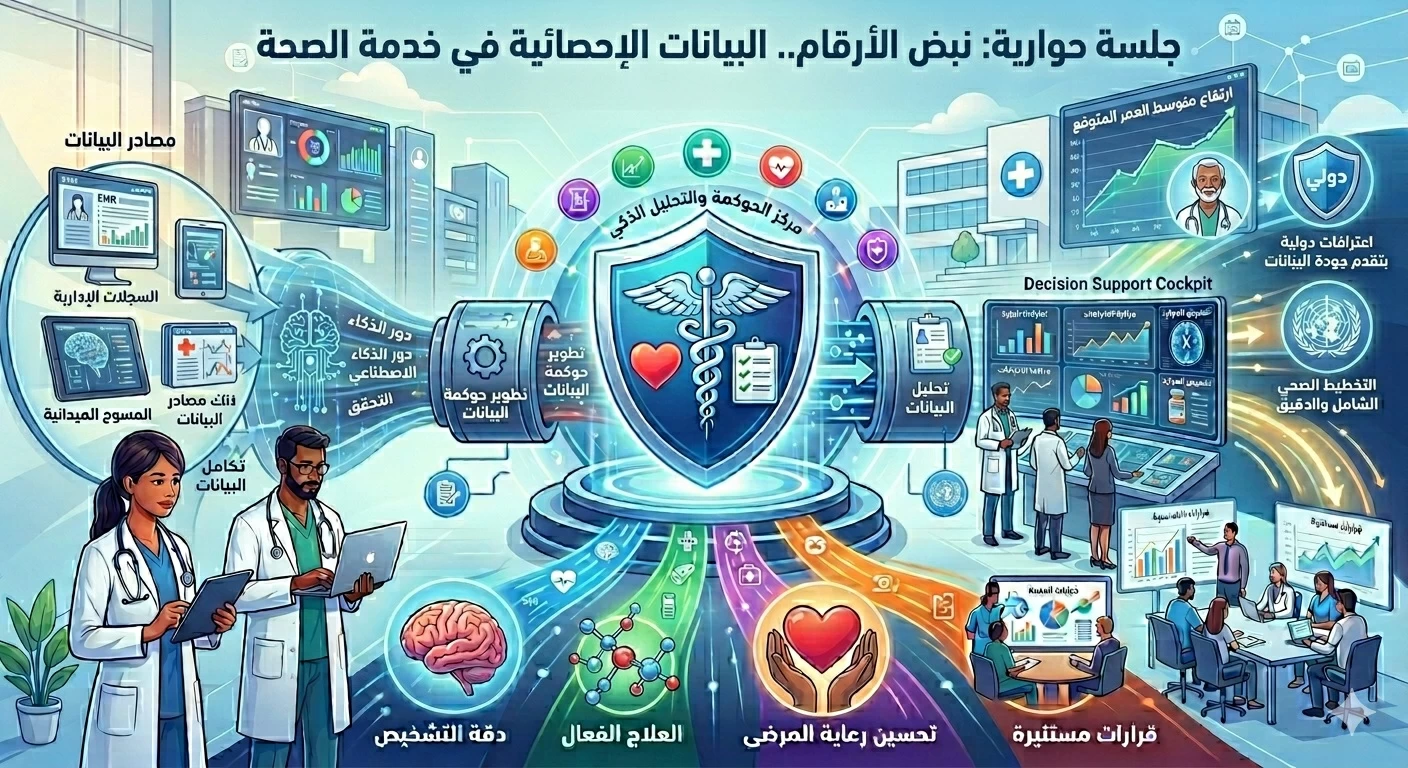
نظّمت الهيئة العامة للإحصاء جلسة حوارية بعنوان «نبض الأرقام: البيانات الإحصائية في خدمة الصحة»، وذلك ضمن فعاليات «الطريق إلى الرياض»، بمشاركة نخبة من القيادات والخبراء من الجهات الإحصائية والصحية، إلى جانب المكتب الإقليمي لمنظمة الصحة العالمية لشرق المتوسط.
وسلطت الجلسة، الضوء على الدور الحيوي الذي تؤديه البيانات الإحصائية في دعم صناعة القرار في القطاع الصحي، من خلال تحسين جودة المؤشرات الصحية وتعزيز موثوقيتها، إلى جانب تطوير حوكمة البيانات، ورفع مستوى التكامل بين الجهات ذات العلاقة، بما ينعكس إيجاباً على كفاءة التخطيط الصحي.
كما ناقش المشاركون أثر التقنيات المتقدمة في تطوير الأنظمة الصحية، ودورها في تسهيل الوصول إلى البيانات وتحسين استخدامها، مستعرضين أبرز التجارب والممارسات الحديثة في هذا المجال.
وتطرقت الجلسة إلى أهمية الاستثمار في التقنيات الحديثة، وما أحدثته من تحولات نوعية في تحليل البيانات الصحية، مع تأكيد الدور المتنامي للذكاء الاصطناعي كأداة محورية في دعم القرارات الصحية المبنية على البيانات.
وأشاد المشاركون بما حققته المملكة من تقدّم ملحوظ في جودة البيانات الصحية، وحصولها على اعترافات دولية متقدمة، مشيرين إلى أن تحسين جودة بيانات الوفيات أسهم في رفع متوسط العمر، إلى جانب دور البيانات في تقديم صورة أكثر شمولية ودقة للواقع الصحي، عبر التكامل بين البيانات الإحصائية والسجلات الإدارية، ودعم المسوح الميدانية لتمثيل السكان بشكل أدق.
The General Authority for Statistics organized a dialogue session titled "The Pulse of Numbers: Statistical Data in the Service of Health," as part of the "Road to Riyadh" events, with the participation of a select group of leaders and experts from statistical and health entities, alongside the regional office of the World Health Organization for the Eastern Mediterranean.
The session highlighted the vital role that statistical data plays in supporting decision-making in the health sector, by improving the quality of health indicators and enhancing their reliability, in addition to developing data governance and increasing the level of integration among relevant entities, which positively impacts the efficiency of health planning.
Participants also discussed the impact of advanced technologies in developing health systems and their role in facilitating access to data and improving its use, showcasing the most prominent experiences and modern practices in this field.
The session addressed the importance of investing in modern technologies and the qualitative transformations they have brought about in health data analysis, emphasizing the growing role of artificial intelligence as a pivotal tool in supporting data-driven health decisions.
Participants praised the notable progress that the Kingdom has achieved in the quality of health data and its receipt of advanced international recognitions, noting that improving the quality of mortality data has contributed to increasing the average lifespan, alongside the role of data in providing a more comprehensive and accurate picture of health reality through the integration of statistical data and administrative records, and supporting field surveys to represent the population more accurately.