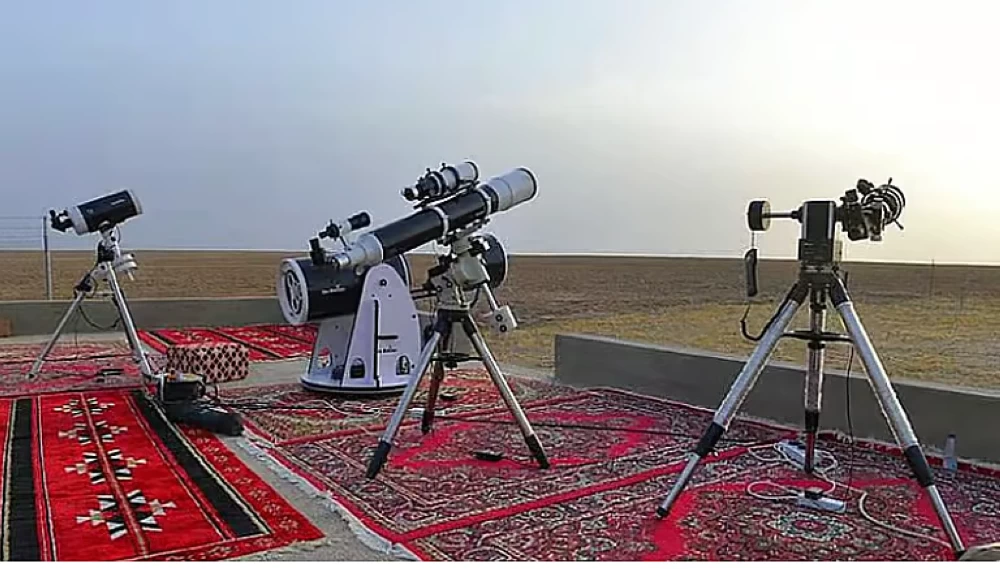
في كل عام مع تباشير رمضان والعيد تتجه الأنظار إلى «تمير» المرصد السعودي لرؤية الهلال. يقع مركز تمير قرب محافظة المجمعة، ويعود ترائي الهلال في المركز الى عقود من السنوات ومن أبرز المترائين «إبراهيم البرغش».
كانت أنظار المترائين في الماضي تتجه إلى الغرب قبل أن تدخل المراصد والعدسات الحادة والتقنية الحديثة في الخدمة.
يركز المتراؤن قديماً أنظارهم إلى جهة الغرب إذ لم تكن حينها النخيل أو البيوت مرتفعة؛ ما كان يمكّنهم من الرؤية ثم جرى الانتقال من المرصد القديم إلى الجديد الذي أسس عام 2015م تحت إشراف بلدية تمير.
يقع مرصد تمير الجديد إلى الغرب و تحيط به مناطق صخرية لا يثور منها أتربة أو غبار، كما تقع أنوار المدينة خلفه.
وأقصى درجة رُصِد القمر فيها من مرصد تمير في فصل الصيف هي 293 درجة، ومن جهة الجنوب في فصل الشتاء، رُصِد القمر على نحو 262 درجة.
اهتمت السعودية بعملية ترائي الأهلة فأوكلت المهمة للمحكمة العليا التي تقف على ضمان موثوقية الترائي من خلال معايير عدة منها المعيار الطبي، إذ يخضع المترائي لتجربة طويلة واختبار طبي لفحص حدة النظر، ثم تُعرض أوراقه على اللجنة الإشرافية الدائمة لرصد الأهلة بوزارة العدل ويجري ندب قضاة للوقوف مع المترائين في موقع الترائي بالمراصد المنتشرة في مناطق المملكة، وكانت أمانة منطقة الرياض أنهت تجهيز وتهيئة مراصد تحري الأهلة في تمير وشقراء والحريق.
واشتهر مركز تمير بتحري الأهلة منذ أكثر من 100 عام، و كان المتراؤن يصعدون إلى المرتفعات في بدايات الأشهر القمرية لرصد الهلال بالعين المجردة، في تقليد توارثه الأهالي عبر الأجيال.
وفي العام 1447هـ شهد تمير نقلة نوعية، بتطوير المرصد وإنشاء مقر حديث ومتكامل، ليكون مركزًا متقدمًا لرصد الأهلة وتعزيز الوعي المجتمعي بعلم الفلك. ويتميز مرصد تمير بعدة مقومات جعلته من أبرز مواقع الرصد في المملكة، من بينها موقعه المرتفع بنحو 678 مترًا عن سطح البحر، وطبيعته الجغرافية الصحراوية التي توفر أفقًا واسعًا ونقاءً بصريًا مناسبًا للرصد، وبيئة هادئة تقل فيها المؤثرات الضوئية والغبار، ما يعزز دقة الرؤية وتوفر مرافق وتجهيزات حديثة وخدمات مساندة لدعم المترائين.
Every year, with the arrival of Ramadan and Eid, attention turns to "Tamir," the Saudi observatory for moon sighting. The Tamir center is located near the Al-Majma'ah governorate, and the moon sighting at the center has been a tradition for decades, with one of the most notable observers being "Ibrahim Al-Barghash."
In the past, the observers would focus their gaze to the west before modern observatories, sharp lenses, and advanced technology came into play.
Historically, observers would direct their attention to the west, as there were no tall palm trees or houses at that time; this allowed them to see the moon clearly. The transition from the old observatory to the new one, established in 2015 under the supervision of the Tamir municipality, then took place.
The new Tamir observatory is located to the west and is surrounded by rocky areas that do not stir up dust or dirt, with the city lights situated behind it.
The highest angle at which the moon was observed from the Tamir observatory in the summer was 293 degrees, and in the winter, the moon was observed at about 262 degrees from the south.
Saudi Arabia has taken an interest in the moon sighting process, assigning the task to the Supreme Court, which ensures the reliability of the sightings through several criteria, including a medical standard. Observers undergo a lengthy experience and a medical test to check their visual acuity, after which their papers are submitted to the permanent supervisory committee for moon sighting at the Ministry of Justice. Judges are then appointed to accompany the observers at the sighting locations in various regions of the Kingdom. The Riyadh Municipality has completed the preparation and setup of moon sighting observatories in Tamir, Shuqaiq, and Al-Hariq.
The Tamir center has been known for moon sighting for over 100 years, with observers climbing to elevated areas at the beginning of lunar months to spot the crescent moon with the naked eye, in a tradition passed down through generations.
In the year 1447 AH, Tamir witnessed a qualitative leap with the development of the observatory and the establishment of a modern and comprehensive headquarters, making it an advanced center for moon sighting and enhancing community awareness of astronomy. The Tamir observatory is distinguished by several features that make it one of the prominent observation sites in the Kingdom, including its elevated location at about 678 meters above sea level, its desert geographical nature that provides a wide horizon and suitable visual clarity for observation, and a quiet environment with minimal light and dust interference, which enhances the accuracy of sighting and provides modern facilities and equipment, along with supporting services for the observers.