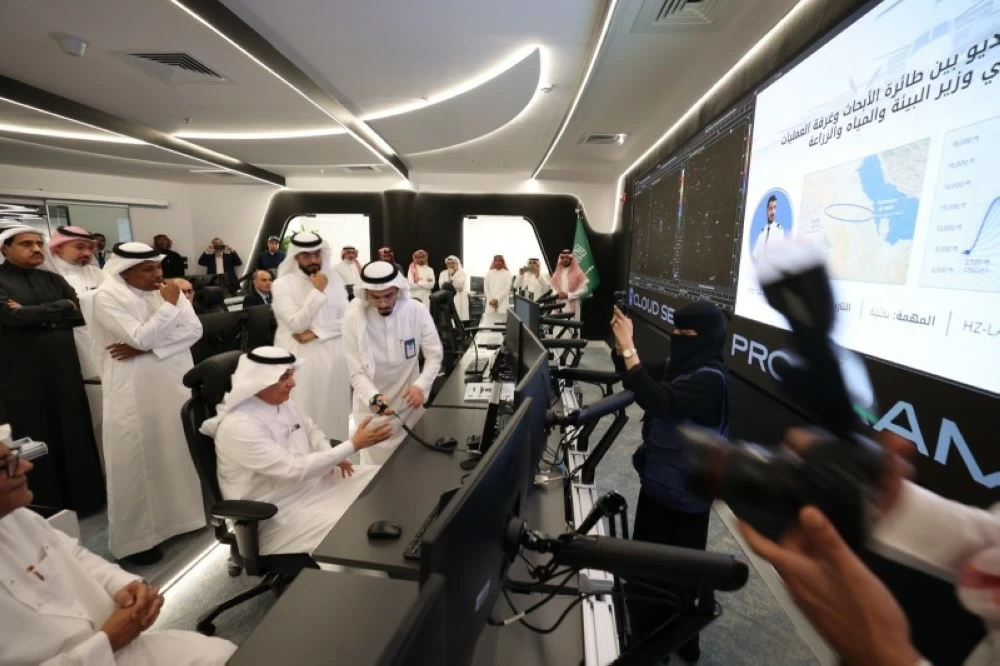
أطلق وزير البيئة والمياه والزراعة رئيس مجلس إدارة المركز الوطني للأرصاد المهندس عبدالرحمن الفضلي، أمس، «المختبر الطائر».. طائرة أبحاث الاستمطار الأحدث من نوعها عالمياً، التي تعمل كمختبر جوي متكامل لقياس عناصر الغلاف الجوي لدعم الدراسات والأبحاث المرتبطة بعمليات استمطار السحب، وذلك بمقر غرفة عمليات برنامج استمطار السحب بالمركز الوطني للأرصاد بجدة.
جاء ذلك، خلال زيارته للمركز واطلاعه على منظومة الأعمال الأرصادية والتشغيلية وإطلاق عددٍ من الأنظمة والبرامج المتقدمة في مجالات الطقس والمناخ والنمذجة العددية.
وتضمنت زيارة الوزير الاطلاع على غرفة العمليات الحديثة للطقس والمناخ ونظام الإنذار المبكر من الظواهر الجوية، وإطلاق أنظمة النمذجة العددية المتقدمة والتنبؤات الاحتمالية للطقس.
كما دشن الوزير في مركز التغير المناخي نظام التوقعات الموسمية وشبه الموسمية، ونظام مراقبة الجفاف وقاعدة بيانات التغير المناخي.
وخلال الزيارة، تم استعراض مشروع أعمال أرشفة ورقمنة السجلات المناخية الممتدة على مدى 73 عاماً (1951 حتى 2023)، ضمن جهود المركز في إطار دعم التحول الرقمي في قطاع الأرصاد، وتعزيز منظومة البيانات المناخية الوطنية.
The Minister of Environment, Water, and Agriculture, and Chairman of the Board of Directors of the National Center for Meteorology, Engineer Abdulrahman Al-Fadli, launched yesterday the "Flying Laboratory"—the latest research aircraft for cloud seeding in the world, which operates as a comprehensive airborne laboratory to measure atmospheric elements to support studies and research related to cloud seeding operations. This took place at the operations room of the cloud seeding program at the National Center for Meteorology in Jeddah.
This event occurred during his visit to the center, where he reviewed the meteorological and operational systems and launched several advanced systems and programs in the fields of weather, climate, and numerical modeling.
The minister's visit included an overview of the modern weather and climate operations room, the early warning system for weather phenomena, and the launch of advanced numerical modeling systems and probabilistic weather forecasts.
Additionally, the minister inaugurated the seasonal and sub-seasonal forecasting system at the Climate Change Center, as well as the drought monitoring system and the climate change database.
During the visit, the project for archiving and digitizing climate records spanning 73 years (from 1951 to 2023) was presented, as part of the center's efforts to support digital transformation in the meteorological sector and enhance the national climate data system.