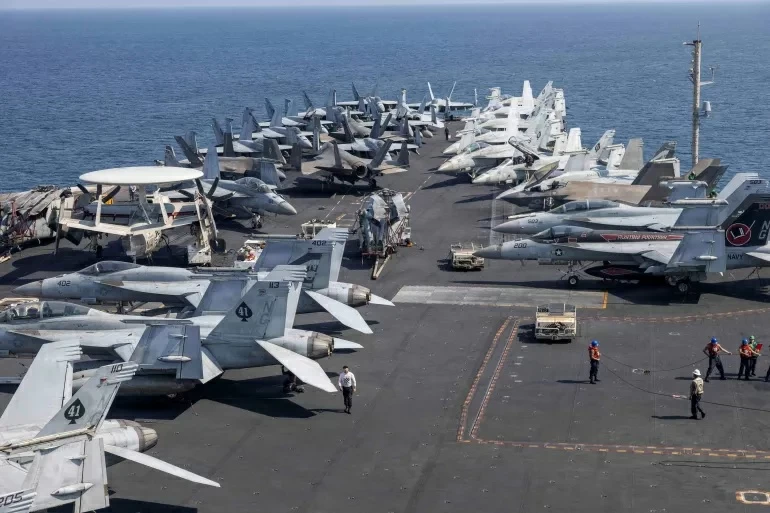
شهدت الأزمة بين واشنطن وطهران تصعيداً جديداً، بعدما عقد الرئيس الأمريكي دونالد ترمب الليلة الماضية اجتماعاً في غرفة العمليات بالبيت الأبيض مع كبار المسؤولين الأمنيين والعسكريين لبحث خيارات توسيع العمليات العسكرية ضد إيران، بما يتجاوز الضربات الحالية في محيط مضيق هرمز.
أهداف التصعيد الأمريكي المحتمل
ونقل موقع «أكسيوس» عن مصادر مطلعة تأكيدها أن التصعيد المحتمل يهدف إلى إلحاق أضرار كبيرة بإيران لإجبارها على إعادة فتح المضيق والعودة إلى المفاوضات بشأن برنامجها النووي.
وخلال مقابلة مع شبكة «فوكس نيوز»، لوّح ترمب بتوسيع الهجمات، قائلاً إن الجيش الأمريكي قد يستهدف محطات الكهرباء والجسور الإيرانية إذا لم تستجب طهران للمطالب الأمريكية، كما لم يستبعد اللجوء إلى عمليات برية، مشيراً إلى أن هناك من قد ينفذها بالنيابة عن الولايات المتحدة.
وشارك في الاجتماع نائب الرئيس جي دي فانس، وزير الخارجية ماركو روبيو، وزير الدفاع بيت هيجسيث، رئيس هيئة الأركان المشتركة الجنرال دان كين، ومدير وكالة الاستخبارات المركزية جون راتكليف، إلى جانب عدد من كبار المسؤولين. وتركزت المناقشات على خطط لاستهداف مواقع إستراتيجية داخل إيران، بالتوازي مع العمليات الجارية في منطقة مضيق هرمز.
استهداف أنظمة الدفاع الجوي
ميدانياً، واصلت القوات الأمريكية ضرباتها لليوم الرابع، مستهدفة أنظمة الدفاع الجوي والرادارات والصواريخ المضادة للسفن ومنصات إطلاق الطائرات المسيّرة، بهدف تقليص قدرة إيران على تهديد الملاحة في المضيق. وأعلنت القيادة المركزية الأمريكية تنفيذ عملية استمرت سبع ساعات استهدفت عشرات المواقع داخل إيران.
فيما استمرت إيران في اعتداءاتها السافرة بإطلاق الصواريخ والطائرات المسيّرة باتجاه دول المنطقة، إذ تعرضت البحرين والكويت والأردن لهجمات جديدة أدت إلى إطلاق صافرات الإنذار، فيما أعلنت الكويت السيطرة على حريق في أحد المواقع المستهدفة دون وقوع إصابات. وأكد قائد القيادة المركزية الأمريكية أن إيران أطلقت عشرات الصواريخ والطائرات المسيّرة نحو دول الخليج، مشيراً إلى انتشار ما لا يقل عن 19 سفينة حربية أمريكية، بينها حاملتا طائرات وسفينة هجومية برمائية، إضافة إلى مئات الطائرات العسكرية في الشرق الأوسط.
حصار بحري وجهود دبلوماسية
بالتزامن مع ذلك، دخل الحصار البحري الأمريكي على الموانئ الإيرانية حيز التنفيذ، ما دفع الحرس الثوري إلى التهديد بوقف جميع صادرات الطاقة من المنطقة، معلناً «إما أن تستمر صادرات النفط والغاز للجميع أو لن تستمر لأحد». وأعلن بدء موجة جديدة من الهجمات قال إنها استهدفت البحرين والكويت والأردن.
ورغم التصعيد، أكد مسؤولون أمريكيون نجاح القوات الأمريكية في تأمين عبور نحو 300 سفينة عبر مضيق هرمز خلال الأسبوع الماضي، في وقت تتزايد فيه المخاوف من اتساع رقعة المواجهة وتأثيرها على أحد أهم الممرات البحرية لتجارة النفط والغاز في العالم.
وفي موازاة التصعيد العسكري، تتواصل جهود الوساطة الإقليمية لإعادة واشنطن وطهران إلى طاولة المفاوضات، إذ أفادت تقارير بأن باكستان تقود تحركات دبلوماسية لإحياء اتفاق وقف إطلاق النار واستئناف المفاوضات. وأكد ترمب أن مسؤولين أمريكيين تواصلوا مع الجانب الإيراني، محذراً من توسيع الضربات خلال الأيام القادمة إذا لم يتم التوصل إلى اتفاق. وأشار إلى مراقبة واشنطن نشاطاً محدوداً في موقع نووي إيراني محصن تحت الأرض، مؤكداً استعداد الولايات المتحدة لاستهدافه إذا رُصد أي نشاط يثير القلق.
The crisis between Washington and Tehran has escalated, after U.S. President Donald Trump held a meeting last night in the White House Situation Room with senior security and military officials to discuss options for expanding military operations against Iran, beyond the current strikes in the vicinity of the Strait of Hormuz.
Potential U.S. Escalation Objectives
Axios reported, citing informed sources, that the potential escalation aims to inflict significant damage on Iran to force it to reopen the strait and return to negotiations regarding its nuclear program.
During an interview with Fox News, Trump hinted at expanding attacks, stating that the U.S. military could target Iranian power stations and bridges if Tehran does not respond to U.S. demands, and he did not rule out resorting to ground operations, indicating that there may be others who could carry them out on behalf of the United States.
The meeting included Vice President J.D. Vance, Secretary of State Marco Rubio, Secretary of Defense Pete Hegseth, Chairman of the Joint Chiefs of Staff General Dan Keen, and CIA Director John Ratcliffe, along with several senior officials. Discussions focused on plans to target strategic sites within Iran, in parallel with ongoing operations in the Strait of Hormuz region.
Targeting Air Defense Systems
On the ground, U.S. forces continued their strikes for the fourth day, targeting air defense systems, radars, anti-ship missiles, and drone launch platforms, aiming to reduce Iran's ability to threaten navigation in the strait. The U.S. Central Command announced the execution of a seven-hour operation targeting dozens of sites within Iran.
Meanwhile, Iran continued its blatant aggressions by launching missiles and drones towards regional countries, with Bahrain, Kuwait, and Jordan experiencing new attacks that triggered alarm sirens. Kuwait announced it had controlled a fire at one of the targeted sites without any injuries. The commander of U.S. Central Command confirmed that Iran launched dozens of missiles and drones towards Gulf countries, noting the deployment of at least 19 U.S. warships, including aircraft carriers and an amphibious assault ship, in addition to hundreds of military aircraft in the Middle East.
Naval Blockade and Diplomatic Efforts
Simultaneously, the U.S. naval blockade on Iranian ports came into effect, prompting the Revolutionary Guard to threaten to halt all energy exports from the region, declaring, "Either oil and gas exports continue for everyone, or they will not continue for anyone." They announced the start of a new wave of attacks that they claimed targeted Bahrain, Kuwait, and Jordan.
Despite the escalation, U.S. officials confirmed the success of American forces in securing the passage of about 300 ships through the Strait of Hormuz over the past week, amid growing concerns about the widening confrontation and its impact on one of the world's most important maritime routes for oil and gas trade.
Alongside the military escalation, regional mediation efforts continue to bring Washington and Tehran back to the negotiating table, with reports indicating that Pakistan is leading diplomatic moves to revive the ceasefire agreement and resume negotiations. Trump confirmed that U.S. officials have communicated with the Iranian side, warning of an expansion of strikes in the coming days if an agreement is not reached. He noted that Washington is monitoring limited activity at a fortified underground Iranian nuclear site, affirming the United States' readiness to target it if any concerning activity is detected.