


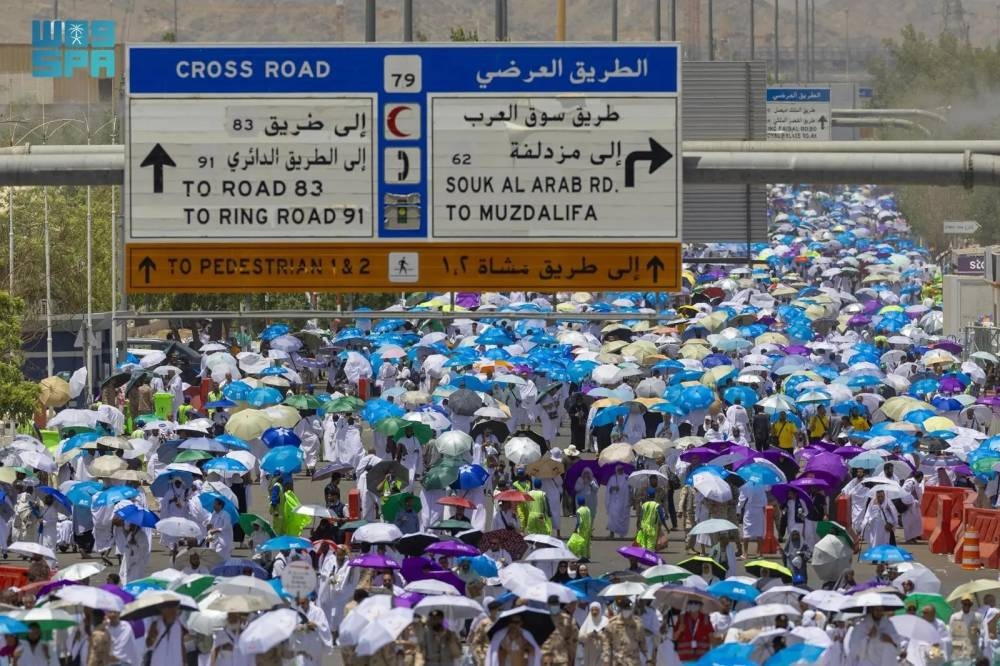
فن إدارة الحشود علامة سعودية تُدرس، فلم تعد هذه الإدارة مجالاً تنظيمياً فقط، بل أصبحت علماً يعتمد على الدراسة والبحث الأكاديمي والعلمي، إذ تفوقت فيه المملكة عملياً بتحقيقها العديد من الإنجازات المتلاحقة وتنفيذ المشاريع المتنامية رائدة عالمياً في إدارة الحشود التي تؤدي مناسك الحج والعمرة في كل عام.
ومثل هذه الإدارة تعد عنصراً محورياً لضمان سلامة الحجاج خلال تأديتهم الشعائر في منطقة محدودة في فترة زمنية قصيرة، إذ يتوافد نحو مليوني حاج من مختلف أنحاء العالم إلى مكة المكرمة والمشاعر المقدسة. وتعمل الجهات ذات العلاقة على منع التدافع والاختناق وتفادي الحوادث، وتنظيم الحشود بين المشاعر، مع سرعة التعامل مع أي أزمات صحية أو أمنية، بالاستفادة من التقنية لتحسين دقة التوقعات والقرارات على أرض الواقع.
لقد نجحت السعودية على مدار الأعوام الماضية في تطوير تقنيات إدارة الحشود وامتلكت التجربة التراكمية، وكيفية التعامل مع الكتل البشرية، عبر التعامل مع حجاج يمثلون 164 جنسية حول العالم، في فترة زمنية قصيرة وفي مواقع محددة داخل المشاعر المقدسة.
وأصبحت التجربة الرائدة في إدارة الحشود في موسمي الحج والعمرة نموذجاً عالمياً في التنظيم البشري المتقدم، ونبراساً يُقتدى به فقد ظهر منهج المملكة جلياً، ووضع الإنسان أولاً؛ تأكيداً لمقاصد الشريعة الإسلامية في حفظ النفس الإنسانية، وهو ما تحقق في حج استثنائي نتيجة تراكم التجارب والخبرات في إدارة الحشود وتنظيم مواسم الحج.
وتمثل إدارة الحشود إحدى الدعائم القوية لرؤية المملكة 2030، التي تستهدف استضافة 100 مليون زيارة، وأكثر من 30 مليون حاج ومعتمر بحلول عام 2030. وتعتبر من أدق وأصعب علوم الإدارة التي تتطلب كيفية التعامل مع ثقافات مختلفة ولغات عدة وسلوكيات وأمزجة مختلفة ومتنوعة ومتعددة، وهو ما دفع الكثير من دول العالم للاستفادة من التجربة السعودية في هذا المجال.
علو كعب المملكة في إدارة الحشود البشرية جعل العالم يشهد بقدرتها في إدارة ملايين البشر في موسمي العمرة والحج، اللذين تستنفر فيهما المملكة طاقاتها وإمكاناتها البشرية والمادية لاستقبال ملايين المعتمرين والحجاج القادمين من أنحاء العالم، وأكسب القائمين على خدمة الحجاج خبرة وتجربة كمية وتراكمية ومعرفية.
وفي ظل تعدد ثقافات ولغات الحجاج، أظهرت الجهات الأمنية في هذه البلاد الطاهرة تميزاً كبيراً في إدارة هذه الحشود البشرية، حفاظاً على أمن الحجاج والمعتمرين والزوار في زمن قياسي وجيز، على مساحة محدودة، بخطط نفذت بسواعد سعودية، بما تمتلكه من خبرة وتميز فريد في تنظيم إدارة الحشود وحماية الحجاج بتعامل إنساني راقٍ ظهر في العديد من المشاهد والمواقف، لتشاهد رجل الأمن تحت الشمس الحارقة والحرارة المرتفعة وهو يوصل رسالته العفوية لجميع أصقاع الأرض بأنهم في خدمة ضيوف الرحمن، يتفانون في العطاء والسهر على أمنهم وراحتهم.
تتفرد المملكة بتنظيم أفواج مليونية خلال مواسم الحج والعمرة وهو أمر بات اعتيادياً ولا يشكل أية عقبات لديها، مهما بلغ عدد الزائرين وفي أي موسم كان؛ فقد هيّأت الهيئة العامة للعناية بشؤون المسجد الحرام والمسجد النبوي جميع الإمكانات لخدمة ضيوف الرحمن، وجندت الكفاءات البشرية والتقنية لهذا الغرض.
تقنية الاستشعار عن بعد
دشنت وزارة الداخلية ومدينة الملك عبدالعزيز للعلوم والتقنية (كاكست) منصة ذكية تعمل بالذكاء الاصطناعي.
وتعد المنصة نقلة نوعية في مجال تكامل التقنيات الحديثة للمراقبة والاستطلاع لدعم متخذي القرار في إدارة الحشود وتأمين سلامة ضيوف الرحمن، وتعتمد على تقنيات متطورة تجمع بين الاستشعار عن بعد، ونظم المعلومات الجغرافية لتحليل الصور الفضائية بدقة عالية؛ ما يوفر رؤية شاملة للحرمين الشريفين والمشاعر المقدسة.
وتمثل المنصة الذكية نموذجاً طموحاً للتحول الرقمي ضمن مستهدفات رؤية 2030، وتجسِّد التزام المملكة بتوظيف أحدث التقنيات العالمية لخدمة ضيوف الرحمن في مجال الذكاء الاصطناعي لتأمين المشاعر المقدسة، ما يضمن للحجاج والمعتمرين أداء مناسكهم في بيئة آمنة، وتطوير البنية التحتية المعرفية والارتقاء بمستوى الخدمات المقدمة في الحرمين الشريفين تحقيقاً لأعلى معايير الأمن والسلامة.
وتقدم المنصة رؤية متكاملة للمشهد العام في إدارة الحشود الضخمة خلال مواسم الحج والعمرة، وتسهم في رفع كفاءة تقنيات المراقبة والاستطلاعات الأمنية وتحسين الاستجابة الميدانية من خلال تزويد الجهات المختصة بإحصاءات وبيانات متكاملة، وتقدم آليات لرصد التغيرات في درجات الحرارة على سطح الأرض، خصوصاً للجزر الحرارية، إضافةً لرصد الأنماط غير النظامية.
وتعمل المنصة على إحصاءات ومقارنات بين بيانات الموسم الحالي والمواسم السابقة؛ ما يسهم في التخطيط المستقبلي وتطوير الخدمات المقدمة للحجاج والمعتمرين، وتستفيد من خدمات المنصة العديد من القطاعات الأمنية التابعة للمديرية العامة للأمن العام بمختلف قطاعاتها الحيوية في موسم الحج، ما يعزز التنسيق بين الجهات الحكومية المختلفة، ويدعم الاستجابة المتكاملة للتحديات المحتملة.
رصد وتحليل الكتل البشرية
تستخدم الهيئة الملكية لمدينة مكة المكرمة والمشاعر المقدسة، بالتعاون مع مدينة الملك عبدالعزيز للعلوم والتقنية، تقنيات الصور الفضائية عالية الدقة والذكاء الاصطناعي الجيومكاني التي تسمى «GeoAI»، والتي تستخدم لرصد وتحليل الحركة البشرية والمرورية خلال موسم الحج؛ وذلك بهدف تعزيز كفاءة إدارة الحشود. ويشمل نطاق التحليل مداخل مكة لمراقبة تدفقات المركبات وأوقات الذروة، والمنطقة المركزية لتتبع كثافة الحشود حول المسجد الحرام، وطرق المشاعر من خلال تحليل التنقلات، إضافة إلى ذلك التنبؤ بمواقع التكدس.
وتهدف التقنية إلى دعم اتخاذ القرارات الفورية من خلال توفير بيانات دقيقة، وتحسين توزيع الحشود، إضافة إلى ذلك ضمان التنقل الآمن، وتعزيز التنسيق بين الجهات التشغيلية ميدانياً.
ويمثل التعاون نموذجاً متقدماً في توظيف التقنيات الجيومكانية لخدمة موسم الحج، ما يعزز السلامة كذلك ويرفع كفاءة الأداء الميداني.
تقنيات تحليل المقاطع
اضطلع معهد خادم الحرمين الشريفين لأبحاث الحج والعمرة بجامعة أم القرى بدورٍ رئيسي في إدارة الحشود، وعمل على تطوير بعض نماذج التعلم الآلي التي تساعد في تحليل كثافة الحشود في عدة أماكن خلال مناسك الحج. وعمل الباحثون على تطوير النماذج واستخدام تقنيات التعلم الآلي لتحليل مقاطع الفيديو من موسم الحج، وتصنيف كثافة الحشود إلى مستويات مختلفة؛ ما يساعد في تحديد المناطق ذات الكثافة العالية وتنبيه الجهات المعنية لاتخاذ الإجراءات اللازمة، والمساعدة في اتخاذ القرارات الفورية.
أما هيئة الاتصالات والفضاء والتقنية فقد شاركت ضمن منظومة خدماتها التقنية والرقمية في إدارة الحشود عبر بنية تحتية متطورة، تسهم من خلالها الهيئة في تسهيل إدارة الحشود، فوظفت استخدام تقنيات مثل الدرونز وإنترنت الأشياء في مراقبة حركة الحشود وتوجيه المركبات، ما يعزز كفاءة النقل، وإجراء المسح الشامل للترددات المستخدمة من الجهات الحكومية في مكة المكرمة والمشاعر المقدسة؛ للتأكد من عدم وجود تداخلات تؤثر في جودة الخدمة، وتوفير فرق فنية متخصصة تعمل على مدار الساعة لمتابعة أداء الشبكات ومعالجة أي مشكلات قد تطرأ في الحج.
إدارة بالذكاء الاصطناعي
تستخدم وزارة الداخلية؛ ممثلةً في المديرية العامة للأمن العام بالتعاون مع الهيئة السعودية للبيانات والذكاء الاصطناعي (سدايا) خوارزميات الذكاء الاصطناعي عبر منصتي «سواهر»، و«بصير»، لرفع مستوى الدقة في رصد الظواهر الأمنية في المسجد الحرام والمشاعر المقدسة، ووضع الخطط الأمنية الاستباقية لإدارة وتنظيم حركة الحشود، وتمرير تلك البيانات إلى صناع القرار في مركز العمليات والسيطرة لاتخاذ القرارات.
وتستلزم أوقات الذروة طوال العام استعداداً مُضاعفاً لإدارة الحشود، وتقدم الإدارة العامة للحشود والتفويج التابعة للهيئة العامة للعناية بشؤون المسجد الحرام والمسجد النبوي جهوداً منظمة على مدار الساعة، تتسم بالمرونة، وتعمل بالتكامل مع جهات مختصة، لتيسير عملية التفويج وإدارة الحشود.
ويُعد صباح صلاة الجمعة من أكثر الأوقات ازدحاماً خلال الأسبوع، أما على مستوى الأشهر فيُمثل شهر رمضان أكثر الأشهر كثافةً عددية، إلى جانب موسم الحج الذي يضمّ أعداداً مليونية تنتقل من مكان إلى آخر في أوقات مُحددة وخطط مدروسة. وترفع الجهات المشاركة في التفويج مستوى جاهزيتها في أوقات الذروة، وتعمل بالتنسيق في ما بينها على إدارة الحشود، إذ تدرب الكوادر البشرية على التعامل مع الحشود بمهنية لتسهيل وصول قاصدي المسجد الحرام إلى الساحات والمصليات وتنقلهم بين الأدوار.
وقال المتحدث باسم قوات أمن الحج المقدم خالد الكريديس: إن عمليات تفويج الحجاج لرمي الجمرات تمت بمشاركة الجهات المعنية كافة، إذ يتم إعداد خطط مسبقة لإدارة الحشود والتفويج.
مركز SMART MOC
يعدّ مركز عمليات مكة الذكية (SMART MOC) بمدينة مكة المكرمة إحدى أهم الركائز التشغيلية التقنية المتقدمة؛ التي تعزز قدرات منظومة الحج من الجهات الحكومية العاملة في خدمة ضيوف الرحمن، ويهدف إلى إدارة ومراقبة الأنظمة والمنصات المتقدمة التي تشرف عليها «سدايا»، لرفع مستوى الخدمات الرقمية المقدمة لحجاج بيت الله الحرام.
ويعزز المركز مهمات إدارة الحشود والقدرات الأمنية في المشاعر المقدسة من خلال منظومة متكاملة تشمل منصة «بصير»ظخ التي تُعالج البيانات بشكل لحظي باستخدام تقنيات وخوارزميات متقدمة لرصد أعداد الحشود وتوزيعها بدقة وكفاءة داخل بيئة الحرمين الشريفين.
«سدايا».. واستعراض التصاريح
أسهمت «سدايا» ضمن جهودها في تطوير المنصة الرقمية الموحدة لتصاريح الحج (منصة تصريح)؛ التي أطلقتها وزارة الداخلية لإصدار التراخيص والتصاريح التي تخول لحامليها من حجاج الداخل والخارج الدخول إلى مدينة مكة المكرمة والمشاعر المقدسة من خلال التكامل التقني مع وزارة الحج عبر منصة «نسك» التي تخول للعاملين والمتطوعين في أعمال الحج كافة، والمركبات التي تنقلهم، الدخول إلى مدينة مكة المكرمة والمشاعر المقدسة مع إمكانية استعراض التصاريح عبر التطبيق الوطني الشامل (توكلنا).
وشهد حج هذا العام خدمة استعراض تصاريح الحج عبر تطبيق «توكلنا»، وذلك بالربط مع المنصة الرقمية الموحدة لتصاريح الحج، وتعمل الخدمة على تسهيل استعراض جميع أنواع تصاريح الحج من الجهات الحكومية كافة، التي تشمل بطاقة تصريح الحاج.
ممنوع حمل الأمتعة
نجحت وزارة الحج بالشراكة مع كل الجهات العاملة في موسم الحج في متابعة ومراقبة حركة تفويج الحشود باستخدام التقنيات الحديثة، وتشمل: كاميرات المراقبة الميدانية وتطبيق الهواتف الذكية وباستخدام لوحة قياس الأداء ومنصة الحج الذكية؛ بهدف تسهيل تأدية الحجاج نسكهم بكل راحة وطمأنينة ويسر.
وتتضمن خطط التفويج مراقبة أداء الخطط التنفيذية وحركة الحشود بالمشاعر المقدسة من خلال كاميرات المراقبة بالمشاعر المقدسة، ونجحت خطة وزارة الحج في تفويج حجاج بيت الله الحرام للجمرات في أول أيام التشريق وسط خدمات تكاملية من مختلف الجهات الحكومية والأهلية المعنية بالحج.
وتتسم انسيابية حركة الحجاج أثناء رميهم الجمرات الثلاث ابتداءً من الجمرة الصغرى فالوسطى ثم جمرة العقبة من خلال التقيد بالجدولة الزمنية التي خصصت لتفويجهم من المخيمات أو من خلال جسور المشاة مع قطار المشاعر التي تمر على مسارات يتم منها توزيعهم على الأدوار المتعددة للجمرات وتحديد طرقات للذاهبين حتى لا تتعارض مع العائدين من الجمرات. وألزمت شركات الطوافة والمجلس التنسيقي لحجاج الداخل بعدم السماح للحجاج بحمل أمتعة شخصية أثناء رمي الجمرات، وضرورة توفر قائد فوج مع كل 90 حاجاً.
فن إدارة الحشود
«صُنع في السعودية».. كيف تُدير حجاج 164 دولة في مساحة صغيرة ؟
13 يونيو 2025 - 01:42
|
آخر تحديث 13 يونيو 2025 - 01:42


تابع قناة عكاظ على الواتساب
The art of crowd management is a Saudi hallmark that is being studied. This management is no longer just an organizational field; it has become a science based on study, academic research, and scientific inquiry. The Kingdom has practically excelled in this area by achieving numerous successive accomplishments and implementing growing projects that are globally pioneering in crowd management for those performing the rituals of Hajj and Umrah every year.
Such management is a pivotal element in ensuring the safety of pilgrims as they perform their rituals in a limited area within a short time frame, as nearly two million pilgrims from various parts of the world converge on Mecca and the holy sites. Relevant authorities work to prevent stampedes and suffocation, avoid accidents, and organize crowds between the holy sites, while quickly addressing any health or security crises, utilizing technology to improve the accuracy of predictions and decisions on the ground.
Over the past years, Saudi Arabia has succeeded in developing crowd management technologies and has accumulated experience in dealing with human masses, managing pilgrims representing 164 nationalities worldwide, within a short time frame and in specific locations within the holy sites.
The pioneering experience in crowd management during the Hajj and Umrah seasons has become a global model for advanced human organization, serving as a beacon to be emulated. The Kingdom's approach is clear, placing humans first; affirming the objectives of Islamic law in preserving human life, which was realized in an exceptional Hajj due to the accumulation of experiences and expertise in crowd management and organizing Hajj seasons.
Crowd management represents one of the strong pillars of the Kingdom's Vision 2030, which aims to host 100 million visits and more than 30 million pilgrims and Umrah performers by 2030. It is considered one of the most precise and challenging fields of management, requiring the ability to deal with different cultures, multiple languages, and diverse behaviors and moods, which has prompted many countries around the world to benefit from the Saudi experience in this field.
The Kingdom's superiority in managing human crowds has made the world witness its ability to manage millions of people during the Umrah and Hajj seasons, during which the Kingdom mobilizes its human and material resources to welcome millions of Umrah performers and pilgrims from around the globe, providing those serving the pilgrims with quantitative, cumulative, and knowledge-based experience.
In light of the diverse cultures and languages of the pilgrims, the security authorities in these holy lands have demonstrated significant excellence in managing these human crowds, ensuring the safety of pilgrims, Umrah performers, and visitors in a remarkably short time, over a limited area, with plans executed by Saudi hands, leveraging unique expertise in crowd management and protecting pilgrims with high humanitarian standards evident in many scenes and situations. You can see security personnel under the scorching sun and high temperatures conveying their spontaneous message to all corners of the earth that they are at the service of the guests of the Merciful, dedicated to ensuring their safety and comfort.
Saudi Arabia uniquely organizes millions of pilgrims during the Hajj and Umrah seasons, a task that has become routine and poses no obstacles, regardless of the number of visitors or the season; the General Authority for the Care of the Two Holy Mosques has prepared all the necessary resources to serve the guests of the Merciful, deploying human and technical competencies for this purpose.
Remote Sensing Technology
The Ministry of Interior and King Abdulaziz City for Science and Technology (KACST) have launched a smart platform powered by artificial intelligence.
This platform represents a qualitative leap in the integration of modern surveillance and reconnaissance technologies to support decision-makers in crowd management and ensuring the safety of the guests of the Merciful. It relies on advanced technologies that combine remote sensing and geographic information systems to analyze satellite images with high precision, providing a comprehensive view of the Two Holy Mosques and the holy sites.
The smart platform is an ambitious model for digital transformation within the targets of Vision 2030, embodying the Kingdom's commitment to employing the latest global technologies to serve the guests of the Merciful in the field of artificial intelligence to secure the holy sites, ensuring that pilgrims and Umrah performers can perform their rituals in a safe environment, and developing the knowledge infrastructure and enhancing the level of services provided in the Two Holy Mosques to achieve the highest standards of security and safety.
The platform provides a comprehensive view of the overall scene in managing large crowds during the Hajj and Umrah seasons, contributing to enhancing the efficiency of surveillance and security reconnaissance technologies and improving field response by providing relevant authorities with integrated statistics and data, and offering mechanisms to monitor changes in surface temperatures, particularly for heat islands, in addition to tracking irregular patterns.
The platform works on statistics and comparisons between data from the current season and previous seasons, contributing to future planning and the development of services provided to pilgrims and Umrah performers. Many security sectors affiliated with the General Directorate of Public Security benefit from the platform's services in various vital sectors during the Hajj season, enhancing coordination among different government entities and supporting a comprehensive response to potential challenges.
Monitoring and Analyzing Human Masses
The Royal Commission for the City of Mecca and the Holy Sites, in cooperation with King Abdulaziz City for Science and Technology, utilizes high-resolution satellite imagery and geospatial artificial intelligence technologies known as "GeoAI," which are used to monitor and analyze human and vehicular movement during the Hajj season; this aims to enhance the efficiency of crowd management. The scope of analysis includes the entrances to Mecca to monitor vehicle flows and peak times, the central area to track crowd density around the Sacred Mosque, and the routes of the holy sites through movement analysis, in addition to predicting congestion locations.
The technology aims to support immediate decision-making by providing accurate data, improving crowd distribution, ensuring safe movement, and enhancing coordination among operational entities in the field.
This collaboration represents an advanced model in employing geospatial technologies to serve the Hajj season, enhancing safety and increasing the efficiency of field performance.
Segment Analysis Technologies
The King Abdulaziz Research Institute for Hajj and Umrah at Umm Al-Qura University has played a key role in crowd management, developing several machine learning models that assist in analyzing crowd density in various locations during the Hajj rituals. Researchers have worked on developing models and using machine learning techniques to analyze video footage from the Hajj season, classifying crowd density into different levels; this helps identify high-density areas and alert relevant authorities to take necessary actions and assist in immediate decision-making.
The Communications, Space, and Technology Authority has participated in its system of technical and digital services in crowd management through advanced infrastructure, through which the authority facilitates crowd management, employing technologies such as drones and the Internet of Things to monitor crowd movement and direct vehicles, enhancing transportation efficiency, and conducting a comprehensive survey of frequencies used by government entities in Mecca and the holy sites to ensure there are no interferences affecting service quality, providing specialized technical teams that work around the clock to monitor network performance and address any issues that may arise during Hajj.
AI-Powered Management
The Ministry of Interior, represented by the General Directorate of Public Security in collaboration with the Saudi Data and Artificial Intelligence Authority (SDAIA), uses artificial intelligence algorithms through the "Sawareh" and "Basir" platforms to enhance the accuracy of monitoring security phenomena in the Sacred Mosque and the holy sites, developing proactive security plans for managing and organizing crowd movement, and passing that data to decision-makers at the operations and control center for decision-making.
Peak times throughout the year require doubled readiness for crowd management, and the General Directorate of Crowds and Pilgrimage of the General Authority for the Care of the Two Holy Mosques provides organized efforts around the clock, characterized by flexibility, working in integration with specialized entities to facilitate the process of crowd management.
The morning of Friday prayers is one of the busiest times during the week, while on a monthly level, the month of Ramadan represents the most densely populated month, alongside the Hajj season, which includes millions moving from one place to another at specific times and according to studied plans. Participating entities in crowd management raise their readiness during peak times and coordinate among themselves to manage crowds, training human resources to handle crowds professionally to facilitate the arrival of those heading to the Sacred Mosque to the squares and prayer areas and their movement between levels.
The spokesperson for the Hajj Security Forces, Major Khalid Al-Kuraidis, stated that the process of managing pilgrims for the stoning of the Jamarat was carried out with the participation of all relevant entities, as pre-planned strategies for crowd management and organization were prepared.
SMART MOC Center
The Smart Operations Center (SMART MOC) in Mecca is one of the most important advanced operational technological pillars that enhance the capabilities of the Hajj system from the government entities working to serve the guests of the Merciful. It aims to manage and monitor the advanced systems and platforms overseen by SDAIA, to elevate the level of digital services provided to the pilgrims of the Sacred House of Allah.
The center enhances crowd management tasks and security capabilities in the holy sites through an integrated system that includes the "Basir" platform, which processes data in real-time using advanced technologies and algorithms to accurately and efficiently monitor and distribute crowds within the environment of the Two Holy Mosques.
SDAIA and Permit Review
SDAIA has contributed to the development of the unified digital platform for Hajj permits (Permit Platform), launched by the Ministry of Interior to issue licenses and permits that allow holders, both domestic and international pilgrims, to enter the city of Mecca and the holy sites through technical integration with the Ministry of Hajj via the "Nusk" platform, which allows workers and volunteers in all Hajj activities, as well as the vehicles transporting them, to enter the city of Mecca and the holy sites, with the ability to review permits through the comprehensive national application (Tawakkalna).
This year's Hajj witnessed the service of reviewing Hajj permits through the "Tawakkalna" application, linked to the unified digital platform for Hajj permits. This service facilitates the review of all types of Hajj permits from all government entities, including the pilgrim permit card.
Prohibition of Carrying Luggage
The Ministry of Hajj, in partnership with all entities involved in the Hajj season, has successfully monitored and followed up on the movement of crowd management using modern technologies, including field surveillance cameras, smartphone applications, performance measurement boards, and the smart Hajj platform; aiming to facilitate pilgrims in performing their rituals with comfort, reassurance, and ease.
The crowd management plans include monitoring the performance of the executive plans and the movement of crowds in the holy sites through surveillance cameras in the holy sites. The Ministry of Hajj's plan for managing the pilgrims of the Sacred House of Allah for the stoning of the Jamarat on the first days of Tashreeq was successful, amidst integrated services from various government and private entities involved in Hajj.
The smooth movement of pilgrims during their stoning of the three Jamarat, starting from the small Jamarah to the middle one and then to the Jamarah Al-Aqabah, is achieved by adhering to the time schedule designated for their movement from the camps or through pedestrian bridges with the train of the holy sites that pass through routes from which they are distributed to the multiple levels of the Jamarat, and designated pathways for those going to ensure they do not conflict with those returning from the Jamarat. The pilgrimage companies and the Coordinating Council for Domestic Pilgrims have mandated that pilgrims are not allowed to carry personal belongings while stoning the Jamarat, and that a group leader must be present for every 90 pilgrims.
Such management is a pivotal element in ensuring the safety of pilgrims as they perform their rituals in a limited area within a short time frame, as nearly two million pilgrims from various parts of the world converge on Mecca and the holy sites. Relevant authorities work to prevent stampedes and suffocation, avoid accidents, and organize crowds between the holy sites, while quickly addressing any health or security crises, utilizing technology to improve the accuracy of predictions and decisions on the ground.
Over the past years, Saudi Arabia has succeeded in developing crowd management technologies and has accumulated experience in dealing with human masses, managing pilgrims representing 164 nationalities worldwide, within a short time frame and in specific locations within the holy sites.
The pioneering experience in crowd management during the Hajj and Umrah seasons has become a global model for advanced human organization, serving as a beacon to be emulated. The Kingdom's approach is clear, placing humans first; affirming the objectives of Islamic law in preserving human life, which was realized in an exceptional Hajj due to the accumulation of experiences and expertise in crowd management and organizing Hajj seasons.
Crowd management represents one of the strong pillars of the Kingdom's Vision 2030, which aims to host 100 million visits and more than 30 million pilgrims and Umrah performers by 2030. It is considered one of the most precise and challenging fields of management, requiring the ability to deal with different cultures, multiple languages, and diverse behaviors and moods, which has prompted many countries around the world to benefit from the Saudi experience in this field.
The Kingdom's superiority in managing human crowds has made the world witness its ability to manage millions of people during the Umrah and Hajj seasons, during which the Kingdom mobilizes its human and material resources to welcome millions of Umrah performers and pilgrims from around the globe, providing those serving the pilgrims with quantitative, cumulative, and knowledge-based experience.
In light of the diverse cultures and languages of the pilgrims, the security authorities in these holy lands have demonstrated significant excellence in managing these human crowds, ensuring the safety of pilgrims, Umrah performers, and visitors in a remarkably short time, over a limited area, with plans executed by Saudi hands, leveraging unique expertise in crowd management and protecting pilgrims with high humanitarian standards evident in many scenes and situations. You can see security personnel under the scorching sun and high temperatures conveying their spontaneous message to all corners of the earth that they are at the service of the guests of the Merciful, dedicated to ensuring their safety and comfort.
Saudi Arabia uniquely organizes millions of pilgrims during the Hajj and Umrah seasons, a task that has become routine and poses no obstacles, regardless of the number of visitors or the season; the General Authority for the Care of the Two Holy Mosques has prepared all the necessary resources to serve the guests of the Merciful, deploying human and technical competencies for this purpose.
Remote Sensing Technology
The Ministry of Interior and King Abdulaziz City for Science and Technology (KACST) have launched a smart platform powered by artificial intelligence.
This platform represents a qualitative leap in the integration of modern surveillance and reconnaissance technologies to support decision-makers in crowd management and ensuring the safety of the guests of the Merciful. It relies on advanced technologies that combine remote sensing and geographic information systems to analyze satellite images with high precision, providing a comprehensive view of the Two Holy Mosques and the holy sites.
The smart platform is an ambitious model for digital transformation within the targets of Vision 2030, embodying the Kingdom's commitment to employing the latest global technologies to serve the guests of the Merciful in the field of artificial intelligence to secure the holy sites, ensuring that pilgrims and Umrah performers can perform their rituals in a safe environment, and developing the knowledge infrastructure and enhancing the level of services provided in the Two Holy Mosques to achieve the highest standards of security and safety.
The platform provides a comprehensive view of the overall scene in managing large crowds during the Hajj and Umrah seasons, contributing to enhancing the efficiency of surveillance and security reconnaissance technologies and improving field response by providing relevant authorities with integrated statistics and data, and offering mechanisms to monitor changes in surface temperatures, particularly for heat islands, in addition to tracking irregular patterns.
The platform works on statistics and comparisons between data from the current season and previous seasons, contributing to future planning and the development of services provided to pilgrims and Umrah performers. Many security sectors affiliated with the General Directorate of Public Security benefit from the platform's services in various vital sectors during the Hajj season, enhancing coordination among different government entities and supporting a comprehensive response to potential challenges.
Monitoring and Analyzing Human Masses
The Royal Commission for the City of Mecca and the Holy Sites, in cooperation with King Abdulaziz City for Science and Technology, utilizes high-resolution satellite imagery and geospatial artificial intelligence technologies known as "GeoAI," which are used to monitor and analyze human and vehicular movement during the Hajj season; this aims to enhance the efficiency of crowd management. The scope of analysis includes the entrances to Mecca to monitor vehicle flows and peak times, the central area to track crowd density around the Sacred Mosque, and the routes of the holy sites through movement analysis, in addition to predicting congestion locations.
The technology aims to support immediate decision-making by providing accurate data, improving crowd distribution, ensuring safe movement, and enhancing coordination among operational entities in the field.
This collaboration represents an advanced model in employing geospatial technologies to serve the Hajj season, enhancing safety and increasing the efficiency of field performance.
Segment Analysis Technologies
The King Abdulaziz Research Institute for Hajj and Umrah at Umm Al-Qura University has played a key role in crowd management, developing several machine learning models that assist in analyzing crowd density in various locations during the Hajj rituals. Researchers have worked on developing models and using machine learning techniques to analyze video footage from the Hajj season, classifying crowd density into different levels; this helps identify high-density areas and alert relevant authorities to take necessary actions and assist in immediate decision-making.
The Communications, Space, and Technology Authority has participated in its system of technical and digital services in crowd management through advanced infrastructure, through which the authority facilitates crowd management, employing technologies such as drones and the Internet of Things to monitor crowd movement and direct vehicles, enhancing transportation efficiency, and conducting a comprehensive survey of frequencies used by government entities in Mecca and the holy sites to ensure there are no interferences affecting service quality, providing specialized technical teams that work around the clock to monitor network performance and address any issues that may arise during Hajj.
AI-Powered Management
The Ministry of Interior, represented by the General Directorate of Public Security in collaboration with the Saudi Data and Artificial Intelligence Authority (SDAIA), uses artificial intelligence algorithms through the "Sawareh" and "Basir" platforms to enhance the accuracy of monitoring security phenomena in the Sacred Mosque and the holy sites, developing proactive security plans for managing and organizing crowd movement, and passing that data to decision-makers at the operations and control center for decision-making.
Peak times throughout the year require doubled readiness for crowd management, and the General Directorate of Crowds and Pilgrimage of the General Authority for the Care of the Two Holy Mosques provides organized efforts around the clock, characterized by flexibility, working in integration with specialized entities to facilitate the process of crowd management.
The morning of Friday prayers is one of the busiest times during the week, while on a monthly level, the month of Ramadan represents the most densely populated month, alongside the Hajj season, which includes millions moving from one place to another at specific times and according to studied plans. Participating entities in crowd management raise their readiness during peak times and coordinate among themselves to manage crowds, training human resources to handle crowds professionally to facilitate the arrival of those heading to the Sacred Mosque to the squares and prayer areas and their movement between levels.
The spokesperson for the Hajj Security Forces, Major Khalid Al-Kuraidis, stated that the process of managing pilgrims for the stoning of the Jamarat was carried out with the participation of all relevant entities, as pre-planned strategies for crowd management and organization were prepared.
SMART MOC Center
The Smart Operations Center (SMART MOC) in Mecca is one of the most important advanced operational technological pillars that enhance the capabilities of the Hajj system from the government entities working to serve the guests of the Merciful. It aims to manage and monitor the advanced systems and platforms overseen by SDAIA, to elevate the level of digital services provided to the pilgrims of the Sacred House of Allah.
The center enhances crowd management tasks and security capabilities in the holy sites through an integrated system that includes the "Basir" platform, which processes data in real-time using advanced technologies and algorithms to accurately and efficiently monitor and distribute crowds within the environment of the Two Holy Mosques.
SDAIA and Permit Review
SDAIA has contributed to the development of the unified digital platform for Hajj permits (Permit Platform), launched by the Ministry of Interior to issue licenses and permits that allow holders, both domestic and international pilgrims, to enter the city of Mecca and the holy sites through technical integration with the Ministry of Hajj via the "Nusk" platform, which allows workers and volunteers in all Hajj activities, as well as the vehicles transporting them, to enter the city of Mecca and the holy sites, with the ability to review permits through the comprehensive national application (Tawakkalna).
This year's Hajj witnessed the service of reviewing Hajj permits through the "Tawakkalna" application, linked to the unified digital platform for Hajj permits. This service facilitates the review of all types of Hajj permits from all government entities, including the pilgrim permit card.
Prohibition of Carrying Luggage
The Ministry of Hajj, in partnership with all entities involved in the Hajj season, has successfully monitored and followed up on the movement of crowd management using modern technologies, including field surveillance cameras, smartphone applications, performance measurement boards, and the smart Hajj platform; aiming to facilitate pilgrims in performing their rituals with comfort, reassurance, and ease.
The crowd management plans include monitoring the performance of the executive plans and the movement of crowds in the holy sites through surveillance cameras in the holy sites. The Ministry of Hajj's plan for managing the pilgrims of the Sacred House of Allah for the stoning of the Jamarat on the first days of Tashreeq was successful, amidst integrated services from various government and private entities involved in Hajj.
The smooth movement of pilgrims during their stoning of the three Jamarat, starting from the small Jamarah to the middle one and then to the Jamarah Al-Aqabah, is achieved by adhering to the time schedule designated for their movement from the camps or through pedestrian bridges with the train of the holy sites that pass through routes from which they are distributed to the multiple levels of the Jamarat, and designated pathways for those going to ensure they do not conflict with those returning from the Jamarat. The pilgrimage companies and the Coordinating Council for Domestic Pilgrims have mandated that pilgrims are not allowed to carry personal belongings while stoning the Jamarat, and that a group leader must be present for every 90 pilgrims.


