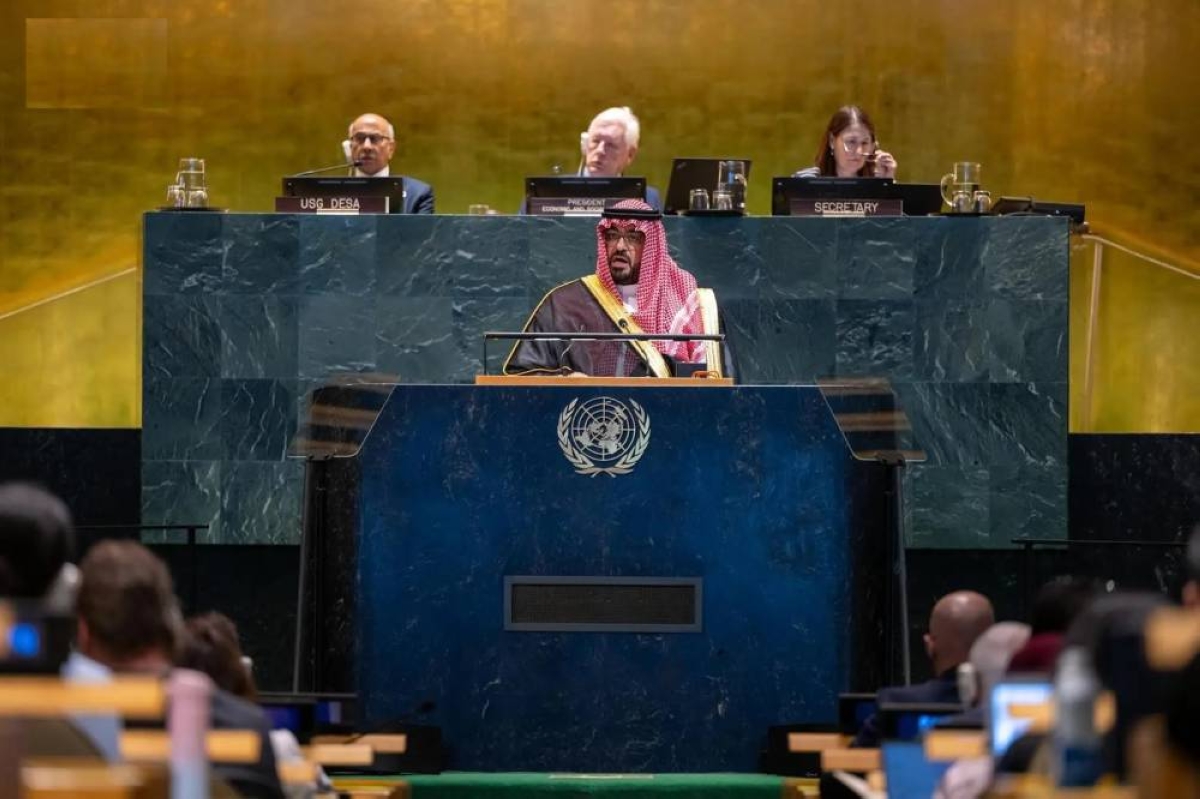
ألقى وزير الاقتصاد والتخطيط فيصل الإبراهيم كلمة المملكة في المنتدى السياسي رفيع المستوى 2025، المعني بالتنمية المستدامة، التابع للأمم المتحدة، والمقام في مدينة نيويورك. وقال: «في المملكة العربية السعودية، شكّلت رؤية المملكة 2030، مشروعاً وطنياً نابعاً من طموحات القيادة الرشيدة وتطلعات أبناء وبنات الوطن، مما جعل المملكة الأسرع تقدماً في مؤشرات التنمية المستدامة ضمن دول مجموعة العشرين خلال السنوات العشر الماضية».
وبين أنّ هذا التقدم يؤكّد أنّ الإنجاز النوعي يتحقق عندما يتوافق الطموح مع العمل المنظّم، الذي تقوده الإرادة القوية وتدعمه السياسات الفعّالة.وأشار الإبراهيم إلى أن المملكة دعت في العام الماضي إلى ضرورة العمل على الانتقال إلى مرحلة تنفيذ جديدة والعمل على آلية مُستحدثة، ترتكز على ثلاثة مبادئ: تركيز الأثر نحو التحديات الأهم، وتجنّب تشتيتها في قضايا هامشية، تصميم حلول مرنة، قابلة للتكيّف والتكرار في سياقات متعددة، والاعتماد على الأدلة والبراهين لبناء القرارات على أسلم الأسس.
واستعرض وزير الاقتصاد والتخطيط تنفيذ المملكة هذا النهج، قائلاً: أعادت المملكة رسم ملامح خطتها الوطنية للتنمية المستدامة، وقد انطلقت جرّاء ذلك جهود محلية رائدة؛ إذ قامت المدينة المنورة بإطلاق أطلس التنمية المستدامة لجميع أحيائها السبعين، في خطوة نوعية وفّرت البيانات العميقة ومكّنت محاكاة السيناريوهات العلمية ورسم السياسات بدقة أعلى وأثر أكبر. وأضاف: سنواصل التعاون الوثيق مع الدول الأعضاء لتحويل الالتزامات إلى نتائج، والطموحات إلى واقع، من أجل بناء حاضر ومستقبل لا يترك أحداً خلف الركب.
Minister of Economy and Planning Faisal Al-Ibrahim delivered the Kingdom's speech at the 2025 High-Level Political Forum on Sustainable Development, organized by the United Nations and held in New York City. He stated: “In the Kingdom of Saudi Arabia, Vision 2030 has formed a national project stemming from the aspirations of the wise leadership and the hopes of the sons and daughters of the nation, which has made the Kingdom the fastest advancing in sustainable development indicators among the G20 countries over the past ten years.”
He indicated that this progress confirms that qualitative achievement occurs when ambition aligns with organized work, led by strong will and supported by effective policies. Al-Ibrahim pointed out that the Kingdom called last year for the necessity of moving to a new implementation phase and working on an innovative mechanism based on three principles: focusing impact on the most important challenges, avoiding dispersion in marginal issues, designing flexible solutions that can adapt and be replicated in multiple contexts, and relying on evidence and proofs to build decisions on the soundest foundations.
He reviewed the Kingdom's implementation of this approach, saying: The Kingdom has redefined the features of its national sustainable development plan, which has led to pioneering local efforts; for instance, Medina launched a Sustainable Development Atlas for all its seventy neighborhoods, in a qualitative step that provided in-depth data and enabled the simulation of scientific scenarios and the precise formulation of policies with greater impact. He added: We will continue to work closely with member states to translate commitments into results and aspirations into reality, in order to build a present and future that leaves no one behind.