


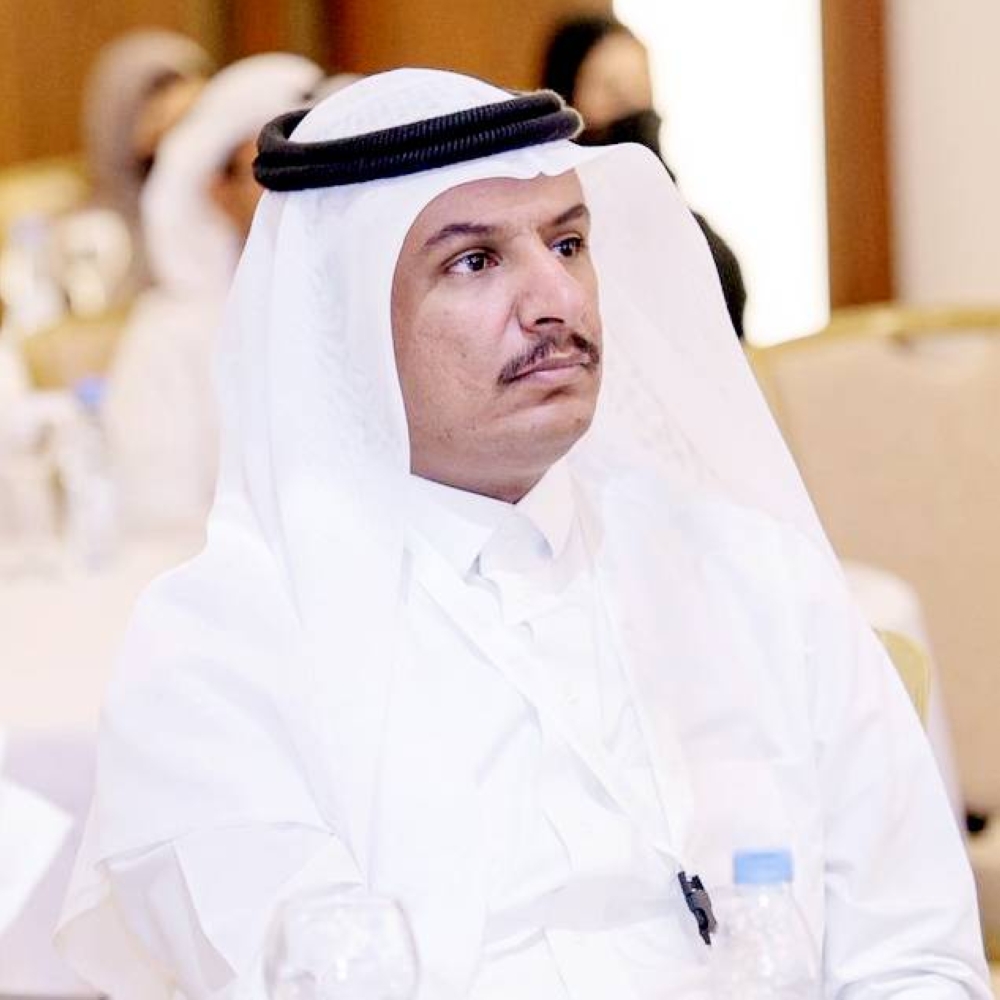
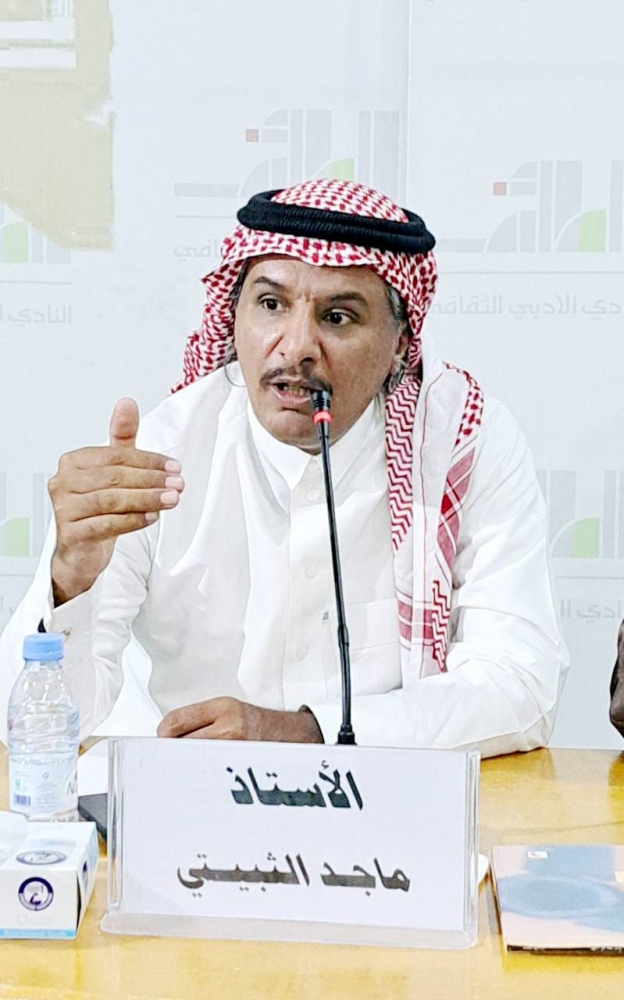
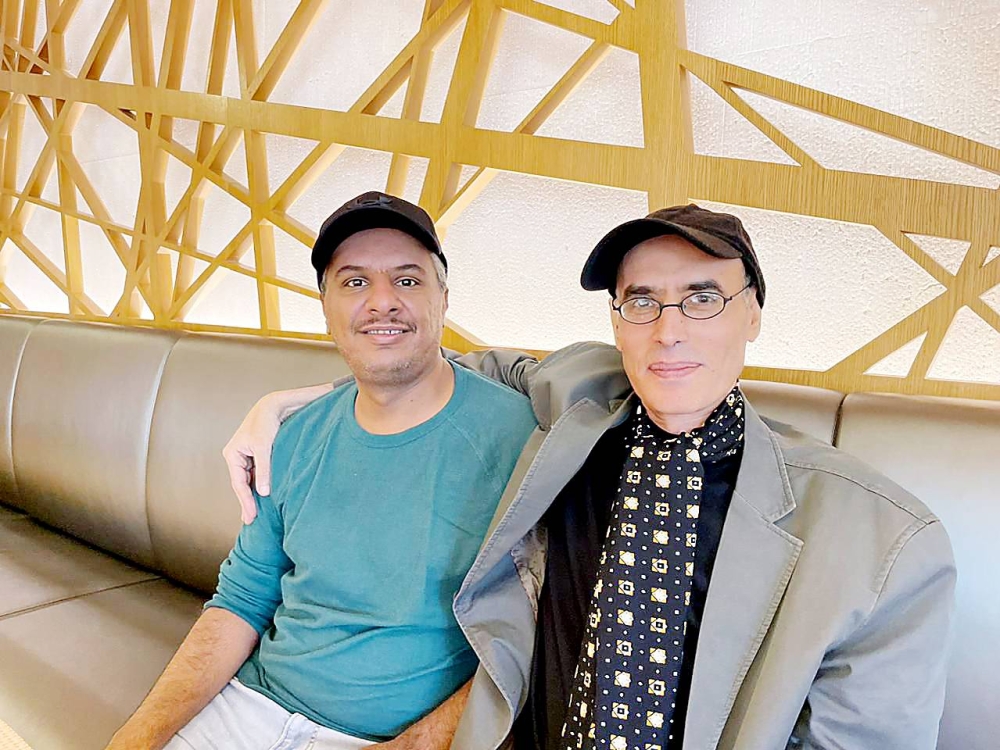
شعرتُ أثناء تنسيق هذا الحوار مع الشاعر اللافت للانتباه ماجد الثبيتي، أنني أقرأ قصيدة لم أقرأ مثلها من قبل، ففي كل إجابة لقطات شاعرية فاتنة، تأخذُ بتلابيب القلب والذائقة إلى فضاء لا حدود لجماله، ولعلّ أوّل ما لفتني لتجربة ضيف هذه المساحة، ما قاله لي في حوار الشاعر الكبير قاسم حداد، بأن ماجد الثبيتي من أهم الأسماء التي يراهن عليها، إضافةً لاستشعاري قدراته وهو يعلّق على ومضة كتبتُها، بإيراد اسم الشاعر الراحل «سركون بولص»، وسيجد القارئ الموضوعي هنا، تأكيداً لصدق الانطباع عن تجربة تستحق أن نشيد بها ونفاخر.. فإلى نصّ الحوار:
• هل للبيئة المكانية والحاضنة الاجتماعية أثر في رسم مسار حياتك؟
•• بلا شك، كانت العائلة هي الينبوع الأول، الذي تدفقت منه علاقتي بالكلمة. نشأت في بيئة تحتفي بالقصص الشعبية والمحاورات الشعرية والمرويات الشفهية، وكانت المجالس تمثل ما يشبه المنصة الثقافية الحقيقية التي يُتداول فيها الكلام بوعيٍ جمالي. ربما لم أكن أدرك وقتها أن هذا التعرّض المبكر سيؤسس لحساسيتي تجاه اللغة، لكنه تراكم ببطء في الذاكرة والوجدان، وصار جزءاً من البنية الداخلية لتجربتي. والحق أن المحاورات الشعرية و«ملاعب الشعراء» التي تقام في الطائف كانت فضاءً ثقافياً مذهلاً وذات أثر، سواءً تلك التي كانت تقام بحفلات الزواج، أو المسجلة على أشرطة الفيديو مثل حفلات «المغترة» بالثمانينيات وسواها من حفلات الزواج المسجلة. لقد أعطتني اعتباراً عميقاً للشعر والفن. وهي في الحقيقة لا تزال مادة ثقافية أصيلة لم تأخذ حقها من الدراسة والبحث المعرفي الذي تستحق.
• متى كانت الكتابة الأولى المبشّرة بك؟
•• ربما كان ذلك في المرحلة الثانوية حين كتبت أول قصة طويلة بعنوان «أرجوحة الذكرى بين مساءين»؛ كانت محاولة قصصية، لكنّ نزعة التجريب فيها بدت لي لاحقاً وكأنها بصمة واضحة للأسلوب الأدبي الذي انطلق منه. ثم جاءت مجموعتي القصصية الأولى «الفهرست وقصص أخرى»، التي فازت بالمركز الأول في جائزة الشارقة للإبداع العربي عام 2009، لتمنحني دفعة قوية نحو الاستمرار، وتدشين الإعلان الرسمي عن اسمي في الأوساط الأدبية. لكن بالعموم أعتقد أن الكتابة دوماً لا تبشّر بالكاتب فقط، بل تخلقه من جديد في كل تجربة.
• بمن تأثرتَ في البدايات؟
•• لم أكن ممن ينشأون على مشروع شعري أو أدبي محدد، وهذا أنقذني -بشكل ما- من فخ الاستلاب. كنت قارئاً مزاجياً، أتصفح أكثر مما أقرأ بعمق، وألتقط ما يشبه الشذرات من كتب متفرقة. تأثرت بطريقة غير مباشرة ببعض الأساليب الشعرية والأدبية المختلفة لا بأسلوب محدد على وجه التحديد. أما التحول الحقيقي فكان مع الأدب المترجم، خصوصاً في فترة لاحقة عبر قصيدة النثر الأمريكية والأوروبية، التي كشفت لي جماليات متنوعة وتجريبية لا علاقة لها بالقوالب الموروثة.
• الاختزال، فطرة لديك أم موهبة طوّرتها؟
•• أعتقد أنه مزيج بين الفطرة والممارسة. بطبيعتي أميل إلى التكثيف، إلى ترك البياض يقول ما لا تقوله الجملة. التجريب في قصيدة النثر، واشتباكي مع الفن المعاصر، دفعاني إلى الإيمان بأن الفراغ جزء من التكوين، وأن الصمت أحياناً أبلغ من الامتلاء.
• بماذا يمكننا الفصل بين قصة قصيرة جداً، وقصيدة نثر؟
•• القصة القصيرة جداً تعتمد على حدث أو مفارقة أو حبكة وإن كانت مضمرة، بينما قصيدة النثر لا تبحث عن ذروة، بل تتكئ على الإيقاع الداخلي والصورة والدهشة. القصة القصيرة جداً في الغالب تقودك إلى نهاية، أما قصيدة النثر فهي اقتراح مفتوح، يقودك إلى احتمالات. لكن المنطقة بينهما ملتبسة، وغالباً ما تكون هناك نصوص هجينة يصعب تصنيفها.
• هل يزعجك وصفك بالقاص الشاعر؟
•• لا يزعجني أن يُقال عني قاص أو شاعر، لكنه توصيف يعود إلى مرحلة كانت الهوية الإبداعية تُعرَّف من خلال جنس أدبي محدد (قاص- شاعر- روائي- ناقد). اليوم، مع التحولات التي يشهدها الفن والأدب، وانفتاح الأنواع الفنية والأدبية على بعضها البعض، لم تعد هذه التصنيفات كافية لفهم طبيعة الممارسة، بل ظهرت تصنيفات جديدة، مثل: كاتب متعدد التخصصات (Interdisciplinary writer)، فنان مفاهيمي (Conceptual artist)، ممارس سردي (Narrative practitioner)، شاعر وسائط جديدة (New media poet)، كاتب تجريبي (Experimental writer)، وأنا أعرّف نفسي أحياناً كمبدع متعدد التخصصات، أشتغل على تقاطع الشعر والسرد والفنون المعاصرة، وأهتم بتجريب الأشكال وتوسيع حدود اللغة والوسيط. ما أكتبه قد يأخذ شكل قصيدة، أو قصة، أو بيان شعري/ فني، لكنه في جوهره محاولة لفهم العالم عبر أدوات متداخلة. لذلك، لا أرفض التصنيف التقليدي، بل أضعه ضمن سياقه، وأترك النصوص تنطق بهويتها، دون فرض تصنيف مسبق، أو تأطير لاحق، الأمر متروك للنقاد والقراء كذلك، ولا يشغلني أو يزعجني هذا الأمر إطلاقاً.
• ما رأيك في تسامح البعض مع تداخل الأجناس الأدبية؟
•• أراه موقفاً صحياً ومنتجاً. في زمن تتكسر فيه الحدود بين الفنون والأنواع، يصبح من الطبيعي أن نرى نصوصاً مشوشة للمنظومات النقدية التقليدية. لا عيب في أن يستعير النص تقنيات من السرد أو من الشعر أو حتى من البيان الفني، المهم هو ما يقوله النص، لا ما يُقال عنه.
• أين يقف نصك من التحولات الكبرى؟
•• أحاول أن يظل نصي واقفاً على الحافة. لا أطمح إلى تمثيل لحظة ما، أو تسجيل موقف مباشر، لكنّني أؤمن بأن الكتابة الجيدة لا تنفصل عن الزمن، وإن لم تكتب عنه صراحة. نصي يقف في المسافة بين الفردي والعام، بين سؤال الداخل وتحوّلات الخارج، وغالباً ما أستخدم المفارقة والصدمة والطرافة، كأدوات لقول ما لا يُقال بطرق مباشرة تخصني لوحدي.
• ما الذي يمكن أن يعبّر عنه شاعر بين ثنائية الوجود والعدم؟
•• الشاعر هو أكثر الكائنات عُرضة لملامسة هذه الثنائية. لا أكتب الشعر بحثاً عن إجابات، بل لأنه يمنحني فرصة لطرح الأسئلة التي لا يجرؤ عليها الكلام العادي. قصيدة النثر تحديداً هي المساحة التي يمكن للذات أن تقيم فيها بين الحضور والغياب، بين أن تكون تماماً أو لا تكون.
• النص يأتيك أم تأتيه؟
•• نلتقي أنا والنص في منطقة محايدة دوماً، اسمها الانتباه الجديد. الانتباه المختلف جذرياً للمعتاد واليومي والشائع من وجهة نظر حديثة ومعالجتها عبر الكتابة والفن بما يخالف التوقعات أو بما يعطي لها معاني لم تخطر على بال من قبل. لا أؤمن بملاحقة النصوص، بل باستقبالها. والكتابة الجيدة لا تحدث دائماً عندما تريد، بل عندما تكون حاضراً لما لا تعرف.
• كيف اتخذت من قصيدة النثر خياراً أبدياً؟
•• لم أخترها بقصدية مصطنعة. يمكنني القول إنها هي من اختارتني. كل ما أكتبه كان ينسجم معها بشكل طبيعي، دون أن أقرر ذلك مسبقاً. مرونتها، وتنوعها، وقدرتها على احتواء القصة والتأمل والشذرة والصرخة، جعلتني أجد نفسي فيها. قصيدة النثر لم تطلب مني أن أكون غيري، بل منحتني ما يكفي لأكون نفسي.
• أيّ مدارس الفنّ الحديث تتقاطع مع تجربتك وتتقاطع معها؟
•• تجربتي تتقاطع بشكل واضح مع الفن المفاهيمي، وفي فترة مبكرة بالسوريالية غير اللغوية. وكل اتجاه يعطي الأولوية للفكرة على الوسيط. أكثر ما يشدّني هو الفن الذي يزعزع المألوف ويعيد مساءلته. أحياناً أكتب نصاً بعد أن أرى مشهداً بصرياً، أو أُنجز عملاً فنياً بعد قراءة نص شعري. بين القصيدة والعمل الفني هناك ملامح متشابهة.. ربما هو الإحساس بأن الفكرة هي التي تقود، لا الوسيط. ولعل أبرز مثال على ذلك هي البيانات الفنية للفن المعاصر.
• هل ينحصر دور النص النثري في التكثيف؟
•• التكثيف إحدى أدواته، لكنه ليس غايته. قصيدة النثر قادرة على أن تكون مشهداً، فكرةً، مونولوجاً، أو حتى خيالاً تجريبياً. أحياناً تتمدد وتتراخى، ثم تعود لتقبض على القارئ في لحظة غير متوقعة. والأنماط التي تندرج تحت قصيدة النثر الحديثة مفتوحة ومذهلة في تنوعها ومرونتها على تحويل كل شيء إلى قصيدة النثر.
• ما أقوى سلاح تمتلكه قصيدة النثر؟
•• الحرية. لا تخضع لقافية، ولا تلتزم بتقاليد جاهزة. قصيدة النثر لا تخجل من التناقض، ولا تطلب الإذن. فيها فسحة لكل شيء: التأمل، السخرية، الصدمة، التلاعب اللفظي، الحكمة والمأثور وحتى العبث.
• ماذا عن العلاقة مع الآباء المؤسسين؟
•• علاقتي بهم نقدية أكثر منها عاطفية. تعثرت مع كثير من كتاباتهم، خصوصاً حين تتضخم اللغة وتتحول إلى متاهة. ربما لأنني أبحث في النص عن أثر إنساني أكثر من حذلقة لغوية. لست قادراً على تحديد اسم واحد يمكنني تسميته أباً مؤسساً لما أكتب في الحقيقة.
• هل أثقلك إطراء قاسم حداد عندما أشاد بتجربتك؟
•• بالعكس، كان ذلك الإطراء دافعاً داخلياً مهماً. حين قال، في لقاء صحفي أعقاب فوز محمد الثبيتي بجائزة عكاظ، إنه اكتشف «ثبيتياً جديداً»، شعرت أن ما أكتبه في عزلتي وصل إلى ضفة أخرى. لم يُثقلني ذلك، لكنه جعلني أكثر حرصاً على أن أكتب بصدق، لا استجابة لأي إشادة أو تصنيف. كما كان له فضل في نشر نصوصي الشعرية بموقع جهة الشعر قبل الجميع.
• أين ومتى تشعر بالطمأنينة على نصك؟
•• حين لا أضطر للدفاع عنه. عندما يُراودني بعد كتابته، أو يدهشني بعد قراءته من جديد. حين أشعر أن فيه طبقة لم أكن أقصدها، لكنه حملها دون وعي. هذه هي الطمأنينة: أن يكون النص أذكى مني. وأكثر حيوية رغم مرور وقت على كتابته.
• ما مدى أهمية الغنائية في قصيدتك؟
•• الغنائية إن كنت تقصد النزعة العاطفية والذاتية في القصيدة، وفي عموم الكتابة الأدبية التي أشتغل عليها لها أهمية رغم أنها ترد بشكل غير مقصود في بعض الأحيان والنصوص. ما يعنيني هو أن تكون النبرة صادقة ومتناغمة مع ما يقوله النص، سواء كانت غنائية أو لا.
• من هم أبرز الشعراء الذين أثروا وأثّروا في قصيدة النثر محلياً وعربياً؟•• محلياً: إبراهيم الحسين، عبدالرحمن الشهري، محمد خضر، وكذلك محمد السعدي.. وأيضاً ضيف فهد لو تم الانتباه للعديد من نصوصه أنها تمثل قصيدة نثر حديثة جداً وغير مسبوقة. عربياً: عماد أبو صالح، سركون بولص، عباس بيضون، وديع سعادة، ميثم راضي، سكينة حبيب الله. جميعهم ساهموا في توسيع حدود قصيدة النثر العربية، كل بطريقته.
• كيف تقيّم تجربتك في مسابقة المعلّقة؟
•• تجربتي في «المعلّقة» كانت مغامرة. أتاح لي البرنامج تقديم اسمي عبر قصيدة النثر لجمهور عريض، لم يكن معتاداً عليها. ولم أكن أتخيل الوصول له حتى على المستوى الاجتماعي الذي يخصني، صحيح أن الإطار تنافسي ومسرحي، لكنه فتح حواراً ضرورياً حول هذا النوع الشعري، وأضاء أصواتاً جديدة كانت تستحق أن تُسمع. والحق أنها على مستوى شخصي كانت أشبه بتجربة اختبار لي وللجنة التحكيم، وباعتقادي لم ينجح أحد منا.
• ممّ تخشى على الفن والإبداع؟
•• أخشى من التنميط، من الذائقة المعلّبة، من جثث تجلس في الصفوف الأمامية محلياً. ومن تحوّل الإبداع إلى أداء وظيفي. أخشى أن نخاف من الصدمة، أو نخجل من الطرافة. الإبداع يجب أن يبقى فعلاً حيوياً وحديثاً وجريئاً، لا أداءً مكرراً.
• ما الذي تحرص على الاحتفاظ به وسط هذه التجارب المتعددة بين الشعر والفن؟
•• أحرص على أن أبقى في منطقة مثيرة إبداعياً، حتى لو كانت بعيدة عن الضوء. لا تعنيني التصنيفات، ولا أجد لذة في التماهي مع تيار بعينه. أكتب بمزاجية وعلى مهل، وأعرض أعمالي كيفما اتفقت اللحظة، لا لأن لدي موعداً للنشر أو العرض.
• ما الذي يميّز صوتك داخل نصك أو أعمالك الفنية؟
•• ثلاثة ملامح أعتقد أنها تميّز تجربتي: المفارقة، الصدمة، والطرافة. هذه ليست تقنيات فقط، بل مواقف ذاتية. أحب للنص أن يربك القارئ، يضحكه في لحظة، ويترك فيه وخزة في اللحظة التالية. هذه المساحة الهجينة هي، كما أظن، أكثر ما يعبر عني.
• ما الجديد الذي تُعدّ له؟
•• أعمل حالياً على مجموعتي الشعرية الجديدة، التي أرجو أن تكون إضافة نوعية إلى القصيدة التي أحب، قصيدة النثر، ولكن من زاوية جديدة ومعاصرة، تواكب تحولات العالم الحديث، وسرعته، ووعي قرائه المتطورين. كما أنجز في الوقت نفسه أعمالاً فنية جديدة، لا تزال في طور الإعداد والنشر.
أكد أن تجربة «المُعلّقة» اختبار له وللجنة التحكيم ولم ينجح أحد..
ماجد الثبيتي: لا يزعجني أن يُقال عني قاص أو شاعر والكتابة لا تبشّر بالكاتب
27 يونيو 2025 - 07:36
|
آخر تحديث 27 يونيو 2025 - 07:36


تابع قناة عكاظ على الواتساب
حاوره: علي الرباعي Al_ARobai@
I felt while coordinating this dialogue with the striking poet Majid Al-Thubaiti that I was reading a poem unlike any I had read before. In every answer, there are stunning poetic snapshots that take hold of the heart and taste, leading to a realm of beauty without limits. Perhaps the first thing that caught my attention about the experience of this space's guest was what he told me in an interview with the great poet Qasim Haddad, that Majid Al-Thubaiti is one of the most important names he bets on, in addition to my sensing his abilities as he commented on a flash I wrote by mentioning the name of the late poet "Sargon Boulos." The objective reader here will find confirmation of the genuine impression of an experience that deserves to be praised and boasted about. So, here is the text of the dialogue:
• Does the spatial environment and social context have an impact on shaping the course of your life?
•• Undoubtedly, family was the first spring from which my relationship with words flowed. I grew up in an environment that celebrated folk tales, poetic dialogues, and oral narratives, and the gatherings represented what resembled a true cultural platform where words were exchanged with aesthetic awareness. Perhaps I did not realize at the time that this early exposure would establish my sensitivity to language, but it slowly accumulated in memory and sentiment, becoming part of the internal structure of my experience. The truth is that the poetic dialogues and "playgrounds of poets" held in Taif were an amazing cultural space with an impact, whether those held at wedding celebrations or those recorded on video tapes, like the "Mughatirah" celebrations in the 1980s and other recorded wedding events. They gave me a profound regard for poetry and art. In fact, they still represent a cultural material that has not received the study and research it deserves.
• When was your first writing that heralded your presence?
•• Perhaps it was in high school when I wrote my first long story titled "The Swing of Memory Between Two Evenings"; it was a narrative attempt, but the experimental inclination in it later seemed to me like a clear fingerprint of the literary style from which I launched. Then came my first short story collection "The Index and Other Stories," which won first place in the Sharjah Award for Arab Creativity in 2009, giving me a strong push to continue and officially announce my name in literary circles. But in general, I believe that writing does not only herald the writer but recreates them anew in every experience.
• Who influenced you in the beginnings?
•• I was not among those who grew up on a specific poetic or literary project, and this saved me - in a way - from the trap of alienation. I was a capricious reader, skimming more than I read deeply, and picking what resembled snippets from various books. I was indirectly influenced by some different poetic and literary styles, but not by a specific style in particular. The real transformation came with translated literature, especially later through American and European prose poetry, which revealed to me diverse and experimental aesthetics unrelated to inherited molds.
• Is conciseness an innate trait for you or a talent you developed?
•• I believe it is a mix of instinct and practice. By nature, I tend to condense, to let the white space say what the sentence does not. Experimentation in prose poetry and my engagement with contemporary art led me to believe that emptiness is part of the composition, and that silence is sometimes more eloquent than fullness.
• How can we distinguish between a very short story and a prose poem?
•• A very short story relies on an event or a paradox or a plot, even if it is implicit, while a prose poem does not seek a climax but leans on internal rhythm, imagery, and surprise. The very short story usually leads you to an ending, while the prose poem is an open suggestion that leads you to possibilities. But the area between them is ambiguous, and there are often hybrid texts that are difficult to classify.
• Does it bother you to be described as a poet-storyteller?
•• It does not bother me to be called a storyteller or a poet, but it is a description that goes back to a stage when creative identity was defined through a specific literary genre (storyteller - poet - novelist - critic). Today, with the transformations that art and literature are witnessing, and the openness of artistic and literary genres to one another, these classifications are no longer sufficient to understand the nature of the practice. New classifications have emerged, such as: interdisciplinary writer, conceptual artist, narrative practitioner, new media poet, experimental writer, and I sometimes define myself as a multidisciplinary creator, working at the intersection of poetry, narrative, and contemporary arts, and I am interested in experimenting with forms and expanding the boundaries of language and medium. What I write may take the form of a poem, or a story, or a poetic/artistic statement, but at its core, it is an attempt to understand the world through intertwined tools. Therefore, I do not reject traditional classification but place it within its context, allowing the texts to express their identity without imposing a prior classification or subsequent framing; this matter is left to critics and readers as well, and it does not concern or bother me at all.
• What do you think of some people's tolerance for the blending of literary genres?
•• I see it as a healthy and productive stance. In an era where boundaries between arts and genres are breaking, it becomes natural to see texts that are confused by traditional critical systems. There is no shame in a text borrowing techniques from narrative or poetry or even from artistic statements; what matters is what the text says, not what is said about it.
• Where does your text stand in the face of major transformations?
•• I try to keep my text standing on the edge. I do not aspire to represent a moment or record a direct stance, but I believe that good writing is inseparable from time, even if it does not explicitly write about it. My text stands in the space between the individual and the collective, between the question of the inner self and the transformations of the outside, and I often use paradox, shock, and humor as tools to say what cannot be said directly concerning me alone.
• What can a poet express between the duality of existence and non-existence?
•• The poet is the most susceptible being to touching this duality. I do not write poetry in search of answers, but because it gives me the opportunity to ask the questions that ordinary speech does not dare to address. Prose poetry, in particular, is the space where the self can dwell between presence and absence, between being completely or not being at all.
• Does the text come to you or do you come to it?
•• I always meet the text in a neutral area called new attention. A radically different attention to the ordinary, daily, and common from a modern perspective and its treatment through writing and art in ways that defy expectations or give meanings that have never crossed the mind before. I do not believe in chasing texts but in receiving them. Good writing does not always happen when you want it to, but when you are present for what you do not know.
• How did you make prose poetry an eternal choice?
•• I did not choose it with artificial intent. I can say it chose me. Everything I write naturally aligns with it, without me deciding that in advance. Its flexibility, diversity, and ability to contain story, contemplation, snippet, and scream made me find myself in it. Prose poetry did not ask me to be someone else but gave me enough to be myself.
• Which modern art schools intersect with your experience?
•• My experience clearly intersects with conceptual art, and at an early stage with non-linguistic surrealism. Each direction prioritizes the idea over the medium. What attracts me most is art that shakes the familiar and re-questions it. Sometimes I write a text after seeing a visual scene, or I create a work of art after reading a poetic text. Between the poem and the artwork, there are similar features... perhaps the feeling that the idea leads, not the medium. Perhaps the most prominent example of this is the artistic statements of contemporary art.
• Is the role of prose text limited to condensation?
•• Condensation is one of its tools, but it is not its goal. Prose poetry can be a scene, an idea, a monologue, or even an experimental imagination. Sometimes it expands and relaxes, then returns to grip the reader at an unexpected moment. The patterns that fall under modern prose poetry are open and amazing in their diversity and flexibility in transforming everything into prose poetry.
• What is the strongest weapon that prose poetry possesses?
•• Freedom. It is not subject to rhyme, nor does it adhere to ready-made traditions. Prose poetry does not shy away from contradiction, nor does it seek permission. It has space for everything: contemplation, irony, shock, verbal play, wisdom, and folklore, even absurdity.
• What about the relationship with the founding fathers?
•• My relationship with them is more critical than emotional. I stumbled with many of their writings, especially when the language becomes inflated and turns into a maze. Perhaps because I seek in the text a more human impact than linguistic cleverness. I cannot pinpoint a single name I can call a founding father of what I write, in truth.
• Did Qasim Haddad's praise weigh you down when he praised your experience?
•• On the contrary, that praise was an important internal motivation. When he said, in a press interview following Muhammad Al-Thubaiti's win of the Okaz Prize, that he discovered a "new Thubaiti," I felt that what I was writing in my solitude had reached another shore. It did not weigh me down, but it made me more careful to write with sincerity, not in response to any praise or classification. He also played a role in publishing my poetic texts on the poetry site before anyone else.
• Where and when do you feel at ease with your text?
•• When I do not have to defend it. When it surprises me after I write it, or astonishes me after I read it again. When I feel that it has a layer I did not intend, but it carried it unconsciously. This is the reassurance: that the text is smarter than me. And more vibrant despite the time that has passed since I wrote it.
• How important is lyricism in your poetry?
•• Lyricism, if you mean the emotional and subjective inclination in the poem, and in the general literary writing that I work on, is important even though it appears unintentionally in some texts. What matters to me is that the tone is sincere and harmonious with what the text says, whether it is lyrical or not.
• Who are the most prominent poets who have influenced and impacted prose poetry locally and Arabically?
•• Locally: Ibrahim Al-Hussein, Abdulrahman Al-Shuhari, Muhammad Khadr, as well as Muhammad Al-Saadi... and also the guest Fahd if many of his texts are noticed as representing a very modern and unprecedented prose poetry. Arabically: Imad Abu Saleh, Sargon Boulos, Abbas Beydoun, Wadi' Saada, Maytham Radi, Sakinah Habibullah. All of them contributed to expanding the boundaries of Arabic prose poetry, each in their own way.
• How do you evaluate your experience in the Mu'allaqa competition?
•• My experience in the "Mu'allaqa" was an adventure. The program allowed me to present my name through prose poetry to a wide audience that was not accustomed to it. I did not imagine reaching it even at the social level that concerns me; it is true that the framework is competitive and theatrical, but it opened a necessary dialogue about this poetic genre and illuminated new voices that deserved to be heard. The truth is that on a personal level, it was more like a test experience for me and the jury, and I believe none of us succeeded.
• What do you fear for art and creativity?
•• I fear stereotyping, from packaged taste, from corpses sitting in the front rows locally. And from the transformation of creativity into functional performance. I fear that we might be afraid of shock or shy away from humor. Creativity must remain a vital, modern, and bold act, not a repeated performance.
• What do you strive to retain amidst these multiple experiences between poetry and art?
•• I strive to remain in a creatively stimulating area, even if it is far from the light. Classifications do not concern me, nor do I find pleasure in identifying with a particular current. I write capriciously and at my own pace, and I present my works however the moment dictates, not because I have a publication or exhibition deadline.
• What distinguishes your voice within your text or artistic works?
•• Three features I believe distinguish my experience: paradox, shock, and humor. These are not just techniques but subjective stances. I like the text to confuse the reader, to make them laugh at one moment, and leave them with a sting in the next. This hybrid space is, as I think, what expresses me the most.
• What new projects are you working on?
•• I am currently working on my new poetry collection, which I hope will be a qualitative addition to the poetry I love, prose poetry, but from a new and contemporary angle that keeps pace with the transformations of the modern world, its speed, and the evolving awareness of its readers. I am also simultaneously completing new artistic works that are still in the preparation and publication stage.
• Does the spatial environment and social context have an impact on shaping the course of your life?
•• Undoubtedly, family was the first spring from which my relationship with words flowed. I grew up in an environment that celebrated folk tales, poetic dialogues, and oral narratives, and the gatherings represented what resembled a true cultural platform where words were exchanged with aesthetic awareness. Perhaps I did not realize at the time that this early exposure would establish my sensitivity to language, but it slowly accumulated in memory and sentiment, becoming part of the internal structure of my experience. The truth is that the poetic dialogues and "playgrounds of poets" held in Taif were an amazing cultural space with an impact, whether those held at wedding celebrations or those recorded on video tapes, like the "Mughatirah" celebrations in the 1980s and other recorded wedding events. They gave me a profound regard for poetry and art. In fact, they still represent a cultural material that has not received the study and research it deserves.
• When was your first writing that heralded your presence?
•• Perhaps it was in high school when I wrote my first long story titled "The Swing of Memory Between Two Evenings"; it was a narrative attempt, but the experimental inclination in it later seemed to me like a clear fingerprint of the literary style from which I launched. Then came my first short story collection "The Index and Other Stories," which won first place in the Sharjah Award for Arab Creativity in 2009, giving me a strong push to continue and officially announce my name in literary circles. But in general, I believe that writing does not only herald the writer but recreates them anew in every experience.
• Who influenced you in the beginnings?
•• I was not among those who grew up on a specific poetic or literary project, and this saved me - in a way - from the trap of alienation. I was a capricious reader, skimming more than I read deeply, and picking what resembled snippets from various books. I was indirectly influenced by some different poetic and literary styles, but not by a specific style in particular. The real transformation came with translated literature, especially later through American and European prose poetry, which revealed to me diverse and experimental aesthetics unrelated to inherited molds.
• Is conciseness an innate trait for you or a talent you developed?
•• I believe it is a mix of instinct and practice. By nature, I tend to condense, to let the white space say what the sentence does not. Experimentation in prose poetry and my engagement with contemporary art led me to believe that emptiness is part of the composition, and that silence is sometimes more eloquent than fullness.
• How can we distinguish between a very short story and a prose poem?
•• A very short story relies on an event or a paradox or a plot, even if it is implicit, while a prose poem does not seek a climax but leans on internal rhythm, imagery, and surprise. The very short story usually leads you to an ending, while the prose poem is an open suggestion that leads you to possibilities. But the area between them is ambiguous, and there are often hybrid texts that are difficult to classify.
• Does it bother you to be described as a poet-storyteller?
•• It does not bother me to be called a storyteller or a poet, but it is a description that goes back to a stage when creative identity was defined through a specific literary genre (storyteller - poet - novelist - critic). Today, with the transformations that art and literature are witnessing, and the openness of artistic and literary genres to one another, these classifications are no longer sufficient to understand the nature of the practice. New classifications have emerged, such as: interdisciplinary writer, conceptual artist, narrative practitioner, new media poet, experimental writer, and I sometimes define myself as a multidisciplinary creator, working at the intersection of poetry, narrative, and contemporary arts, and I am interested in experimenting with forms and expanding the boundaries of language and medium. What I write may take the form of a poem, or a story, or a poetic/artistic statement, but at its core, it is an attempt to understand the world through intertwined tools. Therefore, I do not reject traditional classification but place it within its context, allowing the texts to express their identity without imposing a prior classification or subsequent framing; this matter is left to critics and readers as well, and it does not concern or bother me at all.
• What do you think of some people's tolerance for the blending of literary genres?
•• I see it as a healthy and productive stance. In an era where boundaries between arts and genres are breaking, it becomes natural to see texts that are confused by traditional critical systems. There is no shame in a text borrowing techniques from narrative or poetry or even from artistic statements; what matters is what the text says, not what is said about it.
• Where does your text stand in the face of major transformations?
•• I try to keep my text standing on the edge. I do not aspire to represent a moment or record a direct stance, but I believe that good writing is inseparable from time, even if it does not explicitly write about it. My text stands in the space between the individual and the collective, between the question of the inner self and the transformations of the outside, and I often use paradox, shock, and humor as tools to say what cannot be said directly concerning me alone.
• What can a poet express between the duality of existence and non-existence?
•• The poet is the most susceptible being to touching this duality. I do not write poetry in search of answers, but because it gives me the opportunity to ask the questions that ordinary speech does not dare to address. Prose poetry, in particular, is the space where the self can dwell between presence and absence, between being completely or not being at all.
• Does the text come to you or do you come to it?
•• I always meet the text in a neutral area called new attention. A radically different attention to the ordinary, daily, and common from a modern perspective and its treatment through writing and art in ways that defy expectations or give meanings that have never crossed the mind before. I do not believe in chasing texts but in receiving them. Good writing does not always happen when you want it to, but when you are present for what you do not know.
• How did you make prose poetry an eternal choice?
•• I did not choose it with artificial intent. I can say it chose me. Everything I write naturally aligns with it, without me deciding that in advance. Its flexibility, diversity, and ability to contain story, contemplation, snippet, and scream made me find myself in it. Prose poetry did not ask me to be someone else but gave me enough to be myself.
• Which modern art schools intersect with your experience?
•• My experience clearly intersects with conceptual art, and at an early stage with non-linguistic surrealism. Each direction prioritizes the idea over the medium. What attracts me most is art that shakes the familiar and re-questions it. Sometimes I write a text after seeing a visual scene, or I create a work of art after reading a poetic text. Between the poem and the artwork, there are similar features... perhaps the feeling that the idea leads, not the medium. Perhaps the most prominent example of this is the artistic statements of contemporary art.
• Is the role of prose text limited to condensation?
•• Condensation is one of its tools, but it is not its goal. Prose poetry can be a scene, an idea, a monologue, or even an experimental imagination. Sometimes it expands and relaxes, then returns to grip the reader at an unexpected moment. The patterns that fall under modern prose poetry are open and amazing in their diversity and flexibility in transforming everything into prose poetry.
• What is the strongest weapon that prose poetry possesses?
•• Freedom. It is not subject to rhyme, nor does it adhere to ready-made traditions. Prose poetry does not shy away from contradiction, nor does it seek permission. It has space for everything: contemplation, irony, shock, verbal play, wisdom, and folklore, even absurdity.
• What about the relationship with the founding fathers?
•• My relationship with them is more critical than emotional. I stumbled with many of their writings, especially when the language becomes inflated and turns into a maze. Perhaps because I seek in the text a more human impact than linguistic cleverness. I cannot pinpoint a single name I can call a founding father of what I write, in truth.
• Did Qasim Haddad's praise weigh you down when he praised your experience?
•• On the contrary, that praise was an important internal motivation. When he said, in a press interview following Muhammad Al-Thubaiti's win of the Okaz Prize, that he discovered a "new Thubaiti," I felt that what I was writing in my solitude had reached another shore. It did not weigh me down, but it made me more careful to write with sincerity, not in response to any praise or classification. He also played a role in publishing my poetic texts on the poetry site before anyone else.
• Where and when do you feel at ease with your text?
•• When I do not have to defend it. When it surprises me after I write it, or astonishes me after I read it again. When I feel that it has a layer I did not intend, but it carried it unconsciously. This is the reassurance: that the text is smarter than me. And more vibrant despite the time that has passed since I wrote it.
• How important is lyricism in your poetry?
•• Lyricism, if you mean the emotional and subjective inclination in the poem, and in the general literary writing that I work on, is important even though it appears unintentionally in some texts. What matters to me is that the tone is sincere and harmonious with what the text says, whether it is lyrical or not.
• Who are the most prominent poets who have influenced and impacted prose poetry locally and Arabically?
•• Locally: Ibrahim Al-Hussein, Abdulrahman Al-Shuhari, Muhammad Khadr, as well as Muhammad Al-Saadi... and also the guest Fahd if many of his texts are noticed as representing a very modern and unprecedented prose poetry. Arabically: Imad Abu Saleh, Sargon Boulos, Abbas Beydoun, Wadi' Saada, Maytham Radi, Sakinah Habibullah. All of them contributed to expanding the boundaries of Arabic prose poetry, each in their own way.
• How do you evaluate your experience in the Mu'allaqa competition?
•• My experience in the "Mu'allaqa" was an adventure. The program allowed me to present my name through prose poetry to a wide audience that was not accustomed to it. I did not imagine reaching it even at the social level that concerns me; it is true that the framework is competitive and theatrical, but it opened a necessary dialogue about this poetic genre and illuminated new voices that deserved to be heard. The truth is that on a personal level, it was more like a test experience for me and the jury, and I believe none of us succeeded.
• What do you fear for art and creativity?
•• I fear stereotyping, from packaged taste, from corpses sitting in the front rows locally. And from the transformation of creativity into functional performance. I fear that we might be afraid of shock or shy away from humor. Creativity must remain a vital, modern, and bold act, not a repeated performance.
• What do you strive to retain amidst these multiple experiences between poetry and art?
•• I strive to remain in a creatively stimulating area, even if it is far from the light. Classifications do not concern me, nor do I find pleasure in identifying with a particular current. I write capriciously and at my own pace, and I present my works however the moment dictates, not because I have a publication or exhibition deadline.
• What distinguishes your voice within your text or artistic works?
•• Three features I believe distinguish my experience: paradox, shock, and humor. These are not just techniques but subjective stances. I like the text to confuse the reader, to make them laugh at one moment, and leave them with a sting in the next. This hybrid space is, as I think, what expresses me the most.
• What new projects are you working on?
•• I am currently working on my new poetry collection, which I hope will be a qualitative addition to the poetry I love, prose poetry, but from a new and contemporary angle that keeps pace with the transformations of the modern world, its speed, and the evolving awareness of its readers. I am also simultaneously completing new artistic works that are still in the preparation and publication stage.


