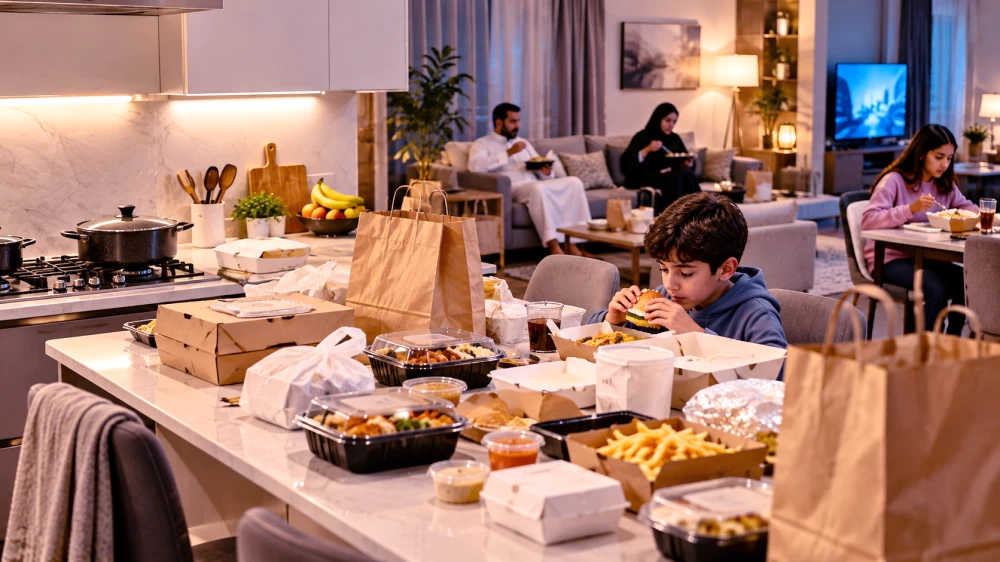
تتكدس طلبات الطعام على أبواب المنازل، وتتعدد خيارات المطاعم والتطبيقات، فيما تتراجع في بعض البيوت صورة المائدة التي يجتمع حولها أفراد الأسرة في موعد واحد. لم يعد السؤال مقتصراً على ما نأكله، بل امتد إلى كيفية تناول الطعام، ومع من نتقاسمه، وما إذا كانت الوجبة لا تزال تحتفظ بدورها الاجتماعي في جمع أفراد العائلة.
وتعكس هذه التحولات تغيراً في إيقاع الحياة اليومية، مع امتداد ساعات العمل، وتفاوت المواعيد الدراسية والمهنية، واتساع الاعتماد على الوجبات الجاهزة. وأصبحت سهولة الحصول على الطعام عاملاً مؤثراً في تنظيم اليوم، بعدما كان إعداد الوجبة وتناولها يمثلان جزءاً من الروتين الأسري المشترك.
لكن المسألة تتجاوز المطبخ إلى طبيعة العلاقات داخل المنزل. فالمائدة ليست مكاناً لتناول الطعام فحسب، بل مساحة للحوار وتبادل التفاصيل اليومية وملاحظة أحوال أفراد الأسرة. وعندما تتحول الوجبات إلى مواعيد فردية، قد تتقلص إحدى الفرص المنتظمة للتواصل بعيداً عن الشاشات والانشغالات.
اقتصادياً، تمنح المطاعم وخدمات التوصيل المستهلك راحة وسرعة وتنوعاً، لكنها قد ترفع الإنفاق المتكرر عندما تصبح بديلاً دائماً عن إعداد الطعام. كما أن سهولة الطلب تشجع على قرارات استهلاكية سريعة لا ترتبط دائماً بالحاجة الفعلية.
وصحياً، تثير الوجبات الجاهزة تساؤلات بشأن حجم الحصص الغذائية ومكوناتها، لكن الحكم عليها يتطلب النظر إلى نوعية الطعام لا مصدره وحده؛ فالتوازن الغذائي يمكن تحقيقه داخل المنزل وخارجه.
وفي المقابل، لا يصح اعتبار المطاعم سبباً مباشراً لتراجع الروابط الأسرية، إذ توفر بدورها فرصة للقاء والتواصل. فالمشكلة تنشأ عندما يصبح تناول الطعام نشاطاً فردياً متكرراً، بصرف النظر عن مكانه.
وتكمن المفارقة، في أن الخيارات التي اختصرت وقت إعداد الوجبات لم تضمن بالضرورة زيادة الوقت المشترك بين أفراد الأسرة. فالقضية ليست حنيناً إلى المائدة التقليدية، وإنما تساؤل عن المساحات اليومية التي نفقدها تدريجياً تحت ضغط السرعة والراحة.
وحين تصبح الوجبة مجرد طلب يصل إلى الباب، يبقى التحدي في ألا يتحول اختصار وقت إعداد الطعام إلى اختصار للقاء العائلي نفسه.
Food orders pile up at the doors of homes, and the options for restaurants and apps multiply, while in some households, the image of the dining table around which family members gather at the same time is diminishing. The question is no longer limited to what we eat, but has extended to how we eat, with whom we share it, and whether the meal still retains its social role in bringing family members together.
This transformation reflects a change in the rhythm of daily life, with extended working hours, varying school and professional schedules, and an increasing reliance on ready-made meals. The ease of obtaining food has become a significant factor in organizing the day, whereas preparing and eating a meal used to be part of the shared family routine.
However, the issue goes beyond the kitchen to the nature of relationships within the home. The dining table is not just a place to eat, but a space for dialogue, exchanging daily details, and observing the conditions of family members. When meals turn into individual appointments, one of the regular opportunities for communication away from screens and distractions may diminish.
Economically, restaurants and delivery services offer consumers convenience, speed, and variety, but they may increase recurring spending when they become a permanent substitute for cooking. Additionally, the ease of ordering encourages quick consumption decisions that are not always related to actual need.
Health-wise, ready-made meals raise questions about portion sizes and their components, but judging them requires looking at the quality of the food, not just its source; nutritional balance can be achieved both at home and outside.
On the other hand, it is not accurate to consider restaurants a direct cause of declining family bonds, as they also provide an opportunity for meeting and communication. The problem arises when eating becomes a repetitive individual activity, regardless of its location.
The paradox lies in the fact that the options that have shortened meal preparation time do not necessarily guarantee an increase in shared time among family members. The issue is not nostalgia for the traditional dining table, but a question about the daily spaces we gradually lose under the pressure of speed and convenience.
When a meal becomes just an order that arrives at the door, the challenge remains not to let the shortening of meal preparation time turn into a shortening of the family gathering itself.