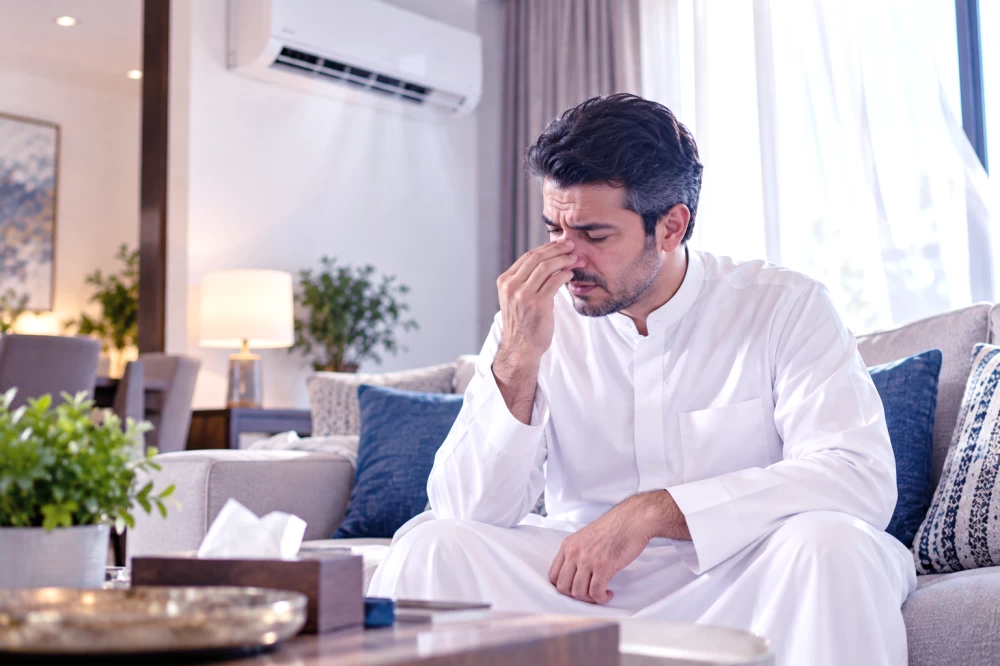
تدخل أجهزة التكييف ضمن العوامل البيئية التي تؤثر في راحة الجهاز التنفسي، خصوصاً مع التعرض المستمر للهواء البارد والجاف داخل المنازل والمكاتب، ما يؤدي لدى بعض الأشخاص إلى جفاف الأغشية المخاطية المبطنة للأنف وزيادة الشعور بالتهيج والاحتقان.
وتشير أبحاث متخصصة إلى أن انخفاض رطوبة الهواء قد يؤثر في الطبقة المخاطية التي تساعد على ترطيب الممرات الأنفية والتقاط الجسيمات الدقيقة، فيما تزيد الأعراض لدى المصابين بحساسية الأنف أو المشكلات التنفسية المزمنة.
وتتفاوت الاستجابة بحسب درجة حرارة الغرفة ومستوى الرطوبة ومدة التعرض واتجاه تدفق الهواء، إذ يشعر البعض بجفاف الأنف والحلق أو تكرر العطاس، خصوصاً عند النوم في مواجهة تيار التكييف المباشر.
ويؤكد متخصصون، أن نظافة فلاتر أجهزة التكييف وصيانتها الدورية تسهمان في تقليل تراكم الغبار والملوثات داخل أنظمة التهوية.
ويساعد ضبط درجة الحرارة عند مستوى مريح، وتجنب توجيه الهواء مباشرة نحو الوجه، والمحافظة على رطوبة منزلية معتدلة، في الحد من الأعراض، مع أهمية التقييم الطبي عند استمرار الجفاف أو حدوث نزيف أنفي متكرر.
Air conditioning units are among the environmental factors that affect the comfort of the respiratory system, especially with continuous exposure to cold and dry air inside homes and offices, which can lead some individuals to experience dryness of the mucous membranes lining the nose and an increased feeling of irritation and congestion.
Specialized research indicates that low humidity levels can affect the mucous layer that helps to moisturize the nasal passages and capture fine particles, while symptoms may worsen in individuals with nasal allergies or chronic respiratory issues.
Responses can vary depending on room temperature, humidity levels, duration of exposure, and direction of airflow, as some people may feel dryness in the nose and throat or experience frequent sneezing, especially when sleeping facing direct air conditioning flow.
Experts confirm that the cleanliness of air conditioning filters and regular maintenance contribute to reducing the accumulation of dust and pollutants within ventilation systems.
Maintaining a comfortable temperature, avoiding directing air directly towards the face, and keeping moderate indoor humidity can help reduce symptoms, with the importance of medical evaluation if dryness persists or if recurrent nasal bleeding occurs.