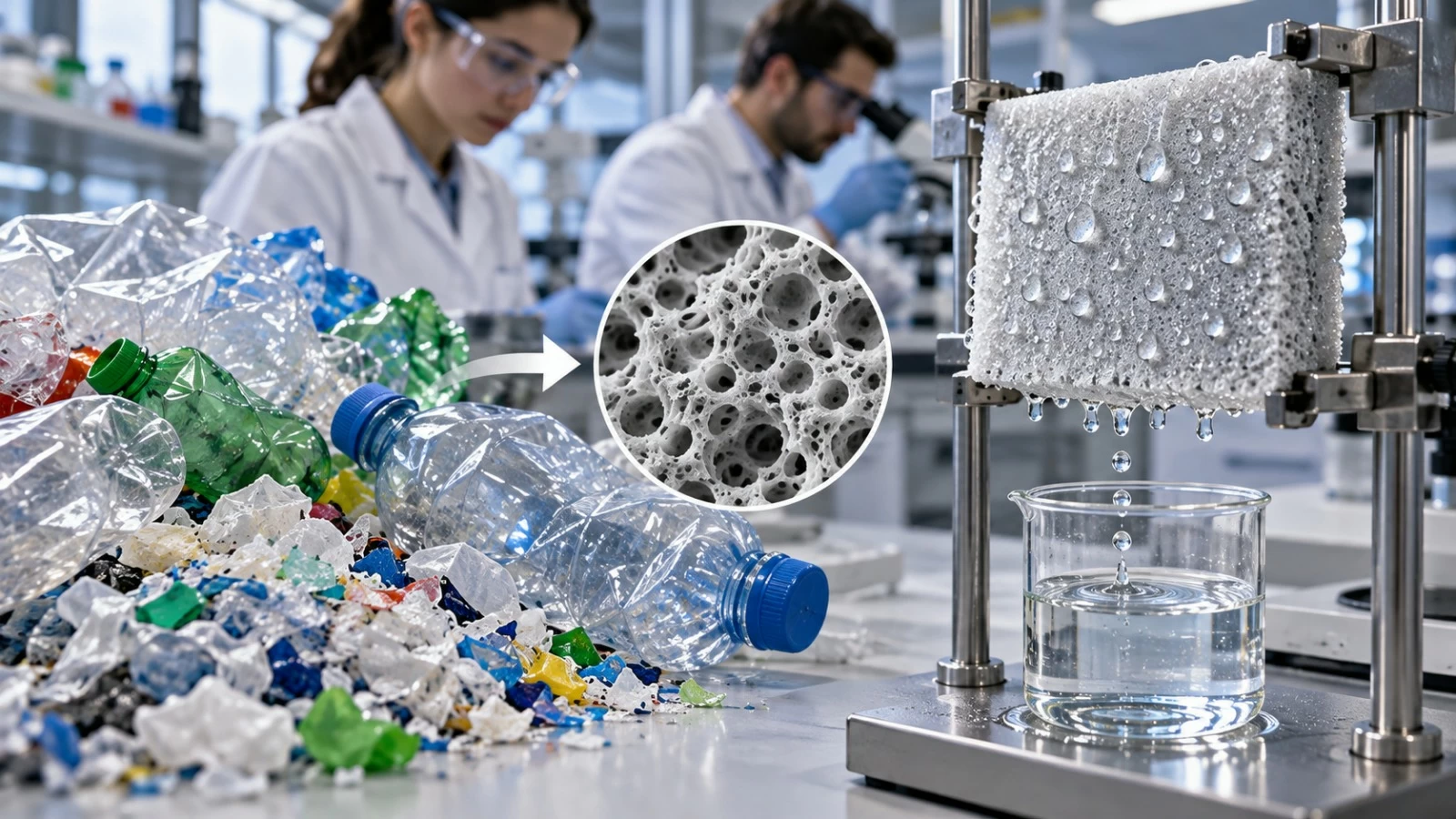
نجح باحثون في تحويل النفايات البلاستيكية، بما في ذلك مواد التغليف المستعملة والأقراص المدمجة القديمة وقطع «ليغو»، إلى مادة قادرة على التقاط الرطوبة من الهواء واستخلاص الماء منها، في خطوة تفتح باباً جديداً أمام معالجة مشكلتين بيئيتين في وقت واحد: تراكم البلاستيك وندرة المياه.
وأوضح باحثون من جامعة فيينا أن الفريق طوّر شبكات بوليمرية جاذبة للماء انطلاقاً من أنواع مختلفة من النفايات البلاستيكية، بحيث تستطيع امتصاص بخار الماء من الجو حتى في البيئات الجافة، ثم إطلاقه مرة أخرى عند تعريضها لتسخين معتدل، مثل حرارة أشعة الشمس.
تحويل المخلفات إلى «إسفنج جزيئي»
واعتمدت الفكرة على إعادة توظيف بعض أنواع البلاستيك المهمل وتحويلها إلى مواد تعمل مثل «الإسفنج الجزيئي»، إذ تمتص الرطوبة من الهواء ثم تطلقها لاحقاً ليجري جمع المياه الناتجة.
وأشار الباحثون إلى أن هذه المواد لم تقتصر على البلاستيك المفروز بعناية، بل أمكن إنتاجها أيضاً من مخلفات بلاستيكية مختلطة، وهو ما يعزز فرص الاستفادة منها عملياً في تقليل النفايات ورفع قيمة استخدامها.
تعمل في الأجواء الجافة
وبيّنت التجارب أن المادة الجديدة قادرة على التقاط الماء حتى في الظروف الجافة نسبياً، وهو ما يمنحها أهمية خاصة للمناطق التي تعاني شح الموارد المائية أو تفتقر إلى بنية تحتية كافية لإمدادات المياه.
وأضاف الباحثون أن إطلاق الماء المختزن لا يحتاج إلى ظروف معقدة، إذ يكفي تسخين معتدل لتحريره، كما أن معظم عمليتي الامتصاص والتحرير تحدثان خلال نحو ساعة واحدة.
استخدام متكرر ومصدر إضافي للمياه
وأظهرت الاختبارات أيضاً أن هذه المواد تتحمل دورات متكررة من الالتقاط والتحرير، ما يعني إمكانية استخدامها أكثر من مرة لإنتاج المياه من الهواء.
ويرى الفريق البحثي أن التقنية قد تقدم حلاً مساعداً لتوفير المياه خارج الشبكات التقليدية، خصوصاً في المناطق النائية أو في البيئات التي يصعب فيها الوصول إلى مصادر مياه مستقرة، مع التأكيد على أن العمل لا يزال مستمراً لتقييم الأداء طويل المدى ومتطلبات التطبيق على نطاق أوسع.
حياة ثانية للبلاستيك
وتسلط الدراسة الضوء على إمكانية منح النفايات البلاستيكية «حياة ثانية» تتجاوز إعادة التدوير التقليدية، عبر تحويلها إلى مادة ذات فائدة مباشرة في مواجهة أحد أكثر التحديات إلحاحاً عالمياً، وهو تأمين المياه.
Researchers have succeeded in converting plastic waste, including used packaging materials, old CDs, and pieces of "LEGO," into a substance capable of capturing moisture from the air and extracting water from it, in a step that opens a new door to addressing two environmental problems simultaneously: plastic accumulation and water scarcity.
Researchers from the University of Vienna explained that the team developed water-attracting polymer networks from different types of plastic waste, allowing them to absorb water vapor from the atmosphere even in dry environments, and then release it again when exposed to moderate heating, such as the warmth of sunlight.
Transforming Waste into "Molecular Sponge"
The idea relied on repurposing certain types of discarded plastics and converting them into materials that function like a "molecular sponge," as they absorb moisture from the air and then release it later to collect the resulting water.
The researchers pointed out that these materials were not limited to carefully sorted plastics, but could also be produced from mixed plastic waste, which enhances the practical opportunities for utilizing them in reducing waste and increasing their value.
Works in Dry Conditions
Experiments showed that the new material is capable of capturing water even in relatively dry conditions, which gives it particular importance for areas suffering from water resource scarcity or lacking adequate infrastructure for water supplies.
The researchers added that releasing the stored water does not require complex conditions, as moderate heating is sufficient to free it, and that most of the absorption and release processes occur within about one hour.
Repeated Use and Additional Water Source
Tests also showed that these materials can withstand repeated cycles of capture and release, meaning they can be used multiple times to produce water from the air.
The research team believes that the technology could provide a supplementary solution for water supply outside traditional networks, especially in remote areas or environments where access to stable water sources is challenging, while emphasizing that work is still ongoing to assess long-term performance and application requirements on a broader scale.
A Second Life for Plastic
The study highlights the potential to give plastic waste a "second life" that goes beyond traditional recycling, by transforming it into a material with direct benefits in addressing one of the most pressing global challenges: securing water.