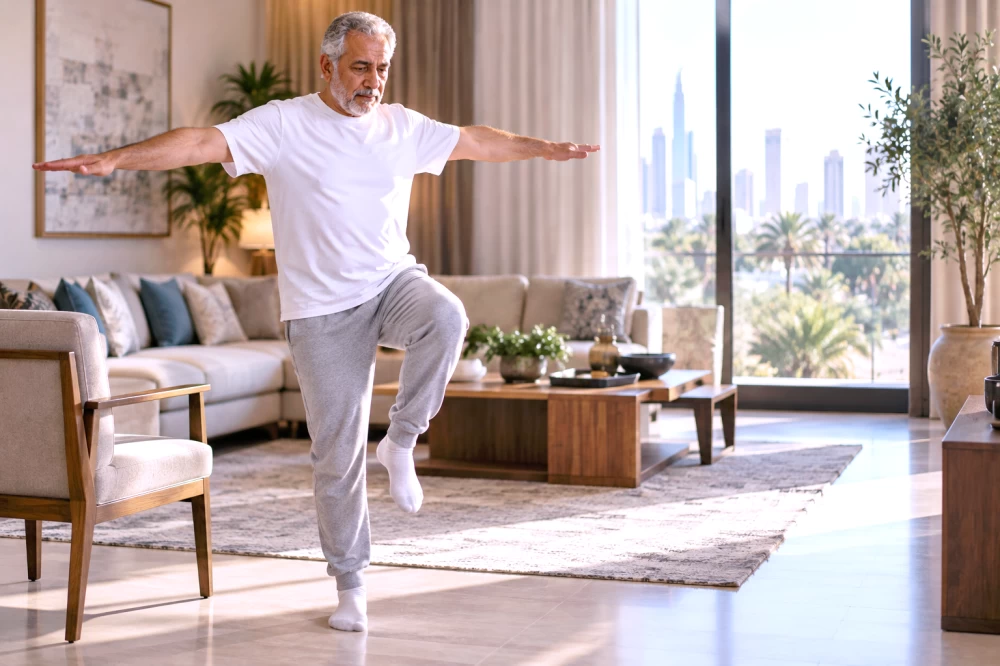
يدخل الوقوف على قدم واحدة ضمن الاختبارات البدنية البسيطة التي يستعين بها الباحثون لتقييم التوازن والقدرة الوظيفية، خصوصاً مع التقدم في العمر، بعدما أظهرت دراسات ارتباط صعوبة الحفاظ على هذه الوضعية بتراجع بعض مؤشرات الصحة البدنية.
وكشفت دراسة، نشرتها المجلة البريطانية للطب الرياضي، وشملت 1,702 شخص، تراوحت أعمارهم بين 51 و75 عاماً، أن العجز عن الوقوف على قدم واحدة لمدة 10 ثوانٍ ارتبط بارتفاع خطر الوفاة خلال سنوات المتابعة، مقارنة بمن تمكنوا من أداء الاختبار، حتى بعد مراعاة عدد من العوامل الصحية.
ويعتمد التوازن على التنسيق بين العضلات والجهاز العصبي والبصر والأذن الداخلية، ما يجعل القدرة على الثبات مؤشراً يتجاوز قوة الساقين وحدها.
ويؤكد متخصصون، أن نتائج الاختبار تعكس ارتباطات إحصائية، ولا تمثل وسيلة مستقلة للتنبؤ بالعمر أو تشخيص الأمراض، كما تتأثر بالعمر واللياقة والحالة الصحية.
وتساعد تمارين التوازن وتقوية عضلات الساقين على تحسين الثبات وتقليل احتمالات السقوط، مع ضرورة إجراء الاختبار قرب سطح ثابت يمكن الاستناد إليه، خصوصاً لدى كبار السن.
The ability to stand on one leg is among the simple physical tests used by researchers to assess balance and functional capacity, especially with advancing age, as studies have shown a correlation between difficulty in maintaining this position and a decline in certain indicators of physical health.
A study published in the British Journal of Sports Medicine, which included 1,702 individuals aged between 51 and 75 years, revealed that the inability to stand on one leg for 10 seconds was associated with an increased risk of death during the follow-up years, compared to those who were able to perform the test, even after accounting for various health factors.
Balance relies on the coordination between muscles, the nervous system, vision, and the inner ear, making the ability to maintain stability an indicator that goes beyond just the strength of the legs.
Experts emphasize that the results of the test reflect statistical correlations and do not represent an independent means of predicting age or diagnosing diseases, as they are also influenced by age, fitness, and health status.
Balance exercises and strengthening leg muscles help improve stability and reduce the likelihood of falls, with the necessity of conducting the test near a stable surface to lean on, especially for older adults.