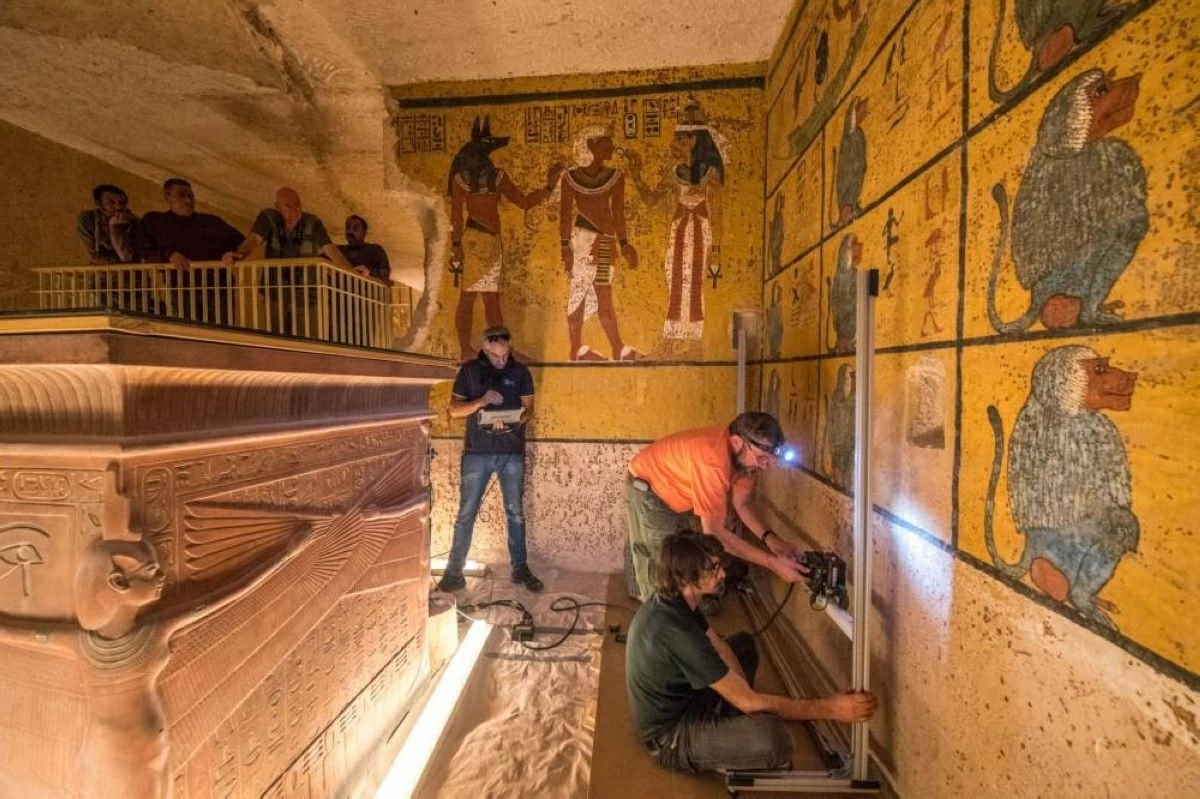
أكثر من قرن مضى على اللحظة التي اخترق فيها عالم الآثار البريطاني هوارد كارتر جدار المقبرة الشهيرة «KV62» في وادي الملوك عام 1922، غير أن مقبرة الفرعون الذهبي توت عنخ آمون لم تفصح بعد عن كامل أسرارها، إذ لا يزال صغر حجمها الاستثنائي مقارنة بمقابر ملوك الأسرة الثامنة عشرة يثير تساؤلات حول أصل بناء المجمع الجنائزي.
يتجاوز اللغز مجرد المساحة الضيقة، فهو يتقاطع مباشرة مع الملكة الأكثر شهرة وغموضاً في تاريخ مصر القديمة: نفرتيتي، التي غاب جثمانها ومقبرتها عن أيدي الأثريين لعقود. ثمة فرضية لعالم المصريات نيكولاس ريفز، تقول إن المقبرة جرى تعديلها على عجل لدفن الشاب توت عنخ آمون عقب وفاته المفاجئة، مع سدّ الأجزاء الأعمق خلف جدران زائفة لإخفاء مدفن نفرتيتي، والآن، عادت هذه الفرضية لتتصدر المشهد العلمي بقوة.
هذه المرة، لم تعد الفرضية مجرد حدس أثري، بل استندت إلى نتائج تحليل مشترك جمع سبع حملات ميدانية استخدمت ترسانة تقنية معقدة، شملت الرادار المخترق للأرض، والتصوير الحراري، وقياسات الجاذبية الدقيقة. القراءة الموحدة للبيانات المجمعة، والتي نشرتها مجلة «Nature»، كشفت عن نمط يرجح وجود مجمع جنائزي يمتد شمالاً ويضم 5 إلى 6 غرف وممرات مخفية.
وتمثلت أكثر النقاط إثارة في الكشف عن «المنطقة رقم 7»، وهي مساحة منخفضة الكثافة تحتوي في أحشائها على كتلة ذات كثافة أعلى، وهو تصميم هندسي يتوافق علمياً مع وجود غرف مأهولة بأجسام أو مقتنيات أثرية، رغم تحذيرات الخبراء من وقوع هذه الإشارات عند حافة قدرة أجهزة الاستشعار.
ويبقى حسم هذه الجدلية بيد السلطات المصرية، التي تدرس منح الضوء الأخضر من المجلس الأعلى للآثار، بعدما قدم الفريق الأثري طلباً رسمياً للترخيص بعملية اختراق دقيقة عبر فتحة صغرية وإدخال كاميرات مرنة لاستكشاف ما خلف الجدار، في خطوة ميدانية قد تبدأ خلال شهر نوفمبر لتحديد ما إذا كان الأثريون على وشك فك أعظم ألغاز الفراعنة، أم أن الجدران تخفي سيناريو أثرياً مختلفاً تماماً.
More than a century has passed since the moment British archaeologist Howard Carter breached the wall of the famous tomb "KV62" in the Valley of the Kings in 1922, yet the tomb of the golden pharaoh Tutankhamun has not yet revealed all its secrets, as its exceptionally small size compared to the tombs of the Eighteenth Dynasty kings continues to raise questions about the origin of the funerary complex.
The mystery goes beyond just the narrow space; it directly intersects with the most famous and enigmatic queen in ancient Egyptian history: Nefertiti, whose body and tomb have eluded archaeologists for decades. There is a hypothesis by Egyptologist Nicholas Reeves, suggesting that the tomb was hastily modified to bury the young Tutankhamun following his sudden death, with the deeper parts sealed behind false walls to conceal Nefertiti's burial site. Now, this hypothesis has returned to the forefront of scientific discourse with vigor.
This time, the hypothesis is no longer merely an archaeological intuition, but is based on the results of a joint analysis that combined seven field campaigns using a complex technical arsenal, including ground-penetrating radar, thermal imaging, and precise gravity measurements. The unified reading of the collected data, published in the journal "Nature," revealed a pattern that suggests the existence of a funerary complex extending northward, containing 5 to 6 hidden rooms and corridors.
One of the most exciting points was the discovery of "Zone 7," a low-density area that contains within it a mass of higher density, a design that scientifically corresponds to the presence of rooms occupied by bodies or archaeological artifacts, despite experts warning that these signals occur at the edge of the sensors' capabilities.
The resolution of this debate remains in the hands of the Egyptian authorities, who are considering granting the green light from the Supreme Council of Antiquities, after the archaeological team submitted an official request for permission to conduct a precise breach through a tiny opening and to insert flexible cameras to explore what lies behind the wall, in a field step that may begin in November to determine whether archaeologists are on the verge of unraveling one of the greatest mysteries of the pharaohs, or if the walls conceal a completely different archaeological scenario.